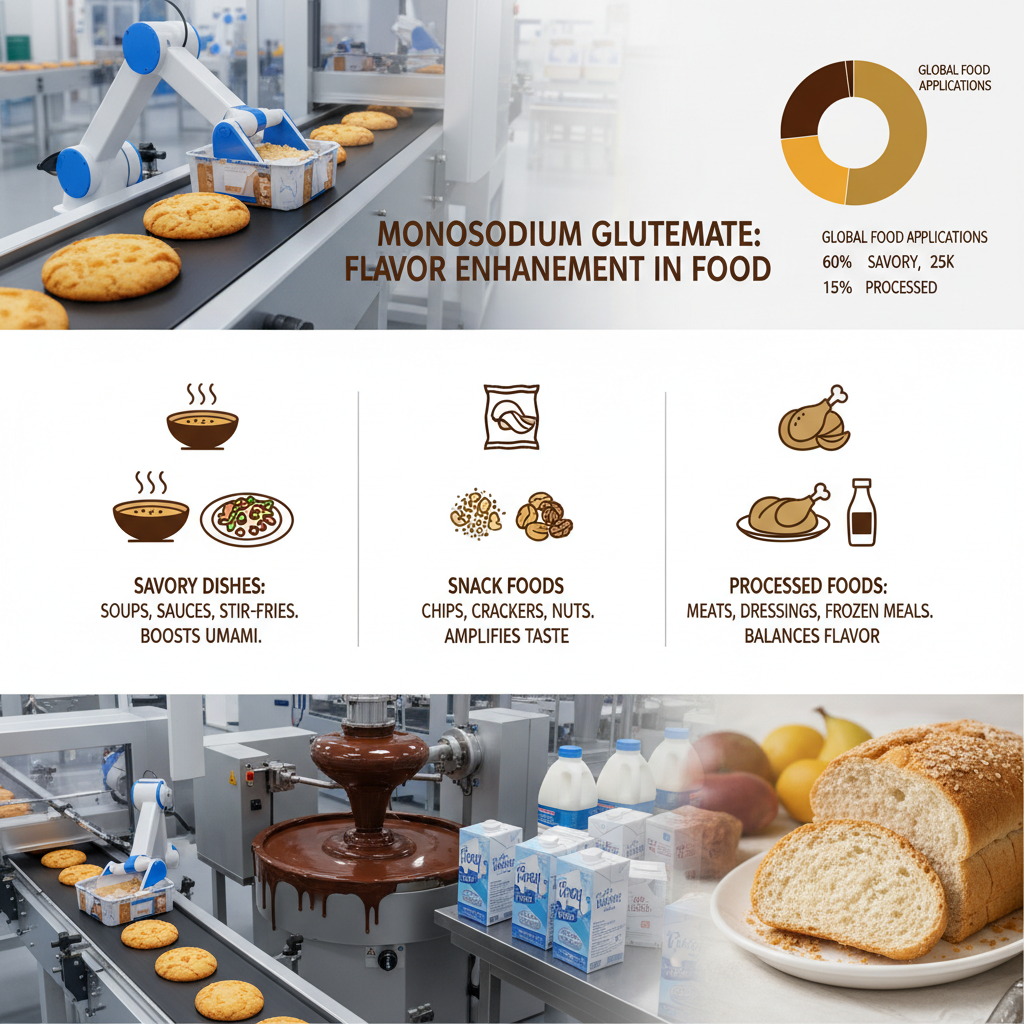
Understanding the diverse range of sodium glutamate uses is essential for professionals in the food, feed, and pharmaceutical industries who seek to optimize flavor profiles and nutritional value. As a cornerstone of the taste-enhancement world, this compound provides the elusive "umami" flavor, bridging the gap between simple saltiness and complex savory richness that consumers crave globally.
The global demand for efficient and cost-effective flavor enhancers has pushed the industry toward a more scientific approach to additive integration. By leveraging the specific chemical properties of monosodium glutamate, manufacturers can reduce the reliance on high-sodium salts while maintaining a high sensory impact, addressing both economic goals and health-conscious consumer trends.
Whether applied in large-scale industrial food processing or specialized pharmaceutical intermediates, the strategic application of sodium glutamate ensures product consistency and quality. This comprehensive guide explores how sodium glutamate uses evolve across different sectors to drive innovation in taste and functionality.
The Industrial Significance of Sodium Glutamate Uses
In the landscape of modern food manufacturing, the industrial significance of sodium glutamate uses cannot be overstated. Across Asia, Europe, and the Americas, this additive is utilized not merely as a flavor booster but as a tool for standardized quality control. According to global trade statistics, the demand for high-purity glutamate continues to rise as emerging markets expand their processed food sectors, requiring ingredients that can deliver consistent taste across diverse climates and storage conditions.
The primary challenge addressed by these applications is the inherent variability of raw ingredients. By integrating sodium glutamate, manufacturers can stabilize the "savory" baseline of a product, ensuring that a soup base or a snack seasoning tastes identical whether it is produced in January or July. This reliability is critical for maintaining brand loyalty in a competitive global market where sensory precision is a key differentiator.
Defining the Core Mechanism of Umami Enhancement
At its simplest level, sodium glutamate uses center around the activation of specific taste receptors on the human tongue. Sodium glutamate is the sodium salt of glutamic acid, an amino acid that occurs naturally in foods like tomatoes and parmesan cheese. When dissolved, it releases glutamate ions that bind to T1R1 and T1R3 receptors, signaling the brain to perceive a rich, meaty flavor known as "umami."
Beyond simple taste, this mechanism plays a vital role in modern humanitarian and nutritional needs. In regions where high-protein animal sources are expensive or unavailable, the strategic use of glutamate in fortified foods can make nutrient-dense but bland plant-based proteins more palatable. This increases the acceptance of sustainable protein alternatives and helps combat malnutrition by encouraging the consumption of fortified legumes and grains.
From a chemical perspective, the efficacy of these uses depends on the synergy between glutamate and other nucleotides, such as inosinate (IMP) and guanylate (GMP). When combined, these components create a multiplicative effect on taste intensity, allowing food scientists to achieve a profound flavor impact with significantly lower concentrations of additive, thereby optimizing the ingredient list.
Key Factors Influencing Efficacy in Applications
One of the most critical factors regarding sodium glutamate uses is Solubility and Dispersion. To ensure a uniform taste profile, the additive must be perfectly dissolved within the matrix of the food or pharmaceutical intermediate. Poor dispersion can lead to "hot spots" of flavor, which detracts from the overall quality and professional finish of the product.
Cost Efficiency and Dosage is another pillar of industrial application. Because of its high potency, sodium glutamate allows manufacturers to replace expensive natural extracts (like meat concentrates) while maintaining a similar sensory profile. The balance between dosage and cost-per-unit is a primary focus for R&D teams looking to scale production without compromising on the umami depth.
Finally, Chemical Stability determines the shelf-life and safety of the final product. Sodium glutamate is remarkably stable under a wide range of temperatures and pH levels, making it suitable for high-heat sterilization processes common in canning and retort pouch packaging. This stability ensures that the flavor does not degrade during transportation or long-term storage.
Global Market Applications and Use Cases
The practical application of sodium glutamate uses spans across diverse industries. In the food sector, it is ubiquitous in bouillon cubes, savory snacks, and frozen meals. In the pharmaceutical industry, glutamate derivatives serve as critical intermediates in the synthesis of various medicinal compounds, demonstrating a versatility that extends far beyond the kitchen.
Real-world use cases often highlight its role in specialized environments. For instance, in the production of high-calorie emergency food rations for disaster relief operations, sodium glutamate is used to mask the metallic or bitter notes of fortified minerals, making the food more appetizing to stressed populations and ensuring caloric intake is maintained during crises.
Comparative Efficiency of Sodium Glutamate Uses across Sectors
Long-term Value and Sustainability Benefits
The long-term value of sodium glutamate uses lies in its ability to promote sustainable eating habits. By enhancing the taste of plant-based proteins, it reduces the global reliance on resource-intensive livestock farming. This shift not only lowers the carbon footprint of food production but also promotes a more ethical approach to protein consumption without sacrificing the sensory pleasure of a savory meal.
Furthermore, the reliability and safety profile of high-quality sodium glutamate build trust between manufacturers and consumers. When produced under strict ISO and food-safety standards, it offers a consistent, non-toxic method of flavor enhancement. This predictability reduces waste during the production process, as fewer batches are rejected for taste inconsistencies, contributing to a leaner and more sustainable manufacturing cycle.
Future Trends in Additive Innovation
Looking ahead, the future of sodium glutamate uses is being shaped by the digital transformation of food science. AI-driven flavor mapping is now allowing companies to predict the exact amount of glutamate needed to complement specific botanical ingredients, moving away from trial-and-error and toward precision formulation.
Sustainability is also driving the adoption of "green" fermentation processes. The transition from chemical synthesis to advanced bio-fermentation using non-GMO sugarcane or corn starch ensures that the additive is not only effective but also environmentally friendly. This alignment with "Clean Label" trends is helping the ingredient shed outdated misconceptions and be recognized for its functional value.
Additionally, the integration of sodium glutamate into "smart foods"—products designed for specific health outcomes—is on the rise. By combining flavor enhancers with functional nutrients, researchers are creating medical-grade foods that are both therapeutically effective and palatable, improving patient compliance in clinical settings.
Challenges and Expert Solutions in Integration
Despite its benefits, some challenges persist regarding sodium glutamate uses, primarily centered around consumer perception and regulatory hurdles. Many markets still deal with legacy myths regarding the safety of MSG, which can lead to "MSG-free" marketing claims that mislead consumers about the nature of flavor.
To overcome this, industry experts suggest a transparency-first approach. Providing detailed educational content on the natural occurrence of glutamates and using scientific data to debunk myths helps rebuild consumer trust. Moreover, implementing precise dosing systems ensures that the additive is used sparingly, avoiding the "over-seasoned" profile that sometimes fuels negative perceptions.
Another technical challenge is the interaction with other acidic components in a recipe, which can sometimes mask the umami effect. The solution lies in pH balancing—adjusting the acidity of the food matrix to a range where the glutamate ions remain most active, thereby maximizing the sensory impact while using the minimum possible amount of material.
Technical Analysis of Sodium Glutamate Integration Parameters
| Application Sector |
Recommended Dosage |
Primary Benefit |
Stability Rating (1-10) |
| Industrial Savory Snacks |
0.1% - 0.5% |
Intense Flavor Punch |
9 |
| Instant Soup Bases |
0.2% - 0.8% |
Umami Depth/Body |
10 |
| Plant-based Meat |
0.3% - 1.0% |
Meat-like Aftertaste |
8 |
| Pharma Intermediates |
Variable |
Chemical Precursor |
7 |
| Animal Feed Additive |
0.05% - 0.2% |
Palatability Increase |
9 |
| Condiment Sauces |
0.1% - 0.4% |
Salt Reduction |
10 |
FAQS
The most common industrial uses involve flavor enhancement in processed foods, such as snacks, canned soups, and seasonings. Beyond food, it is used in animal feed to increase the palatability of nutrient-dense pellets and as a chemical intermediate in the synthesis of specialized pharmaceuticals.
Yes, one of the most strategic uses of sodium glutamate is "salt reduction." Because it enhances the perception of saltiness and savory richness, manufacturers can reduce the total amount of sodium chloride (table salt) in a product without sacrificing the taste, supporting heart-healthy dietary goals.
Absolutely. Sodium glutamate is thermally stable, meaning it does not break down or lose its flavor-enhancing properties during pasteurization, canning, or baking. This makes it an ideal choice for industrial food production where high heat is required for safety and preservation.
Chemically, they are identical. The glutamate ion in monosodium glutamate is the same as that found in aged cheeses, ripe tomatoes, and mushrooms. The industrial version simply provides a concentrated, pure form that can be precisely measured for consistent product quality.
To maximize the efficacy of sodium glutamate in plant proteins, it should be combined with a small amount of yeast extract or nucleotides (IMP/GMP). This creates a synergistic effect that mimics the complex savory profile of beef or pork more accurately than using glutamate alone.
International import requires adherence to ISO standards and local food safety regulations (such as FDA or EFSA). Partnering with a certified manufacturer that provides full COA (Certificate of Analysis) and MSDS documentation ensures a smooth customs process and guaranteed purity.
Conclusion
In summary, the strategic application of sodium glutamate uses extends far beyond basic seasoning; it is a vital tool for industrial efficiency, nutritional accessibility, and sustainable food innovation. By understanding the chemical synergies and precise dosing requirements, manufacturers can create products that are not only delicious but also cost-effective and aligned with global health trends.
As we move toward a future of precision nutrition and sustainable proteins, the role of high-purity flavor enhancers will only grow in importance. We encourage food scientists and procurement officers to embrace evidence-based integration of glutamates to elevate their product lines. Visit our website for professional grade solutions: www.chinaseasoning.com