Understanding how much sodium is in a bouillon cube is more than just a culinary curiosity; it is a critical aspect of modern nutritional management. For many households and food service providers, these concentrated flavor blocks are indispensable tools for enhancing the taste of soups and stews, yet they often serve as a hidden source of excessive salt intake.
Globally, the shift toward healthier eating patterns has put a spotlight on processed seasonings. When consumers ask how much sodium is in a bouillon cube, they are typically seeking a balance between the convenience of industrial food additives and the stringent dietary guidelines recommended by health organizations to prevent hypertension and cardiovascular issues.
By analyzing the composition of these products, from the perspective of a food additive manufacturer, we can see the intricate balance of salt, MSG, and flavor enhancers. Understanding the sodium density allows chefs and home cooks to adjust their recipes accurately, ensuring a savory experience without compromising long-term wellness.
Global Impact of Sodium Levels in Bouillon Cubes
On a global scale, the concern over how much sodium is in a bouillon cube aligns with the World Health Organization's (WHO) efforts to reduce salt intake to less than 5g per day. In many developing regions, bouillon cubes are the primary source of seasoning due to their affordability and long shelf life, often leading to an unconscious overconsumption of sodium that exceeds daily recommended limits.
This industrial challenge creates a tension between accessibility and health. As food additive manufacturers, we recognize that while high sodium levels act as a preservative and flavor catalyst, the rising prevalence of non-communicable diseases requires a fundamental redesign of how these concentrates are formulated.
Defining the Sodium Concentration in Seasoning Cubes
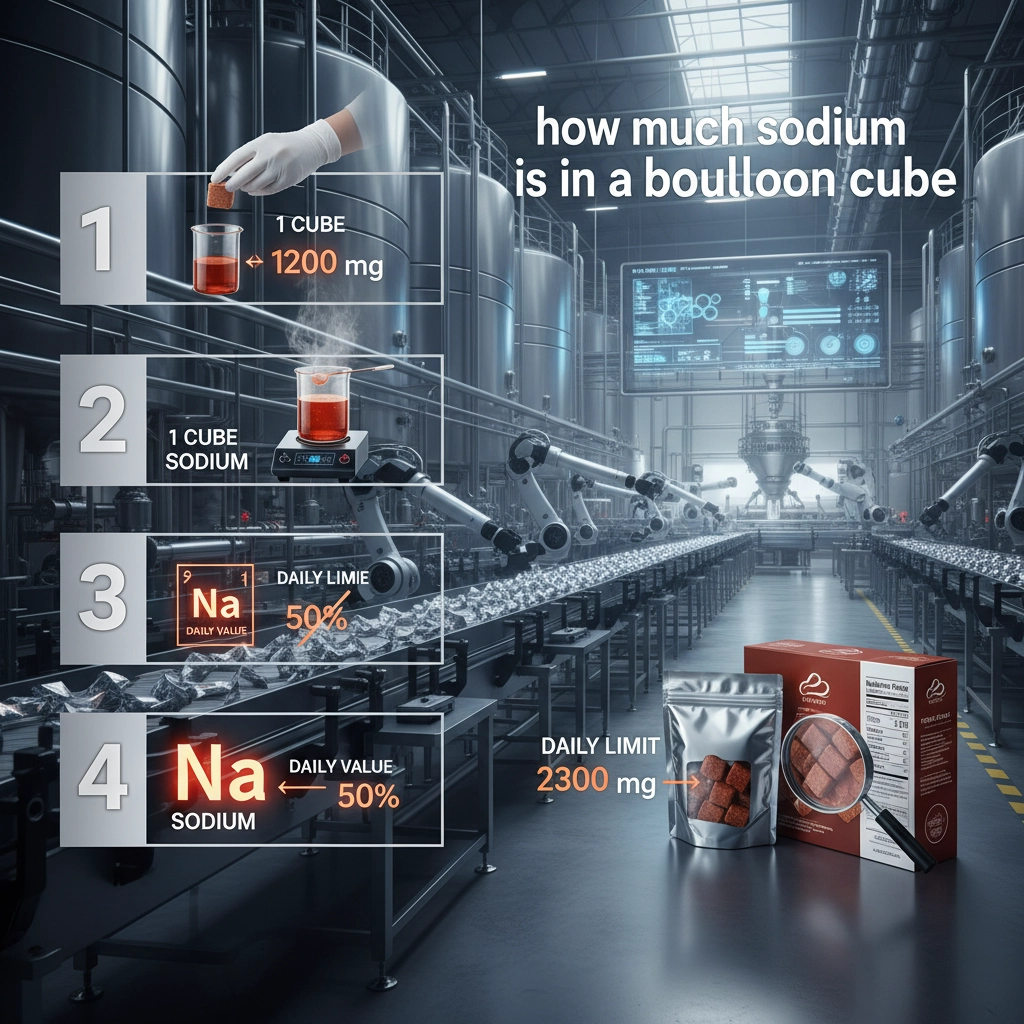
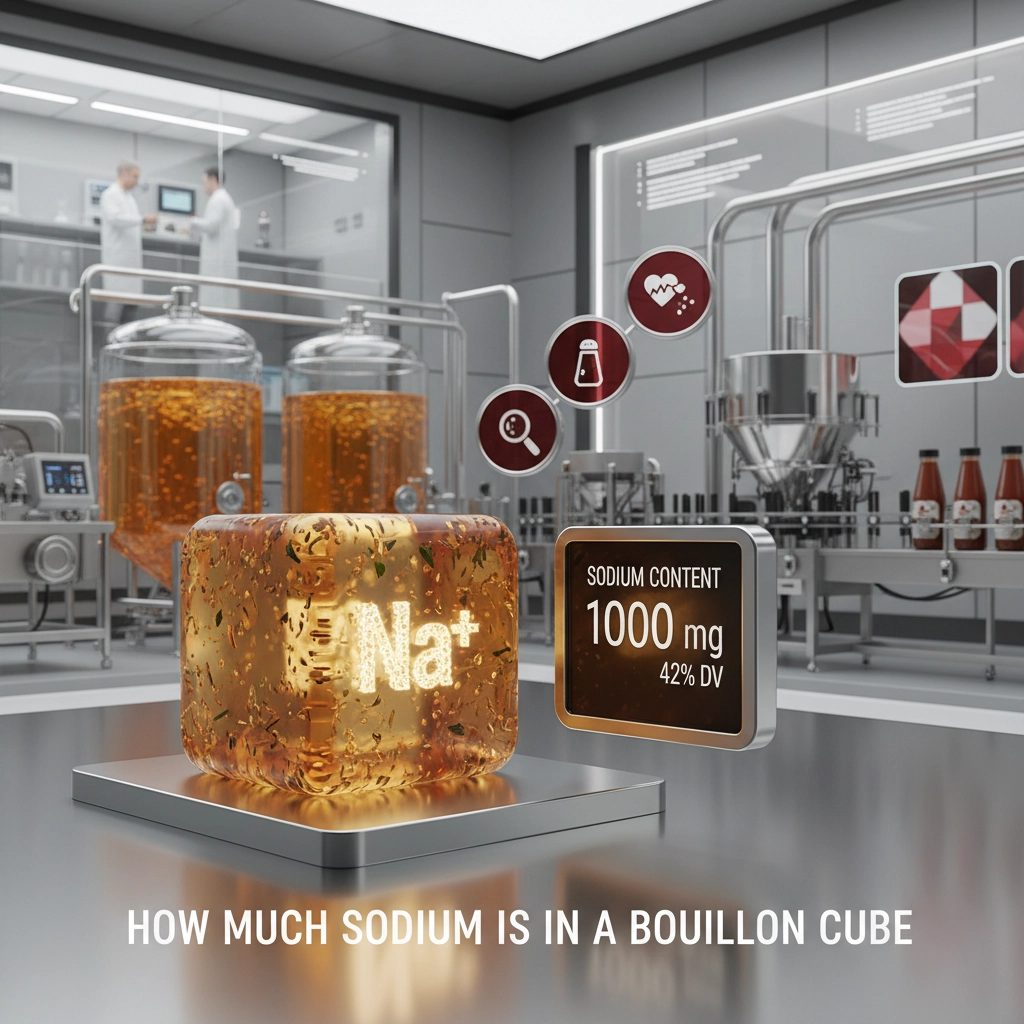
To answer "how much sodium is in a bouillon cube" in simple terms, one must look at the concentration of sodium chloride (table salt) and other sodium-based additives like monosodium glutamate (MSG). Typically, a single standard cube can contain anywhere from 800mg to 2,300mg of sodium, which can represent a significant portion of the total daily allowance for an average adult.
In the context of the food manufacturing industry, this concentration is not accidental. Sodium serves a dual purpose: it provides the essential salty taste profile and acts as a critical preservative that prevents microbial growth, allowing these cubes to be shipped globally without refrigeration.
From a humanitarian perspective, these high-sodium concentrates have been vital in providing nutrient-dense flavor in disaster relief zones or remote industrial camps. However, the modern industry is now pivoting toward "salt-replacement" technologies to maintain this utility while reducing the physiological burden on the consumer.
Core Factors Influencing Sodium Density
When evaluating how much sodium is in a bouillon cube, the first factor is Preservation Scalability. Sodium is the most cost-effective way to ensure a product remains stable across diverse climates, from humid tropical zones to arid deserts, making it a cornerstone of global food additive logistics.
Another critical aspect is Taste Potency. The intensity of the flavor in a bouillon cube relies on the synergistic effect between sodium and umami-rich compounds. Without a specific threshold of sodium, the perception of "savory" is diminished, which is why manufacturers struggle to lower sodium without losing the product's primary appeal.
Finally, Cost Efficiency plays a major role. Sodium chloride is an abundant and inexpensive raw material. Replacing it with potassium salts or complex yeast extracts increases the production cost, which can make the final product less accessible in price-sensitive markets.
Practical Applications and Dosage Control
In real-world culinary applications, knowing how much sodium is in a bouillon cube allows for precise dosage control. In professional kitchens, chefs often use only a fraction of a cube or dilute it heavily to avoid over-salting the dish, especially when the recipe involves subsequent reduction (boiling down), which further concentrates the sodium.
Across different regions, the application varies. In Western cuisines, bouillon is often a base for stocks, while in many African and Asian markets, the cube is used as a direct seasoning for stir-fries and stews. This difference in usage means that the impact of sodium intake varies significantly based on the cultural application of the additive.
Sodium Intensity Comparison across Bouillon Varieties
Strategic Advantages of Low-Sodium Alternatives
The transition toward low-sodium bouillon offers significant long-term value, primarily in the realm of public health and brand trust. By reducing how much sodium is in a bouillon cube, manufacturers can tap into the "health-conscious" consumer segment, which is growing rapidly in North America and Europe.
Beyond health, the shift toward innovative additives like yeast extracts and mushroom powders provides a more nuanced flavor profile. This evolution represents a move from "simple saltiness" to "complex savoriness," enhancing the culinary quality of the food while promoting a sustainable lifestyle.
Future Innovations in Flavor Enhancement
Looking forward, the industry is exploring biotechnology to further optimize how much sodium is in a bouillon cube. Fermentation-derived flavor enhancers are being developed to mimic the taste of salt without the actual sodium content, leveraging the power of amino acids and peptides.
Digital transformation is also playing a role. Precision manufacturing allows for the creation of "micro-dosed" bouillon products, where flavor is delivered in a more efficient manner, reducing the total volume of additives required per serving.
Sustainability is another driving force. The move toward plant-based bouillon cubes not only caters to vegan diets but also allows for the use of natural minerals to replace traditional sodium chloride, reducing the environmental footprint of salt mining.
Overcoming Challenges in Sodium Reduction
The primary challenge in reducing how much sodium is in a bouillon cube is the "flavor gap." When salt is removed, the product can taste flat or bitter. To solve this, food scientists are using "salt enhancers"—compounds that trick the tongue into perceiving saltiness more intensely, allowing for a 30-50% reduction in actual sodium.
Another hurdle is the shelf-life trade-off. Sodium is a powerful preservative; reducing it can make the cubes more susceptible to moisture and oxidation. The solution lies in advanced packaging technologies, such as moisture-barrier foils and vacuum sealing, which protect the product without needing excessive salt.
Finally, there is the issue of consumer perception. Many users associate a high salt taste with a "rich" flavor. Educating the market through transparent labeling and taste-testing is essential to transition users from high-sodium habits to healthier, modern seasoning alternatives.
Comparative Analysis of Sodium Reduction Strategies in Bouillon Production
| Reduction Method |
Flavor Impact |
Cost Factor |
Preservation Level |
| Potassium Salt Swap |
Slightly Bitter |
Medium |
High |
| Yeast Extract Addition |
Rich Umami |
High |
Medium |
| Mushroom Powder Base |
Natural Earthy |
Medium |
Low |
| MSG Optimization |
Intense Savory |
Low |
High |
| Citrus Acid Balancing |
Bright/Tangy |
Low |
Medium |
| Fermented Soy Base |
Deep Salty |
Medium |
High |
FAQS
A typical commercial bouillon cube can contain between 800mg and 2,300mg of sodium. This varies significantly by brand and flavor (e.g., beef vs. vegetable). Because this can be nearly half of the recommended daily limit, it is essential to check the nutrition label and adjust the amount of additional salt added to your dish.
Yes, using a partial cube is one of the most effective ways to control your salt intake. Since bouillon is highly concentrated, half a cube often provides enough depth of flavor for smaller portions of food. Combining this with low-sodium broth or water can maintain the volume of your recipe while slashing the total sodium content.
Not entirely. While sodium chloride (table salt) is the primary source, bouillon cubes also contain sodium from other additives like MSG (monosodium glutamate) and sodium benzoates. All these contribute to the total "sodium" count listed on the label, which is what affects blood pressure and water retention in the body.
They are a healthier alternative, but "low-sodium" doesn't mean "sodium-free." They typically replace a portion of the salt with potassium chloride or flavor enhancers. While they significantly reduce the risk of hypertension, users with kidney issues should consult a doctor due to the increased potassium levels often found in these versions.
Check the "Nutrition Facts" panel for the "Sodium" line. If a single cube exceeds 1,000mg, it is considered high. A "low sodium" product is generally defined as having 140mg or less per serving. Always compare the serving size to the size of the cube to get an accurate reading of the sodium density.
Generally, yes. By making your own stock and freezing it in cubes, you have total control over how much salt is added. You can use fresh herbs, aromatics, and reduced-salt soy sauce to achieve a similar umami profile without the massive sodium load found in industrial-grade concentrates.
Conclusion
Analyzing how much sodium is in a bouillon cube reveals the complex intersection of food chemistry, consumer convenience, and global health. While these concentrates offer an efficient way to deliver flavor and preserve food, the high sodium density remains a significant dietary challenge. By understanding the core factors—from preservation needs to taste potency—consumers and manufacturers can move toward a more balanced approach that prioritizes health without sacrificing the savory experience.
As we look to the future, the integration of biotechnology and "salt-mimicking" additives promises a new era of seasoning where flavor is decoupled from high sodium levels. We encourage both food producers and culinary enthusiasts to embrace these innovations, ensuring that the joy of cooking remains sustainable and safe for everyone. To explore high-quality, balanced food additive solutions, visit our website: www.chinaseasoning.com