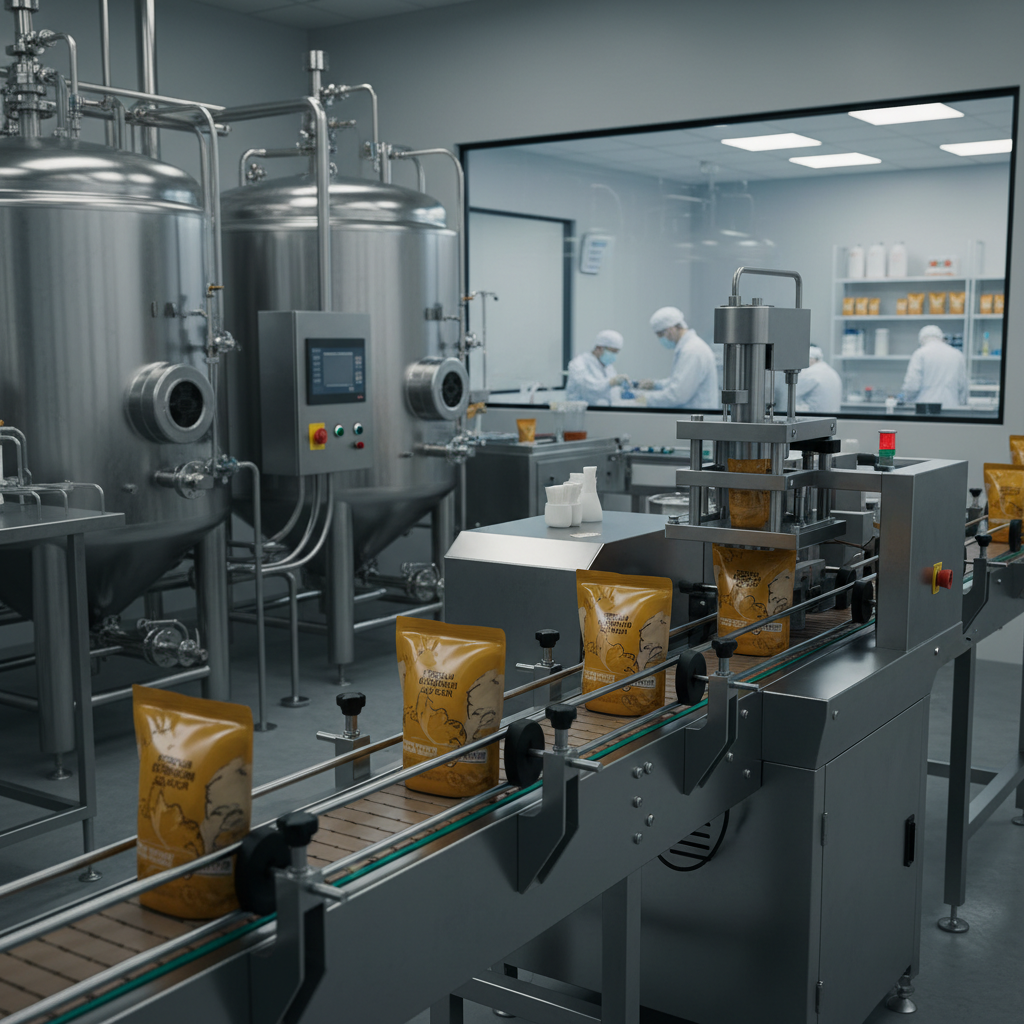
The transformation of granulated bouillon to cubes represents a pivotal evolution in the food additive industry, blending convenience with concentrated flavor delivery. This process is not merely a change in shape but a sophisticated engineering feat that ensures stability, dosage precision, and extended shelf life for global consumers.
Across the globe, the demand for standardized seasoning has surged, pushing manufacturers to optimize how they compress seasoned granules into stable, uniform cubes. This transition allows for easier transport and more accurate portion control in both home kitchens and industrial food production lines, reducing waste and improving consistency.
Understanding the technical nuances of moving from granulated bouillon to cubes is essential for brands aiming to capture market share in the fast-paced convenience food sector. By mastering the binding agents and compression ratios, companies can ensure that their product maintains its sensory profile while meeting rigorous international safety and quality standards.
The Industrial Logic of Granulated Bouillon to Cubes
The shift from granulated bouillon to cubes is driven primarily by the consumer's need for "pre-measured convenience." In a granulated form, users often struggle with consistency, leading to over-seasoning or under-seasoning of dishes. By compressing these granules into a fixed-weight cube, manufacturers eliminate the guesswork, providing a professional-grade result in every household.
From a manufacturing perspective, the transition optimizes packaging efficiency. Cubes can be wrapped in foil or plastic with minimal air gaps, significantly reducing the overall volume of the final product packaging. This not only lowers material costs but also maximizes the number of units that can be shipped in a single container, directly impacting the bottom line of food additive producers.
Technical Components of the Cubing Process
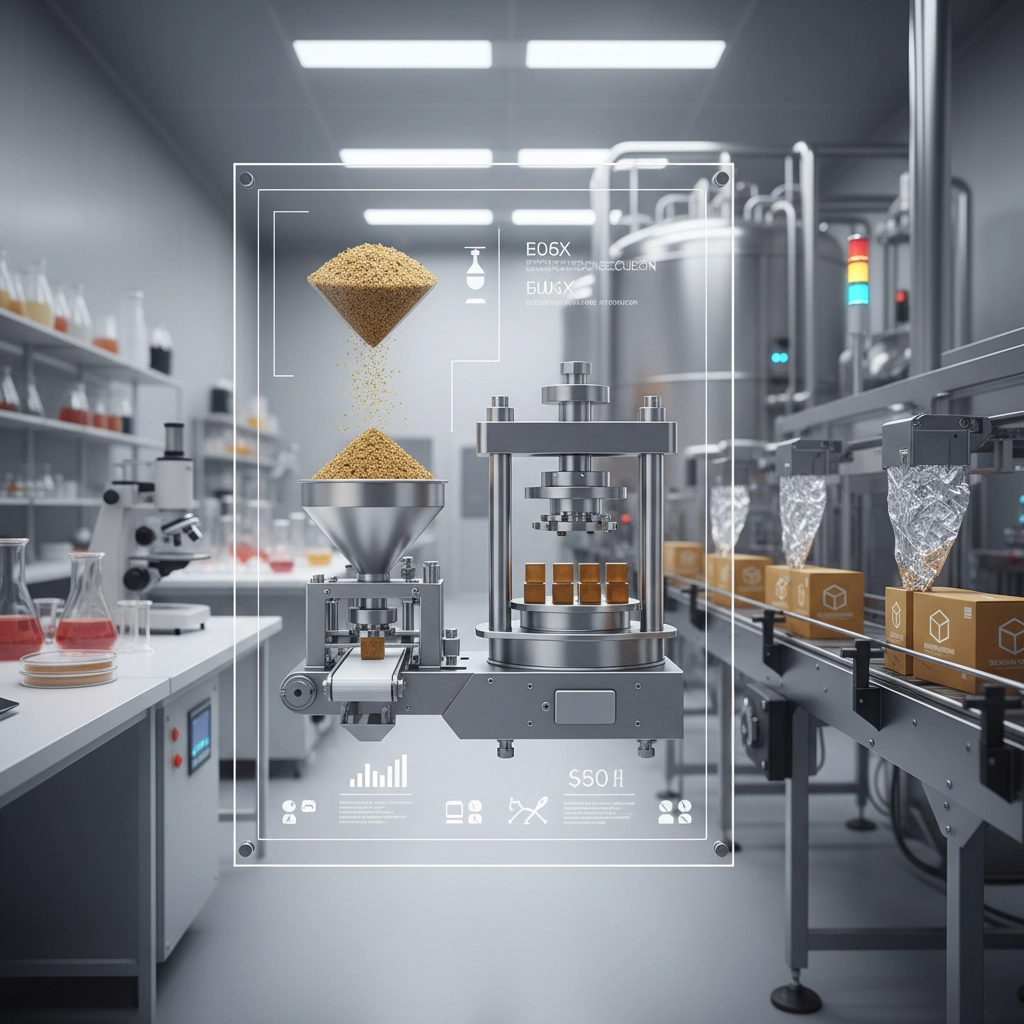
To successfully convert granulated bouillon to cubes, the industry relies on a precise balance of binders and pressure. Common binders, such as maltodextrin or specific vegetable fats, are integrated into the granulated mix to ensure that the resulting cube does not crumble during transport. The ratio of these binders must be carefully calibrated to avoid altering the taste profile of the bouillon.
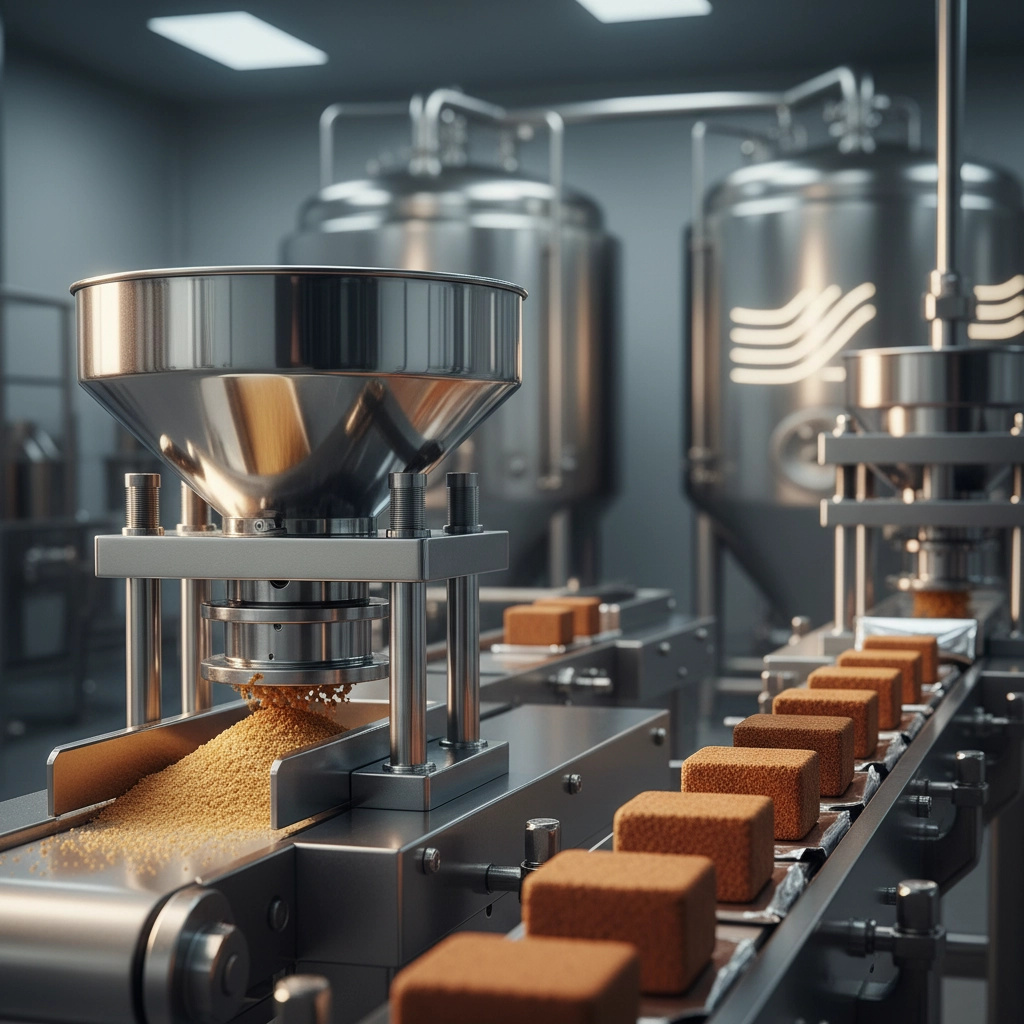
The compression stage involves high-pressure hydraulic or mechanical presses. The granules are fed into molds where they are subjected to specific tonnage to achieve a density that is high enough for stability but low enough to allow for rapid dissolution in boiling water. This "solubility-density paradox" is the primary challenge for engineers in the food additive sector.
Furthermore, moisture control is critical. If the granulated base contains too much water, the cubes will clump and potentially mold; too little, and they will lack the structural integrity to hold their shape. Maintaining a controlled environment during the granulated bouillon to cubes process is non-negotiable for high-quality output.
Impact on Global Supply Chain and Logistics
The logistics of transporting granulated bouillon to cubes are far more efficient than handling bulk powders. Cubes are inherently more stable and less prone to leakage or contamination during transit, which is a significant advantage when shipping to regions with underdeveloped infrastructure.
Statistically, the volume reduction achieved by converting granulated bouillon to cubes allows for a 20-30% increase in pallet density. This reduction in shipping volume leads to a corresponding decrease in carbon emissions per unit, aligning the production process with global sustainability goals and ISO environmental standards.
Moreover, the standardized nature of cubes simplifies inventory management. Warehouse operators can track stock more accurately by unit count rather than by weight, which can fluctuate slightly due to humidity in granulated forms. This precision streamlines the entire supply chain from the factory to the retail shelf.
Comparative Efficiency of Compression Methods
Different manufacturing plants employ various techniques to achieve the transition from granulated bouillon to cubes. Some utilize rotary presses for high-speed output, while others prefer heavy-duty hydraulic systems for maximum density and longevity. The choice of method depends on the intended market—premium cubes require a finer texture and faster dissolution, whereas budget options focus on volume.
Evaluating these methods requires looking at the trade-off between production speed and the structural integrity of the cube. While rotary systems offer unmatched speed, hydraulic systems often provide a more uniform product that resists breaking during rough handling in international shipping.
Efficiency Ratings: Granulated Bouillon to Cubes Methods
Application in Humanitarian and Emergency Food Aid
In the context of disaster relief, the conversion of granulated bouillon to cubes is a matter of survival and dignity. Organizations like the World Food Programme (WFP) rely on nutrient-dense, compact seasonings to make basic grains and legumes palatable for displaced populations. The cube format ensures that nutrition and flavor can be distributed in precise amounts without the risk of spillage.
Furthermore, the extended shelf life associated with the compressed cube format is critical for remote industrial zones and post-disaster areas where refrigeration is non-existent. By removing excess air and sealing each cube, the risk of oxidation is minimized, ensuring that the bouillon remains safe and tasty for years, regardless of the environmental conditions.
Quality Assurance and Stability Standards
Maintaining quality during the granulated bouillon to cubes process requires rigorous testing. One of the primary metrics is the "disintegration time," which measures how long it takes for a cube to fully dissolve in water. If the compression is too high, the cube may leave clumps, which is considered a major quality failure in the consumer market.
Chemical stability is another concern, particularly regarding the interaction between the salt content and the binding agents. Over time, salt can migrate within the cube, potentially leading to "sweating" or moisture absorption. To prevent this, manufacturers often use specialized coatings or moisture-barrier packaging that protects the integrity of the compressed form.
Finally, sensory evaluation is performed to ensure that the compression process hasn't altered the volatile aromatic compounds. The high pressure used in cubing can sometimes "lock in" flavors too tightly or, conversely, cause some aromatics to escape. Advanced labs use GC-MS (Gas Chromatography-Mass Spectrometry) to verify that the cube's profile matches the original granulated recipe.
Future Innovations in Sustainable Cubing
The future of granulated bouillon to cubes is leaning heavily toward "green" manufacturing. This includes the development of biodegradable wrappers made from cornstarch or seaweed, replacing the traditional plastic and foil laminates. As consumers become more eco-conscious, the packaging of the bouillon cube is becoming as important as the product itself.
Digital transformation is also playing a role through "Industry 4.0" automation. AI-driven sensors can now monitor the compression force in real-time, adjusting the pressure millisecond by millisecond to account for slight variations in the moisture of the granulated batch. This ensures a 100% consistency rate, virtually eliminating defective cubes.
Additionally, there is a growing trend toward "clean label" binders. The industry is moving away from synthetic stabilizers in favor of natural fibers and plant-based proteins to hold the bouillon together. These innovations ensure that the product remains healthy and sustainable without sacrificing the convenience of the cube format.
Analysis of Granulated Bouillon to Cubes Production Factors
| Production Metric |
Granulated Form |
Cube Form |
Improvement Index |
| Storage Volume |
High (Loose) |
Low (Compact) |
9/10 |
| Dosage Accuracy |
Variable |
Fixed/Exact |
10/10 |
| Shelf Stability |
Moderate |
High |
8/10 |
| Packaging Cost |
Medium |
Low (per unit) |
7/10 |
| Dissolution Rate |
Instant |
Rapid (Timed) |
6/10 |
| Transport Risk |
High (Leakage) |
Low (Solid) |
9/10 |
FAQS
The primary advantage is portion control and convenience. By compressing the granules into a fixed weight, manufacturers ensure that consumers use the exact amount of seasoning required for a recipe, eliminating the need for measuring spoons and ensuring flavor consistency across different batches of food.
If done correctly, the transition from granulated bouillon to cubes does not alter the taste. However, the choice of binders (like fats or starches) and the level of pressure applied are critical. Professional manufacturers use flavor-neutral binders to ensure the original sensory profile of the seasoning is preserved.
This is achieved by optimizing the compression ratio. Engineers calculate the "critical pressure point" where the cube is strong enough to resist breaking during shipping but porous enough to allow water to penetrate and dissolve the solids rapidly upon contact with boiling water.
Yes, generally they are. The compression process reduces the surface area exposed to oxygen, and the individual foil wrapping of each cube provides a superior moisture barrier compared to a single large container of granulated powder, which is often exposed to air every time it is opened.
Most can, but the formula must be adjusted. Some granulated mixes lack the necessary fat or binder content to hold a shape. In such cases, food technologists must add a small percentage of a binding agent to ensure the product doesn't crumble during the cubing process.
The process is becoming more sustainable. While traditional foil wrapping created waste, the industry is moving toward biodegradable materials. Additionally, the higher shipping density of cubes compared to granules reduces the overall carbon footprint of logistics.
Conclusion
The strategic transition from granulated bouillon to cubes is a masterclass in combining food science with logistical efficiency. By focusing on precise binding, controlled compression, and optimized packaging, the food additive industry has successfully transformed a simple seasoning into a global convenience staple that ensures consistency, durability, and accessibility.
Looking forward, the integration of AI-driven production and eco-friendly materials will further refine this process. For manufacturers, the key to success lies in balancing the structural integrity of the cube with its dissolution speed, all while adhering to "clean label" trends. We invite you to explore our high-quality additive solutions to elevate your production standards. Visit our website: www.chinaseasoning.com