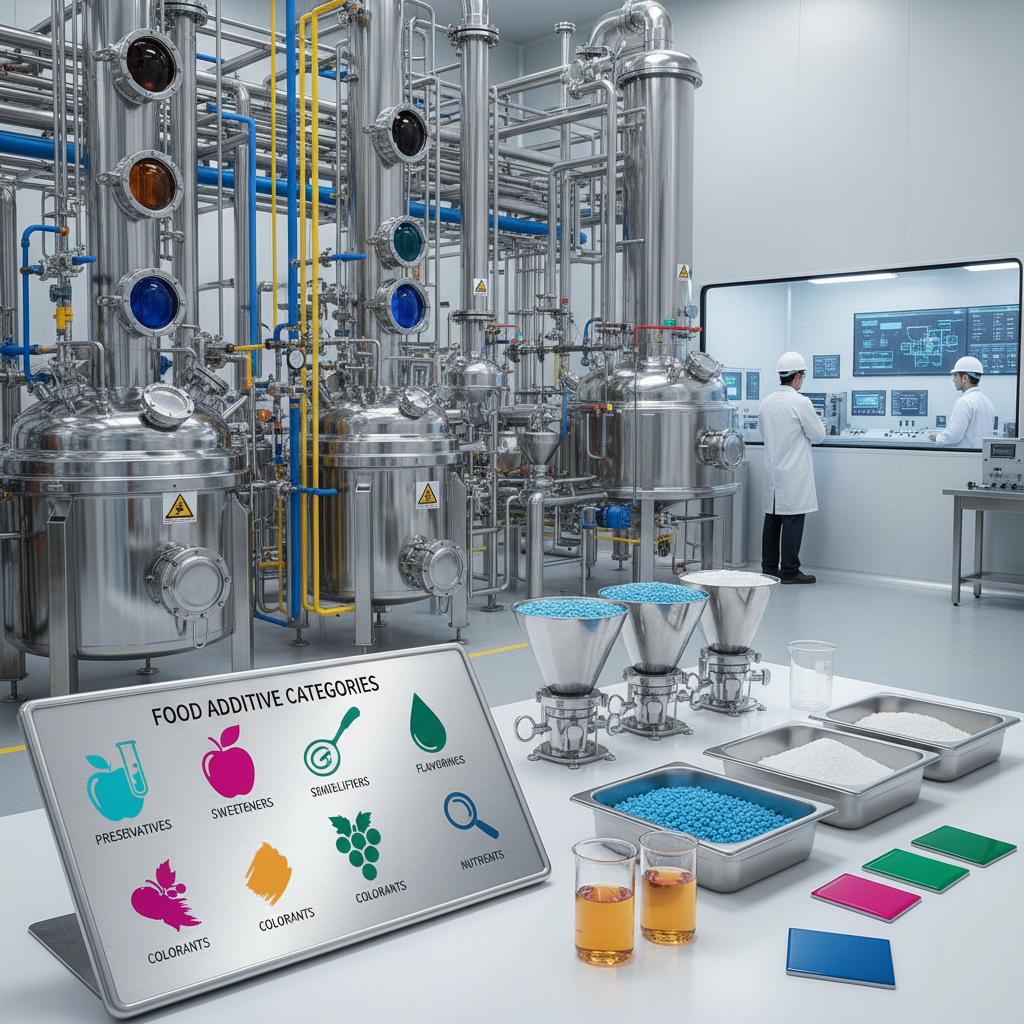
In the complex landscape of modern food production, understanding the main categories of food additives is essential for ensuring both product stability and consumer safety. These substances, ranging from natural extracts to synthesized compounds, serve as the invisible backbone of the global food supply chain, enabling the mass distribution of nutritious and palatable food.
The strategic application of these additives allows manufacturers to combat food waste by extending shelf life and enhancing the nutritional profile of processed goods. By categorizing these agents based on their functionality—such as preservatives, emulsifiers, or enhancers—the industry can maintain a delicate balance between industrial efficiency and the demand for "clean label" ingredients.
For professionals in the food manufacturing sector, mastering the main categories of food additives is not merely a technical requirement but a commercial advantage. It allows for the precise optimization of texture, taste, and safety, ensuring that products meet stringent international regulatory standards while satisfying evolving consumer preferences.
Global Significance of Food Additive Categories
The global food industry relies heavily on the structured classification of main categories of food additives to maintain a consistent supply of safe food. According to data from the Food and Agriculture Organization (FAO), the ability to preserve nutrients and prevent spoilage is critical in reducing the 1.3 billion tons of food wasted annually. By utilizing specific additives, producers can navigate the logistical challenges of transporting perishable goods across continents.
Furthermore, the standardization of these categories allows for seamless trade between nations. When a manufacturer adheres to the International Numbering System (INS) or E-numbers, they ensure that their products are compliant with ISO standards and local health regulations. This systematic approach eliminates ambiguity in labeling and provides transparency to the end consumer, fostering trust in the global food trade.
Functional Definitions and Industrial Meaning
At its core, the main categories of food additives refer to substances added to food to maintain or improve its safety, freshness, taste, texture, or appearance. Unlike primary ingredients, additives are used in precise, minimal quantities to achieve a specific technical effect. They are divided into functional groups such as antioxidants, acidity regulators, and stabilizers, each playing a distinct role in the chemical architecture of the food.
In the context of modern industry, these additives are the bridge between raw agricultural produce and a consumer-ready product. For instance, the pharmaceutical intermediates often overlap with food-grade additives in terms of purity and synthesis, highlighting the multidisciplinary nature of chemical manufacturing. The ability to control the oxidation of fats or the viscosity of a sauce is what allows for the scalability of food production.
Beyond the technicality, these categories address urgent humanitarian needs. In regions prone to food insecurity, the use of fortification additives—adding essential vitamins and minerals—transforms basic staples into life-saving nutritional tools. Thus, the study of additive categories is as much about public health and food security as it is about commercial viability.
Core Components of Additive Performance
The effectiveness of the main categories of food additives is measured by several critical performance indicators. First is Chemical Stability, which ensures that the additive remains active under various temperatures and pH levels without degrading into harmful by-products. This is particularly vital for preservatives used in canned foods.
Another core component is Bioavailability and Safety. Every agent within the main categories of food additives must undergo rigorous toxicological assessment to ensure it is safe for long-term human consumption. The industry focuses on the "Acceptable Daily Intake" (ADI) to quantify the safety margin for each additive used.
Lastly, Synergistic Compatibility is essential. Many additives are used in combination; for example, an emulsifier may work more effectively when paired with a specific stabilizer. Understanding these interactions allows formulators to reduce the total amount of additives used while maintaining high product quality.
Practical Applications Across Global Markets
The application of main categories of food additives varies significantly by region and industry. In Europe, there is a strong push toward "natural" categories, such as using rosemary extract as an antioxidant instead of synthetic BHA. In contrast, in rapidly developing industrial zones in Asia, the focus remains on high-efficiency preservatives that can withstand humid climates and extended transport times.
Real-world use cases extend beyond the supermarket shelf. In post-disaster relief operations, high-calorie, nutrient-dense pastes utilize specific stabilizers and emulsifiers from the main categories of food additives to ensure the food remains edible without refrigeration for months. Similarly, the feed additive industry applies similar chemical principles to enhance the growth and health of livestock, bridging the gap between human food and animal nutrition.
Comparative Efficiency of Main Categories of Food Additives
Economic Advantages and Long-term Value
The adoption of the main categories of food additives provides tangible economic benefits by reducing raw material waste and lowering logistics costs. When a product's shelf life is extended from two weeks to six months, the cost of refrigerated transport is reduced, and the risk of inventory loss is mitigated. This creates a more sustainable profit margin for manufacturers and lower prices for consumers.
Beyond the numbers, there is an emotional and logical value tied to safety and trust. By using standardized additives, brands can guarantee that every batch of a product tastes and performs the same, regardless of where it was produced. This reliability builds brand loyalty and trust, as consumers feel secure knowing that the products they buy are regulated and scientifically formulated for safety.
Future Trends in Sustainable Additives
The future of main categories of food additives is pivoting toward "green chemistry." There is an increasing trend toward using biotechnological processes, such as fermentation and enzymatic synthesis, to create additives that are perceived as natural. For example, the shift from synthetic flavors to bio-identical flavors produced by yeast is reshaping the market.
Digital transformation is also playing a role. AI-driven formulation software can now predict how different main categories of food additives will interact over time, reducing the need for expensive and time-consuming trial-and-error lab tests. This automation accelerates the time-to-market for innovative, health-conscious food products.
Furthermore, policy shifts toward sustainability are encouraging the development of biodegradable additives. The goal is to create substances that perform their function during the product's life but break down harmlessly in the environment after consumption, aligning the food industry with global ESG (Environmental, Social, and Governance) goals.
Technical Challenges and Innovative Solutions
One of the primary challenges facing the main categories of food additives is the "clean label" movement. Consumers are increasingly wary of long lists of chemical names, forcing manufacturers to find "invisible" additives or natural alternatives that provide the same functionality without the technical-sounding names.
To overcome this, the industry is adopting encapsulation technology. By encapsulating active additives, manufacturers can ensure a controlled release of the substance, which often means using a lower total concentration while achieving the same effect. This not only improves the "cleanliness" of the label but also enhances the stability of volatile ingredients like omega-3 fatty acids.
Another solution lies in the diversification of sources. Instead of relying on a few synthetic precursors, companies are exploring plant-based proteins and seaweed extracts to derive emulsifiers and thickeners. This diversification reduces reliance on volatile chemical supply chains and appeals to the growing vegan and organic markets.
Analysis of Additive Category Performance and Market Adaptation
| Additive Category |
Primary Function |
Regulatory Complexity |
Market Demand Trend |
| Preservatives |
Microbial Inhibition |
High |
Shifting to Bio-preservatives |
| Emulsifiers |
Phase Stabilization |
Medium |
Increasing (Plant-based) |
| Antioxidants |
Preventing Oxidation |
Medium |
High (Natural Extracts) |
| Stabilizers |
Texture Maintenance |
Low |
Steady Growth |
| Flavor Enhancers |
Taste Optimization |
Medium |
High (Low-sodium options) |
| Colorants |
Visual Appeal |
High |
Strong shift to Botanicals |
FAQS
The most common categories include preservatives (like sorbates and benzoates), antioxidants (such as Ascorbic acid), emulsifiers (like lecithin), stabilizers, and flavor enhancers (like MSG). Each category serves a specific purpose, from preventing spoilage and oxidation to improving the mouthfeel and taste of the final product.
Yes, provided they are approved by regulatory bodies such as the FDA or EFSA and used within the established Acceptable Daily Intake (ADI) limits. Every additive in the main categories undergoes rigorous testing for toxicity and allergenicity before it is permitted for commercial use.
Selection depends on the food's pH, water activity, and desired shelf life. For example, if you are developing a high-acid beverage, you would look at specific acidity regulators and preservatives that are stable at low pH. Consulting a food chemist is recommended to ensure synergy between different additive categories.
While they share similar chemical categories, food additives are governed by stricter purity standards and regulatory oversight for human consumption. Feed additives focus more on growth promotion, nutrient absorption, and livestock health, often using higher concentrations of certain vitamins or amino acids.
In many cases, yes, but natural alternatives often require higher dosages or more frequent application to achieve the same effect. The industry is currently bridging this gap through biotechnology, creating bio-identical additives that offer synthetic efficiency with a "natural" label.
Most functional additives are neutral regarding nutrition. However, fortification additives (like folic acid or iron) actually increase the nutritional value. Conversely, some sugar-replacing sweeteners allow for the creation of low-calorie options without sacrificing taste.
Conclusion
In summary, the main categories of food additives are indispensable tools that ensure the global food supply remains safe, affordable, and high-quality. By balancing the functional needs of preservatives, emulsifiers, and stabilizers with the increasing demand for transparency and natural ingredients, the industry continues to evolve toward a more sustainable and health-centric model.
Looking forward, the integration of AI and green chemistry will likely redefine how these additives are developed and applied. Manufacturers who prioritize the shift toward bio-based solutions and rigorous safety compliance will not only meet regulatory requirements but will also win the trust of the modern, conscious consumer. To explore high-quality solutions for your production needs, visit our website: www.chinaseasoning.com