Monosodium Glutamate, commonly known as MSG, is one of the most debated yet widely used food additives in the global culinary industry. When consumers ask msg what is it made from, they are often looking for clarity amidst decades of misinformation. At its core, MSG is the sodium salt of glutamic acid, an amino acid that occurs naturally in many protein-rich foods, making it a fundamental component of the "umami" or savory taste profile that enhances food palatability globally.
Understanding the composition of MSG is crucial for food manufacturers, chefs, and health-conscious consumers alike. By dissecting the chemical makeup and the biological origins of this additive, we can appreciate how it bridges the gap between industrial food production and the natural desire for flavor depth. The ability to isolate and concentrate this savory element allows for a reduction in sodium chloride (table salt) without sacrificing the taste experience, presenting a significant advantage in modern dietary management.
Globally, the demand for high-purity MSG continues to rise, driven by the expanding processed food sector and the increasing popularity of Asian cuisines. However, the key to its sustainable use lies in transparency regarding its production process. By exploring the scientific answer to msg what is it made from, industry stakeholders can foster trust, ensure regulatory compliance, and optimize the sensory quality of feed additives, food additives, and pharmaceutical intermediates.
The Biological Origins of MSG Composition
To answer the question msg what is it made from, one must first look at the natural world. Glutamate is one of the most abundant amino acids in nature, found in everything from ripe tomatoes and aged cheeses to breast milk and mushrooms. In these natural sources, glutamate exists as part of a protein chain; when these proteins are broken down through cooking or aging, the free glutamate is released, creating that signature savory taste.
In a commercial context, the additive is essentially a concentrated version of this naturally occurring amino acid. By combining glutamic acid with sodium, the resulting monosodium salt becomes highly soluble and stable, making it an ideal additive for the food industry. This biological foundation proves that the substance is not a "synthetic" chemical in the frightening sense, but rather a refined version of elements already present in our daily diet.
Industrial Fermentation: How MSG is Produced
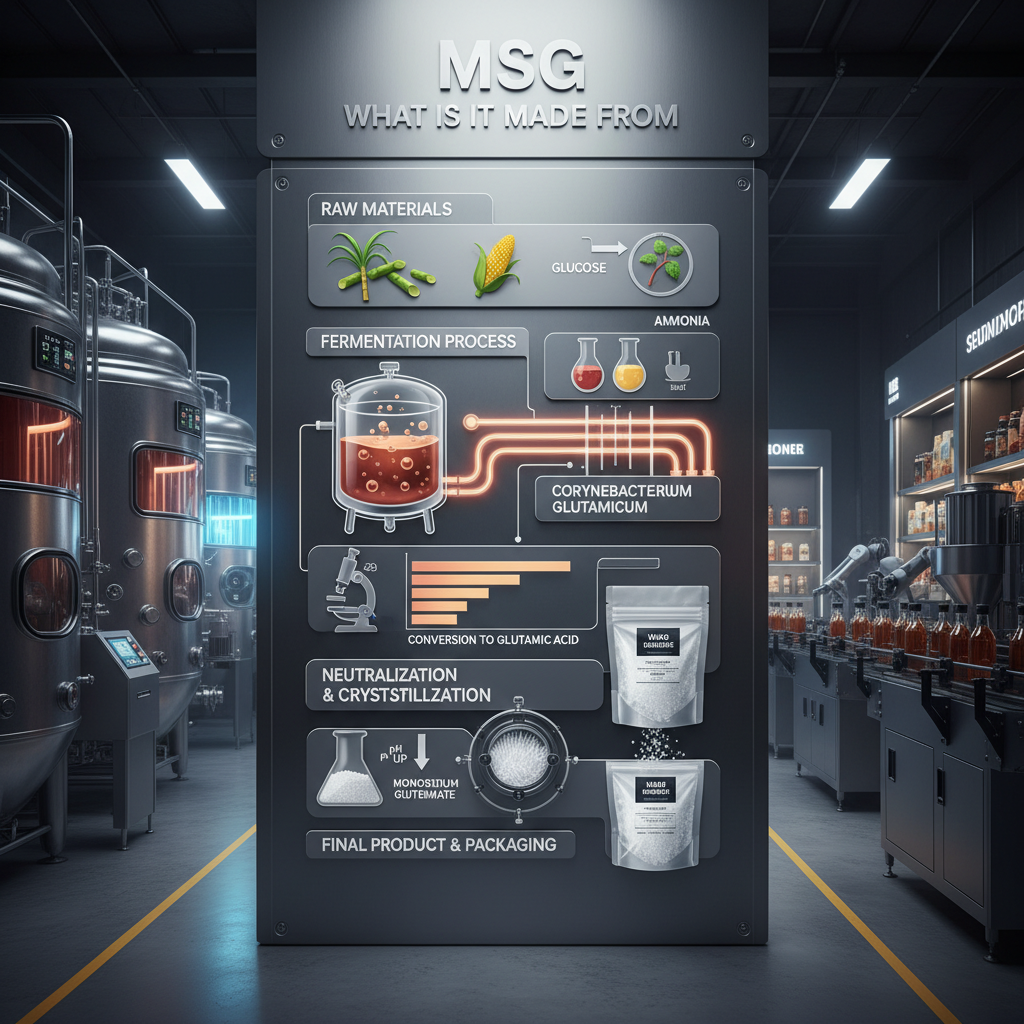
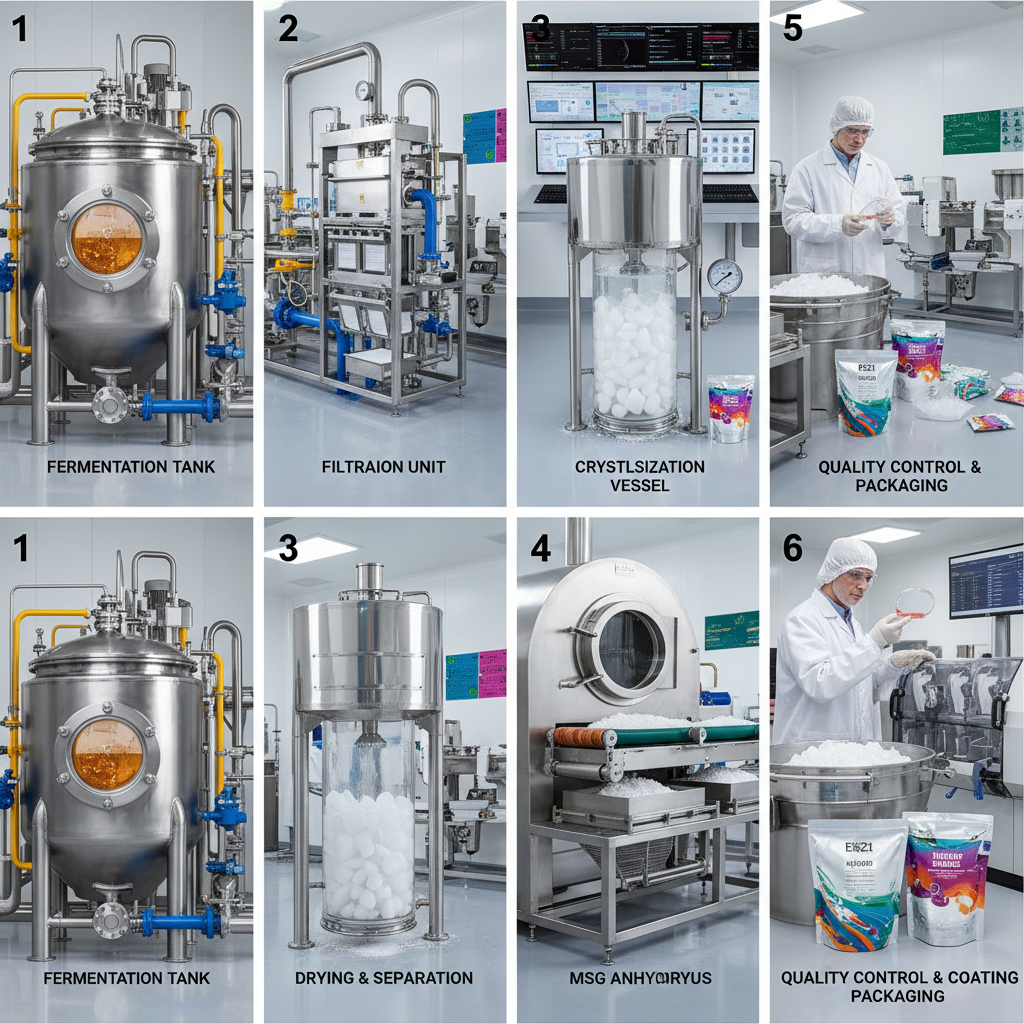
Modern industrial production of MSG has evolved far beyond the early chemical extraction methods of the 20th century. Today, the vast majority of the world's supply is created through a process called microbial fermentation. This process mirrors the way yogurt or beer is made, utilizing specific bacteria—most commonly Corynebacterium glutamicum—to convert simple carbohydrates into glutamic acid.
The feedstock for this fermentation usually consists of renewable agricultural sources such as sugar beets, sugar cane, or corn starch. These starches are broken down into glucose, which the bacteria then consume. As the bacteria thrive in a controlled environment of temperature and pH, they secrete glutamic acid into the surrounding broth. This bio-based approach ensures that the final product remains consistent in purity and quality.
Once the fermentation is complete, the broth is filtered and neutralized with sodium hydroxide to convert the glutamic acid into monosodium glutamate. The solution is then crystallized and dried. This transition from chemical synthesis to biological fermentation highlights the industry's commitment to utilizing sustainable raw materials, answering the curiosity of msg what is it made from with a focus on biotechnology.
The Chemistry of Umami and Glutamate
The essence of the question msg what is it made from lies in the interaction between sodium and glutamic acid. Sodium acts as the carrier, allowing the glutamate molecule to dissolve quickly in water and interact effectively with the taste receptors on the human tongue. This specific chemical structure is what triggers the "umami" sensation, which the brain interprets as a signal of protein-rich, nutrient-dense food.
From a molecular perspective, the stability of the monosodium salt is what makes it such a versatile tool in food manufacturing. Unlike pure glutamic acid, which is less soluble, the sodium salt form integrates seamlessly into sauces, snacks, and pharmaceutical intermediates without altering the texture of the final product. This precise chemical balance is why it remains the gold standard for flavor enhancement.
Furthermore, the synergy between MSG and other nucleotides, such as inosinate (IMP) and guanylate (GMP), creates a taste explosion that is significantly more powerful than any of the components alone. This chemical synergy allows food scientists to achieve a deep, savory profile while using smaller total quantities of additives, effectively reducing the overall chemical load in processed foods.
Comparative Analysis of Raw Material Efficiency
In the competitive landscape of food additive manufacturing, the choice of raw materials directly impacts the cost-efficiency and environmental footprint of the product. When evaluating msg what is it made from, manufacturers weigh the benefits of using molasses versus corn steep liquor or pure glucose. Each substrate offers different yields of glutamic acid per ton of input, influencing the overall scalability of the production line.
The following data illustrates the efficiency and quality ratings of various production methods used in the industry. High-efficiency fermentation not only lowers the cost for the end-consumer but also reduces the amount of waste generated during the purification process, aligning the product with global sustainability goals.
Production Efficiency of MSG Raw Materials
Global Applications Across Food and Pharma
The application of the substances derived from the question msg what is it made from extends far beyond the kitchen. In the realm of animal nutrition, MSG serves as a vital feed additive, providing a source of amino acids that promotes growth and appetite in livestock. This enhances the efficiency of protein absorption, leading to healthier animals and more sustainable farming practices in regions like Southeast Asia and Latin America.
Beyond food and feed, the precursors used in MSG production—specifically glutamic acid—are essential pharmaceutical intermediates. They are used in the synthesis of various medications and health supplements. The high purity levels required for pharmaceutical grades ensure that the biological activity of the glutamate is preserved, demonstrating the critical intersection between food additive manufacturing and medical science.
Sustainability and Green Chemistry in Production
As the world shifts toward a circular economy, the production of MSG is undergoing a green transformation. The answer to msg what is it made from now includes "upcycled" materials. Innovative plants are now using agricultural residues, such as rice husks or straw, as carbon sources for fermentation, thereby reducing the reliance on virgin food crops and lowering the carbon footprint of the additive.
Furthermore, the byproduct of MSG fermentation—a nutrient-rich liquid—is no longer discarded as waste. Instead, it is processed into high-grade organic fertilizers. This "closed-loop" system means that the nitrogen and minerals used to grow the sugar cane for the MSG eventually return to the soil to grow the next crop, creating a sustainable agricultural cycle that benefits both the environment and the producer.
Digital transformation is also playing a role. Automation and AI-driven bioreactors allow for real-time monitoring of the fermentation process, optimizing the yield of glutamic acid while minimizing energy consumption. This integration of biotechnology and digital engineering ensures that the global supply of MSG is not only cost-effective but also ecologically responsible.
Regulatory Standards and Quality Control
To ensure the safety and purity of the product, strict regulatory frameworks govern the answer to msg what is it made from. Organizations such as the FDA (USA), EFSA (European Union), and JECFA (Joint FAO/WHO Expert Committee on Food Additives) have categorized MSG as "Generally Recognized as Safe" (GRAS). Quality control focuses on eliminating impurities such as heavy metals or residual fermentation solvents.
Modern quality assurance involves rigorous testing of the raw materials—whether they be corn or sugarcane—to ensure they are free from pesticides and contaminants. The crystallization process is carefully controlled to achieve a specific particle size and purity level (typically >99%), which is critical for pharmaceutical intermediates where even a trace impurity could alter the efficacy of a drug.
Moreover, transparency in labeling is becoming a global priority. By clearly defining the origin of the ingredients, companies can address consumer concerns and debunk myths surrounding "chemical" additives. The shift toward "Natural Flavor" labeling, when derived from fermentation, reflects a deeper industry understanding of consumer psychology and the importance of evidence-based communication.
Comparative Analysis of MSG Quality Grades and Applications
| Grade Level |
Purity Level |
Primary Use Case |
Regulatory Requirement |
| Food Grade |
98.5% - 99.5% |
Seasonings, Snacks |
FCC Standard |
| Feed Grade |
97% - 98% |
Livestock Growth |
Agricultural Feed Code |
| Pharma Grade |
> 99.9% |
Drug Synthesis |
USP/BP Pharmacopeia |
| Industrial Grade |
95% - 97% |
Chemical Intermediate |
ISO Industrial Spec |
| Organic Certified |
99% (Pure Bio) |
Organic Food Prod |
USDA Organic/EU Bio |
| Technical Grade |
< 95% |
Laboratory Research |
General Lab Spec |
FAQS
MSG is primarily produced through the fermentation of natural agricultural products like sugar cane, sugar beets, or corn. While it is processed in a factory, the biological agent used (bacteria) is a natural catalyst that converts sugars into glutamic acid. Therefore, it is a bio-derived product rather than a synthetic chemical compound.
The high-purity glutamic acid produced during the MSG process serves as a critical building block for various medicines. Because the fermentation process can produce extremely pure amino acids, it is a cost-effective and sustainable way to acquire the raw materials needed for specialized pharmaceutical synthesis.
While the fundamental fermentation science is the same, the raw materials vary by region. For instance, producers in Brazil and Thailand heavily rely on sugar cane molasses, whereas producers in the US and China often utilize corn starch. Regardless of the feedstock, the final molecular structure of the MSG remains identical.
Yes, commercial MSG is entirely vegan and plant-based. It is made from carbohydrates (sugars/starches) and processed by bacteria. No animal proteins or by-products are required in the industrial fermentation process to create the savory glutamate molecule.
Higher purity levels ensure a "clean" umami taste without any bitter or metallic aftertastes. Industrial refining—including decolorization and recrystallization—removes residual sugars and organic acids from the fermentation broth, ensuring that the additive enhances flavor without introducing unwanted notes.
Modern production is increasingly eco-friendly. By using renewable agricultural feedstocks and converting waste fermentation broth into organic fertilizer, the industry is reducing its environmental impact. The shift toward "green chemistry" ensures that the production of this essential additive is sustainable for the long term.
Conclusion
In summary, the answer to msg what is it made from is rooted in the synergy between natural biology and industrial biotechnology. From its origins as a simple amino acid found in tomatoes and cheese to its sophisticated production via microbial fermentation of corn and cane, MSG represents a triumph of food science. By focusing on purity, sustainability, and regulatory compliance, the industry has transformed a once-misunderstood additive into a versatile tool for food, feed, and pharmaceutical applications.
Looking forward, the evolution of MSG production will likely be defined by the integration of AI-driven fermentation and the use of upcycled agricultural waste. For manufacturers and consumers, embracing this scientific transparency is key to unlocking the full potential of umami while maintaining a commitment to global health and environmental stewardship. We invite you to explore our high-purity solutions and learn more about the future of flavor enhancement. Visit our website: www.chinaseasoning.com