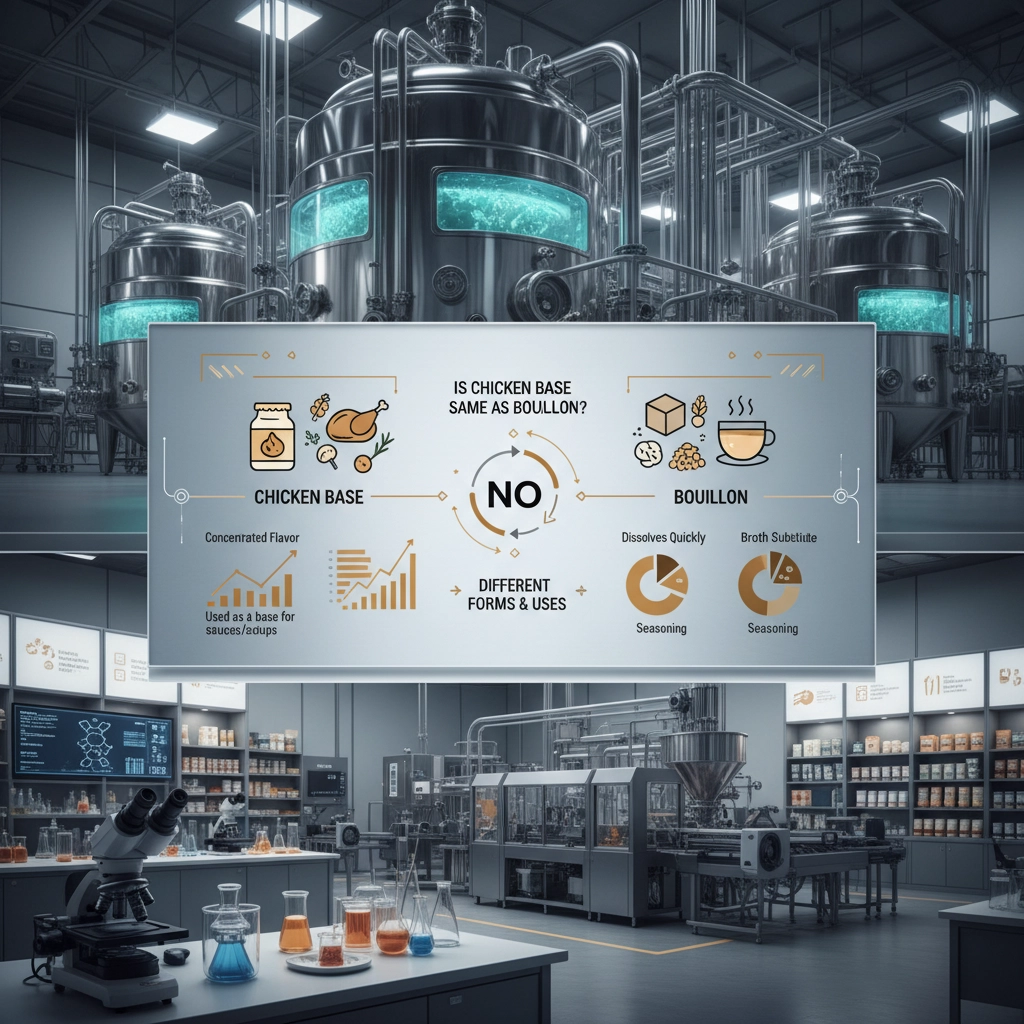
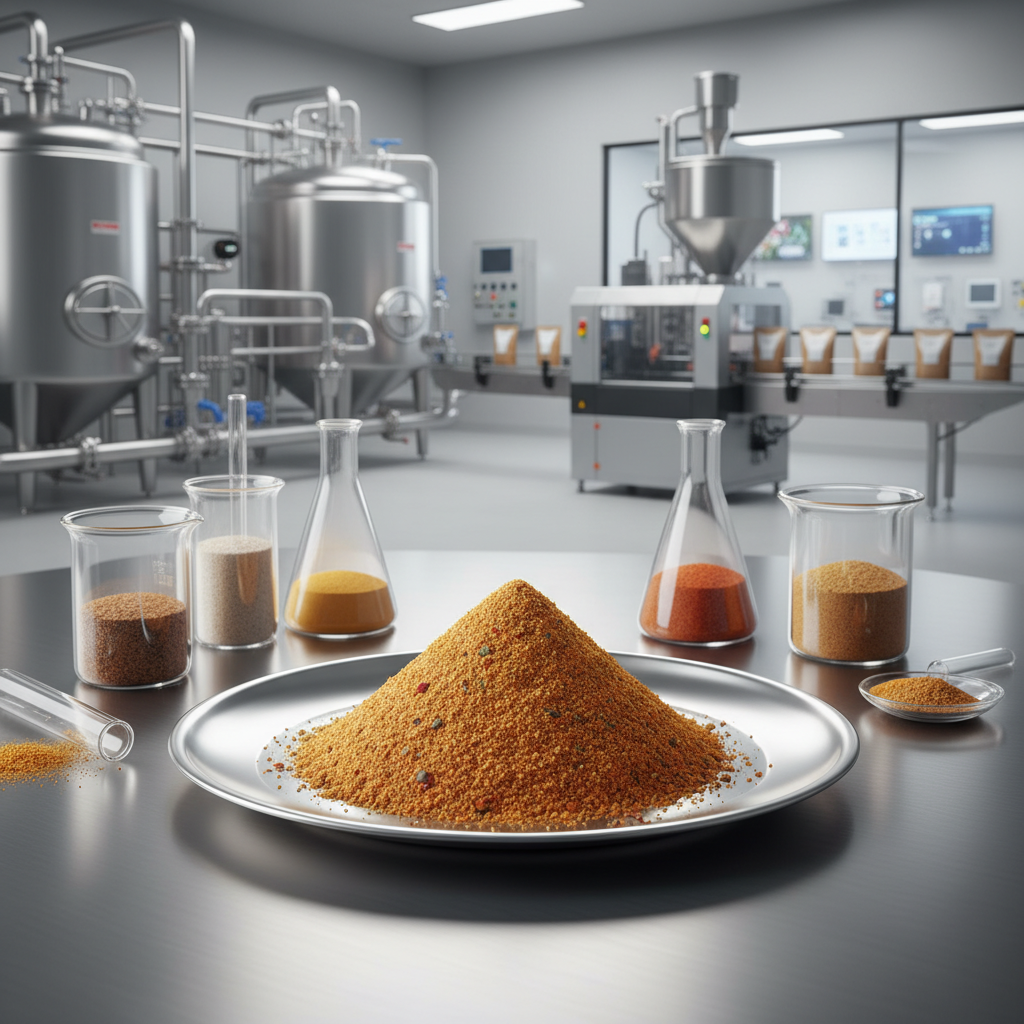
In the world of culinary arts and commercial food production, terminology often overlaps, leading many chefs and procurement managers to ask: is chicken base the same as bouillon? While both serve as concentrated flavor enhancers designed to mimic a slow-simmered chicken stock, they differ significantly in their physical form, concentration levels, and intended industrial applications. Understanding these nuances is essential for maintaining consistency in taste and optimizing cost-efficiency in large-scale food manufacturing.
From a global supply chain perspective, the demand for standardized flavor bases has surged as the food service industry shifts toward "speed-scratch" cooking. Whether it is a high-end restaurant or a massive food processing plant, the choice between a paste-based product and a dehydrated cube can impact the final texture and sodium profile of the dish. This distinction is not merely semantic; it involves different chemical stabilization methods and additive profiles to ensure shelf-stability across various climates.
Ultimately, grasping whether is chicken base the same as bouillon allows manufacturers to better align their product selection with their specific production goals. By analyzing the concentration of proteins, fats, and flavor enhancers, businesses can achieve a superior sensory experience while reducing labor costs associated with traditional stock production.
Defining the Core Differences: Base vs. Bouillon
To answer the fundamental question, is chicken base the same as bouillon? Technically, no. A chicken base is typically a concentrated paste or liquid, often containing a higher percentage of real chicken extracts and fats, which allows it to be easily stirred into hot liquids for a rich, mouth-filling quality. It is designed for high-volume usage where versatility and depth of flavor are paramount.
Bouillon, on the other hand, is usually found in dehydrated cube or powder form. While it provides a convenient way to introduce chicken flavor, it often relies more heavily on salt and maltodextrin for stability. While both are "bases" in a general sense, the professional culinary world distinguishes them by their concentration and the resulting viscosity of the final stock.
Global Industry Context and Market Demand
The global market for food additives and seasonings has seen a steady rise, with a particular emphasis on efficiency. According to industrial food trends, the shift toward pre-concentrated flavor systems is driven by the need to reduce energy consumption associated with simmering bones for 12-24 hours. In the context of the debate over is chicken base the same as bouillon, the industry has moved toward "hybrid" bases that combine the convenience of bouillon with the richness of a traditional base.
Across Asia and Europe, the adoption of ISO-standardized food additives has ensured that these products maintain a consistent taste profile regardless of the region of manufacture. This standardization is critical for international food chains that require the same flavor profile in London as they do in Shanghai, making the choice between a paste base and a bouillon cube a strategic operational decision.
However, a significant challenge remains in balancing sodium levels with flavor intensity. Many commercial bouillon products are criticized for excessive salt content, leading manufacturers to develop "low-sodium" chicken bases that utilize yeast extracts and natural flavor enhancers to maintain the savory "umami" profile without compromising health standards.
Technical Composition and Ingredient Profiles
When analyzing the chemical makeup to determine if is chicken base the same as bouillon, we must look at the emulsion. A chicken base often employs a fat-based emulsion (like palm or soybean oil) to carry fat-soluble flavors, providing a silkier texture to soups and sauces.
In contrast, bouillon is a dehydrated matrix. The process of spray-drying or granulation transforms the liquid extract into a powder. Therefore, while the primary flavor molecule—glutamate—is present in both, the delivery system is entirely different. This is why the answer to is chicken base the same as bouillon depends on whether you are discussing the flavor goal or the physical chemistry.
Furthermore, the inclusion of pharmaceutical-grade intermediates in some high-end additives ensures that the color remains stable under high heat. The use of natural colorants like turmeric or annatto differs between the two, with bases typically maintaining a more natural, translucent golden hue compared to the opaque nature of reconstituted bouillon.
Performance Metrics in Commercial Kitchens
In a commercial setting, the efficiency of a product is measured by its "dissolution rate" and "flavor yield." When chefs ask is chicken base the same as bouillon, they are often thinking about how quickly they can prepare 50 gallons of broth. Paste bases dissolve rapidly in simmering water, whereas some low-quality bouillon cubes can leave undissolved clumps, creating inconsistencies in the final product.
Moreover, the scalability of these products is a key factor. Bases are typically sold in larger tubs (food service size), allowing for precise weight-based dosing. Bouillon is often portion-controlled, which is great for home use but inefficient for industrial-scale pharmaceutical-grade food manufacturing where precision is measured in grams per liter.
Performance Comparison: Chicken Base vs. Bouillon
Global Applications and Use Cases
The application of these flavor enhancers varies by region and industry. In the Western fast-food sector, the question of is chicken base the same as bouillon is answered by the need for "instant" consistency. Bouillon powders are frequently integrated into dry spice rubs or pre-packaged meal kits because they don't introduce moisture into the dry mix, extending the product's shelf life.
Conversely, in high-volume institutional catering—such as hospitals or military barracks—concentrated paste bases are preferred. Their ability to be stored in refrigerated units allows for a "clean label" approach, reducing the need for heavy artificial preservatives. In these contexts, the richness of a base mimics a home-cooked meal, providing comfort and dignity to the consumers in remote industrial zones or relief operations.
Advantages of Standardized Flavor Bases
The primary advantage of using a professional-grade chicken base over a basic bouillon is the depth of flavor and nutritional control. By utilizing advanced food additive technology, manufacturers can ensure that every batch has the exact same salt, protein, and fat content. This eliminates the "human error" factor associated with boiling fresh chicken, which varies by bird size and age.
Sustainability is another long-term value driver. Producing concentrated bases reduces the water footprint and energy waste associated with traditional stock production. For companies focusing on green manufacturing, the move toward efficient flavor concentrates is a logical step in reducing their carbon footprint while maintaining high gastronomic standards.
Furthermore, from a cost-efficiency angle, the high concentration of a professional base means that a small amount of product replaces a large volume of raw ingredients. When you stop asking is chicken base the same as bouillon and start viewing them as different tools for different tasks, you can optimize your procurement strategy to reduce waste.
Future Trends in Food Additive Innovation
Looking ahead, the evolution of flavor enhancers is moving toward "clean label" and "plant-based" alternatives. The industry is developing vegan "chicken" bases that use fermented fungi and pea proteins to replicate the exact umami profile of traditional poultry. This innovation means the distinction between base and bouillon will expand to include "biotech-derived" flavors.
Digital transformation is also playing a role. Smart manufacturing plants are now using AI to calibrate the salt-to-flavor ratio in real-time, ensuring that the answer to is chicken base the same as bouillon becomes a matter of precise molecular engineering. We are seeing the rise of "micro-encapsulated" bouillon, which releases flavor only at specific temperatures, preventing the "burnt" taste often associated with dehydrated products.
Finally, the integration of pharmaceutical-grade purity standards into food additive manufacturing is ensuring that these bases are free from contaminants. As global health regulations tighten, the focus will shift from mere flavor replication to "functional flavors" that may include fortified vitamins or minerals.
Comparison Analysis of Chicken Base and Bouillon Attributes
| Attribute |
Chicken Base (Paste) |
Bouillon (Cube/Powder) |
Industrial Impact |
| Physical State |
Concentrated Paste |
Dehydrated Solid |
Storage Requirements |
| Flavor Profile |
Rich, Full-bodied |
Salty, Sharp |
Sensory Experience |
| Dissolution |
Very Fast (Hot) |
Moderate/Slow |
Production Speed |
| Sodium Level |
Balanced/Customizable |
Generally Higher |
Health Compliance |
| Application |
Professional Kitchens |
Retail/Home Cooking |
Market Segmentation |
| Shelf Life |
Moderate (Refrigerated) |
Long (Dry Store) |
Logistics Cost |
FAQS
While both provide chicken flavor, they are not the same. Chicken base generally offers a deeper, more complex taste with a richer mouthfeel due to the presence of fats and proteins. Bouillon tends to be more one-dimensional and salt-forward, which is ideal for quick seasoning but less suitable for the foundation of a gourmet sauce.
Yes, you can, but be cautious of the sodium levels. Bouillon often contains more salt per gram of flavor than a paste base. If substituting, you may need to reduce other salt additions in your recipe to avoid over-seasoning. Additionally, you may lose some of the viscosity and richness provided by a professional base.
For high-volume production, chicken base is usually more cost-effective. Although the unit price may seem higher, the concentration is superior, meaning you use less product to achieve the desired flavor intensity. Furthermore, the reduction in labor time (no need to simmer bones) provides significant operational savings.
Bouillon cubes and powders should be stored in a cool, dry place in airtight containers to prevent clumping. Chicken base pastes, especially those with fewer preservatives, are best stored in the refrigerator after opening to maintain the integrity of the fats and prevent oxidation.
Absolutely. Most modern food additive manufacturers offer clean-label versions. When sourcing, look for "certified gluten-free" or "no added MSG" labels. Many professional bases now use yeast extract as a natural alternative to MSG to provide that essential savory depth.
Yes. Paste bases generally produce a more natural, translucent golden color that resembles homemade stock. Bouillon can sometimes result in a cloudier, more opaque liquid due to the fillers and anti-caking agents used in the dehydration process.
Conclusion
In summary, while the terms are often used interchangeably, is chicken base the same as bouillon only in the broadest sense of being "chicken flavor concentrates." The technical reality is that a base offers richness and industrial scalability, while bouillon provides unmatched convenience and dry-storage stability. For food manufacturers and professional chefs, the choice depends on the balance between sensory quality, sodium control, and production speed.
As the food industry moves toward more sustainable and clean-label solutions, the gap between these two formats may close through innovative biotech. However, understanding the current distinctions allows businesses to maximize their ROI and ensure a consistent, high-quality product for the end consumer. For those seeking high-quality, industrial-grade flavor solutions, we invite you to explore our specialized range of food additives. Visit our website: www.chinaseasoning.com