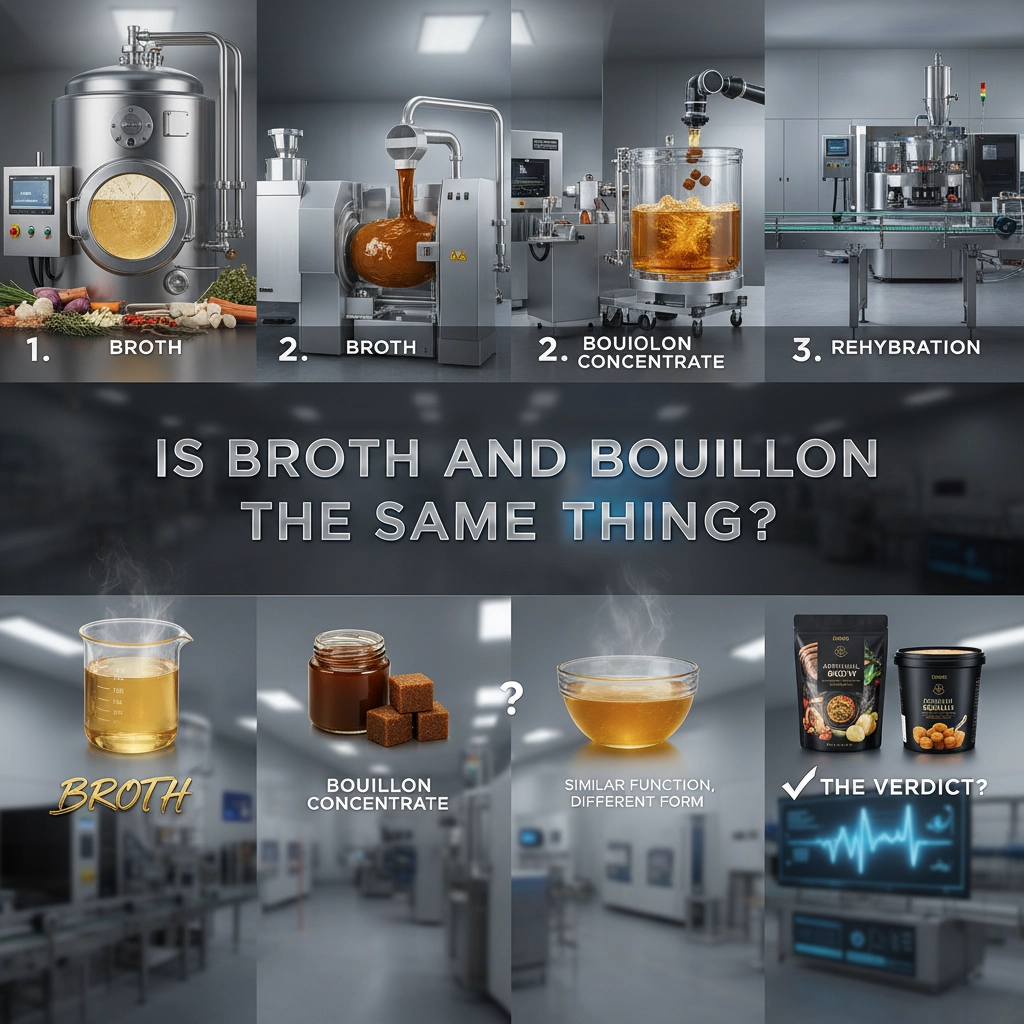
When diving into the world of culinary basics or food additive manufacturing, one of the most common points of confusion is whether is broth and bouillon the same thing. While they are often used interchangeably in casual conversation, understanding the technical distinction is crucial for chefs, food scientists, and manufacturers who prioritize flavor precision and consistency.
From a global industrial perspective, the distinction between a liquid extract and a concentrated base impacts everything from supply chain logistics to the final sensory profile of a consumer product. Whether you are formulating a ready-to-eat soup or a high-end food additive, knowing the nuance of how these savory liquids are produced determines the quality of the end result.
In this comprehensive guide, we will explore the chemical and culinary differences between the two, analyze how modern food additives bridge the gap, and answer the definitive question: is broth and bouillon the same thing? By the end, you will have a professional understanding of how to apply these ingredients in both home and industrial settings.
Defining the Technical Differences Between Broth and Bouillon
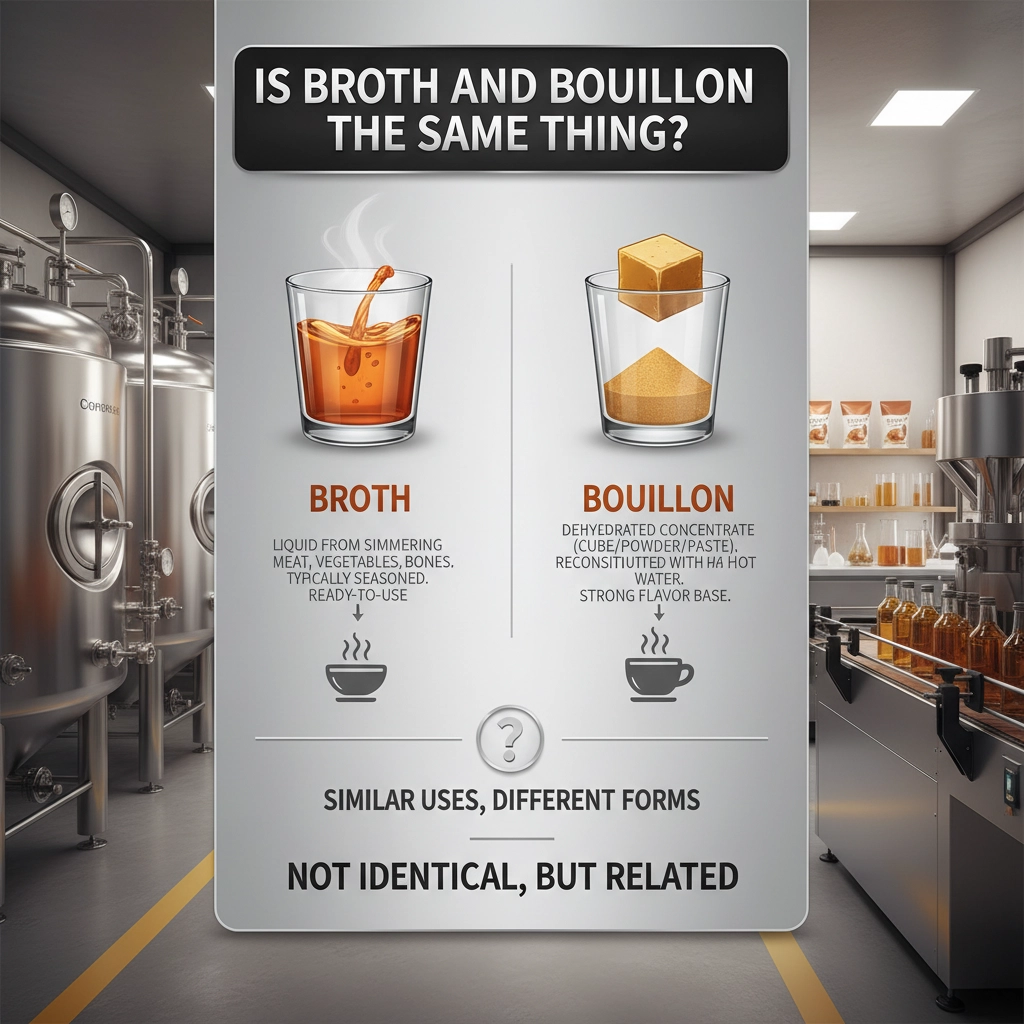
To answer the core question of is broth and bouillon the same thing, we must first look at the preparation. Broth is typically a liquid seasoned by simmering meat, vegetables, and aromatics in water. It is a primary extraction where the nutrients and flavors are infused into the water over several hours, resulting in a light, clear liquid used as a base for soups or as a poaching medium.
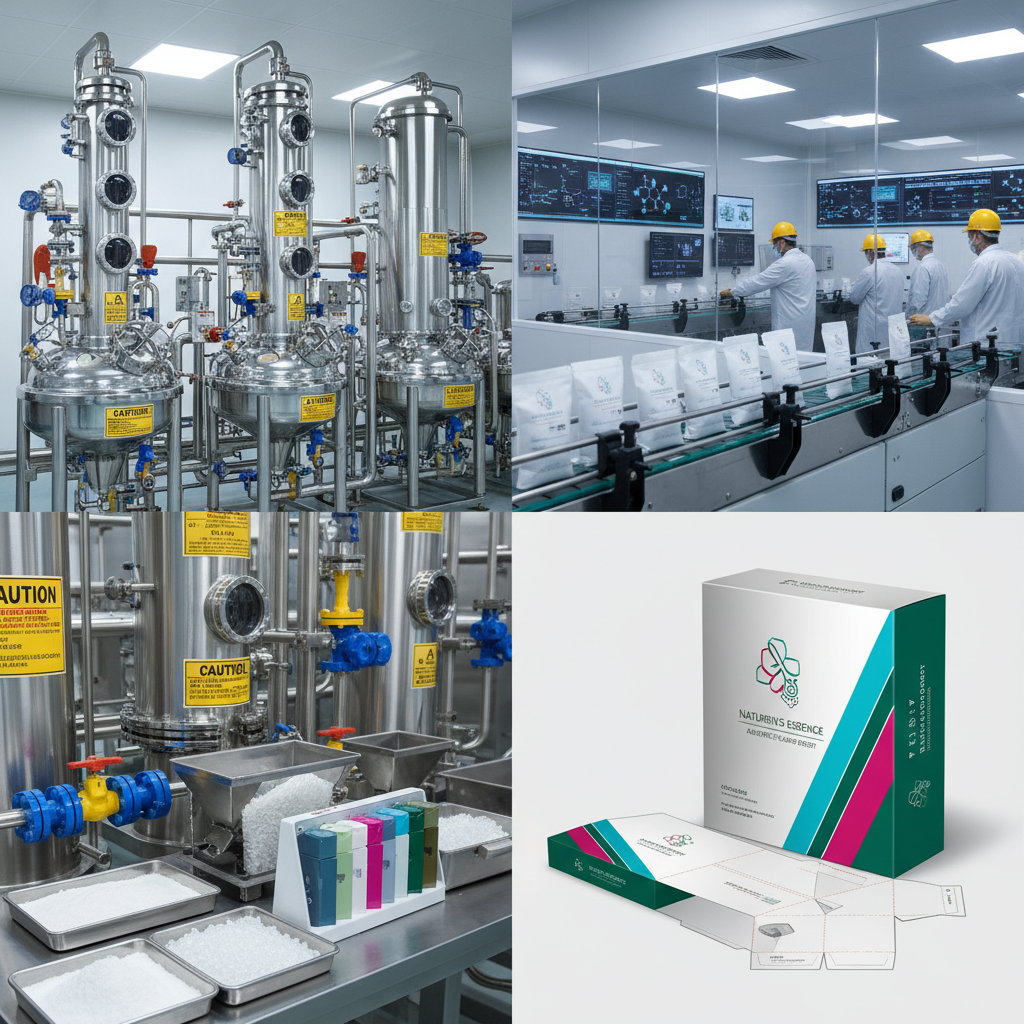
Bouillon, on the other hand, is essentially a concentrated version of broth. In a modern industrial context, bouillon is often produced by reducing broth to a thick paste or dehydrating it into cubes or granules using food additives. While the flavor profile remains similar, the physical state and concentration levels differ significantly, making bouillon the "condensed" cousin of broth.
Global Market Context and the Demand for Savory Bases
In the global food additive market, the demand for standardized savory bases has surged as convenience foods become a staple in urbanized societies. According to food industry trends, the transition from traditional "slow-simmered" broth to "instant" bouillon reflects a wider shift toward efficiency. The global market for bouillon cubes and powders is driven by the need for consistent flavor profiles that can be replicated across different geographic regions without the variance of fresh ingredients.
However, this shift introduces a challenge: maintaining the "homemade" quality of a traditional broth while utilizing the convenience of a concentrated bouillon. Manufacturers are now utilizing advanced Pharmaceutical Intermediates and high-quality Food Additives to replicate the depth of flavor found in bone-based broths, ensuring that the nutritional value is not lost during the dehydration process.
The question "is broth and bouillon the same thing" becomes vital when considering export regulations and ISO standards. A liquid broth is treated as a perishable food item with strict cold-chain requirements, whereas a bouillon cube is categorized as a shelf-stable processed product. This distinction allows for easier global distribution and lower logistics costs for manufacturers.
Core Components and Flavor Profiles in Production
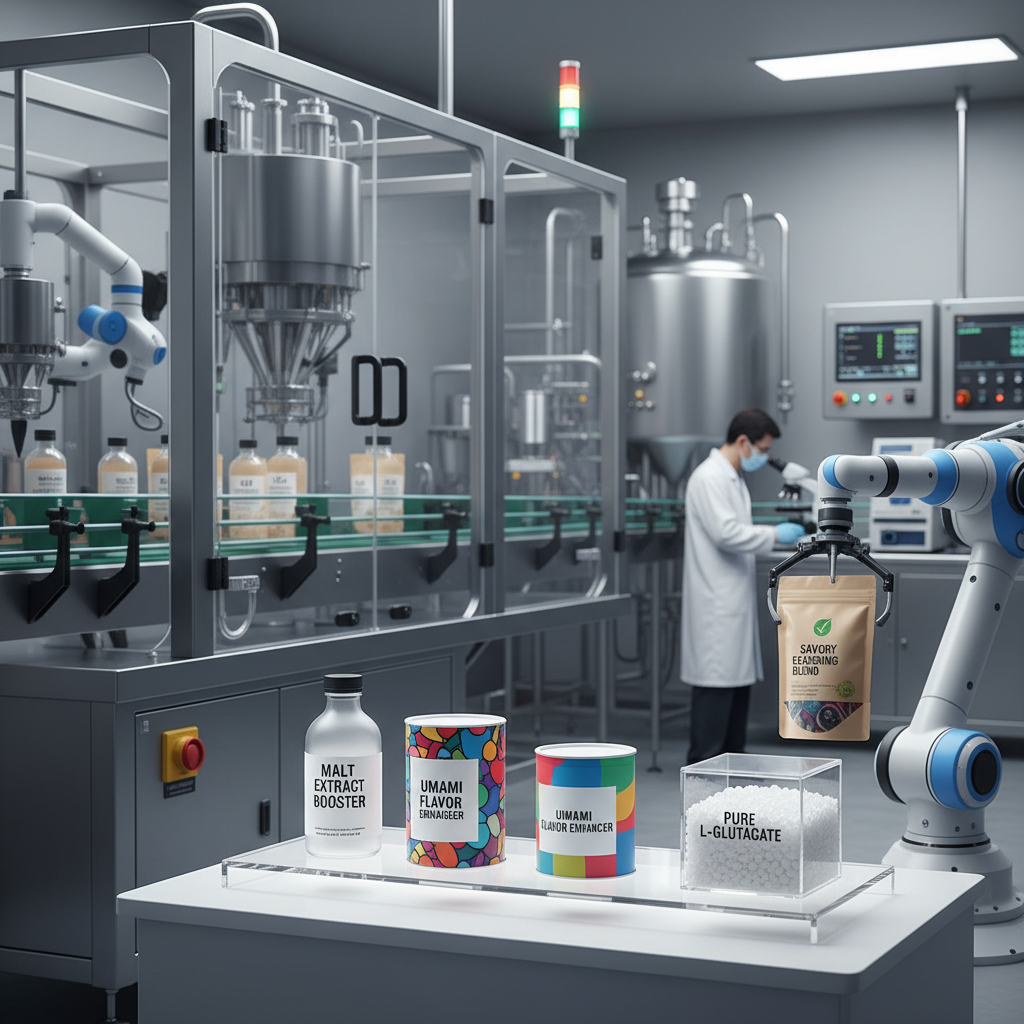
When analyzing is broth and bouillon the same thing from a chemical standpoint, we look at the concentration of glutamates and sodium. A standard broth relies on the natural breakdown of proteins during simmering to release umami, whereas bouillon often incorporates targeted flavor enhancers to maintain potency after the water is removed.
The core components of a high-quality bouillon include maltodextrin for bulk, salt for preservation, and specific food additives that stabilize the lipid content. In contrast, broth is primarily water and dissolved collagen, making the question of is broth and bouillon the same thing a matter of water activity (aw) and solute concentration.
Furthermore, the aromatic profile differs. Broth captures the volatile organic compounds of fresh herbs in real-time. Bouillon requires spray-drying or freeze-drying technology to encapsulate these aromas, ensuring that when the user adds water, the olfactory experience mimics that of a freshly brewed broth.
Practical Application: Scalability and Cost Efficiency
For large-scale food manufacturing, the choice between using broth and bouillon is a matter of scalability. Using fresh broth requires massive vats, significant energy for simmering, and rapid refrigeration to prevent spoilage. In contrast, utilizing a bouillon base allows a factory to store flavor concentrates in compact forms, reducing warehouse space by up to 90%.
Cost efficiency is where the answer to is broth and bouillon the same thing truly matters. Bouillon offers a lower cost-per-serving due to reduced shipping weights and longer shelf lives. By integrating high-grade food additives, manufacturers can achieve a "premium broth" taste using a "cost-effective bouillon" delivery system.
Efficiency Comparison: Broth vs Bouillon Systems
Industrial Use Cases Across Food Manufacturing
In the realm of professional food manufacturing, the application of these two varies by product line. For example, in the production of "Fresh-Chilled" gourmet soups, liquid broth is used to maintain a clean label and a natural mouthfeel. Here, the focus is on the organic extraction of flavors from high-quality proteins.
Conversely, in the production of instant noodle seasonings or dehydrated meal kits, bouillon is the gold standard. By using advanced granulation techniques, manufacturers can ensure that the savory essence—the answer to is broth and bouillon the same thing in a physical form—is evenly distributed in a powder that dissolves instantly in boiling water.
Long-Term Value of Standardized Flavor Bases
Investing in high-quality flavor bases provides long-term stability for food brands. When a company moves beyond the basic question of is broth and bouillon the same thing and begins to master the science of concentration, they gain the ability to maintain a "Signature Taste" regardless of where their raw ingredients are sourced.
From a sustainability angle, bouillon is significantly more eco-friendly. The reduction in water transport means a lower carbon footprint per unit of flavor. This aligns with global ESG (Environmental, Social, and Governance) goals, making concentrated bases a strategic choice for the future of the food industry.
Moreover, the reliability of bouillon bases reduces food waste. Fresh broth has a very short window of peak quality, whereas stabilized bouillon can be stored for years without flavor degradation, ensuring that production lines never halt due to ingredient spoilage.
Future Innovations in Dehydrated Savory Technology
The future of savory bases lies in the convergence of biotechnology and food science. We are seeing the rise of "clean label" bouillon, where synthetic additives are replaced by fermented plant proteins. This evolution addresses the consumer's curiosity about is broth and bouillon the same thing by making the concentrated version just as "natural" as the simmered one.
Automation and AI-driven flavor mapping are also playing a role. Manufacturers can now analyze the chemical profile of a traditional artisan broth and mathematically replicate it in a bouillon cube with 99% accuracy. This digital transformation is removing the quality gap that previously separated the two.
Furthermore, the integration of nutritional fortification—adding vitamins and minerals into the bouillon matrix—is transforming these bases from simple flavor enhancers into functional foods. This ensures that convenience does not come at the expense of health.
Technical Comparison of Broth and Bouillon Production Attributes
| Attribute |
Fresh Broth |
Industrial Bouillon |
Impact on Cost |
| Water Content |
High (95%+) |
Very Low/None |
Shipping expensive |
| Shelf Life |
3-7 Days (Refrigerated) |
12-24 Months |
Low wastage cost |
| Flavor Intensity |
Mild/Natural |
Concentrated/Intense |
High efficiency |
| Production Speed |
Slow (Simmering) |
Fast (Instant Mix) |
Lower labor cost |
| Additive Usage |
Minimal/None |
Stabilizers/Carrier |
Additive investment |
| Application |
Gourmet/Fresh |
Commercial/Instant |
Scalable revenue |
FAQS
In most home recipes, they are used interchangeably, but broth is a liquid and bouillon is a concentrate. If a recipe calls for broth and you have bouillon, simply dissolve the bouillon cube or powder in the amount of water specified on the package to create an equivalent liquid broth.
Fresh broth is generally healthier as it contains more natural collagen and fewer preservatives. However, industrial bouillon can be fortified with vitamins. The main concern with bouillon is the higher sodium concentration, which requires careful management in dietary-restricted diets.
Yes, but remember that stock is usually thicker (made from bones) while bouillon is a concentrated broth (made from meat/veggies). For sauces that require a gelatinous body, a traditional stock is better, but for general seasoning, bouillon is a highly efficient alternative.
Additives such as maltodextrin act as carriers for flavor, while anti-caking agents ensure the powder doesn't clump. These additives allow the "concentrated broth" to remain stable at room temperature, which is the primary difference in how we answer is broth and bouillon the same thing from a manufacturing lens.
The cube format is a result of compression technology designed for maximum shelf stability and precise portion control. This allows manufacturers to ship the essence of a large pot of broth in a tiny, lightweight package, drastically reducing global logistics costs.
Historically, yes, some volatile flavors were lost. However, modern spray-drying and freeze-drying techniques encapsulate flavor molecules, ensuring that the reconstituted bouillon tastes almost identical to the original liquid broth.
Conclusion
To summarize, the answer to "is broth and bouillon the same thing" is both yes and no. While they share the same flavor DNA and culinary purpose, they differ fundamentally in concentration, physical state, and industrial application. Broth is the natural, liquid expression of savory extraction, while bouillon is the engineered, concentrated version designed for efficiency, longevity, and scalability.
As the food industry moves toward more sustainable and functional ingredients, the gap between these two continues to close. By leveraging high-quality food additives and innovative processing, manufacturers can provide the nutritional and sensory benefits of a traditional broth in the convenient form of a bouillon. For those looking to optimize their production or enhance their product line, understanding this distinction is the first step toward flavor mastery.
Visit our website for more professional food additive solutions: www.chinaseasoning.com