In the evolving landscape of the global food industry, the demand for health-conscious ingredients has surged, placing low sodium chicken broth powder at the forefront of modern culinary innovation. As consumers increasingly pivot toward diets that reduce salt intake to combat hypertension and cardiovascular diseases, food manufacturers are tasked with maintaining the savory "umami" profile of traditional broths without relying on excessive sodium chloride.
The transition to specialized additives like low sodium chicken broth powder represents more than just a trend; it is a response to global health mandates from organizations like the World Health Organization (WHO), which advocate for significant reductions in daily salt consumption. By leveraging advanced spray-drying technology and flavor enhancement systems, the industry can now provide a concentrated, shelf-stable powder that delivers the deep, comforting taste of slow-simmered chicken while adhering to strict nutritional guidelines.
Understanding the technical composition and commercial application of this additive is crucial for developers in the food additive and pharmaceutical intermediates sectors. Whether used in instant soup bases, ready-to-eat meals, or clinical nutrition products, low sodium chicken broth powder offers a scalable solution that balances sensory satisfaction with physiological wellness, ensuring that "healthy" does not have to mean "tasteless."
Global Relevance of Low Sodium Chicken Broth Powder
The global shift toward preventative healthcare has fundamentally altered the food additive market. With sodium-related hypertension affecting billions worldwide, the industrialization of low sodium chicken broth powder has become a critical strategic move for food processors. By reducing the sodium content while maintaining the aromatic integrity of chicken essence, manufacturers can penetrate the "Clean Label" market, which is seeing double-digit growth across North America and Europe.
From a regulatory perspective, ISO standards and national food safety authorities are increasingly scrutinizing the salt content in processed foods. The ability to deploy a high-performance low sodium chicken broth powder allows brands to avoid "high sodium" warning labels, thereby increasing consumer trust and expanding their reach into the medical-grade nutrition sector, where sodium restriction is often a clinical requirement.
Defining the Composition of Low Sodium Chicken Broth Powder
At its core, low sodium chicken broth powder is a dehydrated culinary base engineered to mimic the flavor profile of a traditional chicken stock but with a significantly reduced concentration of sodium chloride. Unlike standard bouillon, which uses salt as both a preservative and a primary flavor enhancer, this specialized powder utilizes a combination of potassium salts, yeast extracts, and natural chicken concentrates to achieve a balanced taste.
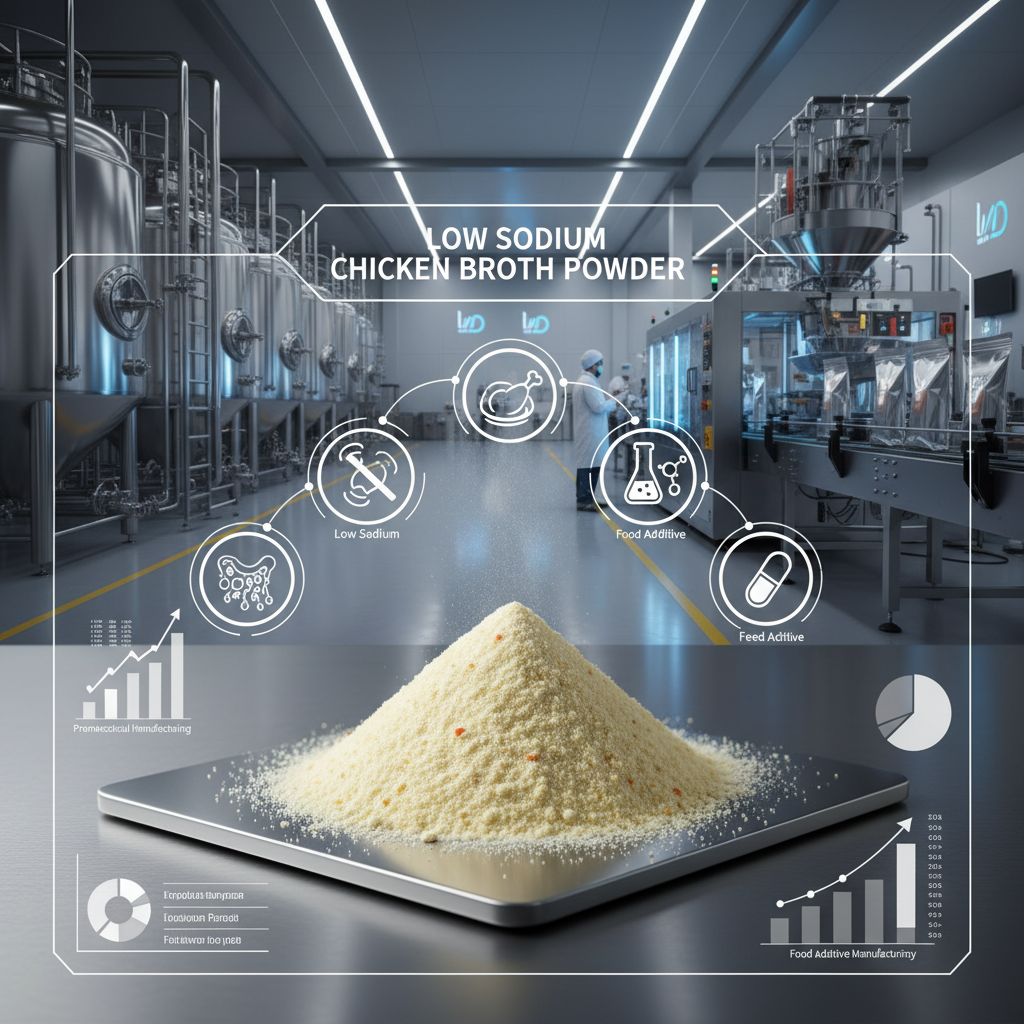
The production process typically involves the extraction of proteins and fats from chicken carcasses, followed by a filtration and concentration phase. The final stage—spray drying—transforms the liquid essence into a free-flowing powder. This ensures that the low sodium chicken broth powder remains stable under various storage conditions, making it an ideal ingredient for the global supply chain of food additives.
Beyond the taste, the "meaning" of this product lies in its humanitarian and health-centric application. In regions facing high rates of non-communicable diseases, providing nutrient-dense, low-salt flavor bases helps populations transition to healthier eating habits without sacrificing the cultural comfort of savory broths, bridging the gap between clinical dietary needs and culinary pleasure.
Core Technical Factors for Quality Assurance
One of the primary factors in the success of low sodium chicken broth powder is Umami Synergy. Since salt normally enhances other flavors, reducing it requires the introduction of ribonucleotides (like IMP and GMP) and glutamates. These compounds work together to trick the taste buds into perceiving a fuller, saltier flavor than is actually present, ensuring the product remains palatable.
Solubility and Dispersion are equally critical. For a powder to be effective in industrial food manufacturing, it must dissolve instantly in hot or cold water without clumping. This is achieved through precise particle size control during the spray-drying process and the addition of food-grade anti-caking agents, allowing the low sodium chicken broth powder to be seamlessly integrated into large-scale automated production lines.
Finally, Oxidative Stability ensures the longevity of the product. Because chicken-based powders contain residual lipids, they are susceptible to rancidity. The use of natural antioxidants, such as rosemary extract or tocopherols, protects the low sodium chicken broth powder from degradation, maintaining a fresh, "home-cooked" aroma throughout its shelf life.
Industrial Applications and Use Cases
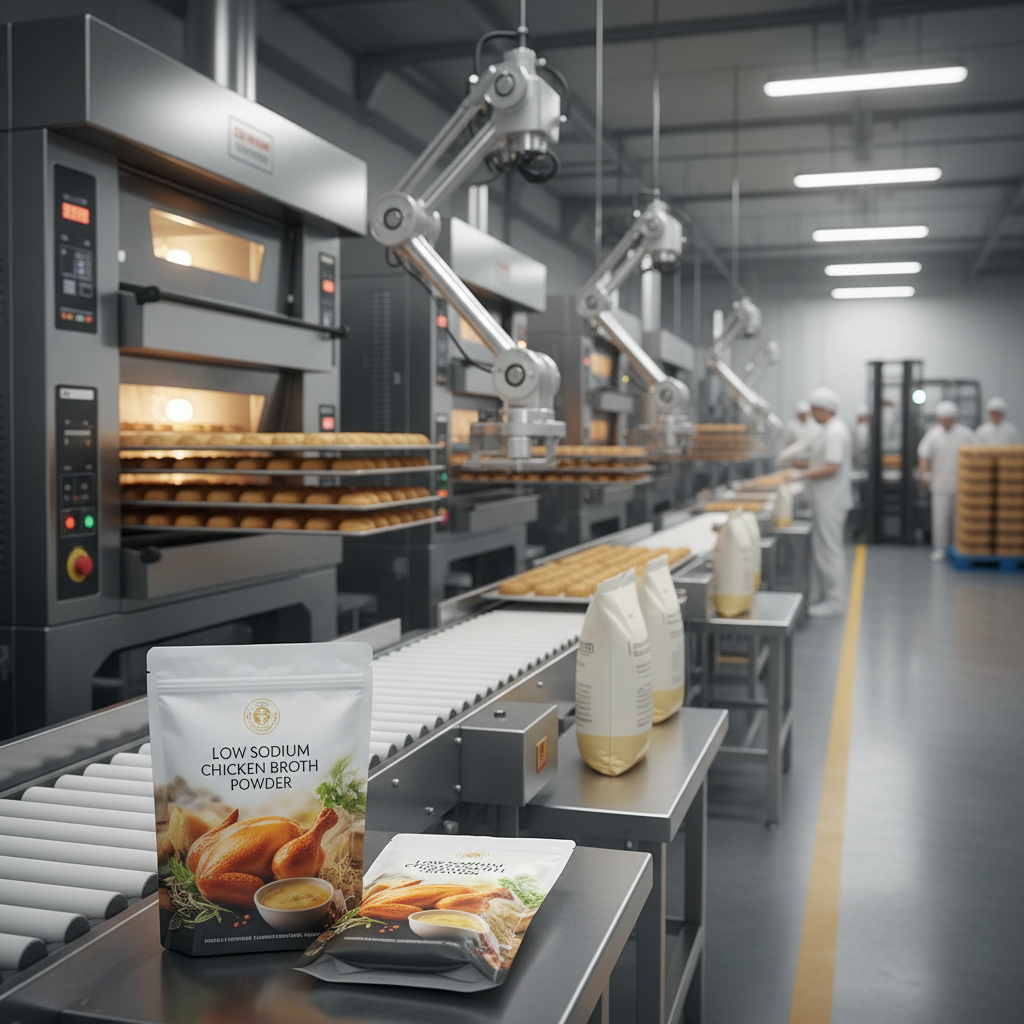
The versatility of low sodium chicken broth powder extends across multiple sectors. In the FMCG (Fast-Moving Consumer Goods) industry, it is the backbone of "healthy" instant noodle seasonings and dehydrated soup mixes. By replacing standard salt-heavy bases, brands can market their products to health-conscious millennials and aging populations who require strict sodium monitoring.
Moreover, this powder finds critical use in specialized environments. For instance, in hospital catering and geriatric care facilities, providing a savory, nutrient-rich broth that does not exacerbate edema or hypertension is essential. Similarly, in remote industrial zones or disaster relief operations, where fresh ingredients are unavailable, a nutrient-dense low sodium chicken broth powder provides a lightweight, high-impact flavor solution for emergency rations.
Comparative Performance of Low Sodium Chicken Broth Powder Formulations
Long-Term Value and Health Impact
The long-term value of integrating low sodium chicken broth powder into food production is rooted in sustainability and social responsibility. By reducing the sodium load in the global food supply, companies contribute directly to the reduction of chronic health conditions. This alignment with public health goals fosters a deeper level of trust between the consumer and the brand, transforming a simple ingredient into a tool for wellness.
From a commercial standpoint, the reliability and consistency of a high-quality powder reduce waste and operational costs. The concentrated nature of low sodium chicken broth powder lowers shipping costs and storage requirements compared to liquid broths, providing a logical economic advantage while promoting an innovative approach to dietary health.
Future Trends in Flavor Engineering
The future of low sodium chicken broth powder is being shaped by biotechnology and digital transformation. We are seeing the rise of "precision fermentation," where microbes are programmed to produce specific flavor molecules that mimic the depth of chicken fat and bone marrow without the need for animal-derived sources. This will allow for the creation of vegan-friendly, low-sodium broth powders that are indistinguishable from the original.
Automation in the manufacturing process is also playing a key role. AI-driven flavor profiling now allows chemists to adjust the ratios of minerals and amino acids in real-time to maintain a consistent taste profile regardless of the variance in raw material quality. This ensures that every batch of low sodium chicken broth powder meets exact sensory specifications.
Furthermore, the move toward "green chemistry" means that the solvents and drying methods used to produce these powders are becoming more energy-efficient. The integration of solar-powered spray dryers and biodegradable packaging is turning the production of low sodium chicken broth powder into a sustainable industrial process that respects both human health and the planet.
Overcoming Implementation Challenges
Despite the benefits, the primary challenge in using low sodium chicken broth powder is the "flavor gap"—the perceived loss of intensity when salt is removed. Expert food scientists solve this by utilizing a "multi-layered seasoning" approach, where acidity (such as citric or lactic acid) is subtly increased to brighten the flavor and enhance the perception of saltiness.
Another hurdle is the potential for a metallic aftertaste often associated with potassium-based salt substitutes. To overcome this, the industry is moving toward yeast-derived peptides and mushroom extracts. These natural boosters mask the bitterness of potassium and add a rich, earthy dimension to the low sodium chicken broth powder, ensuring a smooth and natural taste.
Finally, cost efficiency remains a concern, as high-quality low-sodium alternatives are often more expensive than traditional salts. However, by optimizing the concentration of the powder and improving the extraction efficiency of the chicken essence, manufacturers can achieve a cost-per-serving that is competitive, making the transition to low sodium chicken broth powder viable for mass-market products.
Comparative Analysis of Low Sodium Chicken Broth Powder Quality Metrics
| Formulation Grade |
Sodium Reduction % |
Umami Intensity (1-10) |
Solubility Rate |
| Standard Economy |
30% |
6 |
Fast |
| Health-Plus Grade |
50% |
8 |
Very Fast |
| Clinical Grade |
75% |
7 |
Instant |
| Premium Gourmet |
40% |
10 |
Very Fast |
| Organic Natural |
60% |
7 |
Fast |
| Industrial Bulk |
25% |
5 |
Moderate |
FAQS
It utilizes "umami synergy" by combining natural chicken extracts with ribonucleotides and yeast extracts. These ingredients stimulate the same taste receptors as salt, providing a savory depth and "mouthfeel" that compensates for the reduced sodium levels, ensuring the broth remains delicious.
While low sodium chicken broth powder significantly reduces sodium, some formulations use potassium salts as replacements. People with severe kidney issues should check the potassium levels. We offer customized formulations that can limit both sodium and potassium based on clinical requirements.
The powder has a vastly superior shelf life. Due to the low water activity achieved during spray drying and the use of natural antioxidants, our powder typically lasts 12–24 months in cool, dry storage, whereas liquid broths require refrigeration and expire much faster.
Yes, our low sodium chicken broth powder is designed for high solubility and consistent flowability. It is compatible with automatic dosing systems and spray-dryer mixers, ensuring uniform distribution in large batches of soups, sauces, or snacks.
No. The color of the broth is primarily derived from the Maillard reaction during the chicken extraction process, not the salt content. Our powder maintains a rich, golden-yellow hue that provides the visual appeal consumers expect from a traditional chicken stock.
We provide full documentation, including COA (Certificate of Analysis), MSDS, and ISO certifications. We handle the logistics of food-grade additives to ensure compliance with the import regulations of your specific region, whether in the EU, US, or Asia.
Conclusion
The integration of low sodium chicken broth powder into the modern food chain is a critical intersection of nutritional science and culinary art. By successfully decoupling savory flavor from high salt concentrations, the industry is not only meeting regulatory demands but is actively participating in a global movement toward heart-healthy eating. From the technical precision of umami synergy to the logistical efficiency of dehydrated powders, this additive provides a scalable, sustainable solution for manufacturers worldwide.
As we look toward a future defined by precision nutrition and clean-label ingredients, the role of advanced flavor engineering will only grow. We encourage food developers and procurement specialists to embrace these low-sodium alternatives to future-proof their product lines and enhance consumer well-being. For high-quality, industrial-grade solutions, visit our website: www.chinaseasoning.com