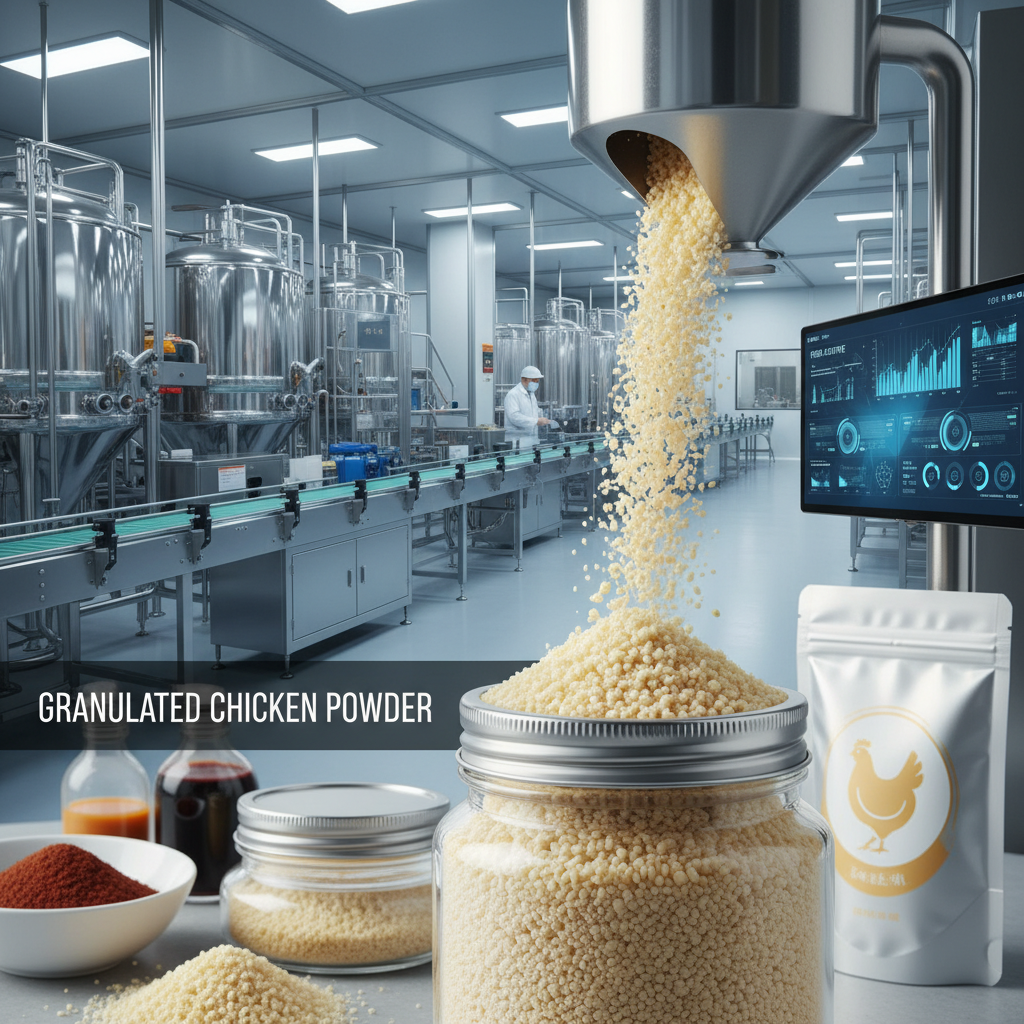
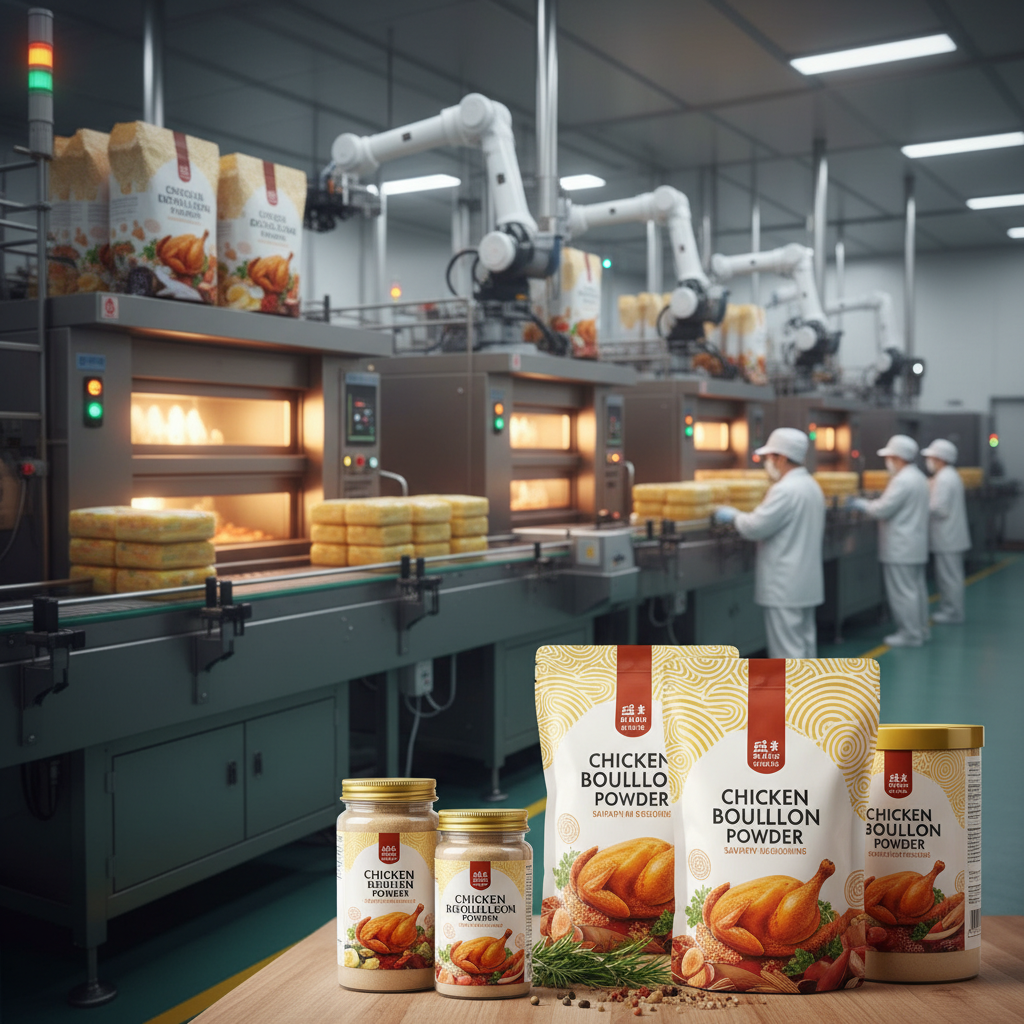
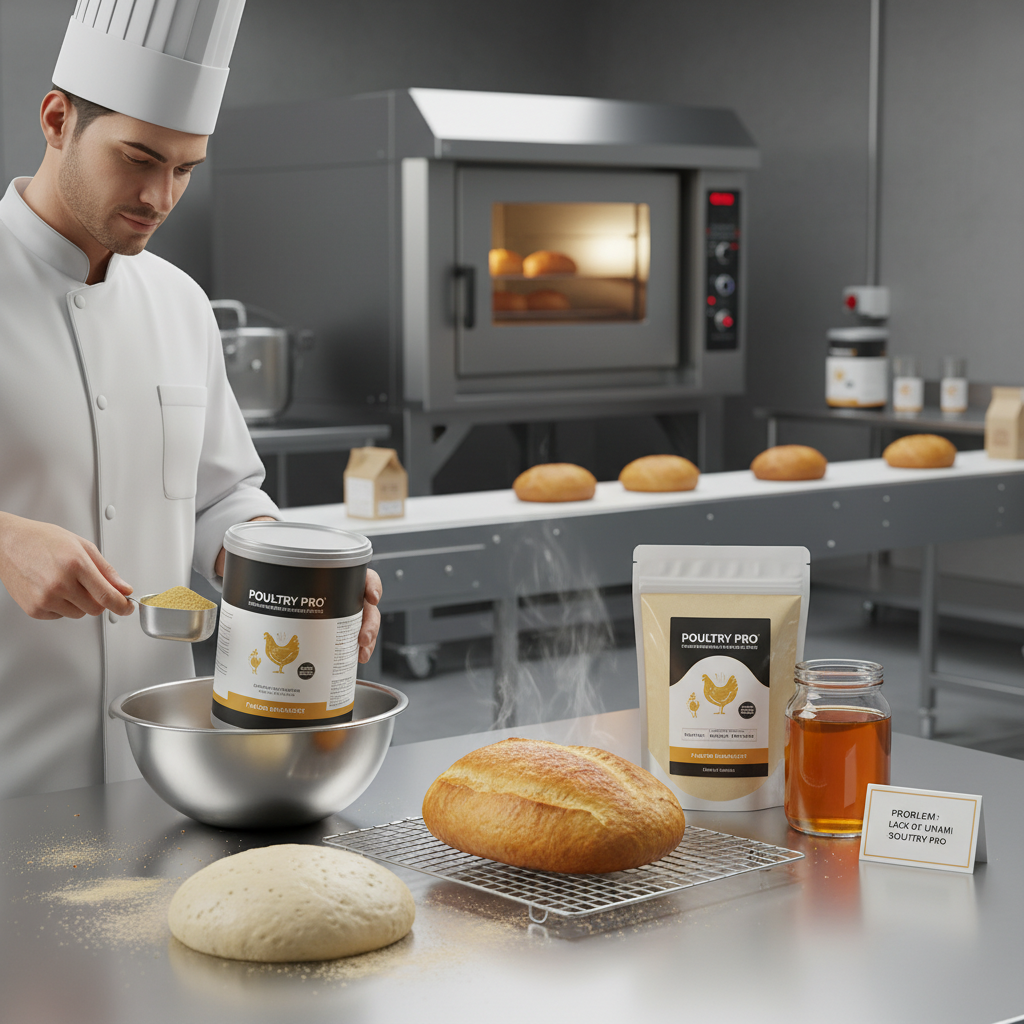
In the competitive landscape of the global food additive industry, granulated chicken powder has emerged as a pivotal ingredient for manufacturers seeking to balance authentic flavor with industrial efficiency. This versatile seasoning agent allows food processors to maintain consistency across large-scale production batches while significantly reducing the labor and time required for traditional broth reduction.
The global demand for convenient, high-umami flavor enhancers is driving a shift toward granulated formats. Unlike liquid concentrates, granulated chicken powder offers superior stability, easier transport, and precise dosing, making it an essential component in everything from instant noodles to professional catering bases.
Understanding the technical nuances of this product—from its granulation process to its solubility profiles—is crucial for brands aiming to optimize their cost-to-quality ratio. By leveraging advanced food science, manufacturers can now produce a powder that replicates the depth of a slow-simmered chicken stock in a matter of seconds.
Global Market Relevance of Granulated Chicken Powder
The international food sector is witnessing a surge in the adoption of granulated chicken powder, driven largely by the rise of ready-to-eat (RTE) meals and the fast-casual dining trend. According to recent food industry analysis, the efficiency gained by switching from liquid stocks to granulated formats can reduce logistics costs by up to 40% due to the elimination of water weight and refrigerated shipping requirements.
However, the industry faces a significant challenge: maintaining a "clean label" while achieving the intense savory profile consumers expect. This has led to a technological arms race in the additive sector, where the focus has shifted toward enzymatic hydrolysis and spray-drying techniques to create a granulated chicken powder that is both natural and highly potent.
Defining the Technical Essence of Granulated Chicken Powder
At its core, granulated chicken powder is a dehydrated seasoning blend designed to provide a concentrated chicken flavor profile. Unlike a simple fine powder, the "granulated" aspect refers to the particle size and structure, which is engineered to prevent clumping (caking) and ensure a controlled release of flavor when introduced to hot water or oil.
From an industrial perspective, this product represents the intersection of chemistry and culinary art. It involves the precise balance of amino acids, salts, and aromatic compounds that trigger the umami receptors on the human tongue. This makes it an indispensable tool for food scientists who need to standardize taste across different regional markets.
Beyond simple flavor, the modern iteration of this additive is designed to meet strict global food safety standards, such as ISO 22000. By converting chicken extracts into a stable granulated form, manufacturers can extend shelf life without relying on heavy preservatives, addressing both humanitarian needs for food security and commercial needs for scalability.
Core Components for Maximum Flavor Impact
The efficacy of granulated chicken powder depends on its solubility. A high-quality product must dissolve rapidly without leaving gritty residues, ensuring a smooth mouthfeel in soups and sauces. This is achieved through precise particle engineering during the granulation phase.
Umami intensity is the second critical factor. By optimizing the ratio of glutamates and nucleotides within the granulated chicken powder, manufacturers can create a synergistic effect that amplifies the perceived "chicken-ness" of the product, allowing for lower dosage levels and reduced overall costs.
Finally, stability under extreme temperatures is paramount. Whether it is used in high-heat frying or frozen meal assembly, the granulated chicken powder must retain its aromatic integrity. This requires the use of advanced encapsulation techniques that protect volatile flavor molecules until they are activated by heat or moisture.
Performance Metrics and Cost Efficiency
When evaluating different grades of granulated chicken powder, procurement managers typically look at the "flavor-to-weight" ratio. A premium powder requires a smaller quantity to achieve the same sensory impact as a budget version, which often offsets the higher initial price per kilogram through reduced usage rates.
Furthermore, the operational efficiency of granulated products is unmatched. The ability to automate dosing using industrial hoppers and screw conveyors reduces human error and labor costs, providing a predictable cost-per-serving model that is essential for large-scale food manufacturing.
Comparative Efficiency of Granulated Chicken Powder Formulations
Global Applications and Industrial Use Cases
The application of granulated chicken powder spans multiple continents and diverse culinary traditions. In Southeast Asia, it is a foundational element in the mass production of instant noodle seasoning packets, where its ability to resist moisture during storage is critical for maintaining a 12-month shelf life.
In Western markets, the product is increasingly used in the "industrial kitchen" sector—providing base flavors for pre-packaged frozen soups and sauces. For example, in remote industrial zones or disaster relief operations, where fresh ingredients are unavailable, this powder provides a nutrient-dense, flavor-rich base that ensures dignity and comfort in meal provision.
Long-Term Value and Sustainability Benefits
The shift toward granulated chicken powder offers significant sustainability advantages. By removing water from the equation, the carbon footprint associated with the transportation of flavor bases is drastically lowered. Fewer trucks on the road and reduced energy consumption for refrigeration contribute to a more sustainable supply chain.
From a logical and emotional perspective, the reliability of a standardized powder fosters trust between suppliers and brands. When a manufacturer knows that every gram of powder delivers the exact same flavor profile, they can innovate with confidence, knowing their end-consumer will experience a consistent product regardless of where it is produced.
Moreover, the reduction in food waste is a tangible benefit. Traditional chicken stocks have a very short window of usability; however, granulated versions can be stored for extended periods and used in precise quantities, eliminating the costly disposal of spoiled liquid batches.
Future Innovations in Seasoning Technology
The future of granulated chicken powder lies in the integration of "green chemistry" and biotechnology. We are seeing a move toward fermentation-derived flavor precursors, which allow for the creation of authentic chicken taste without the need for extensive animal processing, appealing to the growing flexitarian market.
Digital transformation is also playing a role. AI-driven flavor profiling is now being used to adjust the composition of the powder based on regional palate data, allowing for "hyper-localized" versions of the product that maximize consumer acceptance in different countries.
Sustainability policies are pushing for the use of biodegradable packaging for bulk shipments. The combination of automated production and eco-friendly materials will ensure that granulated chicken powder remains a staple of the food industry while meeting the stringent ESG (Environmental, Social, and Governance) goals of the 21st century.
Analysis of Technological Evolution in Chicken Powder Production
| Production Method |
Flavor Intensity |
Solubility Rate |
Sustainability Score |
| Traditional Drying |
Moderate |
Medium |
5/10 |
| Spray Drying |
High |
High |
7/10 |
| Freeze Drying |
Ultra-High |
Very High |
6/10 |
| Enzymatic Hydrolysis |
High |
High |
9/10 |
| Fermentation-Based |
Consistent |
High |
10/10 |
| Hybrid Granulation |
Very High |
Extreme |
8/10 |
FAQS
While both provide chicken flavor, granulated chicken powder has undergone a specific granulation process to create larger, uniform particles. This prevents the powder from clumping in humid environments and allows for more accurate measurement and faster dissolution in industrial cooking processes compared to fine, dusty powders.
To maintain stability, it should be stored in airtight, moisture-proof packaging away from direct sunlight and heat. Because granulated products are hygroscopic (they attract water), using desiccants in bulk packaging and maintaining a cool, dry warehouse is essential to prevent caking and flavor degradation.
Yes, depending on the formulation. Many modern manufacturers use enzymatic hydrolysis and natural yeast extracts to achieve the savory profile without adding MSG or artificial preservatives, making it possible to include granulated chicken powder in products that meet clean-label standards.
High-concentration powders have a higher price per kg but a lower "cost-in-use." Because they provide a stronger flavor impact, you use less product per batch, which typically reduces the overall cost of the final food item compared to using lower-grade, diluted seasonings.
While traditional versions are animal-based, the industry now offers "chicken-style" granulated powders made from fermented soy, mushrooms, and nutritional yeast. These provide the same savory, granulated experience while remaining 100% plant-based.
Importing requires compliance with the destination country's food safety laws (e.g., FDA in the US, EFSA in the EU). Ensure your supplier provides a Certificate of Analysis (CoA), MSDS, and Halal or Kosher certifications if required, to facilitate smooth customs clearance.
Conclusion
In summary, granulated chicken powder is far more than a simple seasoning; it is a precision-engineered tool that empowers food manufacturers to scale their operations without sacrificing taste. By optimizing solubility, flavor intensity, and logistics, this additive solves the critical industry challenge of balancing authentic culinary quality with industrial-scale efficiency.
As the food industry moves toward more sustainable and transparent supply chains, the role of advanced granulated additives will only grow. We encourage food scientists and procurement officers to invest in high-efficiency formulations that not only reduce costs but also align with the global shift toward clean labels and eco-friendly production. Visit our website: www.chinaseasoning.com