The codex general standard for food additives serves as the global benchmark for ensuring the safety and quality of additives used in the food industry. By providing a harmonized framework, it allows manufacturers to navigate the complex landscape of international trade while guaranteeing that consumers are protected from potential health risks. Understanding these guidelines is not merely a regulatory requirement but a strategic advantage for any business operating in the food additive sector.
In an era of hyper-globalized supply chains, the importance of a unified standard cannot be overstated. Whether dealing with preservatives, emulsifiers, or nutritional enhancers, the codex general standard for food additives bridges the gap between different national legislations, reducing trade barriers and preventing the proliferation of inconsistent safety data. This consistency is vital for maintaining trust between producers, regulators, and the end consumer.
For professionals in food manufacturing and pharmaceutical intermediates, adhering to these standards ensures that products are not only compliant but also optimized for performance and stability. By aligning production processes with the codex general standard for food additives, companies can scale their operations globally with confidence, knowing their ingredients meet the highest international safety thresholds.
Global Relevance of the Codex General Standard for Food Additives
The global food trade relies heavily on the codex general standard for food additives to prevent chaotic regulatory disparities. According to data from the FAO and WHO, the harmonization of food standards significantly reduces the incidence of trade disputes and ensures that food security is maintained across borders. Without such a standard, a preservative approved in one region might be banned in another, leading to massive economic losses and potential health crises.
The primary challenge addressed by this standard is the "regulatory patchwork" that often hinders small and medium enterprises from entering international markets. By following the codex general standard for food additives, manufacturers can create a single product formulation that is acceptable in multiple jurisdictions, thereby streamlining production costs and enhancing the scalability of their supply chain.
Defining the Codex General Standard for Food Additives
In simple terms, the codex general standard for food additives (GSFA) is a comprehensive directory that lists the food additives permitted for use in various food categories. It doesn't just list the chemicals; it specifies the maximum levels permitted, the functional classes (such as antioxidants or stabilizers), and the specific food groups they are allowed in. It acts as the "universal dictionary" for food safety.
This standard is deeply connected to modern humanitarian needs, particularly in the fight against food waste. By regulating the use of preservatives and stabilizers through the codex general standard for food additives, the industry can extend the shelf life of nutrient-dense foods, allowing them to be transported to remote areas or disaster zones without spoiling.
Furthermore, the GSFA ensures that "additive-heavy" processed foods remain safe for long-term consumption. By establishing an Acceptable Daily Intake (ADI), the codex general standard for food additives balances the technical necessity of these substances with the biological limits of the human body, ensuring that innovation never comes at the cost of public health.
Core Components of the Codex General Standard for Food Additives
One of the primary pillars of the codex general standard for food additives is Toxicological Evaluation. Every substance must undergo rigorous scientific review by JECFA (Joint FAO/WHO Expert Committee on Food Additives) to determine its safety profile before it is ever listed in the GSFA.
Another critical aspect is Functional Classification. The codex general standard for food additives categorizes additives by their purpose—such as acidity regulators, coloring agents, or thickening agents—ensuring that they are used for a legitimate technological purpose and not to hide poor quality ingredients.
Finally, Maximum Permitted Levels (MPL) provide the quantitative boundaries. By defining exactly how much of a substance can be present in a specific food category, the codex general standard for food additives prevents the over-accumulation of chemicals in the human diet, maintaining a precise balance between efficiency and safety.
Practical Application and Efficiency Ratings
Implementing the codex general standard for food additives requires a blend of chemistry, law, and logistics. In practical terms, a manufacturer producing a new beverage must refer to the GSFA to determine which sweeteners or preservatives are globally accepted. This avoids the costly mistake of producing a batch that is compliant in the home market but illegal in a target export market.
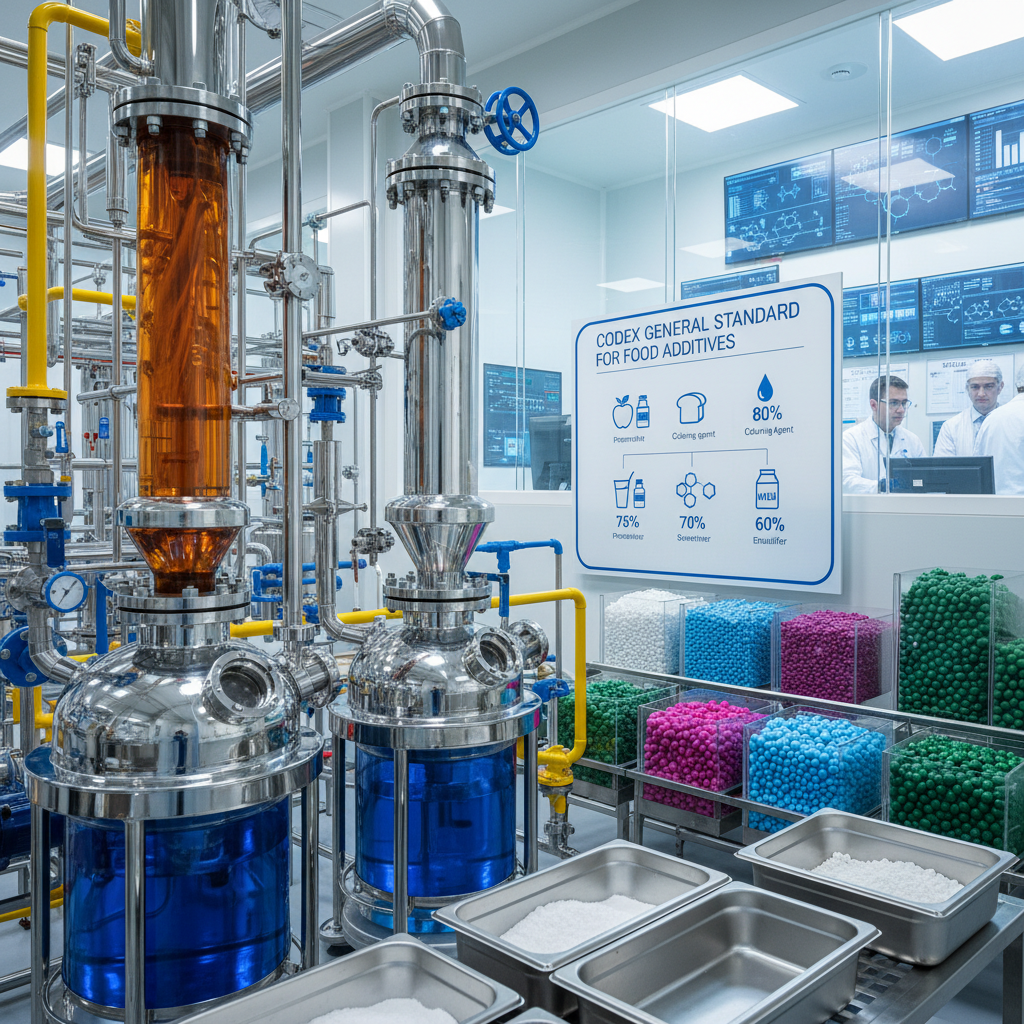
When we evaluate the effectiveness of different compliance methods associated with the codex general standard for food additives, we see varying levels of success based on the rigor of the quality control systems in place.
Compliance Efficiency of Codex General Standard for Food Additives Methods
Global Use Cases and Regional Impact
In Southeast Asia and Africa, the codex general standard for food additives is often adopted as the primary basis for national legislation. For instance, in developing industrial zones, local governments leverage the GSFA to create food safety laws without having to invest millions in their own toxicological research, thereby accelerating the growth of their local food processing industries.
Moreover, in high-stakes scenarios such as post-disaster relief operations, the codex general standard for food additives ensures that the emergency food rations provided by international NGOs are safe for consumption regardless of the recipient's nationality. This universality saves lives by ensuring that fortified foods and preservatives are used within safe, scientifically proven limits.
Long-Term Value and Safety Advantages
The long-term value of adhering to the codex general standard for food additives lies in the creation of "Consumer Trust." In a market where "clean label" trends are rising, being able to prove that additives are used according to international GSFA standards provides a logical and emotional safety net for the consumer, ensuring they are not consuming harmful concentrations of chemicals.
From a financial perspective, the codex general standard for food additives provides immense reliability. It reduces the risk of product recalls and legal liabilities, which can be catastrophic for food manufacturers. By investing in GSFA compliance early in the product development cycle, companies avoid the prohibitive costs of reformulating products after they have already reached the shelf.
Ultimately, the standard fosters innovation. When a company knows the "safe boundaries" defined by the codex general standard for food additives, they can experiment with new combinations of pharmaceutical intermediates and feed additives to create more sustainable and nutrient-rich food products without venturing into dangerous territory.
Future Trends in the Codex General Standard for Food Additives
As we move toward "Industry 4.0," the codex general standard for food additives is evolving to integrate digital transformation. We are seeing the rise of AI-driven compliance software that can automatically cross-reference a company's ingredient list against the latest GSFA updates in real-time, ensuring that no product ever falls out of compliance due to a sudden regulatory change.
Sustainability is also driving changes within the codex general standard for food additives. There is an increasing push to include more "natural" alternatives and bio-based additives in the standard. The focus is shifting toward "Green Chemistry," where additives are not only safe but also biodegradable and sourced from sustainable agriculture.
Finally, the integration of blockchain for traceability is making the codex general standard for food additives more transparent. In the future, a consumer might scan a QR code and see exactly how the additives in their food comply with the GSFA, creating an unprecedented level of transparency from the laboratory to the dinner table.
Analysis of GSFA Implementation Trends across Different Additive Categories
| Additive Category |
Compliance Complexity |
Market Adoption Rate |
Future Growth Potential |
| Preservatives |
Medium |
High (95%) |
Steady |
| Emulsifiers |
Low |
High (90%) |
Moderate |
| Sweeteners |
High |
Medium (75%) |
Rapid |
| Colorants |
Medium |
High (85%) |
Shifting to Natural |
| Stabilizers |
Low |
High (88%) |
Steady |
| Nutritional Enhancers |
High |
Medium (60%) |
Very High |
FAQS
The GSFA provides international guidelines based on global scientific consensus. While many countries adopt these standards directly into their national laws, some may apply stricter limits or ban specific additives based on local dietary habits or specific health concerns. However, the GSFA remains the primary reference for resolving trade disputes under the WTO.
While the Codex standards themselves are voluntary, they are often mandated by the laws of the countries where the food is sold. For manufacturers exporting globally, following the codex general standard for food additives is practically mandatory to ensure their products are not rejected at customs or recalled for safety violations.
The GSFA is a living document. It is updated regularly as new toxicological data becomes available from JECFA. These updates may include the addition of new permitted additives, the revision of maximum levels, or the complete removal of a substance if new evidence suggests it is unsafe for human consumption.
If an additive is not listed in the codex general standard for food additives for a specific food category, it is generally considered not permitted for use in that category unless a specific national authorization exists. Using non-listed additives can lead to severe regulatory penalties and product seizures during international trade.
While the GSFA focuses specifically on human food, the scientific principles of safety evaluation and toxicological limits it employs are very similar to those used for feed additives. Many manufacturers use the GSFA as a high-level safety benchmark when developing pharmaceutical intermediates that may eventually enter the food or feed chain.
Companies should conduct regular internal audits and third-party laboratory testing to ensure the concentrations of additives in their final products align with the MPLs specified in the codex general standard for food additives. Implementing a robust Quality Management System (QMS) is the most effective way to maintain ongoing compliance.
Conclusion
The codex general standard for food additives stands as the indispensable pillar of the global food industry, ensuring that the additives we rely on for preservation, taste, and nutrition are used safely and consistently. By harmonizing scientific data and regulatory requirements, the GSFA protects public health while empowering manufacturers to expand their reach in an increasingly connected world. From the initial toxicological review to the final product label, the standard provides a roadmap for excellence and safety.
Looking forward, the industry must embrace the integration of digital traceability and sustainable chemistry to further enhance the values promoted by the GSFA. We recommend that all stakeholders in the food and pharmaceutical sectors continuously monitor GSFA updates to stay ahead of regulatory shifts. For high-quality ingredients and professional guidance on compliance, visit our website: www.chinaseasoning.com