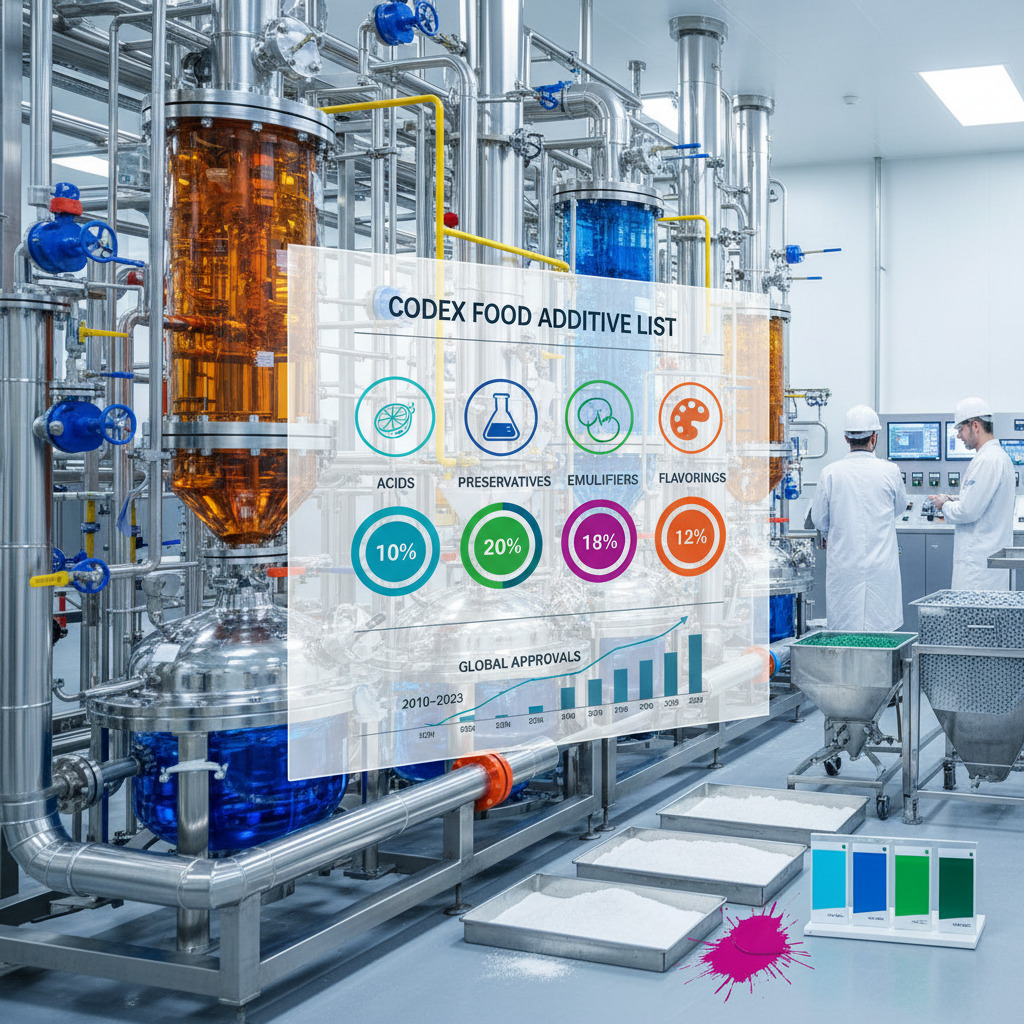
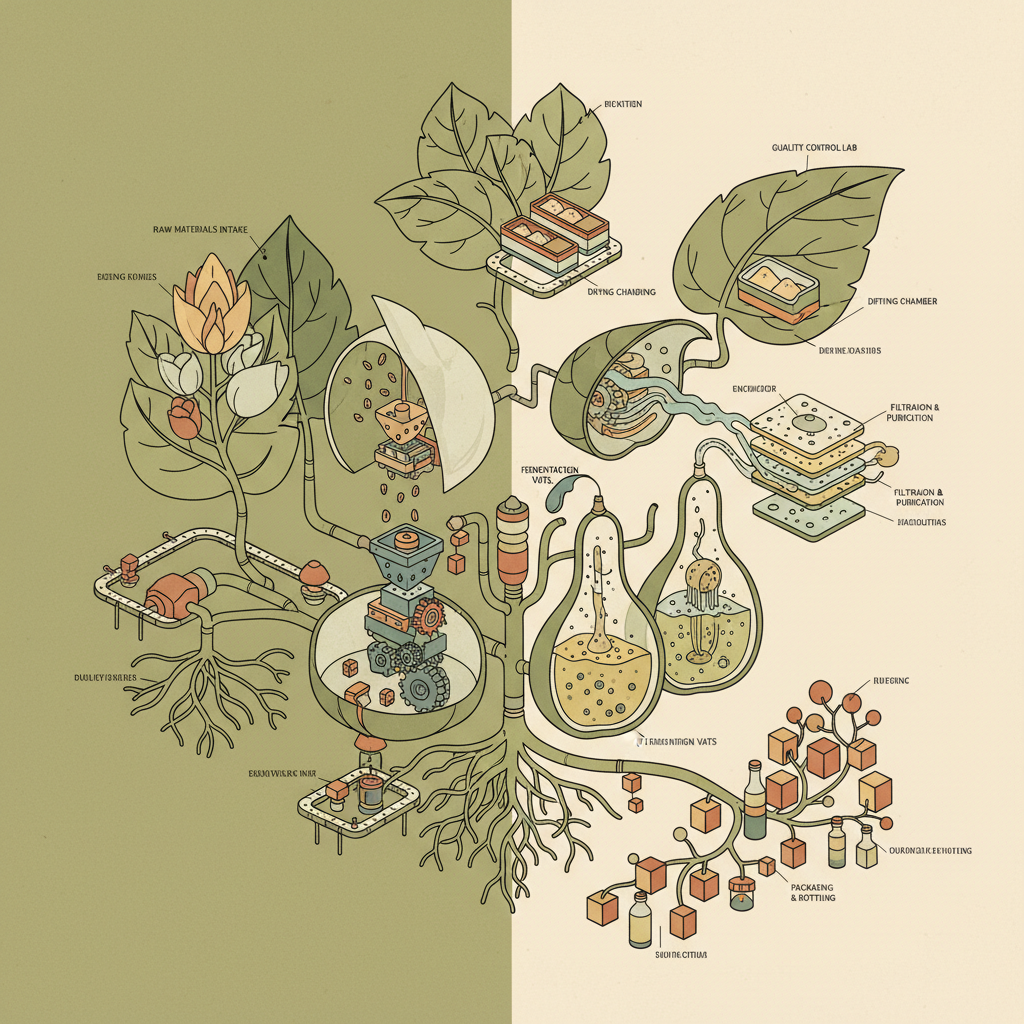
Navigating the complexities of global food safety requires a standardized approach to the substances that preserve, enhance, and stabilize our food supply. The codex food additive list serves as the gold standard in this regard, providing a scientifically backed framework that ensures consumer safety while facilitating international trade. By aligning national regulations with these global benchmarks, manufacturers can guarantee that their products meet the rigorous safety criteria demanded by health authorities worldwide.
For professionals in the food additive and pharmaceutical intermediates sectors, understanding the nuances of this list is not merely a matter of compliance but a strategic advantage. It allows for the precise formulation of products that are both effective and legally permissible across different jurisdictions. As the global food chain becomes more interconnected, the role of a unified codex food additive list becomes indispensable in preventing trade disputes and ensuring that food additives are used within safe, acceptable daily intakes (ADI).
Ultimately, the goal of following the codex food additive list is to balance the technical necessity of additives—such as preventing spoilage or improving nutritional profiles—with the paramount need for public health. Whether dealing with feed additives or complex food stabilizers, this comprehensive guide provides the clarity needed to innovate safely in a highly regulated global marketplace.
Global Relevance of the Codex Food Additive List
The global food trade operates on a scale where a single ingredient may originate in one continent, be processed in another, and consumed in a third. In this complex ecosystem, the codex food additive list acts as the primary linguistic and scientific bridge. By harmonizing the standards for what constitutes a safe additive, the Codex Alimentarius Commission (established by the FAO and WHO) reduces the risk of fragmented regulations that often lead to costly shipment rejections at international borders.
Statistically, the adoption of these standards has significantly reduced foodborne illnesses and contamination risks globally. For manufacturers specializing in feed additives and pharmaceutical intermediates, adhering to this list ensures that their chemical purity and functional dosages align with international expectations. This synchronization is critical for maintaining a stable global food supply chain, particularly in regions where local regulatory bodies rely heavily on Codex guidelines to build their own national food laws.
Defining the Codex Food Additive List and Its Purpose
In simple terms, the codex food additive list is a comprehensive, scientifically validated catalog of substances that are permitted for use in food products. It doesn't just list the ingredients; it specifies the functional classes—such as preservatives, antioxidants, and emulsifiers—and dictates the maximum levels (MLs) allowed in specific food categories to ensure they do not pose a health risk to the consumer.
Beyond mere regulation, this list addresses a fundamental humanitarian need: the democratization of food safety. By providing a free, accessible, and transparent set of standards, the Codex framework allows developing nations to implement high safety standards without having to conduct prohibitively expensive independent toxicological studies for every single additive. This ensures that a consumer in a remote industrial zone has access to food that is as safe as that in a major metropolitan hub.
For the modern industry, the list serves as a roadmap for product development. When a chemist develops a new pharmaceutical intermediate or a food stabilizer, referencing the codex food additive list ensures that the end product will be commercially viable on a global scale. It transforms "dry" chemistry into a compliant commercial asset, reducing the time-to-market for innovative food solutions.
Core Components of Food Additive Standardization
The first pillar of the codex food additive list is Toxicological Safety. Every substance listed has undergone rigorous evaluation by the Joint FAO/WHO Expert Committee on Food Additives (JECFA). This process determines the Acceptable Daily Intake (ADI), which is the amount of a food additive that can be ingested daily over a lifetime without appreciable health risk.
Another critical component is Functional Justification. The codex food additive list mandates that an additive should only be used if it performs a specific technological function—such as extending shelf life or maintaining texture—that cannot be achieved by other means. This prevents the unnecessary "over-additive" trend and promotes a cleaner label approach in food manufacturing.
Finally, Global Scalability is achieved through a standardized numbering system (INS). By assigning a unique number to each additive in the codex food additive list, the industry avoids the confusion caused by different regional names for the same chemical compound, allowing for seamless communication between suppliers of pharmaceutical intermediates and food manufacturers.
Practical Applications of the Codex Framework
In real-world industrial contexts, the application of the codex food additive list is most evident in the production of fortified foods for post-disaster relief operations. In such scenarios, where nutrition must be maximized and spoilage minimized in extreme climates, following the Codex standards ensures that the additives used to stabilize vitamins and prevent oxidation are safe for diverse populations with varying health needs.
Furthermore, in the pharmaceutical intermediates industry, the list provides the purity specifications required for additives that cross over into medicinal use. This ensures that a substance used as a food stabilizer doesn't contain impurities that would be unacceptable in a pharmaceutical context, thereby maintaining a high bridge of quality across the Feed Additive and Food Additive categories.
Compliance Impact of Codex Food Additive List Methods
Long-Term Value of International Compliance
The tangible benefits of strictly adhering to the codex food additive list extend far beyond mere legal avoidance. For a business, it translates into significant cost efficiency by reducing the need for redundant product reformulations when entering new markets. Instead of creating five different versions of a product for five different countries, a manufacturer can design one "Codex-compliant" version that is acceptable globally.
From an emotional and ethical perspective, compliance fosters deep trust between the brand and the consumer. In an era of "clean label" movements and heightened scrutiny of synthetic ingredients, being able to demonstrate that every additive is backed by the codex food additive list provides a shield of scientific credibility. It transforms safety from a hidden requirement into a visible mark of quality and dignity for the end user.
Future Trends in Global Additive Regulation
The future of the codex food additive list is increasingly intertwined with the digital transformation of the food industry. We are moving toward "Digital Product Passports" where the additive data from the Codex list will be integrated into blockchain-based traceability systems. This will allow consumers to scan a QR code and see exactly which Codex-approved additive was used and its specific safety profile.
Sustainability is also driving a shift in the list's composition. There is a growing trend toward "Green Additives"—bio-based preservatives and natural colors derived from sustainable agricultural waste. The Codex framework is evolving to integrate these novel materials, ensuring that the transition to eco-friendly additives does not compromise the rigorous safety standards established over decades.
Furthermore, automation in the manufacturing of pharmaceutical intermediates is enabling more precise dosing of additives. As AI-driven formulation tools become common, they will use the codex food additive list as a primary constraint set, automatically flagging any combination of additives that might exceed the cumulative ADI, thereby automating safety and compliance at the design stage.
Challenges and Expert Solutions for Implementation
One of the most common challenges is the "Regulatory Gap"—the time lag between a new safety finding and the update of the official codex food additive list. Manufacturers often find themselves in a limbo where a substance is still Codex-approved but is being phased out by specific national authorities like the EFSA in Europe.
To overcome this, expert consultants recommend a "Hybrid Compliance Strategy." This involves using the Codex list as the baseline for global operations while implementing a "most-stringent-market" overlay. By adopting the strictest regional limit among their target markets as their internal corporate standard, companies can future-proof their products against upcoming Codex revisions.
Another hurdle is the technical complexity of interpreting "Maximum Levels" across varied food matrices. The solution lies in investing in advanced analytical chemistry. By utilizing high-performance liquid chromatography (HPLC) and mass spectrometry, manufacturers can verify that their final products align precisely with the codex food additive list, providing empirical data to support their compliance claims during audits.
Comparative Analysis of Implementation Challenges and Solutions
| Challenge Dimension |
Regulatory Impact |
Expert Solution |
Efficiency Score (1-10) |
| Regulatory Lag |
High - Risk of non-compliance |
Hybrid Compliance Overlay |
9 |
| Matrix Complexity |
Medium - Dosing errors |
Advanced HPLC Testing |
8 |
| Labeling Variance |
Medium - Trade barriers |
INS Number Adoption |
10 |
| Sourcing Purity |
High - Contamination risk |
Certified Supplier Audits |
7 |
| Cost of Compliance |
Low - OpEx increase |
Digital Tracking Systems |
8 |
| Ingredient Transition |
Medium - R&D delays |
Bio-based Alternative R&D |
6 |
FAQS
The list is updated periodically following new scientific evaluations by JECFA. While there isn't a fixed calendar date, updates occur as new toxicological data emerges or as new additives are proposed for global use. It is recommended for manufacturers to check for updates quarterly to ensure their formulations remain compliant with the latest safety standards.
While it provides a strong baseline and is recognized by the WTO, some countries have stricter national laws. For example, the EU may have different limits than the Codex. However, using the Codex list as your primary guide significantly simplifies the process, as most national variations are minor adjustments rather than complete contradictions.
The chemical name describes the molecular structure, which can vary by language and nomenclature system. The INS (International Numbering System) is a unique identifier assigned by the Codex. Using INS numbers prevents errors in communication and procurement, ensuring that the correct additive is used regardless of the local language of the supplier.
Technically, you can if the national authority of the country where you are selling the product allows it. However, doing so limits your ability to export that product internationally. For global commercial viability, sticking to the Codex-approved substances is the safest and most cost-effective strategy for long-term growth.
Maximum Levels (MLs) are determined based on the expected dietary intake of that specific food. If a food is consumed in large quantities daily, the ML for an additive will be lower to prevent the consumer from exceeding the Acceptable Daily Intake (ADI). This ensures safety across all demographic groups.
Yes, the principles of the Codex list often inform the standards for feed additives, as animal feed eventually impacts the human food chain. Maintaining consistency between food and feed additive standards prevents the bioaccumulation of unsafe substances in livestock, thereby protecting human health at the source.
Conclusion
In summary, the codex food additive list is far more than a regulatory checklist; it is the fundamental infrastructure that enables the safe, efficient, and transparent movement of food and chemical intermediates across the globe. By synthesizing toxicological safety, functional necessity, and international standardization, it provides a roadmap for manufacturers to innovate without compromising public health. From the precision of INS numbering to the rigor of JECFA evaluations, the framework ensures that the global food supply remains resilient and trustworthy.
Looking forward, the integration of digital traceability and sustainable, bio-based chemistry will further evolve the role of this list. We encourage food manufacturers and pharmaceutical intermediate suppliers to move beyond passive compliance and embrace these standards as a tool for competitive differentiation. By prioritizing the highest safety benchmarks, companies can build enduring trust with consumers and secure their place in the future of the global food economy. Visit our website for more professional insights: www.chinaseasoning.com