The global appetite for fried chicken has transformed from a regional preference into a universal culinary phenomenon, driving a massive demand for consistency and quality in breading solutions. A high-quality fried chicken powder mix is not merely a collection of ingredients but a precision-engineered food additive designed to ensure the perfect balance of crunch, flavor adhesion, and moisture retention. For food manufacturers and QSR (Quick Service Restaurant) operators, mastering this mix is the difference between a mediocre product and a market-leading signature dish.
Understanding the science behind these blends is critical as consumer preferences shift toward cleaner labels and more complex flavor profiles. The integration of advanced food additives allows for the stabilization of oils and the enhancement of the Maillard reaction, ensuring that the golden-brown hue and savory aroma are consistent across thousands of batches. This technical precision reduces waste and optimizes the frying process, making it a cornerstone of efficiency in modern food production.
Whether you are scaling a boutique chicken brand or managing a large-scale industrial facility, the choice of a fried chicken powder mix impacts everything from supply chain logistics to the final customer experience. By analyzing the core components—from modified starches to flavor enhancers—businesses can innovate their menus while maintaining the rigorous safety and quality standards required by international food authorities.
Global Market Relevance of Fried Chicken Powder Mix
The global fast-food sector has seen an unprecedented rise in the consumption of fried poultry, with the market for seasoned breading growing at a steady CAGR. Data from international trade reports indicate that the demand for standardized fried chicken powder mix has surged as franchise models expand into emerging markets in Asia and Africa. This expansion necessitates a product that can withstand diverse shipping conditions while delivering a uniform taste profile regardless of the local water quality or frying oil used.
However, the industry faces a significant challenge: the balance between "hyper-palatability" and health consciousness. Manufacturers are now tasked with reducing sodium levels and eliminating trans fats without sacrificing the sensory experience that consumers crave. This has led to a wave of innovation in food additive chemistry, where natural flavor enhancers and functional fibers are replacing traditional synthetic alternatives to meet ISO and FDA guidelines.
Defining the Technical Composition of Breading Mixes
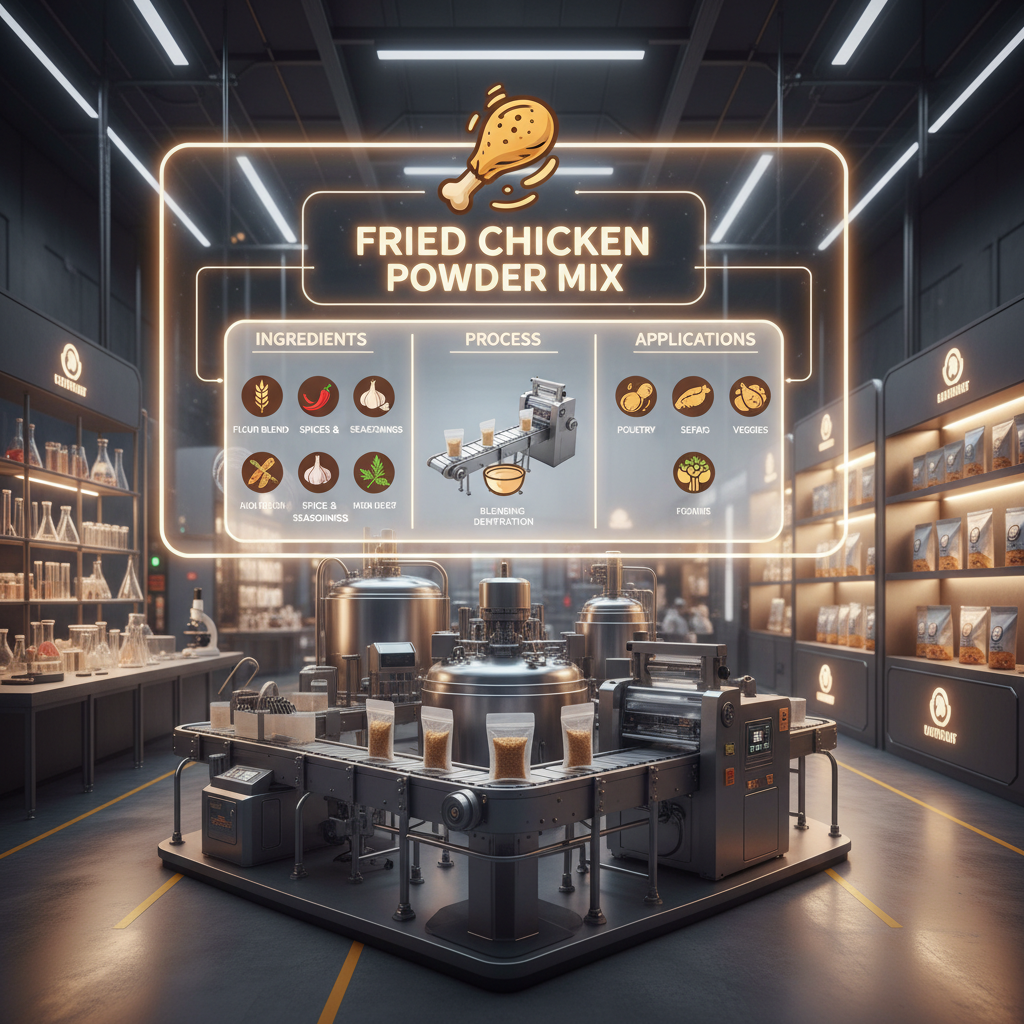
At its core, a fried chicken powder mix is a complex synergy of flours, leavening agents, spices, and functional additives. Unlike simple home-made dredging, industrial mixes are engineered to create a "barrier" that prevents excessive oil absorption while trapping the natural juices of the meat. This chemical architecture ensures that the chicken remains succulent on the inside and shatteringly crisp on the outside.
From a manufacturing perspective, these mixes are categorized under specialized food additives and seasoning blends. They often incorporate modified starches to improve the "cling" of the powder to the protein, ensuring that the coating does not peel off during the frying or freezing process. This adherence is crucial for frozen-to-fry products, where stability during temperature fluctuations is paramount.
Beyond texture, the mix serves as the primary vehicle for flavor delivery. Through the use of encapsulated spices and flavor enhancers, the powder ensures that the seasoning penetrates the crust evenly. This scientific approach to flavor distribution eliminates the "salty exterior, bland interior" problem common in lower-grade breading solutions.
Core Components for Optimal Texture and Taste
The foundation of any premium fried chicken powder mix lies in its starch composition. The ratio of wheat flour to cornstarch or potato starch determines the final hardness and "crunch" factor. A higher starch content typically results in a lighter, crispier shell that resists softening over time, which is essential for delivery-based business models.
Leavening agents, such as baking soda or phosphate blends, play a critical role in creating a porous structure. When the fried chicken powder mix hits the hot oil, these agents release carbon dioxide, creating tiny air pockets. This aeration not only makes the crust lighter but also increases the surface area, enhancing the visual appeal and the "crunch" sound.
Finally, the seasoning matrix—including garlic powder, onion powder, paprika, and MSG or yeast extracts—provides the savory depth. The precision of these additives ensures that the flavor profile remains stable even after exposure to high temperatures, preventing the spices from burning or losing their aromatic potency.
Performance Metrics in Industrial Applications
In industrial food production, the success of a fried chicken powder mix is measured by specific KPIs: oil uptake percentage, crust adhesion rate, and flavor retention after reheating. A superior mix minimizes the amount of oil absorbed by the coating, which not only reduces caloric content but also significantly lowers the cost of frying oil for the operator.
Furthermore, the scalability of the mix is tested through "holding time" experiments. Since many fried chicken products are kept in warming cabinets, the powder must prevent the crust from becoming soggy due to internal steam. High-performance mixes utilize hydrophobic additives to maintain a crisp barrier for extended periods.
Comparative Performance of Fried Chicken Powder Mix Formulations
Global Use Cases and Regional Adaptations
The application of fried chicken powder mix varies significantly across different cultural landscapes. In North America, the preference leans toward a "heavy" breading with high salt and pepper profiles. In contrast, the East Asian market—particularly in Korea and Japan—favors a "double-fry" technique using a mix that creates a glass-like, ultra-thin, and extremely crisp shell, often paired with sweet and spicy glazes.
Beyond commercial restaurants, these mixes are essential in the "Ready-to-Eat" (RTE) frozen food sector. In remote industrial zones or disaster relief operations where fresh ingredients are scarce, pre-seasoned, dehydrated fried chicken powder mix provides a shelf-stable way to deliver high-protein meals that are palatable and nutrient-dense, demonstrating the humanitarian utility of food additive technology.
Long-Term Value and Economic Advantages
Implementing a standardized fried chicken powder mix offers immense operational value. By eliminating the need for in-house spice blending, businesses reduce the risk of human error and cross-contamination. This consistency builds brand trust; a customer expects the same taste in London as they do in New York, and a precision mix is the only way to guarantee this reliability.
From a cost-efficiency perspective, professional mixes are designed to optimize "yield." A well-engineered powder adheres more efficiently to the meat, meaning less wasted powder at the bottom of the dredging station. Over a year of high-volume production, a reduction of even 2% in powder waste can translate into thousands of dollars in savings.
Furthermore, the use of high-quality food additives in the mix extends the shelf life of the final product. By controlling water activity and oil oxidation through the breading layer, manufacturers can extend the distribution radius of their products, allowing them to penetrate distant markets without compromising the sensory quality of the fried chicken.
Future Trends in Seasoning Technology
The future of fried chicken powder mix is moving toward "Clean Label" innovation. We are seeing a shift away from synthetic MSG toward yeast extracts and mushroom-based umami boosters. Additionally, the integration of plant-based proteins into the meat itself is forcing the development of new powder mixes that can mask the "beany" aftertaste of pea or soy proteins while providing the same structural integrity as traditional breading.
Digital transformation is also impacting the industry. AI-driven flavor mapping is being used to create hyper-localized mixes that cater to the specific taste preferences of different cities or demographics. Automation in the dredging process is also driving the demand for powders with specific flow characteristics (anti-caking properties) to prevent clogging in high-speed industrial applicators.
Sustainability is the final frontier. Research is currently focusing on replacing wheat-based flours with sustainable alternatives like cricket powder or algae-based starches to reduce the carbon footprint of the food chain. These innovations ensure that the fried chicken powder mix evolves alongside global environmental goals.
Analysis of Fried Chicken Powder Mix Formulation Dimensions
|
Formulation Type
|
Primary Functional Goal
|
Key Additive Used
|
Market Suitability
|
| Classic Southern |
Heavy Texture & Saltiness |
Wheat Flour / Paprika |
North American QSR |
| Korean Style |
Ultra-Thin Crispiness |
Cornstarch / Potato Starch |
Asian Gourmet Market |
| Health-Conscious |
Sodium Reduction |
Potassium Chloride / Yeast |
Wellness Brands |
| Industrial Frozen |
Freeze-Thaw Stability |
Modified Tapioca Starch |
Supermarket Frozen Aisles |
| Plant-Based |
Flavor Masking |
Nutritional Yeast / Smoked Salt |
Vegan Fast Food |
| Budget Economy |
Low Raw Material Cost |
Generic Wheat Mix / MSG |
Street Food Vendors |
FAQS
A basic dredge is usually just flour and salt, which often leads to a dense crust that absorbs too much oil. A professional fried chicken powder mix contains modified starches and leavening agents that create a porous, lightweight structure. This results in a superior "crunch" and prevents the coating from peeling away from the meat during frying, ensuring a consistent commercial quality.
Sogginess is caused by internal steam escaping and hydrating the crust. To prevent this, use a fried chicken powder mix formulated with hydrophobic starches and a higher ratio of cornstarch. These ingredients create a more robust moisture barrier. Additionally, ensuring the chicken is fried to the correct internal temperature prevents excessive steam release.
Yes, many modern manufacturers offer gluten-free versions using a blend of rice flour, cornstarch, and potato starch. The challenge is maintaining the "cling" that wheat gluten provides. This is solved by adding gums (like xanthan gum) or modified starches to the fried chicken powder mix to replicate the binding properties of gluten.
Low-quality mixes contain high amounts of free sugars and unstable fats that carbonize quickly, darkening the oil and shortening its life. A professional-grade fried chicken powder mix is designed to minimize "fines" (tiny particles that fall off) and uses stabilized ingredients, which helps keep the oil cleaner for longer, reducing filtration frequency.
While a versatile fried chicken powder mix can work for both, wings typically benefit from a thinner, more starch-heavy mix to highlight their shape, whereas thighs require a more robust, flour-based coating to handle the higher moisture content of the dark meat.
Importing requires strict adherence to the destination country's food safety laws (e.g., FDA in the USA, EFSA in Europe). Ensure your supplier provides a full COA (Certificate of Analysis), MSDS, and an ingredient list that complies with local additive regulations. Working with an experienced partner like www.chinaseasoning.com simplifies this process through standardized documentation.
Conclusion
In conclusion, the role of a fried chicken powder mix extends far beyond simple seasoning; it is a critical engineering component that determines the texture, taste, and profitability of a food product. From the precise calibration of starches for maximum crunch to the integration of clean-label additives for health-conscious consumers, the science of breading is central to the success of the global fried chicken market. By prioritizing consistency and technical performance, food manufacturers can ensure a superior consumer experience while optimizing their operational costs.
Looking ahead, the industry will likely see a convergence of sustainability and sensory excellence, with the rise of plant-based alternatives and AI-optimized flavor profiles. For businesses looking to lead in this competitive space, investing in a high-performance, customizable mix is the most effective way to build brand loyalty and scale efficiently. We invite you to explore our professional solutions and elevate your product quality. Visit our website: www.chinaseasoning.com