When entering the world of culinary arts or food science, one of the most frequent questions encountered is: is bouillon the same as broth? While they are often used interchangeably in casual conversation, they represent different stages of concentration and preparation, fundamentally impacting the flavor profile and viscosity of a dish.
Understanding the distinction between these two liquid gold bases is essential for both home cooks and professional food manufacturers. In the industrial sector, specifically within food additive manufacturing, knowing whether is bouillon the same as broth helps in determining the correct stabilizers, salt levels, and flavor enhancers needed to maintain consistency across large batches.
Globally, the demand for convenient seasoning solutions has surged, leading to a proliferation of bouillon cubes and powdered bases. This shift has made the debate over whether is bouillon the same as broth more relevant than ever, as consumers seek to balance the convenience of processed additives with the authentic taste of traditional slow-simmered broths.
Defining the Core Differences Between Bouillon and Broth
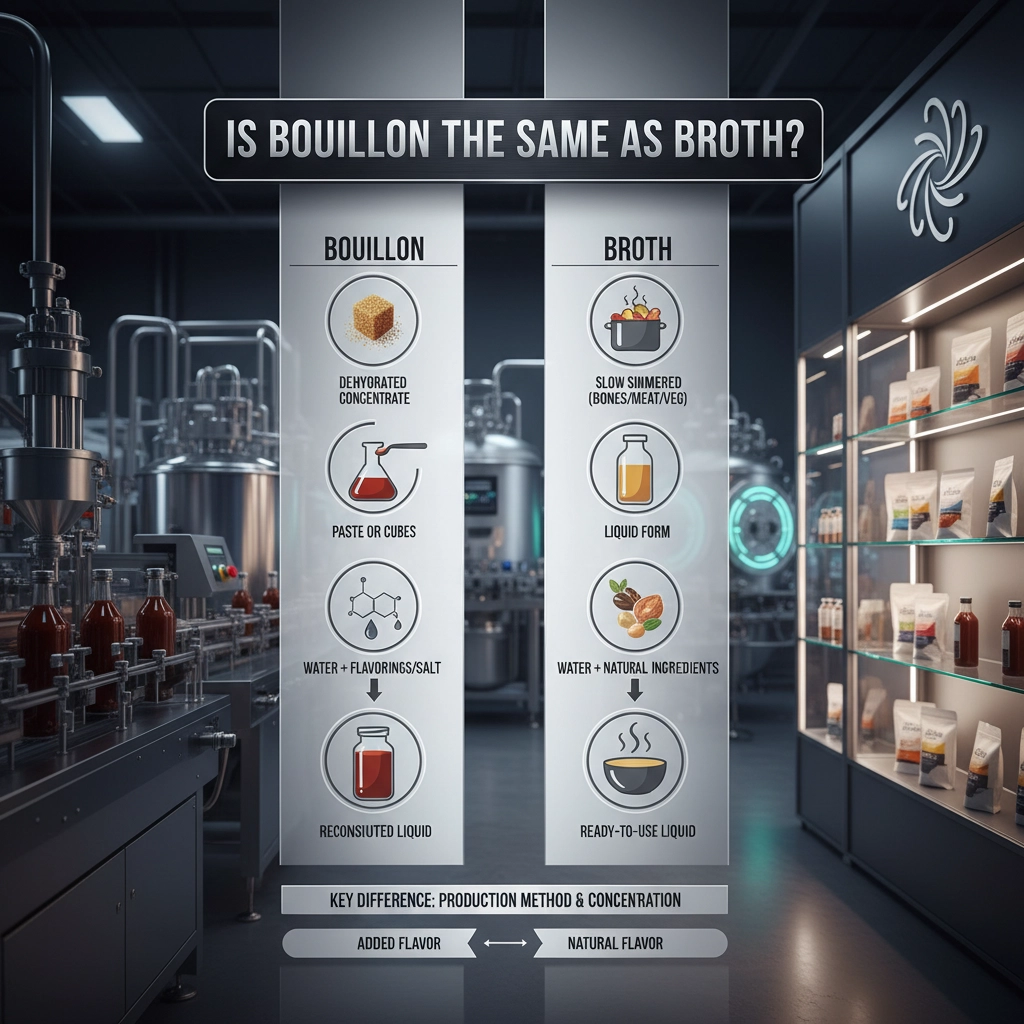
To answer the question is bouillon the same as broth, we must first look at the definitions. Broth is essentially a savory liquid produced by simmering meat, vegetables, and aromatics in water. It is a "ready-to-use" liquid that provides a light, clean base for soups and sauces.
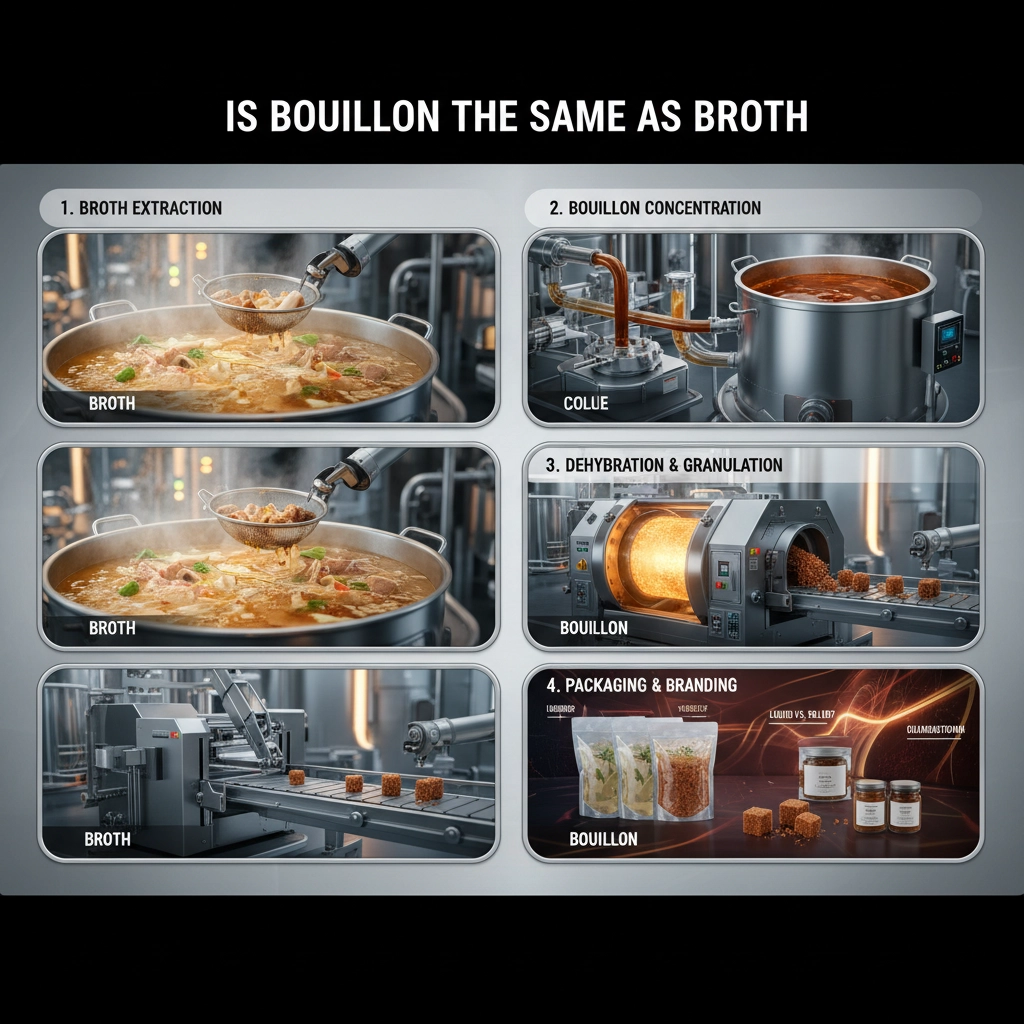
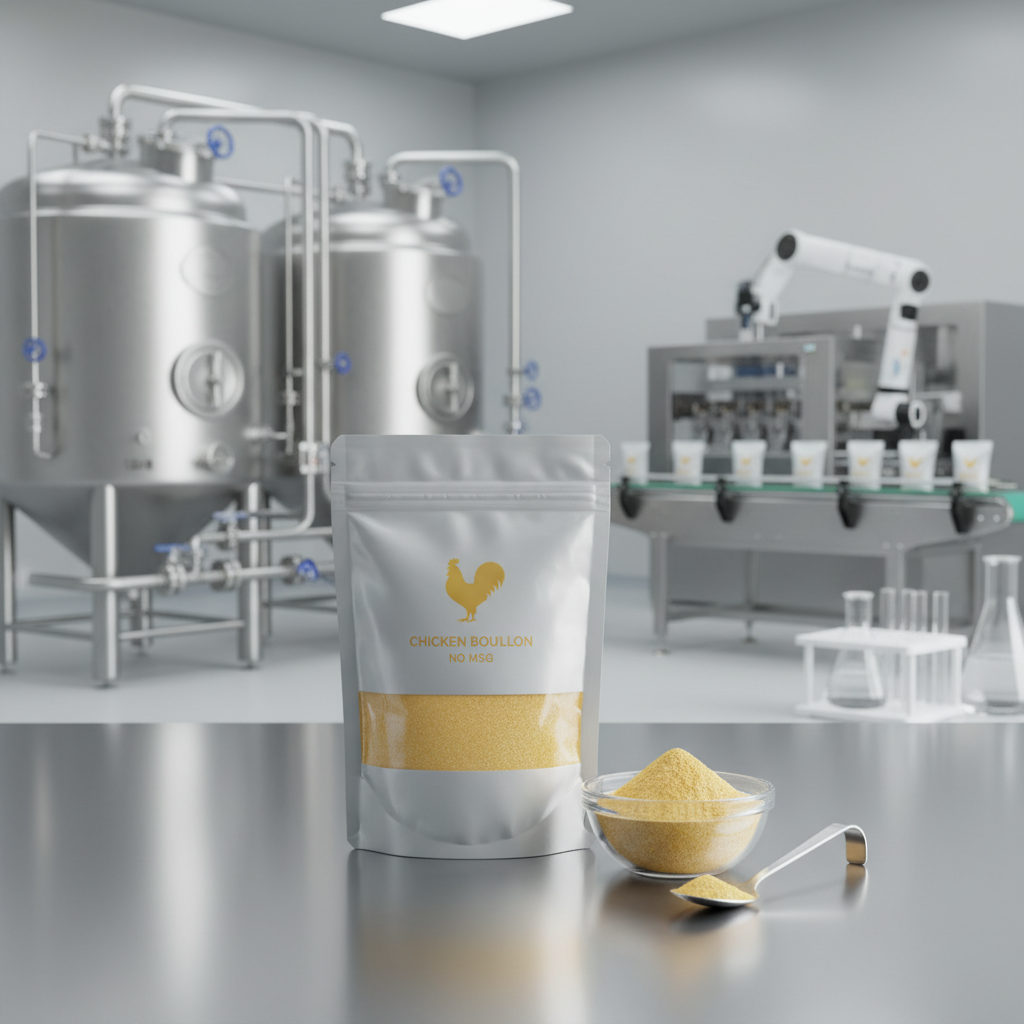
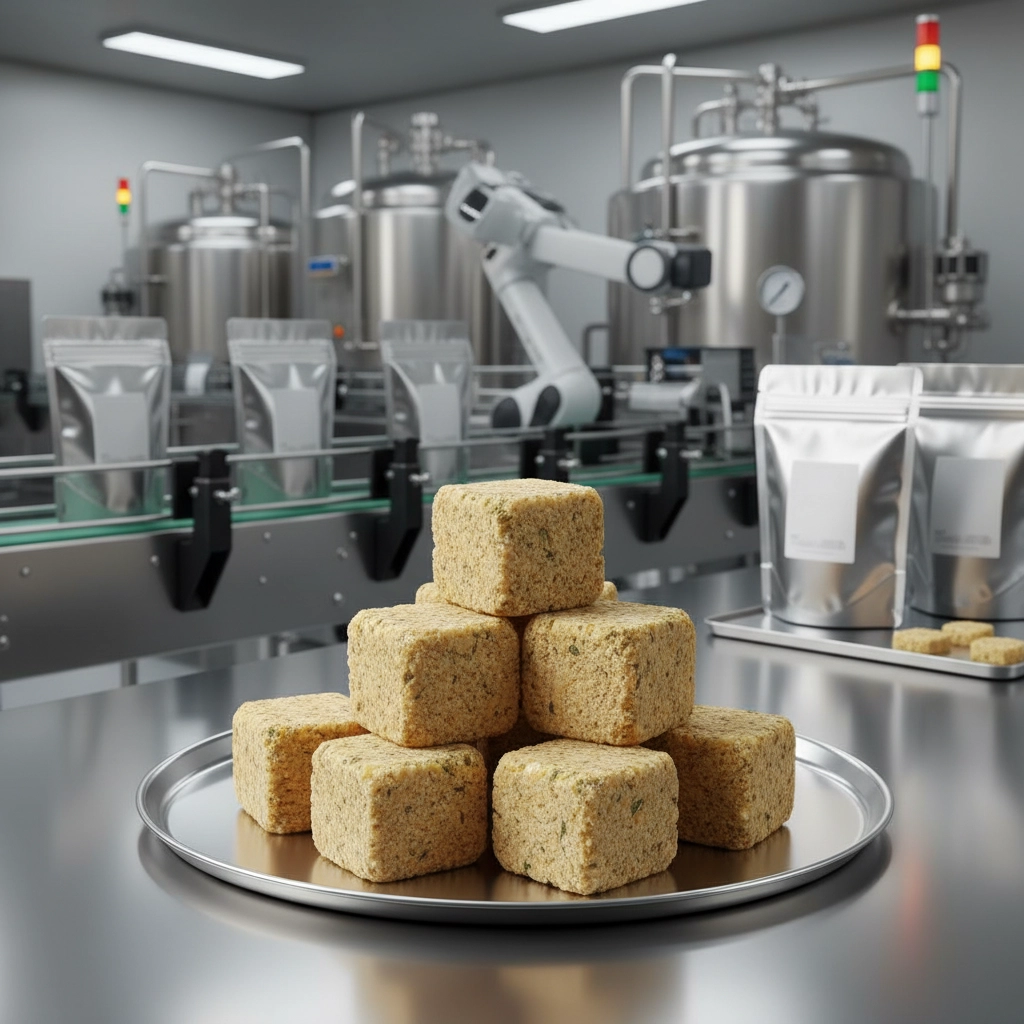
Bouillon, on the other hand, is a concentrated form of broth. Derived from the French word for "boiling," bouillon is typically reduced or dehydrated into a paste, cube, or powder. While the flavor profile is similar, bouillon is far more intense and requires dilution with water to reach the consistency of traditional broth.
The Industrial Context of Flavor Concentrates
In the global food manufacturing industry, the distinction between these two becomes a matter of logistics and chemistry. The industry doesn't just ask is bouillon the same as broth, but rather, "which form is more scalable?" Broth, being mostly water, is heavy and expensive to transport, making it inefficient for international supply chains.
This is where bouillon-style concentrates excel. By removing the water content through advanced dehydration or spray-drying techniques, manufacturers can produce high-potency flavor bases that occupy a fraction of the space. According to food industry standards, concentrated bases reduce shipping costs by up to 80% compared to liquid counterparts.
However, this concentration process introduces a challenge: the need for food additives. To maintain the same "mouthfeel" and flavor depth as fresh broth, manufacturers incorporate pharmaceutical-grade intermediates and specific stabilizers, ensuring that the reconstituted product remains indistinguishable from a slow-simmered liquid.
Key Factors in Production and Stability
When analyzing is bouillon the same as broth from a technical standpoint, we must consider Concentration Efficiency. Broth maintains a natural balance of solutes, whereas bouillon requires a precise ratio of salt and flavor enhancers to prevent degradation during storage.
Another critical factor is Shelf-Life Stability. Because broth contains high water activity, it is prone to microbial growth and requires refrigeration or retort packaging. Conversely, bouillon concentrates have low water activity, allowing them to remain stable at room temperature for years, provided the correct additives are used.
Lastly, Solubility and Reconstitution play a major role. A high-quality bouillon must dissolve rapidly in hot water without leaving clumps or residue. This requires a sophisticated understanding of particle size and the use of anti-caking agents, a level of chemistry not required when simply simmering a traditional broth.
Global Application and Market Efficiency
The practical application of these concepts varies by region. In Western markets, there is a growing trend toward "clean label" broths, where consumers prefer liquid products with fewer additives. However, in rapidly developing economies and disaster-relief zones, the efficiency of bouillon is unmatched. In these contexts, wondering is bouillon the same as broth is less important than the ability to provide nutrient-dense flavor to thousands of people quickly.
From an economic perspective, the use of food additives in bouillon allows for a standardized taste profile regardless of the season or source of raw materials. This scalability enables global food chains to ensure that a soup tastes the same in New York as it does in Tokyo.
Comparison of Efficiency: Bouillon vs Broth
Long-term Value in Food Manufacturing
The long-term value of mastering the difference between these two lies in cost optimization. By utilizing high-quality food additives and pharmaceutical intermediates, manufacturers can create bouillon that mimics the organic complexity of broth while drastically reducing overhead. This creates a sustainable business model that supports both affordability for the consumer and profitability for the producer.
Beyond the financial metrics, there is an emotional value associated with "trust." When a manufacturer can guarantee that their reconstituted bouillon provides the same nutritional and sensory experience as a home-cooked broth, they build lasting brand loyalty. This trust is anchored in the precision of the additive formulations used to stabilize the product.
Future Innovations in Seasoning Technology
Looking ahead, the industry is moving toward "Smart Seasoning." We are seeing the integration of freeze-drying technology and nano-encapsulation, which allows the volatile aromatic compounds of a fresh broth to be trapped within a bouillon cube. This effectively erases the line when people ask is bouillon the same as broth, as the final result becomes virtually identical.
Sustainability is also driving innovation. The shift toward plant-based proteins means that the "broth" of the future will be derived from fermented fungi or pea proteins. This requires new types of flavor additives to replicate the umami depth traditionally found in animal-based bouillon.
Automation in the manufacturing process is further refining the consistency of these products. AI-driven flavor profiling now allows manufacturers to adjust the additive levels in real-time based on the raw material inputs, ensuring that every batch of bouillon delivers a consistent "broth-like" experience.
Overcoming Challenges in Flavor Standardization
Despite the advances, the biggest challenge remains the "sodium paradox." To keep bouillon stable, salt is often used as a primary preservative, leading to products that are significantly saltier than traditional broth. This has led to a health-conscious push for low-sodium alternatives that don't sacrifice taste.
The solution lies in the use of potassium-based salts and yeast extracts, which provide a salty perception without the cardiovascular risks of sodium chloride. By blending these additives, manufacturers can create a "healthy bouillon" that satisfies the craving for a rich broth.
Another hurdle is the perception of "artificiality." To combat this, the industry is shifting toward natural extracts and organic intermediates. The goal is to move away from the robotic taste of early bouillon cubes and return to the nuanced, layering flavors of a slow-cooked broth.
Comparative Analysis of Bouillon and Broth Production Dimensions
| Product Form |
Primary Stability Method |
Logistical Cost |
Flavor Intensity |
| Traditional Broth |
Refrigeration/Retort |
High (Water Weight) |
Mild/Balanced |
| Bouillon Cube |
Dehydration/Salt |
Very Low |
Very High |
| Bouillon Powder |
Spray Drying |
Low |
High |
| Bouillon Paste |
Concentration/Oil |
Medium |
High/Rich |
| Organic Broth |
Pasteurization |
High |
Natural/Clean |
| Industrial Base |
Chemical Stabilization |
Low |
Standardized |
FAQS
Yes, but not in the same quantity. Since bouillon is a concentrate, you must follow the dilution instructions (usually one cube or teaspoon per cup of water) to create a liquid that mimics broth. If you use it without diluting, the dish will be overwhelmingly salty.
Traditional broth is generally healthier as it contains fewer processed additives and less sodium. However, low-sodium bouillon options are available that offer similar convenience with a better nutritional profile.
Bouillon relies on flavor enhancers like MSG or yeast extract and high salt levels to preserve taste after dehydration. Home-made broth relies on the natural extraction of collagen and minerals from bones and vegetables over several hours.
Bouillon has a significantly longer shelf life, often lasting 12-24 months at room temperature. Liquid broth typically lasts only 3-7 days in the refrigerator or a few months if frozen.
Yes, provided they are food-grade and compliant with ISO and FDA standards. Most bouillon uses GRAS (Generally Recognized as Safe) ingredients to ensure stability and flavor consistency.
It depends on the product. Many traditional bouillons are meat-based, but there are numerous vegetable-based bouillon concentrates specifically designed for vegan and vegetarian diets.
Conclusion
In summary, while the common question is is bouillon the same as broth, the answer is a nuanced "no." Broth is the raw, liquid foundation of flavor, while bouillon is its highly engineered, concentrated counterpart. The transition from broth to bouillon involves a complex process of dehydration and the strategic use of food additives to ensure that convenience does not come at the cost of taste.
For the food industry, the ability to produce high-quality bouillon concentrates is a key driver of global efficiency and market reach. As technology evolves, the gap between the two will continue to shrink, offering consumers the purity of a slow-cooked broth with the effortless application of a bouillon base. To explore high-quality additives and seasoning solutions, visit our website: www.chinaseasoning.com.