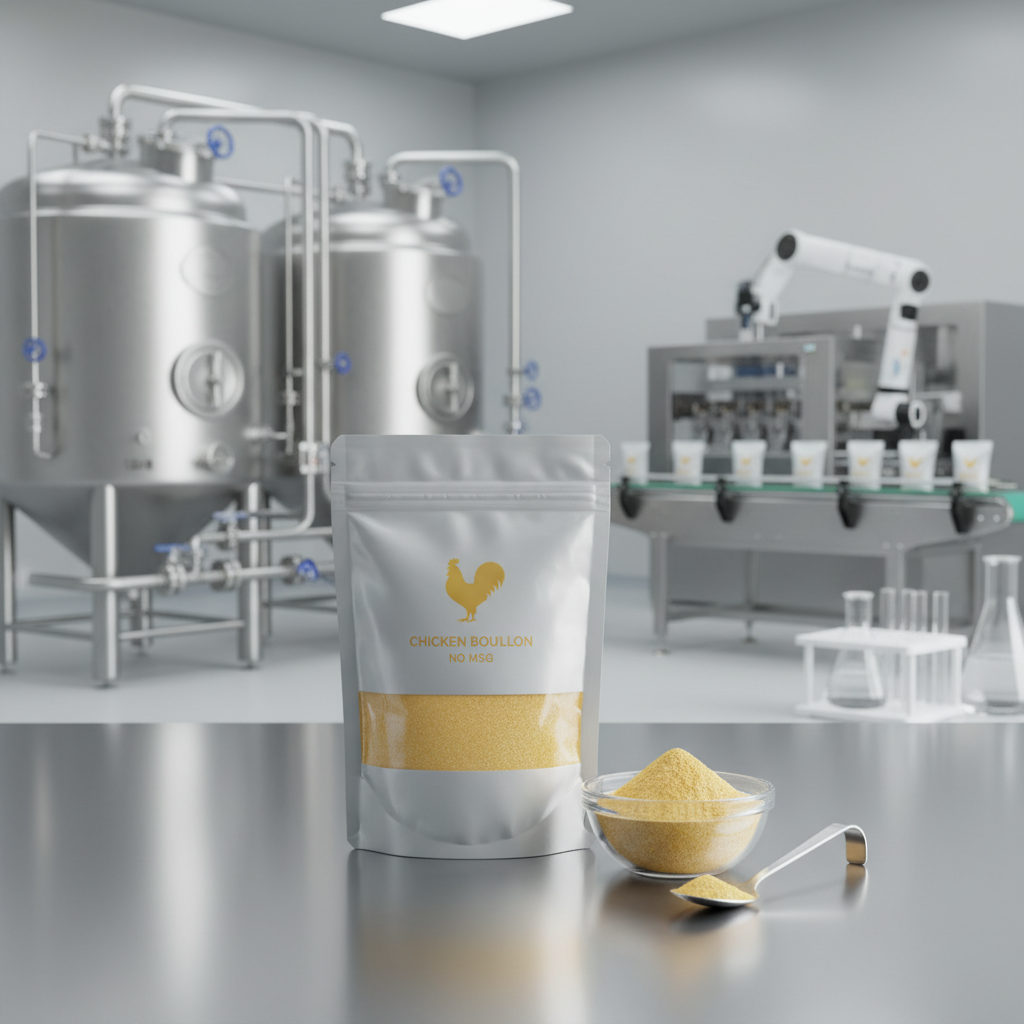
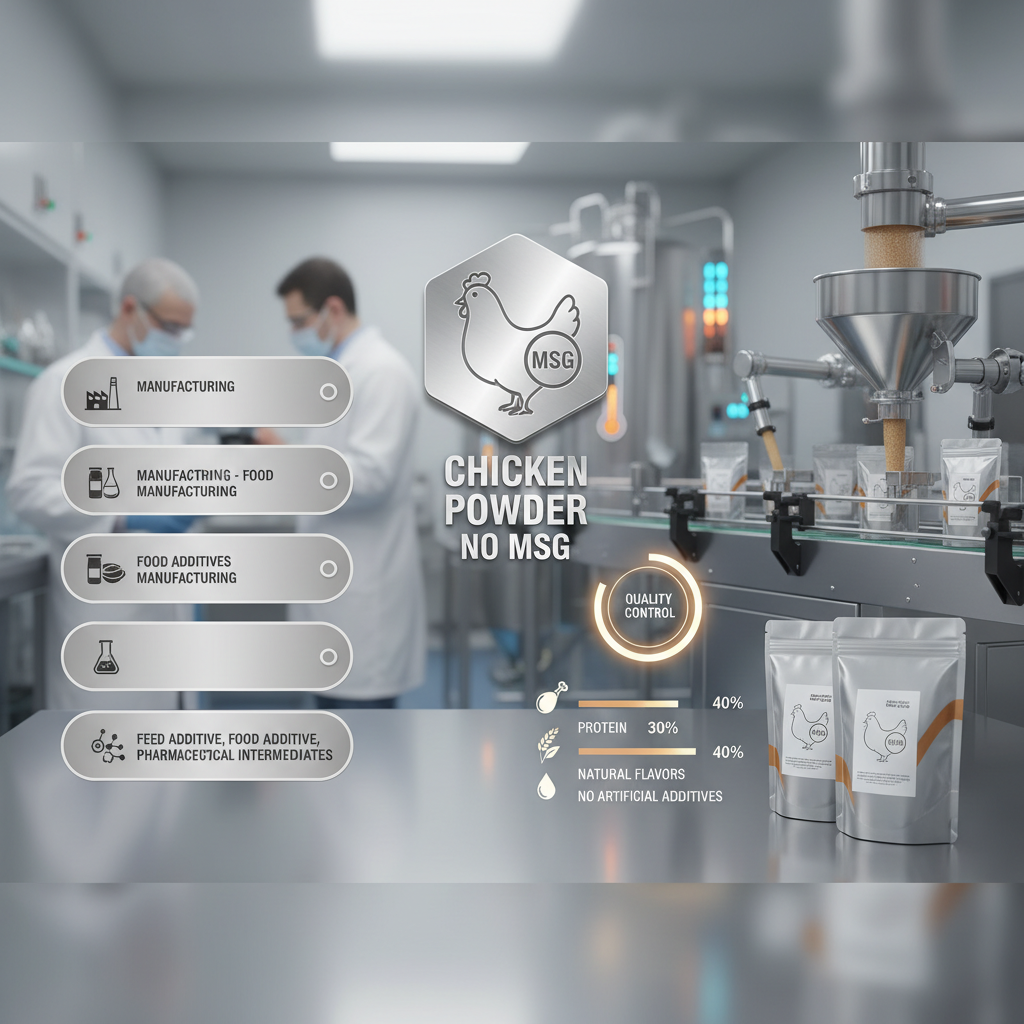
In the evolving landscape of global food manufacturing, the demand for clean-label ingredients has reached an unprecedented peak. Consumers are increasingly scrutinizing ingredient lists, leading to a significant shift toward chicken powder no msg as a preferred savory base. This transition is not merely a trend but a reflection of a broader health consciousness that prioritizes natural flavor enhancers over synthetic additives.
The challenge for food producers has always been maintaining the "umami" profile—that deep, savory taste—without relying on monosodium glutamate. By leveraging advanced fermentation and extraction technologies, the industry has successfully developed a chicken powder no msg that satisfies both the palate of the gourmet and the requirements of the health-conscious consumer.
Understanding the technical composition and application of these MSG-free alternatives is crucial for businesses operating in the food additive and pharmaceutical intermediate sectors. By adopting high-quality, clean-label solutions, manufacturers can expand their market reach into regions with strict regulatory standards, such as the EU and North America, while fostering long-term consumer trust.
The Global Shift Toward MSG-Free Savory Solutions
The global food additive market is witnessing a structural transformation. According to recent industry analysis and consumer behavior data, there is a documented increase in "clean label" searches, with a specific focus on avoiding synthetic flavor enhancers. This has pushed the production of chicken powder no msg from a niche health-store product to a mainstream industrial requirement.
Manufacturers are now integrating these alternatives into everything from instant noodles to premium ready-to-eat meals. The shift is driven by a combination of regulatory pressures—such as stricter labeling laws in the European Union—and a psychological shift in consumers who associate "No MSG" with higher purity and safety, thereby increasing the perceived value of the final product.
Technical Definition and Composition of MSG-Free Powder
At its core, chicken powder no msg is a concentrated seasoning agent formulated to mimic the savory depth of traditional chicken bouillon without the addition of Monosodium Glutamate. Instead of relying on a single synthetic crystalline molecule, it utilizes a synergistic blend of natural proteins, yeast extracts, and organic salts to stimulate the same taste receptors on the human tongue.
From a chemical perspective, this involves the strategic use of naturally occurring glutamates found in hydrolyzed vegetable proteins or fermented soy. By balancing these with inosinates and guanylates derived from mushroom or yeast sources, the powder achieves a "multiplier effect," where the perceived intensity of the flavor exceeds the sum of its individual parts.
This scientific approach ensures that the product remains stable during high-temperature processing, such as spray drying or extrusion, making it an ideal choice for the Feed Additive and Food Additive industries where shelf-life and consistency are paramount.
Core Components for Achieving Natural Umami
The effectiveness of chicken powder no msg relies heavily on the quality of its raw materials. The primary goal is to replicate the complex amino acid profile of slow-simmered chicken bones and meat, which naturally contains a variety of nucleotides.
To achieve this, manufacturers often use a combination of yeast extracts and hydrolyzed proteins. These components provide a rich source of free glutamic acid, ensuring that the chicken powder no msg delivers a lingering savory aftertaste without the "metallic" edge often associated with low-grade synthetic substitutes.
Furthermore, the integration of organic spices, such as onion and garlic powders, helps to mask any bitterness from the hydrolyzation process. This holistic blending approach ensures that the flavor profile is rounded, satisfying both industrial scalability and gourmet quality standards.
Performance Metrics of Various MSG-Free Alternatives
Evaluating the success of an MSG-free seasoning requires a multi-dimensional approach. Companies typically measure the "Umami Intensity Index," the "Clean-Label Compliance Score," and the "Cost-to-Flavor Ratio" to determine which formulation of chicken powder no msg best fits their product line.
While traditional MSG-based powders offer an immediate flavor hit, natural alternatives provide a more complex, layered taste profile that is often preferred in high-end culinary applications and pharmaceutical-grade food supplements.
Comparative Analysis of Chicken Powder No MSG Formulations
Industrial Applications Across Global Food Sectors
The versatility of chicken powder no msg allows it to be utilized across various segments. In the snack food industry, it is used as a coating for extruded corn puffs and chips, providing a savory punch that attracts health-conscious youth. In the ready-meal sector, it serves as a base for gravies and sauces that must maintain flavor stability during freeze-thaw cycles.
Beyond human consumption, similar non-MSG savory compounds are being explored in the Feed Additive industry to improve the palatability of livestock feed, thereby increasing nutrient intake and growth rates without introducing synthetic additives that could migrate into the final meat product.
Economic Value and Long-Term Brand Loyalty
From a commercial standpoint, transitioning to chicken powder no msg is a strategic investment in brand equity. While the raw material cost of natural umami enhancers may be slightly higher than synthetic MSG, the ability to market a product as "Natural" or "MSG-Free" allows brands to command a premium price point.
Furthermore, this move mitigates the risk of regulatory backlash. As global health organizations continue to highlight the importance of reducing processed additives, companies that have already pivoted to clean-label seasonings are positioned as industry leaders rather than laggards.
Ultimately, trust is the most valuable currency in the food industry. By providing a transparent, safe, and delicious seasoning solution, manufacturers foster a deeper emotional connection with their customers, ensuring repeat purchases and long-term market sustainability.
Future Innovations in Clean-Label Flavor Technology
The future of chicken powder no msg lies in the intersection of biotechnology and digitalization. We are seeing the rise of "precision fermentation," where microbes are engineered to produce specific savory peptides that exactly mimic the taste of chicken, reducing the reliance on animal-based extracts and moving toward sustainable, vegan-friendly savory powders.
Additionally, AI-driven flavor mapping is allowing chemists to analyze the molecular structure of traditional bouillon and recreate it using a mathematical combination of natural plant-based ingredients. This ensures a consistent taste profile across different batches, solving one of the biggest challenges of using natural raw materials.
As sustainability becomes a core corporate goal, the industry is also focusing on "upcycling" agricultural by-products to create the base for MSG-free powders, turning food waste into high-value flavor additives.
Comparative Analysis of Future Chicken Powder No MSG Production Technologies
| Technology Type |
Umami Profile |
Production Cost |
Eco-Sustainability |
| Precision Fermentation |
Excellent (9/10) |
High |
Very High |
| AI-Driven Blending |
Good (8/10) |
Medium |
High |
| Upcycled Plant Protein |
Moderate (6/10) |
Low |
Maximum |
| Enzymatic Hydrolysis |
High (8/10) |
Medium |
Medium |
| Cryogenic Extraction |
Superior (10/10) |
Very High |
Medium |
| Traditional Yeast Blend |
Balanced (7/10) |
Low |
High |
FAQS
It uses a synergistic combination of naturally occurring glutamates and nucleotides found in yeast extracts, hydrolyzed vegetable proteins, and mushroom powders. These natural components bind to the same taste receptors as MSG, creating a rich umami experience through biological synergy rather than synthetic addition.
Depending on the formulation, yes. While some use chicken extracts, many "no msg" versions are designed using plant-based proteins and fermented yeast, making them entirely vegan. It is important to check the specific ingredient list for animal-derived components.
No, removing MSG does not negatively impact shelf life. In fact, high-quality chicken powder no msg is formulated with stable natural salts and carriers (like maltodextrin) that ensure a long shelf life when stored in cool, dry conditions.
Absolutely. It is designed for scalability. Because it is a dry powder, it integrates easily into automated mixing systems, spray-dryers, and seasoning applicators used in the mass production of snacks, soups, and condiments.
Generally, MSG-free versions are slightly more expensive due to the cost of natural yeast extracts and the complex blending process. However, this is usually offset by the higher market value and premium pricing that "clean label" products command.
Request a detailed Certificate of Analysis (COA) and a third-party lab report. Reputable manufacturers provide transparency regarding their hydrolysis process and certify that no synthetic monosodium glutamate was added during production.
Conclusion
The transition toward chicken powder no msg represents a pivotal moment in the food additive industry, aligning industrial capability with global health trends. By replacing synthetic enhancers with sophisticated, natural umami blends, manufacturers can deliver high-performance flavor profiles that satisfy the most demanding consumers while meeting stringent international regulatory standards.
Looking forward, the integration of biotechnology and sustainable sourcing will only further refine these products, making them more accessible and environmentally friendly. For businesses aiming to secure a competitive edge in the modern market, adopting clean-label savory solutions is no longer optional—it is a necessity for long-term growth and consumer trust. Visit our website for more information: www.chinaseasoning.com