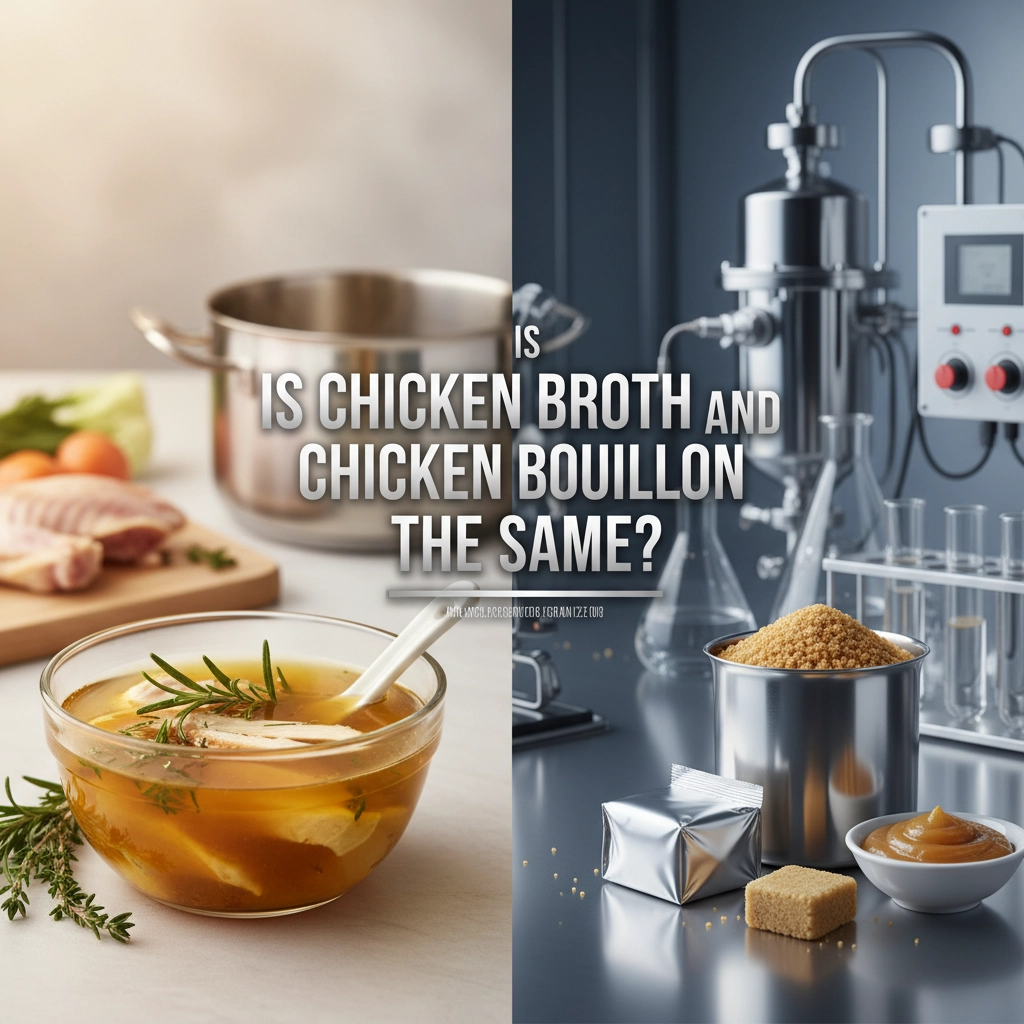
When venturing into the world of culinary arts or industrial food production, one of the most common points of confusion for chefs and food scientists alike is whether is chicken broth and chicken bouillon the same. While both are used to impart a rich, savory chicken flavor to dishes, they differ fundamentally in their production, concentration, and chemical composition. Understanding this distinction is crucial for maintaining consistency in flavor profiles and controlling the nutritional content of commercial food products.
From a global perspective, the demand for convenient flavor enhancers has led to a massive surge in the production of dehydrated bases. The question of whether is chicken broth and chicken bouillon the same becomes particularly relevant when analyzing cost-efficiency in large-scale catering or the development of a new line of instant soups. While broth is a liquid extraction, bouillon is a concentrated essence, often incorporating various food additives to ensure stability and a standardized taste across different batches.
For manufacturers in the food additive sector, bridging the gap between these two forms requires a deep understanding of dehydration technology and flavor chemistry. By clarifying if is chicken broth and chicken bouillon the same, businesses can better optimize their supply chains, selecting either a fresh liquid base for premium organic lines or a high-potency powder for export-oriented convenience foods. This guide will dissect the technical and practical differences to provide a comprehensive industry perspective.
Defining the Technical Difference Between Broth and Bouillon
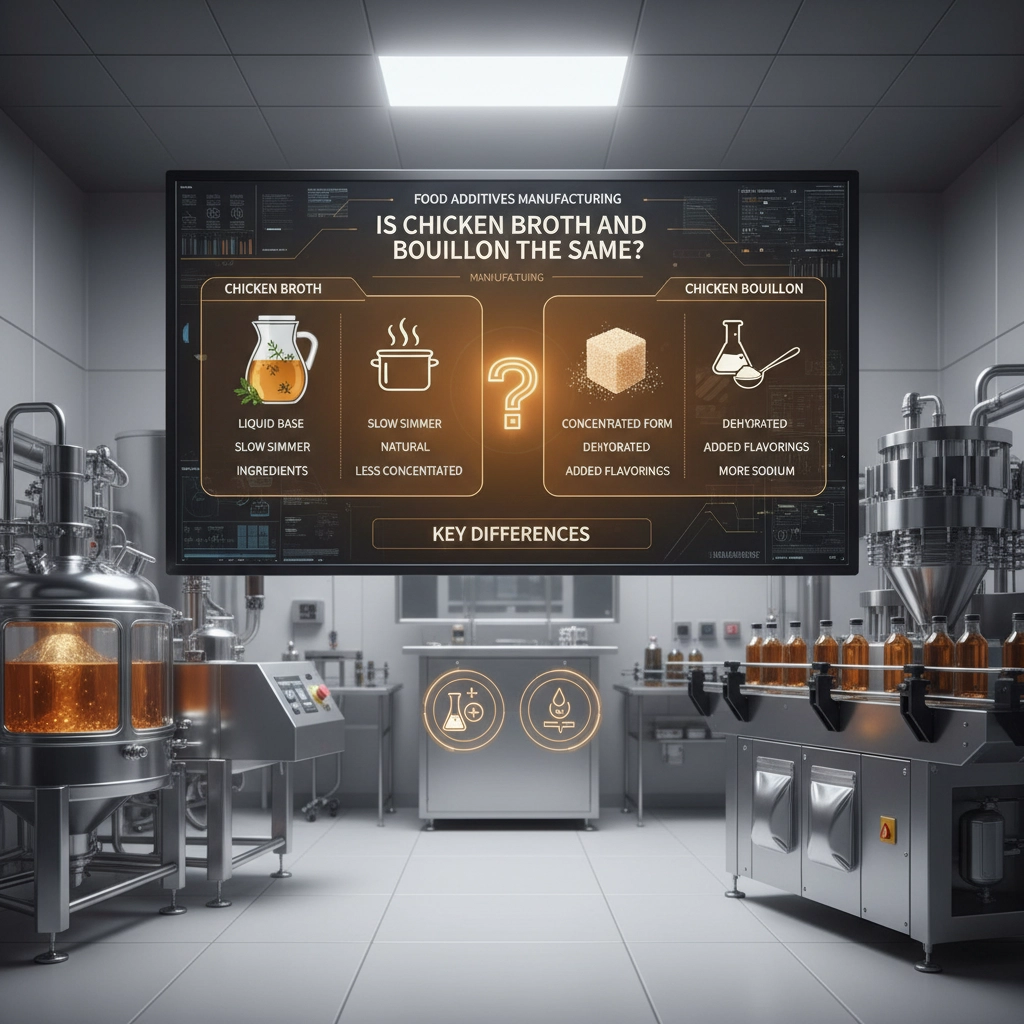
To answer the central question, is chicken broth and chicken bouillon the same, we must first look at the extraction process. Chicken broth is typically a liquid produced by simmering chicken meat and vegetables in water. It is a primary extraction, valued for its natural collagen content and subtle, clean flavor profile. In a commercial setting, broth is often sold as a chilled or UHT-treated liquid that requires little to no further dilution.
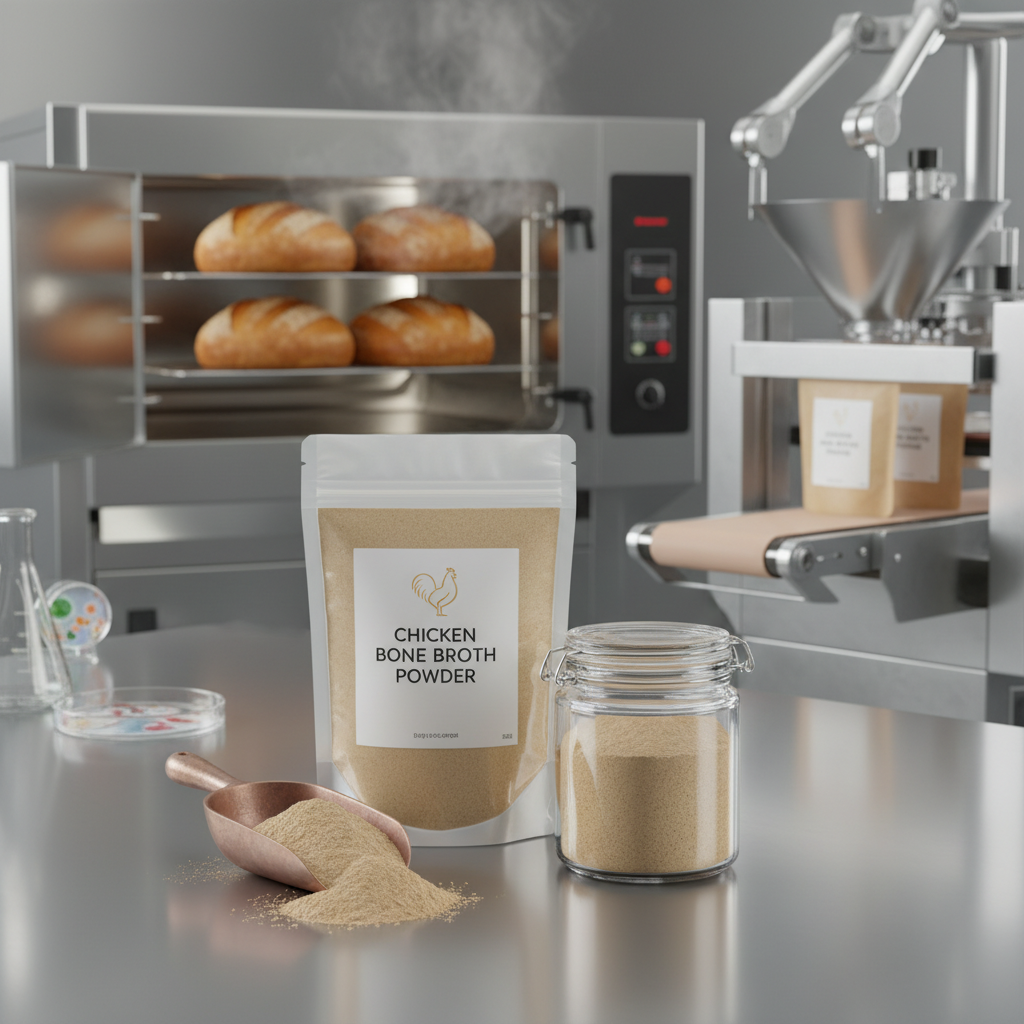
Bouillon, conversely, is the concentrated form of this essence. It is often reduced significantly or created using a blend of meat extracts, salts, and food additives, then dehydrated into a cube or powder. While broth is a finished product, bouillon is a base designed to be reconstituted. Therefore, they are not the same; one is a ready-to-use culinary liquid, while the other is a high-density flavor delivery system used for efficiency and longevity.
Global Market Relevance of Flavor Concentrates
In the global food industry, the debate over whether is chicken broth and chicken bouillon the same takes on economic significance. According to market trends in the processed food sector, the demand for dehydrated bouillon has grown exponentially in regions with complex logistics, such as Sub-Saharan Africa and Southeast Asia. The ability to transport a lightweight cube rather than thousands of liters of liquid broth drastically reduces carbon footprints and shipping costs.
Furthermore, ISO standards for food safety and quality management emphasize the importance of standardization. For a global brand, ensuring that a soup tastes the same in London as it does in Tokyo is nearly impossible with traditional broth due to the variability of raw poultry. Bouillon solves this by using precise additive ratios, ensuring a consistent chemical profile that meets strict international quality benchmarks.
The challenge arises when consumers shift toward "Clean Label" trends. As the world moves away from synthetic enhancers, manufacturers are tasked with creating bouillon that mimics the natural complexity of broth without the reliance on heavy MSG or artificial coloring. This pivot is driving innovation in spray-drying and freeze-drying technologies across the food additive industry.
Core Components and Additive Integration
When analyzing the chemical makeup to determine if is chicken broth and chicken bouillon the same, we see a stark contrast in additive use. Broth relies primarily on water, proteins, and natural fats. Its stability is managed through temperature control and pasteurization, focusing on the preservation of natural amino acids.
Bouillon, however, integrates a sophisticated array of food additives. To achieve its characteristic "umami" punch, manufacturers utilize yeast extracts, hydrolyzed vegetable proteins, and precise sodium levels. These components are essential for ensuring that the product remains shelf-stable for years without refrigeration, a feature that liquid broth simply cannot offer.
The integration of these additives allows bouillon to function as a versatile tool in pharmaceutical intermediates and specialized nutritional feeds. By manipulating the salt and protein concentration, companies can create customized flavor bases that serve both as a culinary ingredient and a nutritional supplement, further widening the gap in the answer to whether is chicken broth and chicken bouillon the same.
Comparative Analysis of Cost and Scalability
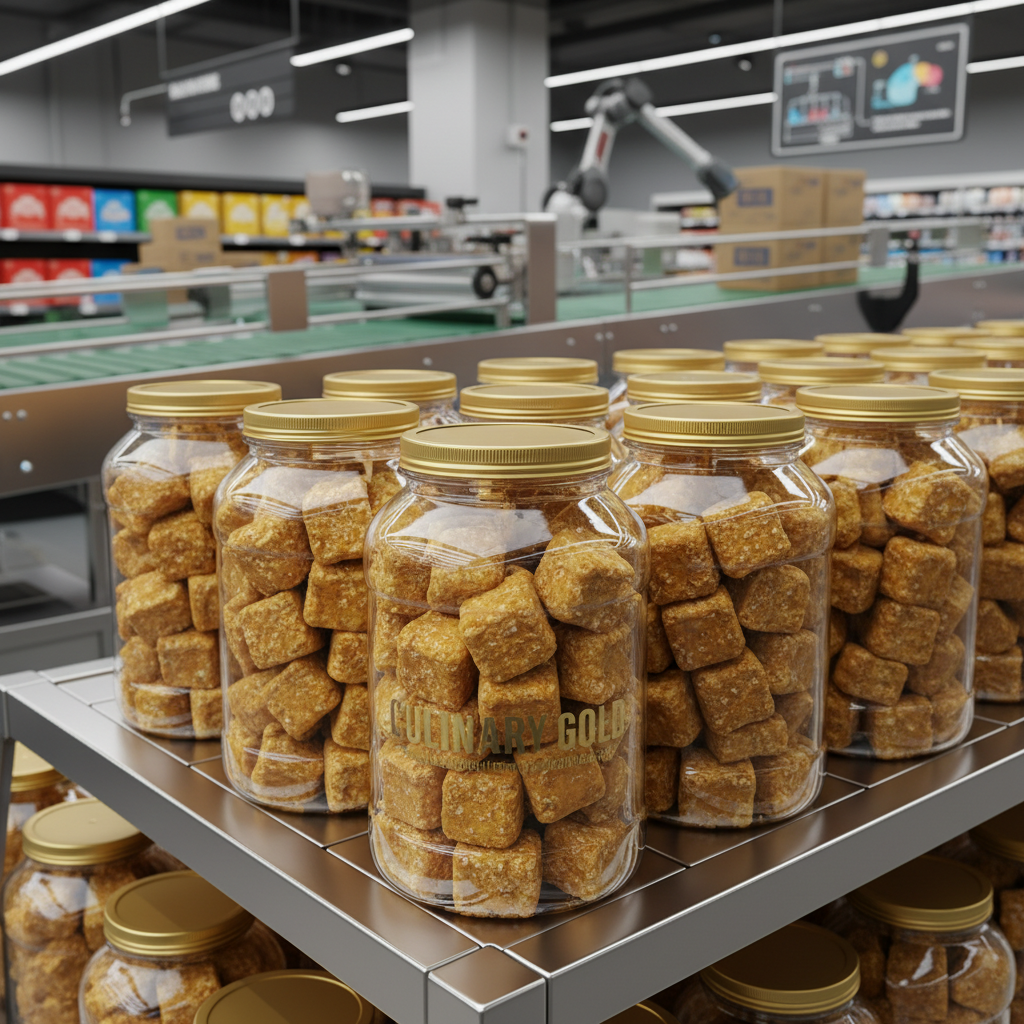
From an operational standpoint, the decision between broth and bouillon depends on the scale of production. Broth requires significant storage space (cold chain logistics) and has a shorter shelf life, making it a high-cost, high-premium option. Bouillon offers unparalleled scalability; a small warehouse can store enough concentrate to produce millions of liters of seasoned liquid.
This scalability is why most commercial food manufacturers favor bouillon. The cost per serving is dramatically lower, and the risk of spoilage during transit is virtually eliminated. When weighing the question of whether is chicken broth and chicken bouillon the same, the financial answer is that bouillon is a tool for mass-market efficiency, while broth is a tool for artisanal quality.
Industrial Efficiency: Broth vs. Bouillon Metrics
Real-World Industrial Applications
In real-world contexts, the distinction regarding whether is chicken broth and chicken bouillon the same manifests in different industries. In the hospitality sector, five-star hotels often prepare their own broth to showcase culinary authenticity and depth. However, in the "Ready-to-Eat" (RTE) meal industry, bouillon is the gold standard because it allows for precise sodium control and rapid rehydration during the assembly line process.
Another critical application is found in humanitarian aid. In post-disaster relief operations, providing liquid broth is logistically impossible. Fortified bouillon cubes, enriched with essential vitamins and minerals, provide a calorie-dense, flavor-rich base that can be mixed with local water and grains to provide immediate nutrition to displaced populations. This highlights how bouillon transcends mere seasoning to become a tool for global food security.
Long-Term Value of Standardized Flavoring
The long-term value of choosing a concentrated bouillon over a traditional broth lies in reliability and trust. For a food manufacturer, "reliability" means that the flavor profile does not fluctuate based on the season or the source of the poultry. By using standardized food additives, brands can guarantee a sensory experience that customers have come to expect, fostering long-term brand loyalty.
Furthermore, there is a sustainability angle. The production of bouillon requires significantly less water for transport and reduces the energy needed for refrigeration. As companies strive to meet ESG (Environmental, Social, and Governance) goals, the shift toward concentrated formats is seen as a logical step in reducing the overall environmental impact of the food supply chain.
Ultimately, the logical angle is cost-effectiveness, but the emotional angle is convenience. The modern consumer values the ability to create a "home-cooked" taste in minutes. By mastering the chemistry that distinguishes bouillon from broth, additive manufacturers can provide the tools that empower both professional chefs and home cooks to achieve excellence with minimal effort.
Future Innovations in Dehydration Technology
Looking ahead, the answer to whether is chicken broth and chicken bouillon the same will be further nuanced by the advent of "Hyper-Concentration" technologies. We are seeing a move toward cryogenic grinding and nano-encapsulation, which allow the volatile aromatic compounds of fresh broth to be trapped within a bouillon powder. This means the gap in taste between the two is rapidly closing.
Digital transformation is also playing a role. AI-driven flavor profiling now allows manufacturers to analyze the molecular structure of a premium home-made broth and replicate it exactly in a bouillon format. This "digital twinning" of flavors ensures that the convenience of a powder no longer requires a sacrifice in sensory quality.
Sustainability will continue to drive the industry toward plant-based "chicken" bouillon. By using fermentation-derived proteins and yeast-based flavor enhancers, the industry is creating alternatives that provide the same savory profile as traditional bouillon but with a fraction of the environmental cost, ensuring the industry remains viable in a green economy.
Comparative Analysis of Broth and Bouillon Industrial Properties
| Property Dimension |
Chicken Broth (Liquid) |
Chicken Bouillon (Concentrate) |
Industrial Impact |
| Shelf Stability |
Short (Requires Cooling) |
Long (Ambient Temp) |
Lowers waste rates |
| Transport Volume |
High (Heavy/Bulky) |
Low (Compact) |
Reduced logistics cost |
| Flavor Control |
Variable/Natural |
Standardized/Precise |
Guarantees consistency |
| Production Speed |
Slow (Simmering) |
Instant (Rehydration) |
Increases throughput |
| Additive Content |
Minimal/None |
High (Stabilizers/Salt) |
Requires label compliance |
| Cost per Liter |
Premium/High |
Economical/Low |
Higher profit margins |
FAQS
No, they are quite different. Chicken broth is generally lower in sodium and contains more natural gelatin and collagen from the simmering process. Chicken bouillon is a concentrated flavor base and typically contains significantly higher levels of sodium and added flavor enhancers like MSG to maintain taste stability. For health-conscious applications, broth is preferred, whereas for flavor intensity, bouillon is superior.
Yes, you can, but you must account for the concentration. Since bouillon is a dehydrated essence, you must follow the dilution instructions (usually one cube or teaspoon per cup of water) to mimic the volume of broth. Be cautious with additional salt in your recipe, as bouillon is already highly salted compared to traditional broth.
For industrial applications, bouillon is almost always the better choice. Its shelf stability, ease of transport, and standardized taste profile make it ideal for mass production. It allows manufacturers to maintain strict quality control across different geographical regions, which is nearly impossible with fresh liquid broth.
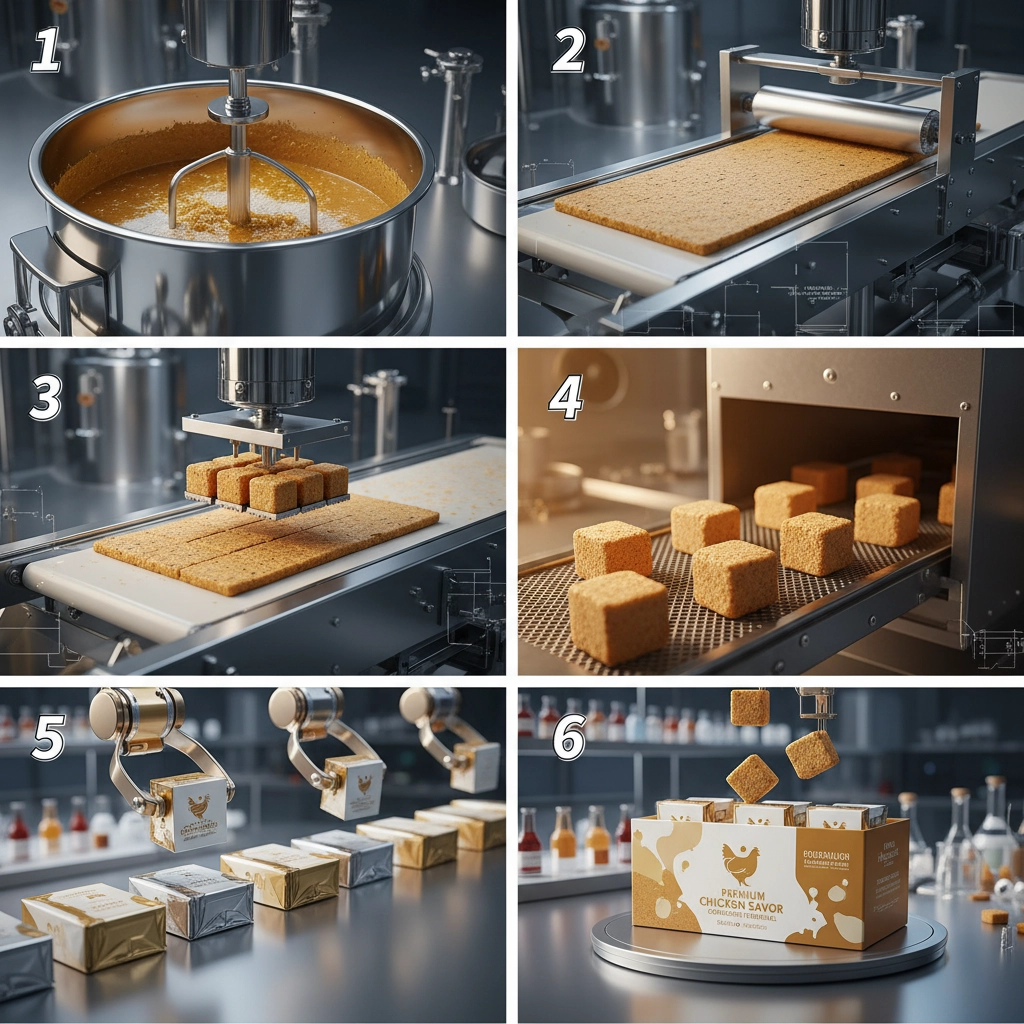
Broth is produced through simple aqueous extraction (boiling meat and veg). Bouillon involves a multi-step process: extraction, concentration via evaporation, the addition of stabilizers and flavor enhancers, and finally, dehydration through spray-drying or compression into cubes.
Yes, the industry is shifting toward clean labels. Many additive manufacturers now offer bouillon produced via freeze-drying without synthetic MSG or artificial colors, using natural yeast extracts to provide the savory profile while remaining compliant with organic and natural food standards.
Absolutely. Broth is highly perishable and requires strict cold-chain management to prevent bacterial growth. Bouillon is designed for ambient storage; as long as it is kept dry and away from direct sunlight, its quality and flavor remain consistent for years.
Conclusion
In summary, while they share a common flavor profile, the answer to is chicken broth and chicken bouillon the same is a definitive no. Broth is the liquid gold of the kitchen, offering natural richness and nutritional depth, whereas bouillon is the engineered powerhouse of the food industry, providing efficiency, consistency, and extreme convenience. From the technical differences in additive integration to the logistical advantages of dehydration, each serves a specific purpose in the culinary and industrial landscape.
For businesses looking to optimize their product lines, the key is to balance authenticity with scalability. Whether you are developing a premium organic soup or a cost-effective instant meal, understanding these distinctions allows you to select the right base for your target market. As technology continues to blur the line between natural extraction and industrial concentration, the ability to leverage both will be a competitive advantage in the global food additive market. Visit our website for more professional insights: www.chinaseasoning.com