Understanding how much sodium in bouillon cubes is essential for modern consumers and food manufacturers alike, as these concentrated flavor enhancers are staples in kitchens worldwide. While they offer convenience and a deep umami profile, the high concentration of salt often poses a challenge for those managing dietary restrictions or seeking a healthier lifestyle.
Globally, the demand for convenient seasoning has surged, but so has the awareness of hypertension and cardiovascular health, leading many to question exactly how much sodium in bouillon cubes they are incorporating into their daily meals. This balance between taste efficiency and nutritional safety is a primary driver in the evolution of the food additive industry.
By analyzing the composition of these cubes, we can better understand the role of salt as both a preservative and a flavor carrier. Navigating the complexities of how much sodium in bouillon cubes allows users to make informed substitutions or adjust their recipes to maintain flavor without compromising their well-being.
Global Context of Sodium Levels in Bouillon
On a global scale, the consumption of processed seasonings is inextricably linked to public health trends. The World Health Organization (WHO) has consistently highlighted the risks of excessive sodium intake, which is a primary contributor to high blood pressure and heart disease. In many regions, the question of how much sodium in bouillon cubes becomes a critical health metric, as these products are often used in large quantities for family-sized meals.
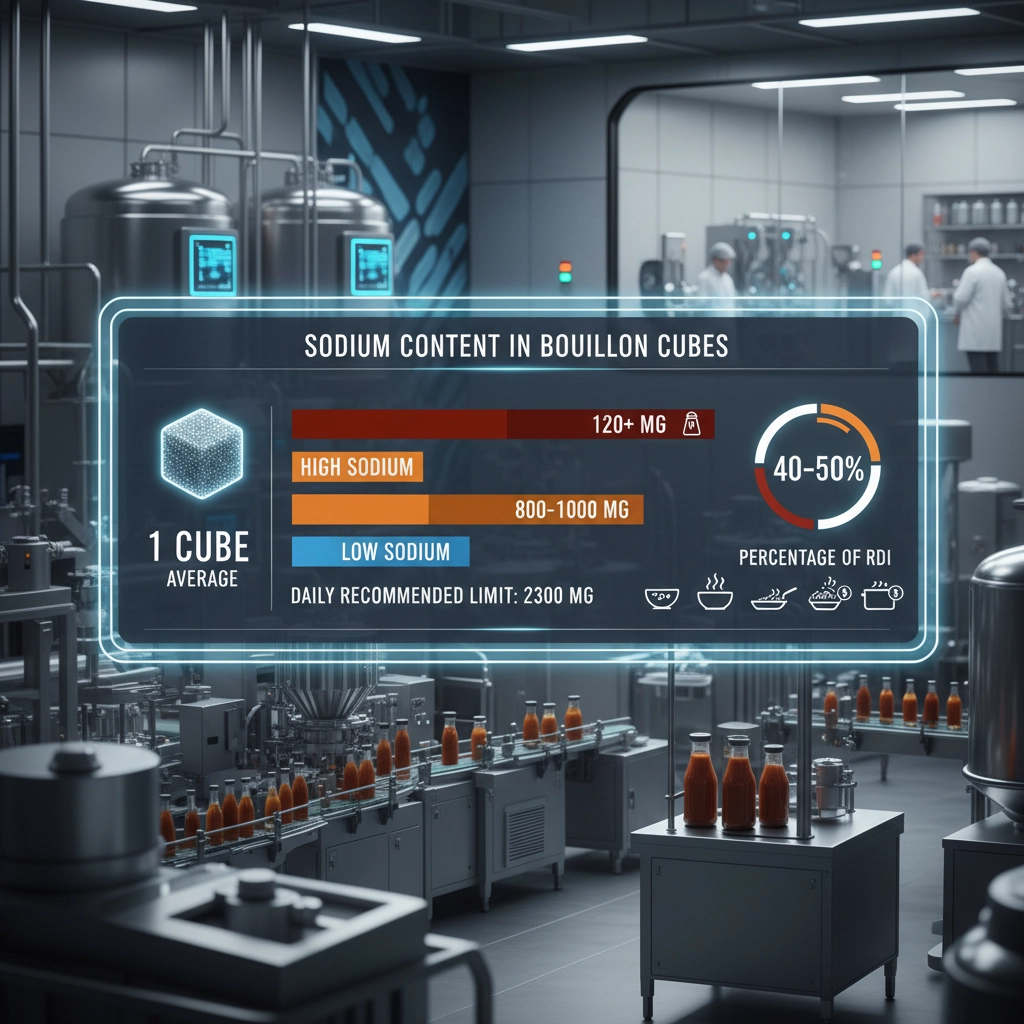
Industry data suggests that a single bouillon cube can sometimes contain more than half of the recommended daily intake of sodium. This creates a significant challenge for food manufacturers who must balance the preservation qualities of salt with the growing consumer demand for "clean label" and heart-healthy products. Consequently, the industry is shifting toward more sophisticated flavor profiles that do not rely solely on sodium chloride.
Defining Sodium Concentration in Seasoning Cubes
When we discuss how much sodium in bouillon cubes, we are referring to the amount of sodium ions present in the product, typically measured in milligrams (mg) per cube or per serving. Sodium is not just about the taste of salt; it is a chemical component that ensures the stability of the cube, preventing microbial growth and maintaining a long shelf life without the need for constant refrigeration.
In simple terms, sodium in bouillon serves as both a flavor enhancer and a structural stabilizer. For the food additive industry, managing these levels is a precise science. By utilizing different types of salts or potassium-based substitutes, manufacturers can manipulate the perceived saltiness while reducing the actual sodium load, addressing the humanitarian need for accessible yet healthy nutrition.
This definition extends beyond the kitchen. In industrial food production, understanding the sodium density of these cubes allows for the precise calculation of nutritional labels. This transparency is vital for consumers globally, enabling them to track their daily intake and make healthier dietary choices without sacrificing the rich, savory taste provided by high-quality bouillon.
Key Factors Influencing Sodium Content
One of the primary factors determining how much sodium in bouillon cubes is the preservation method. Salt acts as a natural preservative by drawing moisture out of the product, which inhibits the growth of bacteria. Therefore, cubes designed for long-term storage in tropical climates often have higher sodium concentrations to ensure safety and durability.
Another critical aspect is the use of MSG (Monosodium Glutamate) and other flavor enhancers. While MSG provides the "umami" taste, it also contributes to the overall sodium count. The ratio of sodium chloride to monosodium glutamate determines not only the final taste profile but also the total answer to how much sodium in bouillon cubes is present.
Finally, the target market and regional taste preferences play a significant role. In some cultures, a higher salt profile is preferred for traditional stews, leading manufacturers to increase sodium levels. Conversely, in markets with strict health regulations, such as the EU, there is a stronger push toward reducing these levels through the integration of advanced food additives and natural extracts.
Comparative Analysis of Sodium Variations
Comparing different brands and types of bouillon reveals a wide spectrum of sodium levels. Traditional beef and chicken cubes tend to have the highest concentrations, whereas organic or "low-sodium" versions utilize potassium chloride to mimic the saltiness. When analyzing how much sodium in bouillon cubes, it becomes clear that the additive blend is the deciding factor in nutritional value.
The shift toward pharmaceutical-grade intermediates in food additives has allowed for more precise control over sodium delivery. By using micronized salts and concentrated yeast extracts, manufacturers can achieve the same sensory impact with a lower total sodium mass, effectively optimizing the nutritional profile without losing the commercial appeal of the product.
Comparison of Sodium Impact Across Different Bouillon Types
Global Applications and Culinary Use Cases
In real-world applications, the awareness of how much sodium in bouillon cubes varies by industry. In large-scale catering and hotel chains, bouillon is used as a base for massive quantities of soup, meaning that even a small reduction in sodium per cube can lead to a significant decrease in the total salt intake for thousands of guests.
In humanitarian contexts, such as post-disaster relief operations or remote industrial zones, bouillon cubes are invaluable due to their stability and nutrient density. However, NGOs are increasingly sourcing low-sodium versions to ensure that vulnerable populations—who may already have compromised health—are not subjected to excessive salt loads during emergency feeding programs.
Long-Term Value of Sodium-Controlled Additives
The transition toward optimized sodium levels offers tangible long-term benefits for both the producer and the consumer. For manufacturers, creating products with a balanced sodium profile increases market reach, allowing them to enter health-conscious markets and comply with tightening international food safety standards. This innovation fosters trust and brand loyalty, as consumers feel the company is prioritizing their health.
From a social impact perspective, reducing how much sodium in bouillon cubes contributes to a broader goal of reducing global hypertension rates. By innovating the way salt is used, the industry provides a path toward "dignified nutrition," where flavor and health are not mutually exclusive, but rather integrated through scientific advancement.
Moreover, the reliability of these low-sodium alternatives ensures that dietary restrictions do not mean the loss of cultural culinary traditions. By maintaining the deep, savory characteristics of traditional bouillon while controlling the sodium, the food additive industry preserves the emotional connection people have with their favorite comfort foods.
Future Trends in Low-Sodium Seasoning Technology
The future of bouillon production is leaning heavily toward digital transformation and biotechnology. We are seeing the rise of "precision fermentation," where microbes are used to create natural flavor enhancers that provide the same salty punch as sodium chloride but with a fraction of the sodium content. This shift will fundamentally change the answer to how much sodium in bouillon cubes in the next decade.
Sustainability is also driving innovation. The move toward plant-based bouillon is reducing the reliance on animal-derived fats, which often required higher salt levels for flavor stabilization. New, green-energy-powered dehydration techniques are allowing for the creation of cubes that retain more natural volatile flavor compounds, reducing the need for salt as a primary flavor carrier.
As automation and AI-driven formulation become standard, manufacturers can now simulate thousands of ingredient combinations to find the "sweet spot" where sodium is minimized without affecting the taste profile. This algorithmic approach to seasoning is paving the way for personalized nutrition, where bouillon cubes could be tailored to specific health needs.
Comparative Analysis of Sodium Reduction Strategies in Bouillon Production
| Reduction Method |
Impact on Taste |
Shelf-Life Stability |
Cost-Efficiency Score |
| Potassium Chloride Sub |
Slightly Metallic |
High |
9/10 |
| Yeast Extract Enrichment |
Enhanced Umami |
Medium |
7/10 |
| Precision Fermentation |
Natural/Pure |
High |
5/10 |
| Micronized Salt Tech |
Very Similar |
High |
8/10 |
| Natural Herb Blends |
Complex/Aromatic |
Low |
6/10 |
| AI-Optimized Formulations |
Balanced |
High |
8/10 |
FAQS
Generally, any bouillon cube containing more than 800-1,000mg of sodium per serving is considered high. Since the daily recommended limit for most adults is around 2,300mg, a single cube can quickly account for a large portion of your daily allowance. It is always advisable to check the nutritional panel for the specific milligram count per cube.
Yes, you can reduce the impact by using half a cube and supplementing the flavor with fresh herbs, lemon juice, or garlic. Additionally, avoid adding extra table salt to the dish until the very end, as the sodium in the bouillon concentrates as the liquid boils down.
Modern low-sodium cubes use advanced food additives like potassium chloride and yeast extracts to maintain a savory profile. While the "sharpness" of the salt might be slightly different, they provide an excellent umami base that is often more complex than standard high-sodium versions.
Sodium serves two primary purposes: taste and preservation. Salt prevents the growth of microorganisms, allowing the cubes to remain shelf-stable for years without refrigeration. It also acts as a flavor enhancer that carries the taste of meat or vegetables across the palate more effectively.
While it varies by brand, beef bouillon often has a slightly higher sodium content to balance the heavier, richer flavors of the beef extract. Chicken bouillon is typically slightly lower but still significant. Always compare the "sodium per serving" on the label for an accurate comparison.
For industrial applications, it is best to partner with a specialized food additive manufacturer that offers customizable formulations. By specifying your sodium targets, you can obtain customized seasoning bases that meet both your nutritional goals and your flavor requirements.
Conclusion
In summary, the question of how much sodium in bouillon cubes is more than just a dietary concern; it is a reflection of the ongoing evolution in food science. By balancing the functional needs of preservation with the health requirements of the modern consumer, the industry has moved toward more innovative, low-sodium alternatives that do not sacrifice the rich, savory experience we expect from professional-grade seasonings.
Looking forward, the integration of biotechnology and AI-driven formulation will likely lead to a new era of "smart seasonings," where sodium is minimized while flavor is maximized. We encourage food manufacturers and culinary professionals to embrace these low-sodium trends to promote global health without losing the heart of their culinary creations. Visit our website for more professional additive solutions: www.chinaseasoning.com