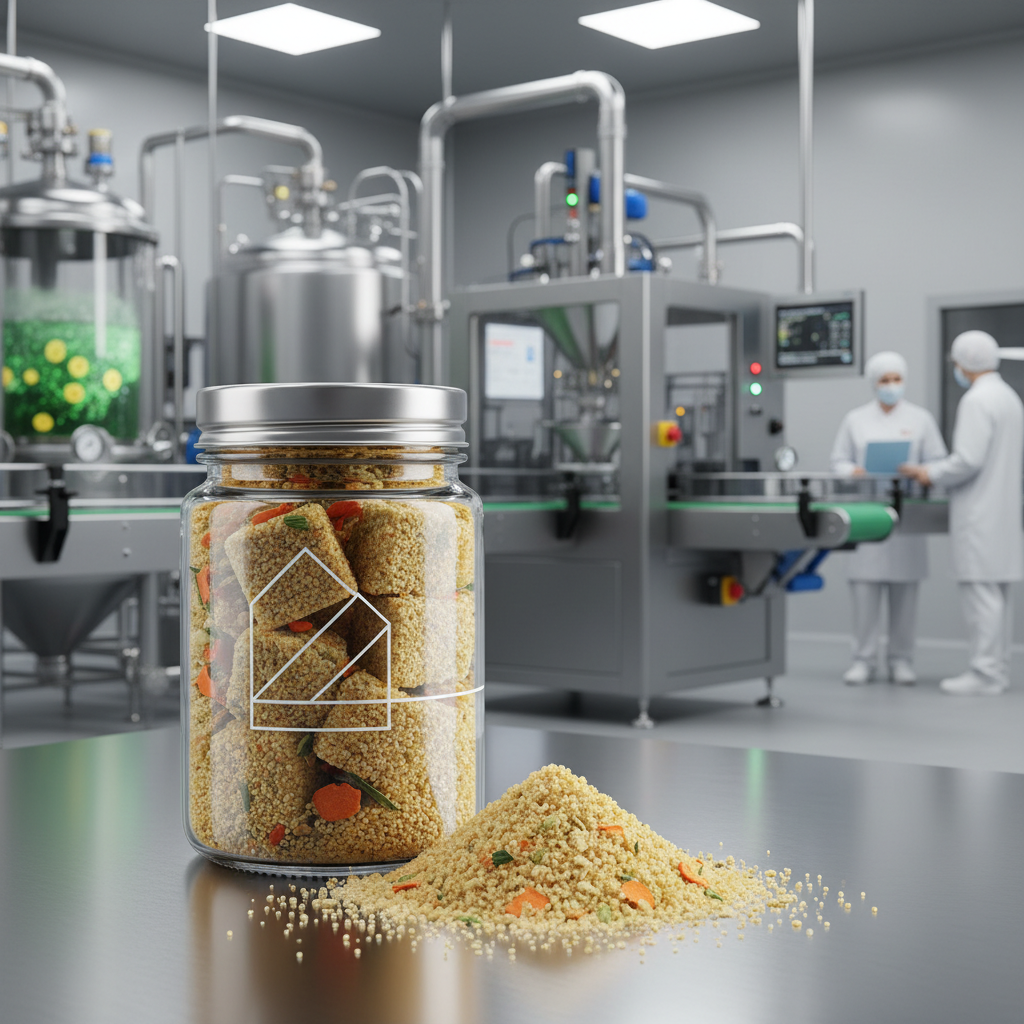
The global shift toward plant-based diets and the rising demand for clean-label ingredients have propelled bouillon veg stock from a simple kitchen staple to a critical industrial component in the food additive sector. As consumers seek convenient yet nutritious alternatives to animal-based broths, the manufacturing of high-quality vegetable bases has become a focal point for innovation in flavor chemistry and sustainability.
From a commercial perspective, the versatility of a well-formulated bouillon veg stock allows food producers to standardize taste profiles across massive production lines while meeting the strict dietary requirements of vegan and vegetarian populations. The ability to condense complex aromatic profiles into a stable, powdered, or cubed format ensures a long shelf life and efficient logistics, which are essential for global distribution.
Understanding the nuances of bouillon veg stock—from its ingredient synergy to its application in pharmaceutical intermediates and food additives—is vital for businesses aiming to capture the growing health-conscious market. By balancing savory "umami" notes with nutritional integrity, manufacturers can provide a product that satisfies both the palate and the health-driven demands of the modern era.
Global Market Relevance of Bouillon Veg Stock
The global demand for bouillon veg stock is intricately linked to the rise of "flexitarianism" and the increasing prevalence of food allergies. According to industry trends mirrored in ISO food safety standards, there is a documented shift toward plant-derived flavor enhancers that can replicate the depth of traditional meat stocks without the associated cholesterol or environmental footprint.
In many emerging markets, the challenge lies in providing affordable, nutrient-dense flavor bases that can withstand tropical climates without refrigeration. This is where industrial-grade vegetable bouillon excels, offering a concentrated source of savory flavor that supports food security and enhances the palatability of basic grains and legumes in humanitarian aid packages.
Defining the Industrial Standard of Vegetable Bouillon
At its core, bouillon veg stock is a dehydrated, concentrated seasoning blend consisting of vegetable extracts, salts, and aromatic herbs. Unlike home-made stocks, industrial bouillon is engineered for consistency, ensuring that every batch delivers the exact same sensory experience regardless of the season or origin of the raw vegetables.
In the context of modern food additives, these stocks serve as "flavor foundations." They are not merely ingredients but are complex matrices designed to interact with other components in a recipe, enhancing the natural taste of primary ingredients while providing a consistent baseline of salinity and umami.
This industrialization addresses the critical need for scalability. For a global food brand, relying on fresh vegetable reductions is cost-prohibitive and logistically impossible; therefore, the transition to a stabilized bouillon format is the only viable path to maintaining quality at a scale of millions of units.
Core Components for Flavor Stability
To achieve a professional grade of bouillon veg stock, manufacturers focus on the synergy between yeast extracts and vegetable powders. Yeast extracts provide the essential nucleotides that trigger the umami receptors, mimicking the depth typically found in slow-simmered animal bones.
The second critical component is the salt and maltodextrin balance. Salt acts not only as a flavor enhancer but as a primary preservative, while maltodextrin ensures the bouillon veg stock remains free-flowing and resists clumping in humid industrial environments.
Finally, the inclusion of aromatic botanical oils—such as celery seed oil, onion powder, and parsley extract—creates the "top notes" of the flavor profile. These volatile compounds are carefully encapsulated to prevent oxidation, ensuring the stock smells fresh upon reconstitution.
Key Performance Factors in Production
The efficiency of bouillon veg stock production is measured by its solubility, flavor intensity, and stability. A high-performance stock must dissolve completely in hot water without leaving gritty residues, which requires precise particle size distribution during the milling and granulation process.
Furthermore, cost efficiency is achieved through the strategic sourcing of "ugly" vegetables—produce that is aesthetically imperfect for retail but nutritionally and flavor-perfect for extraction. This reduces waste and lowers the raw material cost for the final additive.
Performance Metrics for Bouillon Veg Stock Formulations
Global Applications and Use Cases
In the commercial food sector, bouillon veg stock is extensively used in the production of ready-to-eat (RTE) meals and instant soups. By integrating a concentrated veg base, manufacturers can ensure a consistent taste profile across different geographical markets, eliminating the variability associated with local fresh produce.
Beyond the kitchen, these formulations find a niche in pharmaceutical intermediates where specific vegetable-derived minerals and salts are required as carriers for active ingredients. In remote industrial zones or post-disaster relief operations, bouillon cubes are essential for providing an immediate sense of "home-cooked" comfort and essential sodium levels to displaced populations.
Long-term Value and Sustainability Benefits
The transition toward bouillon veg stock represents a significant victory for environmental sustainability. By replacing beef or chicken stocks, the carbon footprint of the final product is drastically reduced, lowering the methane emissions and water usage associated with livestock farming.
Economically, the long-term value lies in the reduction of food waste. The process of transforming surplus vegetables into a shelf-stable powder prevents tons of organic matter from ending up in landfills, turning a liability into a high-value commercial asset.
Furthermore, from a social impact lens, providing a clean-label, vegan-friendly bouillon ensures that food is inclusive. It allows diverse populations—regardless of religious or ethical dietary restrictions—to access flavor-rich nutrition, fostering a sense of dignity and inclusivity in global food supply chains.
Future Innovations in Stock Manufacturing
The future of bouillon veg stock is being shaped by biotechnology and the "clean label" movement. We are seeing a move away from MSG toward fermentation-derived glutamates, where microbes are used to naturally produce the umami depth once achieved through chemical synthesis.
Digital transformation is also playing a role; AI-driven flavor mapping allows manufacturers to analyze thousands of vegetable combinations to find the perfect "golden ratio" for different regional palates, enabling a hyper-localized approach to global stock production.
Additionally, the integration of green energy in the spray-drying process is reducing the industrial energy load. By using solar-thermal drying and closed-loop water systems, the production of vegetable bouillon is becoming a benchmark for circular economy practices in the food additive industry.
Comparative Analysis of Bouillon Veg Stock Production Technologies
| Technology Type |
Flavor Retention |
Production Cost |
Shelf Stability |
| Spray Drying |
Moderate (6/10) |
Low |
High |
| Freeze Drying |
Excellent (10/10) |
Very High |
Very High |
| Drum Drying |
Low (4/10) |
Very Low |
Moderate |
| Vacuum Evaporation |
High (8/10) |
Moderate |
High |
| Cold Press Extraction |
Very High (9/10) |
High |
Low (Liquid) |
| Hybrid Fermentation |
High (8/10) |
Moderate |
High |
FAQS
Industrial bouillon veg stock is engineered for consistency and longevity. While home-made stock uses fresh simmering, industrial versions utilize concentration and dehydration techniques. This allows for a standardized flavor profile, a much longer shelf life, and the ability to be stored without refrigeration, making it ideal for large-scale commercial use.
Yes, certain high-purity vegetable extracts used in bouillon are utilized as excipients or carriers in pharmaceutical applications. Their ability to provide a palatable taste and a stable salt matrix helps in masking the bitterness of active pharmaceutical ingredients (APIs) in liquid or powdered oral medications.
Most professional bouillon veg stock products are vegan, but it depends on the specific additive used. For example, some use milk-derived lactose or soy-based thickeners. High-quality manufacturers provide clear certifications (e.g., V-Label) to guarantee that the product is 100% plant-based and free from common allergens.
The savory depth is achieved through the use of yeast extracts and the concentration of naturally occurring glutamates found in vegetables like tomatoes, mushrooms, and onions. By utilizing enzymatic hydrolysis, manufacturers can unlock these flavor precursors, creating a rich taste profile that mimics meat stocks.
When stored in a cool, dry place in airtight packaging, powdered bouillon typically has a shelf life of 18 to 24 months. The use of salt and maltodextrin prevents moisture absorption and microbial growth, ensuring the flavor remains potent over time.
Importing bouillon veg stock requires compliance with the destination country's food safety laws (such as FDA or EFSA). Companies should ensure that the supplier provides a detailed Certificate of Analysis (CoA), MSDS sheets, and appropriate customs documentation to facilitate smooth transit.
Conclusion
In summary, bouillon veg stock has evolved from a simple convenience product into a sophisticated industrial tool that bridges the gap between nutrition, taste, and sustainability. By leveraging advanced dehydration technologies and flavor chemistry, the food additive industry can now provide a consistent, plant-based foundation that meets the rigorous demands of global food production while significantly reducing the environmental impact of savory seasonings.
Looking ahead, the integration of AI-driven formulation and fermentation technology will likely push the boundaries of what vegetable stocks can achieve, making them indistinguishable from their animal-based counterparts. For businesses looking to innovate in the food and pharmaceutical sectors, investing in high-quality, clean-label bouillon solutions is not just a trend—it is a strategic necessity for long-term growth and consumer trust. Visit our website for more professional solutions: www.chinaseasoning.com