Understanding food additive numbers is essential for maintaining transparency and safety in the global food supply chain. These alphanumeric codes, often referred to as E numbers in Europe and internationally recognized through Codex Alimentarius, serve as a universal language that allows manufacturers, regulators, and consumers to identify substances used to preserve, color, or enhance the flavor of food products regardless of linguistic barriers.
In an era of complex global trade, the standardized use of food additive numbers ensures that a product manufactured in one continent meets the safety specifications of another. By condensing complex chemical names into streamlined codes, the industry can manage vast inventories of Feed Additives, Food Additives, and Pharmaceutical Intermediates with precision, reducing the risk of mislabeling and ensuring that dosage limits are strictly adhered to.
For professionals in the food manufacturing sector, mastering these numbering systems is not just a regulatory requirement but a strategic advantage. It facilitates faster product development, streamlines customs clearance, and builds consumer trust by providing a verifiable method of ingredient disclosure, ultimately contributing to a more sustainable and secure global food system.
The Global Standardization of Food Additive Numbers
The standardization of food additive numbers is primarily driven by the need for international harmonization in food safety. Organizations such as the WHO and FAO, through the Joint Expert Committee on Food Additives (JECFA), establish the scientific basis for these numbers, ensuring that every code corresponds to a substance that has been rigorously tested for toxicity and biological impact.
This global framework prevents the chaotic proliferation of local naming conventions, which often led to dangerous misunderstandings in the early 20th century. Today, whether a manufacturer is producing pharmaceutical intermediates or specialized feed additives, these numbers provide a failsafe reference point that ensures the right concentration of a substance is used across different regulatory jurisdictions.
Decoding the Logic Behind Numbering Systems
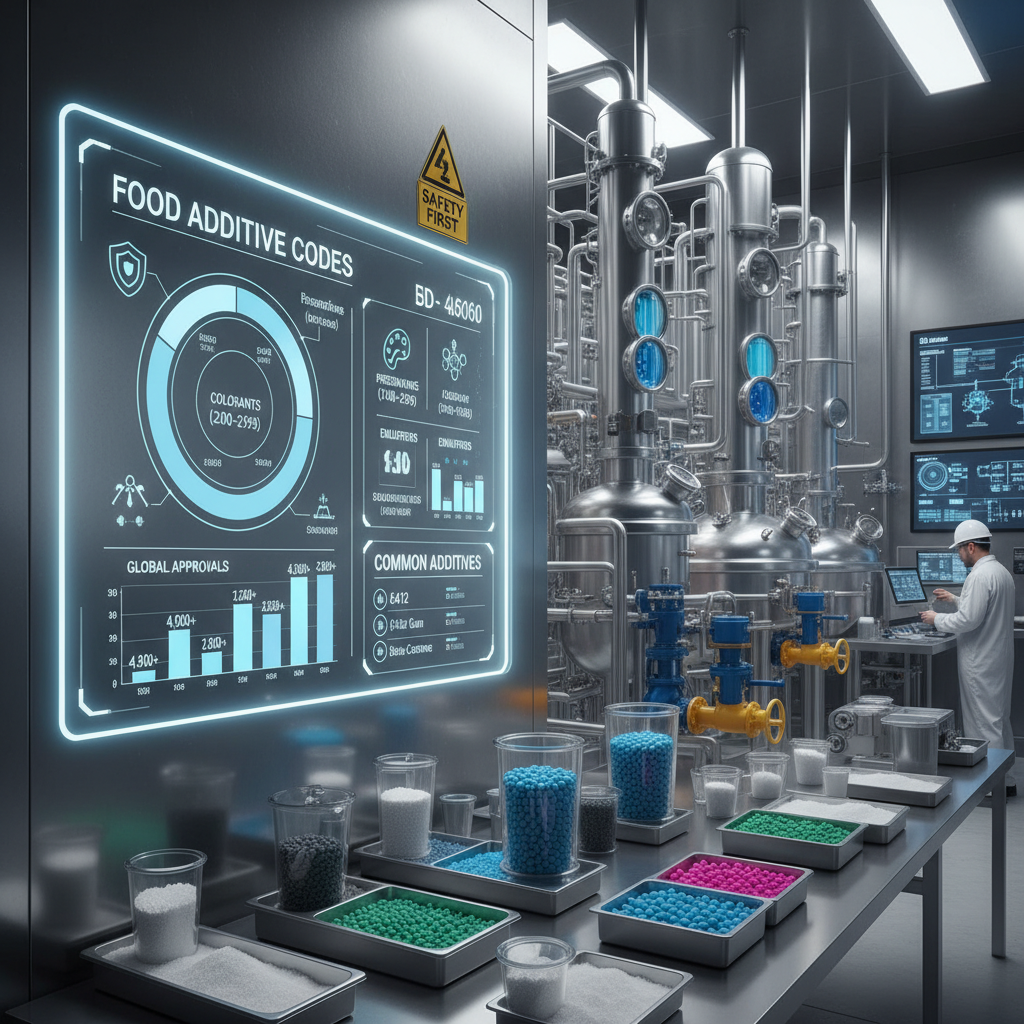
At first glance, food additive numbers may seem like random digits, but they follow a strict logical hierarchy. Typically, the numbers are grouped by function: for instance, numbers in the 100s usually represent colors, the 200s are reserved for preservatives, the 300s for antioxidants and acidity regulators, and so on. This systematic approach allows food scientists to quickly identify the purpose of an ingredient without needing a full chemical dictionary.
Furthermore, the distinction between natural and synthetic origins is often embedded within the numbering logic or the accompanying regulatory documentation. This allows for the precise categorization of additives, making it easier for companies to market "natural" labels while still remaining compliant with the rigorous technical requirements of the food additive numbers system.
Understanding this logic is crucial for scalability in manufacturing. When a company expands its product line from basic food additives to complex pharmaceutical intermediates, the ability to categorize substances by their functional code reduces the overhead cost of quality control and speeds up the formulation process in the laboratory.
Impact of Food Additive Numbers on Safety Compliance
Safety compliance in the food industry relies heavily on the precise application of food additive numbers to prevent over-consumption of specific chemicals. By linking every additive to a specific number, regulatory bodies can set Acceptable Daily Intakes (ADIs) that are easily trackable across different product labels.
The integration of food additive numbers into digital auditing tools allows for real-time monitoring of ingredient levels. This is particularly vital when handling high-potency additives where a minor deviation in dosage could lead to health risks or a total product recall, thus safeguarding the brand's reputation and consumer health.
Moreover, for exporters, these numbers act as a "passport" for ingredients. When shipping food additives to international markets, presenting a list of standardized food additive numbers simplifies the verification process for customs agents, ensuring that the shipment complies with the destination country's health laws.
Efficiency Metrics of additive Classification
To evaluate the efficiency of utilizing food additive numbers over traditional naming, we look at factors such as search speed, error reduction, and regulatory alignment. The use of numeric codes eliminates the ambiguity associated with synonyms—where one chemical might have five different names—thereby drastically reducing procurement errors in the supply chain.
In a fast-paced manufacturing environment, the ability to utilize numeric identifiers allows for the automation of inventory management. Systems can be programmed to flag incompatible food additive numbers during the formulation stage, ensuring that no two reactive substances are mixed.
Efficiency Rating of Food Additive Numbers Identification Methods
Practical Applications Across Industrial Zones
In large-scale industrial zones, such as those specializing in Feed Additives and Pharmaceutical Intermediates, food additive numbers are used to synchronize logistics. For example, in remote industrial parks in Asia, the use of these numbers allows for the seamless integration of raw material imports from Europe, ensuring that the purity and grade of the additives match the local production requirements.
Beyond the factory floor, these numbers are applied in disaster relief operations where nutrient-fortified foods must be produced rapidly. Using standardized food additive numbers ensures that humanitarian organizations can quickly verify that the fortification agents used in emergency rations are safe and approved by international health standards, regardless of where the food is processed.
Long-term Value of Transparent Labeling
The long-term value of relying on a standardized system of food additive numbers lies in the creation of consumer trust. As consumers become more health-conscious, they often research the numbers listed on their food labels. When a company provides transparent information linked to these universal codes, it demonstrates a commitment to safety and honesty, which enhances brand loyalty.
From a corporate sustainability perspective, the use of these numbers reduces waste. By eliminating errors in ingredient selection and dosing, manufacturers can significantly lower the rate of spoiled batches. This operational reliability not only improves the bottom line but also reduces the environmental impact associated with chemical waste and discarded food products.
Moreover, the logical structure of food additive numbers supports innovation. Researchers can easily identify "gap" areas in current additive functions—such as the need for more sustainable, plant-based stabilizers—and develop new substances that can eventually be integrated into the numbering system, pushing the industry toward greener alternatives.
Future Innovations in Digital Additive Tracking
The future of food additive numbers is inextricably linked to digital transformation. We are seeing a shift toward Blockchain-enabled traceability, where a specific additive number is linked to a digital ledger. This allows a consumer to scan a QR code and see the entire journey of that additive, from the laboratory where it was synthesized to the final packaged product.
Artificial Intelligence is also playing a role in predicting the interactions between different food additive numbers. AI algorithms can now simulate how various additives will react over a product's shelf life, allowing manufacturers to optimize the combination of preservatives and antioxidants to extend freshness while minimizing the total amount of chemicals used.
As the industry moves toward "Clean Label" trends, the challenge will be to maintain the rigor of the numbering system while simplifying the information presented to the end-user. The integration of Augmented Reality (AR) could allow consumers to point their phones at a label and see a human-readable explanation of what each food additive number does, bridging the gap between technical necessity and consumer understanding.
Analysis of Digital Integration and Regulatory Impact on Food Additive Numbers
|
Technology Layer
|
Operational Impact
|
Compliance Level
|
User Trust Score (1-10)
|
| Traditional Paper Logs |
Manual verification of numbers |
Basic/Reactive |
4 |
| ERP Integration |
Automated number tracking |
Standardized |
6 |
| Blockchain Ledger |
End-to-end provenance |
High/Proactive |
9 |
| AI Formulation |
Predictive number synergy |
Optimized |
7 |
| QR Transparency |
Instant consumer access |
Transparent |
10 |
| Cloud Compliance |
Global regulatory syncing |
Dynamic |
8 |
FAQS
Food additive numbers are standardized codes (such as E numbers in the EU) used to identify substances added to food to maintain safety, freshness, or taste. They are assigned based on guidelines from international bodies like JECFA (Joint Expert Committee on Food Additives) and Codex Alimentarius, ensuring that each number represents a substance that has undergone rigorous safety assessments.
Yes, any substance that is granted a standardized food additive number has been reviewed by scientific experts to ensure it is safe when used within the specified dosage limits. However, "safe" refers to the regulated amount; consuming additives in excessive quantities beyond the established ADI (Acceptable Daily Intake) is not recommended.
Many pharmaceutical intermediates share chemical properties with food additives. By using a standardized numbering system, pharmaceutical companies can ensure the purity and grade of excipients used in medicine, ensuring they meet the same safety and quality standards as those used in food products, thereby streamlining the raw material procurement process.
While Codex Alimentarius provides a global baseline, some regions have their own numbering systems. However, most countries align their local codes with the international food additive numbers to facilitate trade. For example, an E number in Europe typically corresponds to a specific INS (International Numbering System) code used globally.
Chemical names can be incredibly long and complex (e.g., "Butylated Hydroxyanisole" vs "E320"). Numbers save space on packaging, eliminate translation errors between different languages, and provide a quick reference for regulators to check compliance without needing a chemistry degree to read the label.
Manufacturers should utilize updated regulatory databases and collaborate with certified suppliers of food and feed additives. Implementing an ERP system that cross-references ingredients with the latest Codex Alimentarius lists ensures that the food additive numbers used on labels are current and accurate.
Conclusion
The implementation of standardized food additive numbers is a cornerstone of modern food science, providing a bridge between complex chemical formulations and transparent consumer communication. By harmonizing the identification of additives across food, feed, and pharmaceutical sectors, the industry has significantly reduced the risk of contamination, minimized regulatory friction, and established a global benchmark for safety and quality.
Looking ahead, the transition toward digital traceability and AI-driven formulation will further refine the utility of these numbering systems. For manufacturers, the key to long-term success lies in embracing this transparency and integrating these standards into a broader strategy of sustainability and consumer trust. We encourage all industry professionals to stay updated on evolving regulations to ensure their products remain safe and competitive in a global market. Visit our website for more professional insights: www.chinaseasoning.com