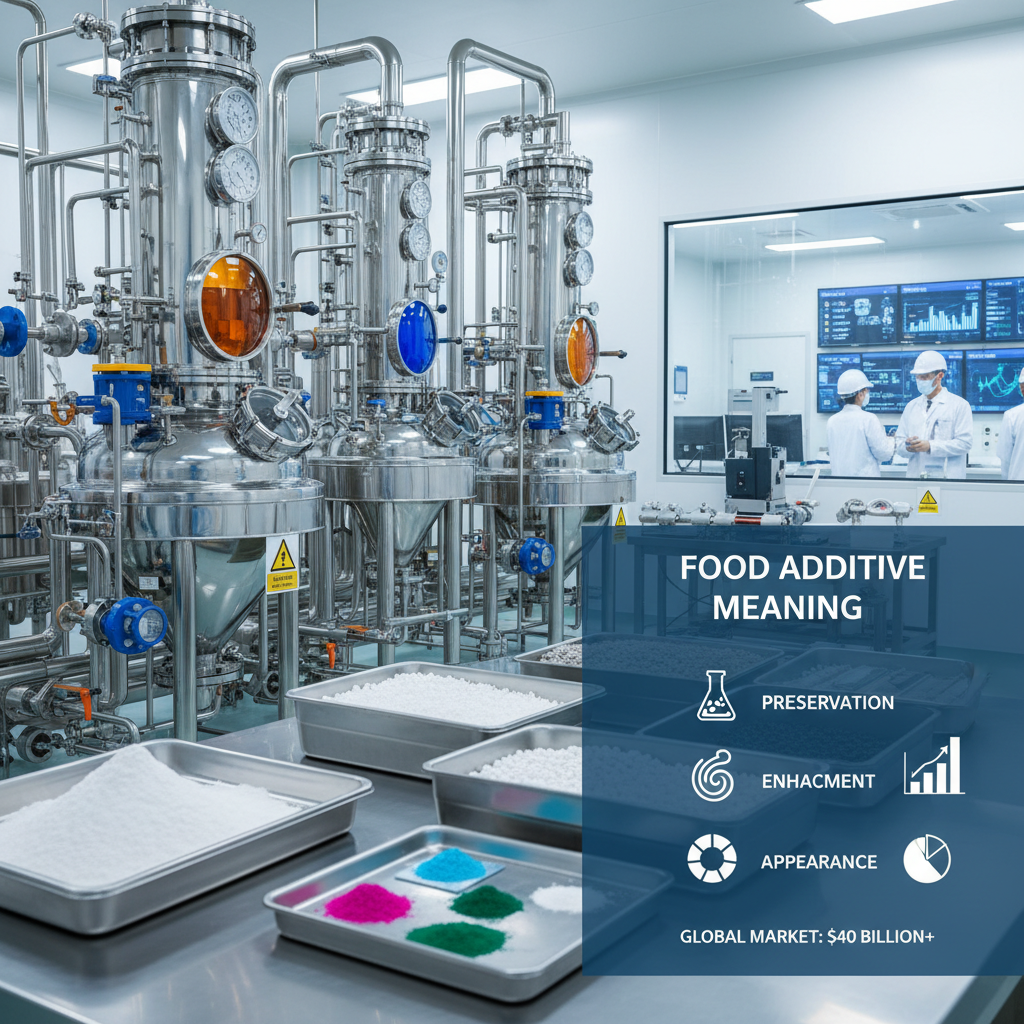
Understanding the food additive meaning is essential for anyone involved in the modern food supply chain, from manufacturers to health-conscious consumers. At its core, these substances are ingredients added to food to maintain or improve its safety, freshness, taste, texture, or appearance. In an era of global trade and urbanization, these components ensure that nutritious food can travel thousands of miles without spoiling, thereby reducing waste and increasing accessibility.
Globally, the food additive industry is governed by strict regulatory frameworks such as the Codex Alimentarius and EFSA to ensure human safety. The complexity of the food additive meaning extends beyond simple chemistry; it encompasses the intersection of biotechnology, food science, and public health. As the global population grows, the demand for stable and affordable food sources makes the strategic use of additives a cornerstone of food security.
By delving into the specifics of how these substances function, businesses can optimize their product formulations to meet evolving consumer preferences for "clean labels" while maintaining the industrial scalability required for mass production. Whether it is a preservative preventing botulism or an emulsifier creating a smooth texture in dairy alternatives, the true value of understanding this concept lies in balancing industrial efficiency with nutritional integrity.
The Core Definition and Scope of Food Additives
To grasp the full food additive meaning, one must view these substances as tools of precision engineering. They are not merely "chemicals" but are often naturally occurring compounds or synthesized versions of natural molecules designed to perform a specific task. For instance, antioxidants prevent the oxidation of fats, which stops oils from becoming rancid, thereby extending the shelf life of products from a few days to several months.
The scope of these additives spans across various categories including preservatives, colorants, flavor enhancers, and stabilizers. Each category serves a humanitarian need—reducing food spoilage prevents hunger in remote regions, while nutritional additives like folic acid combat widespread vitamin deficiencies. Thus, the meaning of these additives is rooted in the necessity of sustaining a growing global population with safe, palatable, and nutrient-dense food.
Key Functional Components of Food Additives
One of the most critical aspects of the food additive meaning is the functional role of preservatives. These substances, such as sorbates or benzoates, inhibit the growth of mold, yeast, and bacteria. In the context of industrial food manufacturing, this prevents the catastrophic risk of foodborne illnesses and significantly reduces the economic loss associated with food waste in the retail sector.
Beyond preservation, texture modifiers—including emulsifiers and thickeners—play a pivotal role in the sensory experience of food. By stabilizing the interface between oil and water, emulsifiers ensure that sauces and dressings remain homogenous. This technical capability allows manufacturers to create consistent products that behave predictably during shipping and storage, regardless of temperature fluctuations.
Lastly, flavor enhancers and colorants contribute to the psychological appeal of food. While often viewed as purely aesthetic, the consistency of color and taste provides a "quality signal" to the consumer. When a product looks and tastes the same every time it is purchased, it builds brand trust and reliability, which is essential for the scalability of any global food brand.
Global Industrial Standards and Regulatory Meaning
The regulatory framework surrounding food additive meaning is designed to ensure that "Generally Recognized as Safe" (GRAS) standards are met. These standards are not static; they evolve as toxicological data improves. Regulatory bodies like the FDA in the US and EFSA in Europe set Maximum Permitted Levels (MPLs) to ensure that additives provide the necessary function without posing a risk to human health.
For manufacturers, the meaning of compliance involves rigorous testing and transparent labeling. The use of E-numbers in Europe, for example, provides a standardized shorthand for additives, allowing for international trade while ensuring that consumers and regulators can identify exactly what is inside a product. This transparency is the bridge between industrial efficiency and consumer trust.
Moreover, the integration of these standards ensures that pharmaceutical intermediates and food-grade additives are strictly separated. While some compounds may have similar chemical structures, the purity levels required for food-grade additives are extreme to prevent contamination. This strict demarcation is what allows the food industry to maintain a high safety profile globally.
Practical Application Performance Analysis
When evaluating the effectiveness of various additives, manufacturers look at "performance metrics" such as stability, solubility, and synergy. The food additive meaning in a practical sense is often defined by how well a compound interacts with other ingredients. For example, combining two different preservatives can often create a synergistic effect, allowing for a lower total concentration of chemicals while achieving higher protection.
The choice of additive often depends on the specific environment of the food product—whether it is high-acid, high-fat, or subject to freeze-thaw cycles. Industrial chemists analyze these variables to select the additive that provides the highest ROI in terms of shelf-life extension versus cost of ingredient.
Comparative Performance Analysis of Additive Categories
Real-World Use Cases Across Global Markets
In the context of international disaster relief, the food additive meaning becomes a matter of survival. High-energy, nutrient-dense pastes used by NGOs in famine-stricken regions rely heavily on emulsifiers and antioxidants. These additives ensure that the food remains stable in extreme heat without refrigeration, providing a reliable calorie source to populations in critical need.
Similarly, in the rapid growth of the plant-based meat industry, additives are the key to mimicking the mouthfeel of animal proteins. Methylcellulose and other hydrocolloids are used to create the "bite" and juiciness of a burger. This application demonstrates how additives drive innovation, allowing the industry to transition toward more sustainable protein sources without sacrificing the consumer experience.
Long-Term Value: Sustainability and Safety
The long-term value of understanding the food additive meaning lies in the reduction of global food waste. According to the FAO, nearly one-third of all food produced for human consumption is lost or wasted. By utilizing advanced preservatives and stabilizers, we can extend the "sell-by" dates of perishable goods, allowing for more efficient logistics and reducing the environmental footprint of agriculture.
From a safety perspective, additives provide a critical line of defense. The use of nitrites in cured meats, while debated, is a primary tool in preventing Clostridium botulinum, a deadly bacterium. When used within regulatory limits, the safety benefit far outweighs the risk, illustrating the logical balance required in food chemistry.
Furthermore, the shift toward "natural" additives—extracting preservatives from rosemary or citrus—shows an evolution in the industry. This movement combines the functional power of additives with the emotional demand for "cleaner" labels, ensuring that the industry remains viable in a health-conscious market.
Future Trends in Additive Innovation
The future of the food additive meaning is leaning heavily toward biotechnology and precision fermentation. We are seeing the rise of "bio-preservatives," where beneficial bacteria produce antimicrobial peptides that protect food naturally. This shift reduces the reliance on synthetic chemicals and aligns with the global trend toward green chemistry.
Digital transformation is also playing a role. AI is now used to predict the synergistic effects of different additive combinations, reducing the need for trial-and-error in the lab. This acceleration in R&D allows companies to develop tailored additives for specific diets, such as low-sodium or sugar-free alternatives, without losing the structural integrity of the food.
As automation increases in food processing, the demand for "smart additives" that react to environmental changes (like pH-sensitive colorants that indicate freshness) will grow. This will transform the role of additives from passive ingredients to active quality-control agents.
Comparative Analysis of Conventional vs. Next-Gen Food Additives
| Additive Generation |
Primary Source |
Stability Score (1-10) |
Consumer Acceptance |
| Synthetic Preservatives |
Chemical Synthesis |
9.8 |
Low |
| Plant-Based Extracts |
Botanical Extraction |
7.5 |
High |
| Fermentation-Derived |
Microbial Culture |
8.5 |
Medium-High |
| Enzymatic Modifiers |
Biocatalysis |
8.0 |
Medium |
| Nano-Encapsulated |
Nano-technology |
9.2 |
Medium-Low |
| Bio-Peptides |
Protein Hydrolysis |
7.0 |
High |
FAQS
In simple terms, a food additive is any substance added to food to keep it safe, make it last longer, or improve its taste and appearance. Think of them as "support ingredients" that ensure the food you buy at the store is consistent and safe to eat, regardless of where it was produced.
No. Many additives are natural, such as citric acid (found in citrus fruits) or lecithin (found in soy and eggs). Furthermore, all approved additives must undergo rigorous safety assessments by organizations like the FDA or EFSA to ensure they are safe for consumption at the levels used in food.
Additives like antioxidants and preservatives slow down the natural decay process caused by oxygen and microbes. By extending the shelf life of bread, meats, and produce, they reduce the amount of food that is thrown away by retailers and consumers, contributing to global sustainability.
A nutrient (like protein or vitamin C) is required by the body for growth and health. A food additive is added for technical purposes (like texture or preservation). However, some additives are "nutritional," such as iodine added to salt, which serves both a technical and a health purpose.
E-numbers are a standardized coding system used primarily in the EU. They simplify labeling and allow the same additive to be identified across different languages. Each E-number corresponds to a specific substance that has been evaluated for safety.
While some chemical compounds are used in both, the "food grade" and "pharma grade" designations refer to different purity standards. Food additives are governed by food safety laws, whereas pharma intermediates follow strict GMP (Good Manufacturing Practice) standards for medicinal use.
Conclusion
In summary, the food additive meaning encompasses a sophisticated blend of science and necessity. From ensuring the safety of the global food supply to enabling the creation of sustainable plant-based alternatives, these substances are indispensable to modern life. By balancing strict regulatory compliance with innovative biotechnology, the industry continues to provide solutions that enhance food security and reduce environmental waste.
Looking forward, the trajectory of food science is moving toward "cleaner" and more intelligent additive systems. For manufacturers and distributors, the key to success lies in transparency and the adoption of bio-based alternatives that satisfy both regulatory requirements and consumer desires. Embracing these innovations will ensure a more resilient, safe, and sustainable food ecosystem for future generations. Visit our website for more professional insights: www.chinaseasoning.com