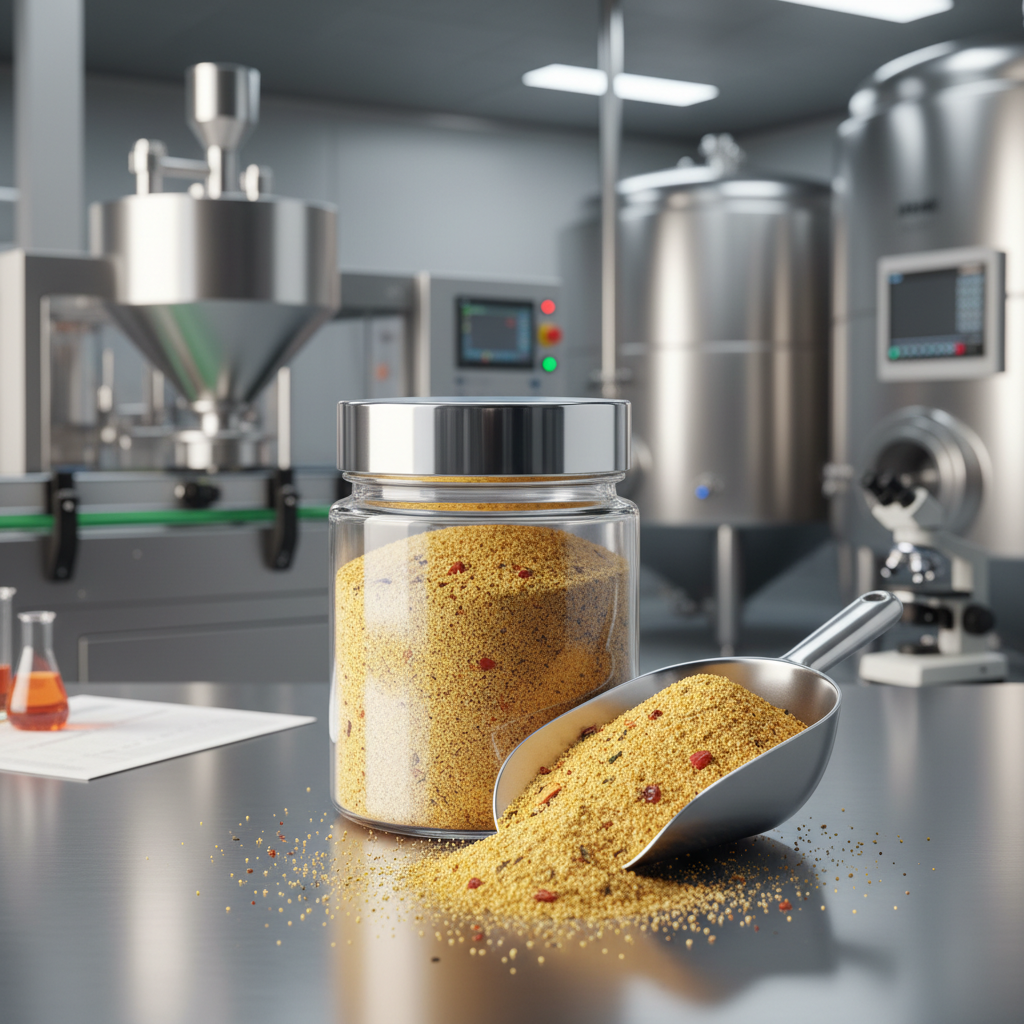
The culinary landscape of the modern food industry is increasingly reliant on precision and consistency, where the right seasoning powder for chicken can transform a standard protein into a gourmet experience. As global consumption of poultry continues to rise, food manufacturers are seeking scalable solutions that maintain authentic flavor profiles while ensuring long shelf lives and regulatory compliance.
Understanding the chemistry and application of high-quality chicken seasonings is not merely about taste; it is about operational efficiency. For industrial producers, the ability to standardize taste across thousands of batches is critical for brand loyalty, making the choice of additive components a strategic business decision rather than a simple kitchen preference.
From the rise of ready-to-eat (RTE) meals to the expansion of the fast-food sector in emerging markets, the demand for specialized seasoning powder for chicken has surged. This guide explores the technical dimensions, global applications, and future innovations of these essential food additives, providing professional insights for manufacturers and distributors.
Global Market Dynamics of Seasoning Powder for Chicken
The global poultry market has seen unprecedented growth, with chicken remaining the most consumed protein worldwide due to its affordability and versatility. Consequently, the demand for specialized seasoning powder for chicken has evolved from simple salt-and-pepper mixes to complex, multi-layered flavor profiles that cater to diverse regional palates, from the spicy notes of Peri-Peri in Africa to the umami-rich blends of East Asia.
According to industry trends aligned with ISO food safety standards, the shift toward "clean label" products is the primary challenge facing manufacturers. Consumers are demanding fewer artificial enhancers and more natural extracts, forcing the seasoning industry to innovate in the extraction of natural aromatic compounds and the use of organic carriers to maintain the potency of the flavor.
Technical Composition and Functional Ingredients
A professional-grade seasoning powder for chicken is a sophisticated blend of taste enhancers, anti-caking agents, and aromatic spices. The core functionality relies on the synergistic effect between salt, which acts as a primary flavor carrier and preservative, and glutamates or yeast extracts that provide the deep "umami" characteristic essential for poultry products.
Beyond taste, functional ingredients such as maltodextrin or corn starch are often incorporated to ensure the powder adheres evenly to the chicken skin and meat, creating a consistent crust during frying or roasting. This prevents the seasoning from clumping and ensures that every bite delivers a uniform sensory experience.
Furthermore, the inclusion of antioxidants and stabilizers is crucial for maintaining the color and aroma of the seasoning over time. Without these, volatile oils from spices like paprika or garlic would oxidize, leading to an off-flavor and a loss of the vibrant golden-brown hue that consumers associate with high-quality cooked chicken.
Industrial Standardization and Quality Control
Achieving consistency in large-scale production requires a rigorous approach to the formulation of seasoning powder for chicken. Manufacturers must employ precise blending technologies that ensure micron-level distribution of ingredients, preventing "hot spots" where one batch might be overly salty or spicy compared to another.
The integration of HACCP (Hazard Analysis and Critical Control Points) is non-negotiable when producing seasoning powder for chicken. This involves monitoring raw material purity, controlling moisture levels to prevent microbial growth, and utilizing metal detectors to ensure that the final powder is free from industrial contaminants.
Quality control also extends to sensory evaluation panels and laboratory testing for salt content and pH levels. By maintaining strict specifications, food additive manufacturers can guarantee that their poultry seasonings perform identically regardless of whether they are used in a high-pressure industrial fryer or a conventional oven.
Performance Metrics Across Different Applications
Different cooking methods require different chemical properties in a seasoning powder for chicken. For example, breading for deep-frying requires high thermal stability so the flavors do not burn, whereas a marinade powder for grilling must have high solubility to penetrate deep into the muscle fibers of the meat.
The effectiveness of a seasoning blend is typically measured by its "flavor retention rate" and "adhesion strength." These metrics determine how much of the taste remains after the cooking process and how well the seasoning resists stripping away during the handling or packaging phase.
Comparative Efficiency of Seasoning Powder for Chicken Formulations
Global Application Case Studies
In the fast-growing Quick Service Restaurant (QSR) markets of Southeast Asia, the application of seasoning powder for chicken has been pivotal in scaling operations. By utilizing pre-blended powders, franchises can ensure that a piece of fried chicken in Jakarta tastes identical to one in Bangkok, eliminating the variance associated with manual spice mixing.
Furthermore, in the European frozen food sector, manufacturers utilize specialized seasoning powders to prevent "flavor leaching" during the freezing and thawing process. These advanced powders are designed to lock the seasoning within the protein structure, ensuring that the consumer experiences a fresh, vibrant taste even after several months of cold storage.
Economic Advantages and Value Chain Impact
From a cost-management perspective, the transition to a professional seasoning powder for chicken offers significant reductions in labor and waste. Instead of sourcing, cleaning, and grinding twenty different spices, manufacturers can purchase a single, high-potency blend, streamlining their supply chain and reducing inventory overhead.
The reliability of these additives also minimizes the risk of batch failure. In an industrial setting, a single error in spice proportions can result in thousands of dollars of wasted product. Standardized powders remove this human error, providing a predictable and repeatable outcome.
Moreover, the long shelf life of powdered seasonings compared to liquid marinades reduces the frequency of logistics shipments and the need for extensive refrigerated storage, thereby lowering the overall carbon footprint and operational cost of the production facility.
Future Innovations in Poultry Seasoning Technology
The future of seasoning powder for chicken lies in the intersection of biotechnology and flavor science. We are seeing a move toward "encapsulation technology," where flavor molecules are trapped in microscopic shells that only break open at specific cooking temperatures. This ensures a burst of fresh flavor precisely when the chicken reaches its peak internal temperature.
Additionally, the drive toward sustainability is pushing the industry toward plant-based umami boosters. Using fermented fungi or algae extracts to replace animal-derived enhancers allows manufacturers to target the growing "flexitarian" market without sacrificing the savory depth that defines a great chicken product.
Automation in flavor profiling, powered by AI, is also beginning to emerge. By analyzing consumer preference data in real-time, companies can now tweak the formulation of their seasoning powder for chicken to match regional trends faster than ever before, moving from concept to shelf in a fraction of the traditional time.
Analysis of Future Poultry Seasoning Innovation Trends
| Technology |
Primary Benefit |
Market Impact |
Adoption Rate |
| Micro-Encapsulation |
Controlled Flavor Release |
High (Gourmet RTE) |
Medium |
| Plant-Based Umami |
Clean Label Appeal |
Very High (Vegan/Flex) |
High |
| AI Flavor Profiling |
Rapid Trend Adaptation |
Medium (Large Corps) |
Low |
| Low-Sodium Tech |
Health Compliance |
High (Government Regs) |
Very High |
| Cold-Press Extraction |
Preserved Aromatics |
Medium (Premium Line) |
Medium |
| Sustainable Carriers |
Eco-Friendly Sourcing |
High (ESG Goals) |
Medium |
FAQS
Industrial powders utilize food-grade anti-caking agents, standardized flavor enhancers (like yeast extracts), and precise particle size control. This ensures that the seasoning adheres uniformly to the meat and maintains a consistent taste across millions of units, which is impossible with home-ground spices that vary by batch and humidity.
Moisture is the primary enemy of seasoning powders. High humidity can cause "clumping," where the powder forms hard lumps, leading to uneven distribution on the chicken. Professional blends include silicon dioxide or other food-safe flow agents to prevent this and ensure a free-flowing powder that is easy to dispense in automated systems.
Yes, but the formulation differs. Frying-specific powders are designed for high-heat stability to avoid bitterness from burnt spices, while baking blends often prioritize moisture retention and aromatic volatility to ensure the flavor permeates the meat during longer, slower cooking cycles.
Absolutely. By utilizing "umami boosters" like mushroom powder, hydrolyzed vegetable proteins, or potassium salts, manufacturers can reduce the sodium content of seasoning powder for chicken by up to 40% without losing the perceived saltiness or depth of flavor.
When stored in airtight, UV-protected packaging in a cool, dry environment, professional seasoning powders typically have a shelf life of 12 to 24 months. The use of natural antioxidants helps prevent the fats in spices from going rancid, maintaining the flavor profile over time.
Importing requires compliance with the destination country's food safety laws (e.g., FDA in the US, EFSA in Europe). Ensure your supplier provides a complete COA (Certificate of Analysis), MSDS (Material Safety Data Sheet), and follows ISO 22000 or HACCP certifications to ensure smooth customs clearance.
Conclusion
The strategic application of high-quality seasoning powder for chicken is a cornerstone of success for any modern food manufacturing operation. By balancing technical precision—such as particle size and thermal stability—with culinary artistry and regulatory compliance, producers can achieve a level of consistency and scalability that defines market leaders in the poultry sector.
As the industry pivots toward cleaner labels and sustainable sourcing, the role of advanced food additives will only grow. We encourage manufacturers to invest in encapsulated and plant-based seasoning technologies to stay ahead of consumer trends and operational demands. For premium, industrial-grade solutions tailored to your specific market, visit our website: www.chinaseasoning.com.