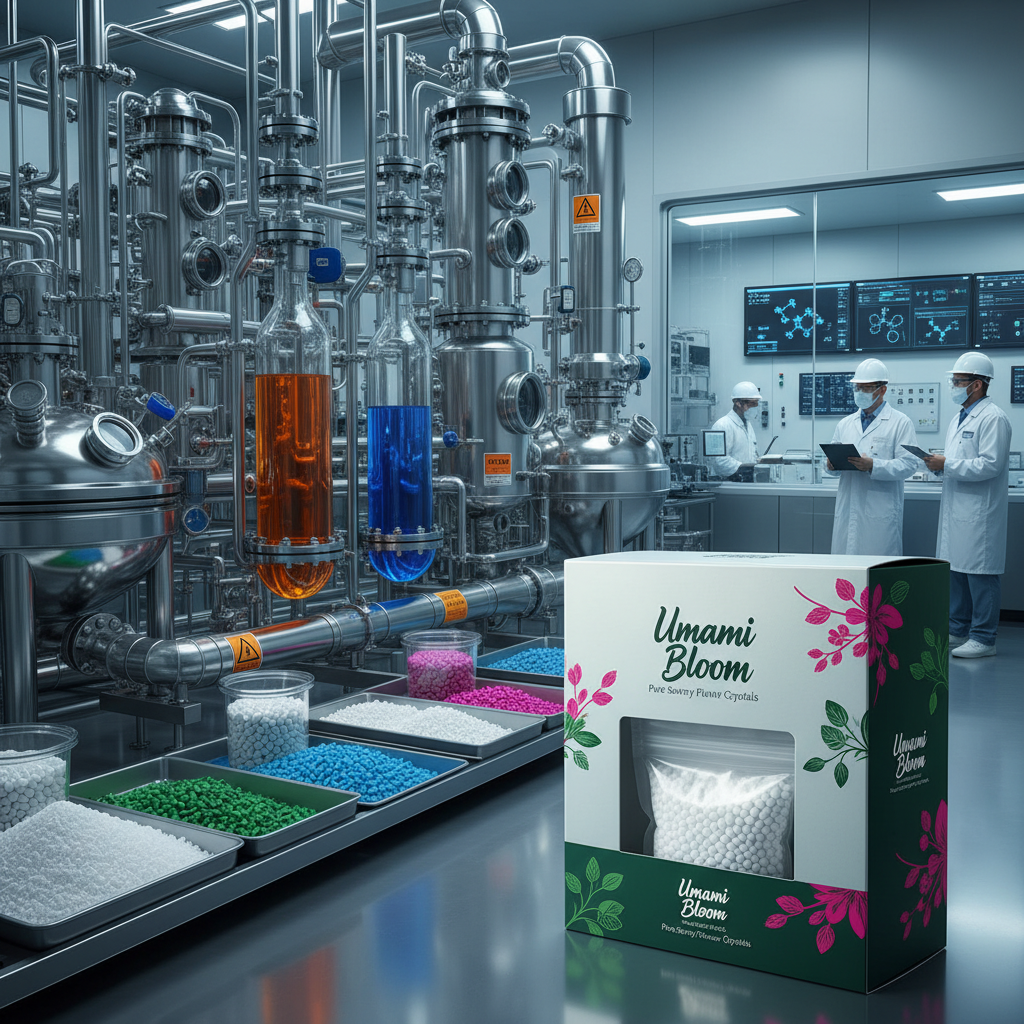
The global culinary landscape has been profoundly shaped by the quest for "umami," the fifth basic taste that provides a savory depth to food. At the heart of this flavor revolution is asian msg seasoning, a cornerstone of food additive manufacturing that allows producers to achieve consistent, mouth-watering profiles across diverse product lines. By bridging the gap between raw ingredients and gourmet experiences, this seasoning has become an essential tool for the modern food industry.
From a technical perspective, the production of high-quality Monosodium Glutamate (MSG) requires precise fermentation processes and stringent quality control to ensure purity and efficacy. As global demand for processed foods and convenient meals rises, the role of asian msg seasoning extends beyond simple taste enhancement; it is now a critical component in cost-optimization and sodium-reduction strategies, allowing manufacturers to maintain flavor intensity while lowering overall salt content.
Understanding the science, application, and regulatory environment of these additives is crucial for brands aiming to compete in international markets. Whether integrated into snack foods, ready-to-eat meals, or industrial pharmaceutical intermediates, the strategic use of asian msg seasoning empowers manufacturers to deliver high-value products that resonate with consumer preferences across Asia, Europe, and the Americas.
The Global Industry Context of Asian MSG Seasoning
The global market for flavor enhancers has seen exponential growth, with asian msg seasoning acting as a primary driver in the food additive sector. According to industry data, the demand for umami-based seasonings is closely linked to the expansion of the convenience food market in developing economies. As urban populations increase, the need for scalable, cost-effective ways to maintain flavor consistency in mass-produced foods has made MSG an indispensable industrial asset.
However, the industry faces a paradox: while technical demand is at an all-time high, consumer perception varies wildly across different geographical regions. In many Western markets, legacy misconceptions have created barriers, whereas in Asian markets, it is viewed as a fundamental culinary tool. This disparity presents a unique challenge for manufacturers who must balance high-performance chemical specifications with transparent labeling and educational marketing to ensure global acceptance.
Defining the Technical Essence of Asian MSG Seasoning
At its core, asian msg seasoning is the sodium salt of glutamic acid, an amino acid found naturally in many foods like tomatoes and parmesan cheese. In an industrial context, it is produced through the fermentation of starches or sugars using specific bacterial strains, such as Corynebacterium glutamicum. This biological process ensures a high-purity crystalline product that can be easily integrated into various food matrices without altering the texture of the final product.
Beyond the simple chemistry, this seasoning serves as a catalyst for other flavors, amplifying the natural taste of ingredients while filling "flavor gaps" that occur during high-temperature processing (such as canning or drying). In the realm of food additive manufacturing, the ability to control the particle size and solubility of the seasoning is paramount, ensuring that it dissolves evenly in liquids or adheres perfectly to dry snacks.
Furthermore, the connection between asian msg seasoning and modern humanitarian needs is evident in the production of fortified nutrient blends. By improving the palatability of nutrient-dense but bland supplements, MSG helps increase the acceptance of life-saving foods in disaster-relief operations, proving that flavor is not just about luxury, but about the efficacy of nutrition delivery.
Key Factors Driving the Efficacy of Asian MSG Seasoning
One of the primary drivers of success for asian msg seasoning is its unmatched purity and stability. In industrial applications, stability ensures that the flavor profile does not degrade when exposed to varying temperatures or pH levels during the manufacturing process, providing a reliable baseline for flavor engineers.
Scalability is another critical factor. Because asian msg seasoning can be produced in massive quantities through streamlined fermentation, it offers a cost-efficiency that natural extracts cannot match. This allows large-scale food producers to maintain a consistent "signature taste" across millions of units worldwide without fluctuating raw material costs.
Finally, the versatility of asian msg seasoning allows it to function as a sodium reducer. Because the human palate perceives umami and saltiness as complementary, a small amount of MSG can allow manufacturers to reduce total sodium chloride (table salt) by up to 40% without sacrificing the perceived taste, aligning with global health trends toward lower sodium intake.
Global Applications and Market Use Cases
The practical application of asian msg seasoning spans multiple sectors. In the snack food industry, it is used to create the addictive, savory profiles found in chips and extruded puffs. In the pharmaceutical sector, certain intermediates derived from the same fermentation pathways are used in the synthesis of specialty chemicals and medical-grade additives, showcasing the overlap between food science and pharmaceutical chemistry.
Regionally, the impact is most visible in the rapid growth of the "Ready-to-Eat" (RTE) sector in Southeast Asia and North America. For instance, in remote industrial zones where fresh ingredients are scarce, the use of high-potency seasonings allows for the creation of palatable, nutrient-dense meals that sustain workers' morale and health.
Efficiency Comparison of Asian MSG Seasoning Variants
Long-Term Value and Economic Advantages
Investing in high-quality asian msg seasoning provides tangible economic benefits through waste reduction and shelf-life extension. Because MSG helps stabilize flavors, manufacturers find that their products maintain a "fresh" taste profile longer, reducing the rate of returns and spoilage in the supply chain.
From a logical perspective, the reliability of this additive fosters trust between the B2B supplier and the end manufacturer. When a brand can guarantee that every batch of seasoning will yield the exact same flavor result, they can innovate faster, launching new product lines with confidence in their taste profiles, which ultimately drives higher ROI and brand loyalty.
Future Innovations in Flavor Enhancement Technology
The future of asian msg seasoning is inextricably linked to the green energy transition. Leading manufacturers are now shifting toward "bio-refineries," where the fermentation of MSG is powered by renewable energy and the byproduct waste is converted into organic fertilizers, creating a circular economy that reduces the environmental footprint of food additive production.
Digital transformation is also playing a role. The integration of AI-driven fermentation monitoring allows for real-time adjustments in nutrient feeding and temperature control, maximizing the yield of asian msg seasoning while minimizing energy consumption. This automation ensures a level of precision that was previously impossible, leading to "designer" MSG crystals with customized dissolution rates.
Furthermore, we are seeing a trend toward "hybrid seasonings," where MSG is combined with plant-based proteins and natural extracts. This approach caters to the "clean label" movement, providing the powerful umami punch of traditional seasonings while appealing to the health-conscious consumer who seeks a balance between industrial efficiency and natural origins.
Overcoming Challenges in Asian MSG Seasoning Adoption
Despite its benefits, the primary challenge facing asian msg seasoning is the persistence of "MSG Symptom Complex," a cultural rather than scientific phenomenon. To overcome this, industry experts suggest a shift toward "educational transparency," where brands clearly explain the natural occurrence of glutamates and the safety certifications (such as GRAS - Generally Recognized As Safe) associated with their products.
Another technical limitation is the potential for clumping in humid environments. Innovative solutions now include the use of advanced anti-caking agents and moisture-barrier packaging. By improving the physical form of the seasoning, manufacturers can ensure that the product remains free-flowing, which is critical for automated dosing systems in large factories.
Finally, regulatory hurdles in different jurisdictions require a nuanced approach. By adhering to ISO standards and maintaining rigorous documentation of the fermentation process, producers can navigate the complexities of international trade, ensuring that their asian msg seasoning meets the strict safety and purity requirements of every target market.
Comparative Analysis of Asian MSG Seasoning Industrial Standards
| Product Grade |
Purity Level (%) |
Solubility Rate |
Market Suitability |
| Industrial Grade |
98.5% |
High |
Mass-market snacks |
| Food Grade A |
99.2% |
Very High |
Premium condiments |
| Pharma Grade |
99.9% |
Instant |
Medical intermediates |
| Organic Certified |
99.0% |
Medium |
Health-food stores |
| Custom Blend |
97.0% |
Variable |
Specialized catering |
| Low-Sodium Variant |
98.8% |
High |
Dietary supplements |
FAQS
Yes, asian msg seasoning is classified as "Generally Recognized as Safe" (GRAS) by the FDA and other global health authorities. It consists of sodium and glutamate, both of which occur naturally in the body and in many common foods. When used in accordance with industry guidelines, it poses no risk to the general population.
MSG contains significantly less sodium than table salt (sodium chloride). Because it provides a powerful umami taste that enhances the perception of saltiness, manufacturers can replace a portion of salt with asian msg seasoning, reducing the total sodium content while keeping the flavor profile identical or even improved.
The primary difference lies in the purity levels and the stringent nature of the quality control processes. Food-grade asian msg seasoning undergoes more rigorous filtration and testing to ensure it is free from any fermentation byproducts, making it suitable for direct human consumption in high-end food products.
Absolutely. Most modern asian msg seasoning is produced via the fermentation of sugar beets, corn, or sugarcane, making it 100% plant-based and vegan. It is an ideal tool for vegan food manufacturers seeking to replicate the savory "meaty" taste of animal proteins.
To maintain the free-flowing nature of asian msg seasoning, it should be stored in a cool, dry environment with humidity levels kept below 60%. Using moisture-proof HDPE bags or airtight silos is recommended to prevent the crystals from absorbing atmospheric water, which leads to caking.
Buyers should request certificates of analysis (CoA), ISO certifications, and third-party lab reports. Ensuring the supplier follows GMP (Good Manufacturing Practices) and provides transparency regarding the fermentation source is the best way to guarantee the consistency of asian msg seasoning.
Conclusion
In summary, asian msg seasoning represents a perfect synergy of biological science and commercial utility. From its ability to amplify complex flavors and reduce sodium levels to its scalability and economic efficiency, it remains an cornerstone of the global food additive industry. By addressing historical misconceptions through scientific transparency and embracing green manufacturing, the industry is ensuring that umami enhancement remains a sustainable and welcomed part of the global diet.
Looking ahead, the integration of AI and bio-refinery technology will further refine the production of these essential additives, making them more eco-friendly and precise. For manufacturers aiming to elevate their product profiles and enter new international markets, the strategic sourcing of high-purity seasonings is not just a culinary choice, but a competitive necessity. To explore high-grade solutions for your production line, visit our website: www.chinaseasoning.com