In the sophisticated landscape of modern food science, the pursuit of the perfect "umami" flavor has led to the widespread integration of monosodium glutamate spice. As a flavor enhancer that mimics the savory depth found in naturally aged cheeses and cured meats, this additive has become an indispensable tool for food manufacturers worldwide seeking to maintain taste consistency while optimizing production costs.
The global demand for high-quality seasonings is driven by a diversifying palate and the rapid expansion of the processed food sector. Understanding the chemistry and application of monosodium glutamate spice allows producers to create products that are not only delicious but also meet the rigorous sensory standards of a global consumer base, bridging the gap between industrial efficiency and artisanal taste.
Beyond mere taste, the strategic use of this ingredient reflects a deeper intersection of biotechnology and culinary art. By analyzing its impact on the overall flavor profile, companies specializing in food additives, pharmaceutical intermediates, and feed supplements can leverage the versatility of monosodium glutamate spice to enhance the palatability and nutritional appeal of a vast array of dietary products.
Global Industrial Context of Monosodium Glutamate Spice
The global market for flavor enhancers has seen exponential growth, with monosodium glutamate spice standing as a pillar of the food additive industry. According to food industry trends and international trade data, the shift toward convenient, ready-to-eat meals has surged by nearly 15% annually in emerging economies. This shift has placed an immense pressure on manufacturers to deliver high-impact flavors without relying solely on expensive raw ingredients, making the precision of MSG-based spices a critical economic driver.
However, the industry faces the persistent challenge of overcoming legacy misconceptions regarding food additives. By adhering to ISO standards and rigorous quality control, modern manufacturers are transforming the narrative, repositioning monosodium glutamate spice as a safe, fermented product that enhances dietary satisfaction and reduces the need for excessive sodium chloride in many formulations.
Definition and Functional Meaning of the Additive
At its most fundamental level, monosodium glutamate spice is the sodium salt of glutamic acid, one of the most abundant naturally occurring amino acids. In the context of industrial food production, it serves as a "synergistic catalyst," meaning it doesn't just add flavor but amplifies the existing taste profiles of other ingredients, creating a fuller, more rounded sensory experience.
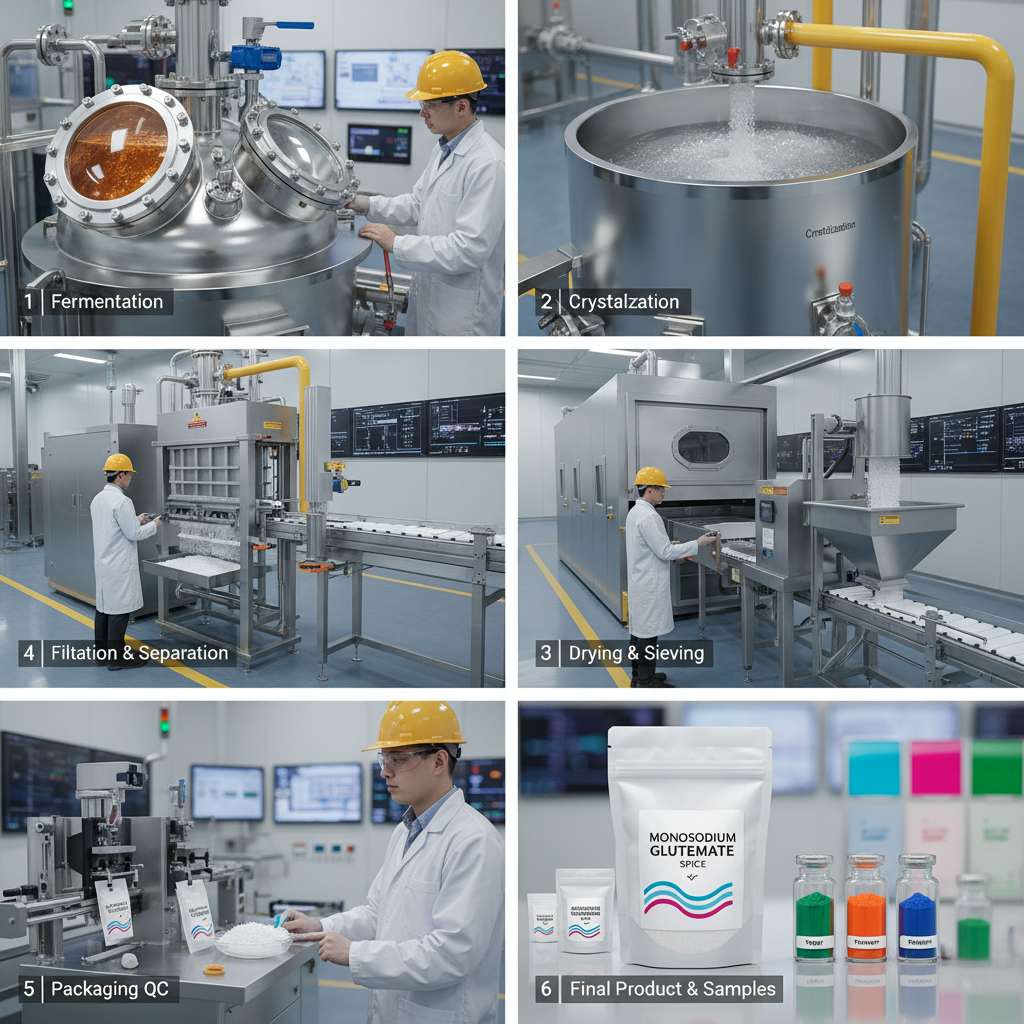
The functional meaning of this additive extends beyond the kitchen. In the broader scope of the food additive and pharmaceutical intermediate sectors, it represents a triumph of fermentation technology. By using microorganisms to convert sugar sources into glutamic acid, the industry provides a scalable solution to the universal human need for palatable, nutrient-dense food.
For the modern manufacturer, integrating this spice means achieving "taste stability." Whether a product is consumed in New York or Tokyo, the use of monosodium glutamate spice ensures that the umami profile remains consistent regardless of the natural variance in raw vegetable or meat harvests.
Core Components and Quality Factors
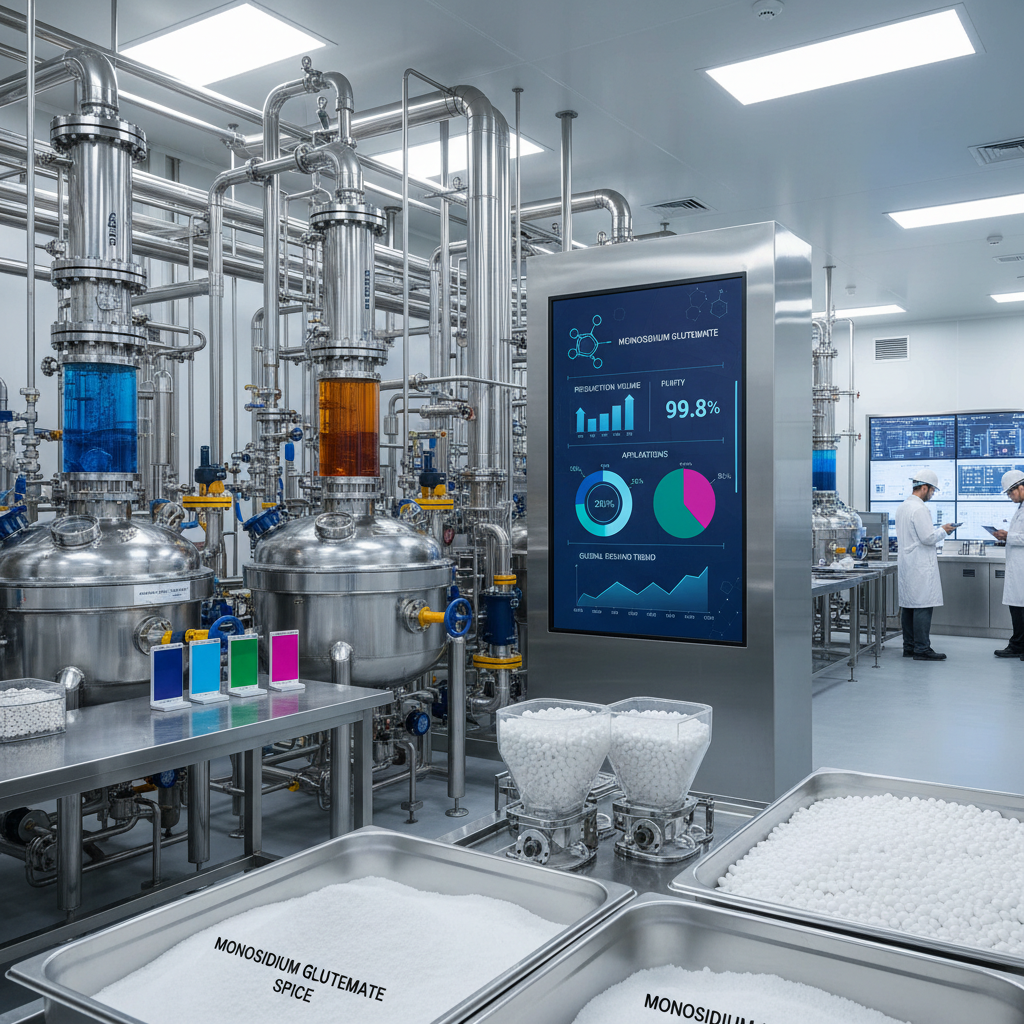
The efficacy of monosodium glutamate spice is determined by several critical quality factors, most notably its purity levels. High-grade additive production focuses on minimizing impurities that could affect the color or scent of the final food product, ensuring a crystalline structure that dissolves rapidly in aqueous solutions.
Scalability and solubility are equally paramount. For industrial applications, the particle size distribution of monosodium glutamate spice must be precisely controlled to prevent clumping in automated dosing systems, which ensures that every batch of food additive or feed supplement maintains an exact concentration of flavor.
Finally, cost-efficiency and stability under heat are the benchmarks of a premium product. Since many food processes involve high-temperature pasteurization or baking, the molecular stability of monosodium glutamate spice ensures that the umami effect survives the manufacturing chain to reach the end consumer intact.
Performance Metrics in Commercial Applications
Evaluating the performance of monosodium glutamate spice requires a multi-dimensional approach. Manufacturers typically measure "Umami Intensity," "Dissolution Rate," and "Synergistic Efficiency" to determine how much of the additive is required to reach the peak flavor threshold. By optimizing these metrics, companies can reduce overall material costs while enhancing the perceived quality of the product.
In practical terms, the balance between cost and sensory output is what defines the commercial success of a seasoning line. The following data represents the comparative performance of different production methods for monosodium glutamate spice, highlighting how different refinement processes impact the final rating.
Performance Analysis of Monosodium Glutamate Spice Variants
Global Use Cases and Regional Applications
The application of monosodium glutamate spice varies significantly by region. In Southeast Asia, it is a cornerstone of street food and industrial sauce production, where it is used to balance the heat of chilies and the acidity of lime. In North America and Europe, the trend has shifted toward "clean label" integration, where MSG is often blended with yeast extracts to provide the same umami punch while appealing to health-conscious consumers.
Beyond human consumption, the additive finds critical use in the animal nutrition sector. In remote industrial zones where livestock feed quality may vary, monosodium glutamate spice is added to feed additives to increase the palatability of the feed, encouraging higher intake and improving the growth rates of livestock in challenging environments.
Long-term Value and Sustainability Advantages
From an economic perspective, the long-term value of monosodium glutamate spice lies in its ability to reduce food waste. By enhancing the taste of less expensive or "ugly" produce, manufacturers can create high-value products from ingredients that would otherwise be discarded, aligning with global sustainability goals.
Moreover, the shift toward bio-fermentation for producing this additive has reduced the carbon footprint compared to older chemical synthesis methods. This transition to "green chemistry" ensures that the supply chain for monosodium glutamate spice is not only reliable but also ethically sustainable for future generations.
Ultimately, the reliability of this ingredient fosters trust between the producer and the consumer. When a brand can guarantee the same savory experience in every package, it builds emotional loyalty and brand equity, proving that technical precision in additives leads to commercial success.
Future Trends and Technological Innovations
The future of monosodium glutamate spice is being reshaped by digital transformation and automation. AI-driven flavor profiling is now allowing companies to determine the exact milligram of MSG required to optimize a recipe, reducing waste and ensuring a perfect sensory balance through predictive modeling.
We are also seeing a rise in "hybrid" additives. By combining monosodium glutamate spice with natural nucleotides (like IMP and GMP), manufacturers are achieving a "synergy effect" that increases flavor intensity by up to ten times, allowing for a significant reduction in total sodium content without sacrificing taste.
As the world moves toward personalized nutrition, the ability to customize these additives will be key. The integration of sustainable feedstock—such as agricultural waste—into the fermentation process marks the next frontier for the production of monosodium glutamate spice, turning the food additive industry into a circular economy.
Comparative Analysis of Monosodium Glutamate Spice Production Technologies
| Technology Type |
Purity Level |
Cost Efficiency |
Environmental Impact |
| Traditional Fermentation |
High |
Medium |
Moderate |
| Advanced Bio-Catalysis |
Ultra-High |
High |
Low |
| Chemical Synthesis |
Medium |
Very High |
High |
| Circular Waste-to-MSG |
Medium-High |
High |
Very Low |
| Hybrid Nutrient Blend |
High |
Medium |
Low |
| Enzymatic Refinement |
Ultra-High |
Medium |
Low |
FAQS
Unlike table salt, which primarily provides salinity, monosodium glutamate spice targets the umami receptors on the tongue. While salt enhances overall flavor, MSG creates a deep, savory richness. In industrial settings, this additive is refined to ensure consistent purity and solubility, allowing it to blend seamlessly into large-scale food batches without altering the texture or color of the product.
Yes, one of the primary advantages of monosodium glutamate spice is its thermal stability. It remains effective during baking, frying, and pasteurization processes. This makes it an ideal choice for canned foods, frozen meals, and baked goods where the flavor profile must withstand intense heat during manufacturing and subsequent reheating by the consumer.
In the feed additive industry, monosodium glutamate spice is used as a palatability enhancer. Some nutrient-dense feeds can have an unappealing taste or smell, which leads to lower intake rates in livestock. By adding MSG, manufacturers can stimulate the appetite of animals, ensuring they consume the necessary nutrients for optimal growth and health, thereby improving the overall ROI for farmers.
Absolutely. Because monosodium glutamate spice is far more potent in flavor enhancement than sodium chloride, it can be used as a strategic replacement. By substituting a portion of table salt with MSG, manufacturers can significantly reduce the total sodium content of a product while maintaining, or even enhancing, the savory taste, helping brands meet government health guidelines.
When sourcing monosodium glutamate spice, look for ISO 9001 for quality management and ISO 22000 for food safety. Additionally, depending on the target market, Halal, Kosher, and GRAS (Generally Recognized as Safe) certifications from the FDA are essential to ensure the product meets international regulatory standards and consumer dietary requirements.
Modern bio-fermentation uses natural sugars (like sugarcane or corn) and specific bacteria to produce glutamic acid. This process is far more sustainable than chemical synthesis as it reduces toxic by-products and operates at lower temperatures. Furthermore, the innovation of using agricultural side-streams as feedstock further minimizes the environmental footprint of monosodium glutamate spice production.
Conclusion
The strategic integration of monosodium glutamate spice represents a critical intersection of economic efficiency and sensory excellence. From its role in stabilizing the flavor of global processed foods to its application in improving animal nutrition and reducing overall sodium intake, this additive provides a versatile solution to some of the most pressing challenges in the food and pharmaceutical intermediate industries. By focusing on purity, thermal stability, and sustainable fermentation, manufacturers can ensure a high-quality end product that resonates with consumers.
Looking forward, the industry is poised for a transition toward AI-driven formulation and circular production methods. As we embrace green chemistry and personalized nutrition, the role of monosodium glutamate spice will evolve from a simple enhancer to a precision tool for health and taste optimization. We encourage industry professionals to adopt these innovations to stay competitive in an ever-evolving global market. Visit our website for more professional solutions: www.chinaseasoning.com