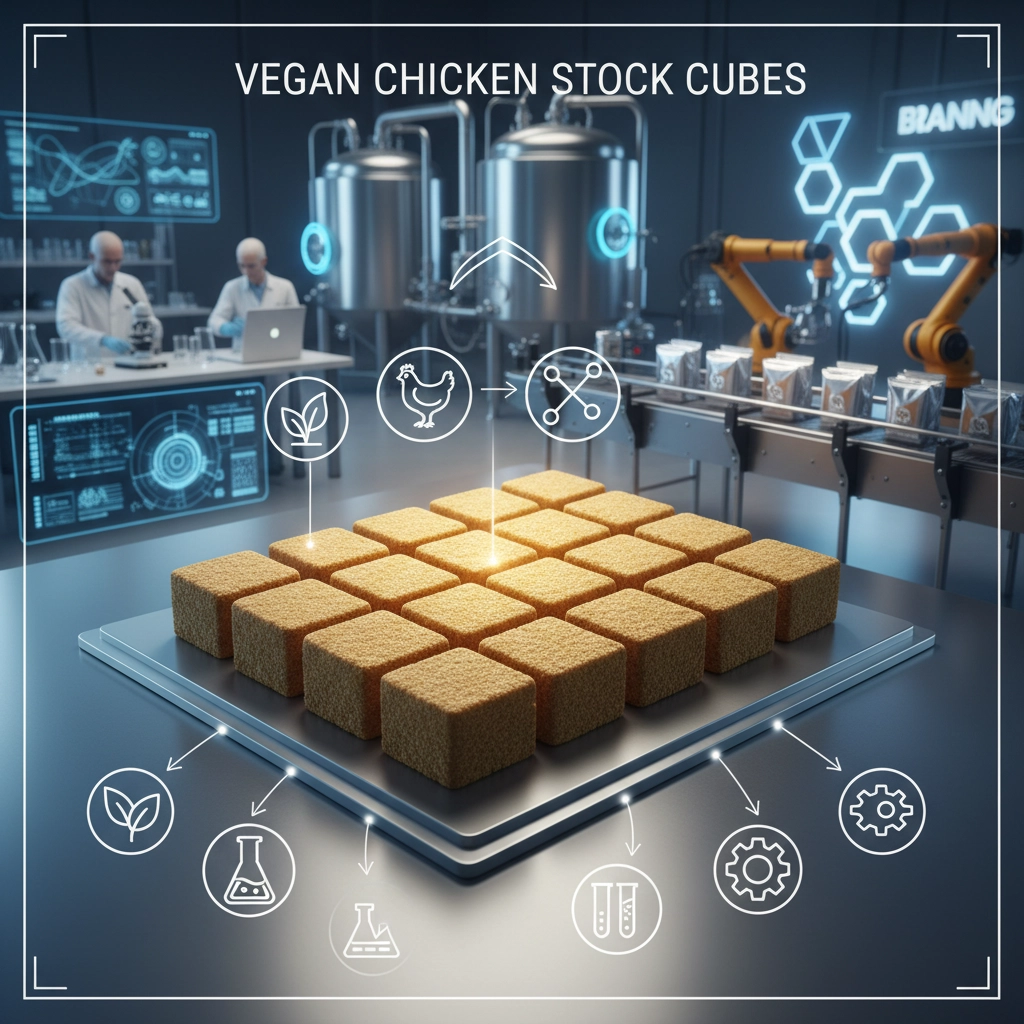
The global shift toward plant-based diets has fundamentally transformed the food additive industry, leading to the rise of high-performance chicken stock cubes vegan alternatives. These innovative products aim to replicate the complex, savory "umami" profile of traditional poultry stock without relying on animal derivatives, catering to a growing demographic of vegans, vegetarians, and health-conscious consumers worldwide.
Understanding the chemistry and production of vegan stock cubes is essential for food manufacturers seeking to maintain flavor consistency while meeting strict dietary certifications. By leveraging advanced fermentation and plant-based protein extraction, these cubes provide a convenient, shelf-stable solution for industrial kitchens and home cooks alike, ensuring that nutritional value is not sacrificed for taste.
As sustainability becomes a primary driver in consumer purchasing decisions, the adoption of chicken stock cubes vegan represents more than just a dietary choice; it is a strategic move toward reducing the environmental footprint of the food supply chain. This guide explores the technical components, global applications, and future innovations defining the vegan savory seasoning market.
Global Market Context of Vegan Stock Cubes
The demand for chicken stock cubes vegan has seen an unprecedented surge, mirroring the global growth in "flexitarian" diets. Market data suggests that the plant-based seasoning sector is expanding at a CAGR that outperforms traditional bouillon, driven largely by the ISO standards for food safety and the increasing prevalence of vegan certifications globally.
However, the industry faces a significant challenge: the "flavor gap." Traditional chicken stock relies on animal proteins and fats to create a lingering mouthfeel and depth. Bridging this gap requires a sophisticated blend of yeast extracts and hydrolyzed vegetable proteins to satisfy a consumer base that refuses to compromise on the culinary experience.
Defining the Chemistry of Vegan Savory Bases
In technical terms, chicken stock cubes vegan are concentrated seasoning blocks composed of plant-derived salts, flavor enhancers, and binders. Unlike traditional stocks, they utilize a synergistic combination of glutamates and nucleotides derived from fungi or fermented grains to trigger the same taste receptors as animal-based proteins.
Beyond mere taste, these products address a critical humanitarian and ethical need. By removing animal ingredients, manufacturers can provide a universal seasoning that is compatible with diverse religious dietary laws (such as Halal and Kosher) and ethical veganism, making food production more inclusive on a global scale.
The production process involves precise dehydration and compression. The goal is to create a stable, anhydrous cube that dissolves rapidly in hot water, releasing a complex aromatic profile that mimics the slow-simmered essence of traditional poultry broth.
Core Components for Flavor Replication
To achieve a believable profile in chicken stock cubes vegan, the use of yeast extract is paramount. Yeast extract provides the foundational umami taste by offering a rich source of natural nucleotides and amino acids, which serve as the "backbone" of the savory experience.
A critical second component is the integration of plant-based lipids. Since animal fats contribute significantly to the "richness" of traditional stock, vegan versions often incorporate coconut oil or sunflower lecithin to emulate the viscosity and mouth-coating properties essential for a premium chicken stock cubes vegan product.
Finally, the aromatic layer is constructed using a blend of dehydrated onion, garlic, and celery, often enhanced with a touch of turmeric for the characteristic golden color. This botanical synergy ensures that the olfactory experience matches the taste, completing the sensory illusion.
Technical Performance and Efficiency Metrics
From a manufacturing perspective, the efficiency of chicken stock cubes vegan is measured by their solubility, stability, and flavor potency. High-quality cubes must exhibit a rapid dissolution rate without clumping, ensuring consistent dosing in large-scale industrial food production.
Cost efficiency is also a key driver. By optimizing the ratio of salt to flavor enhancers, manufacturers can produce a potent product that requires a smaller volume per serving, thereby reducing packaging and logistics costs while maintaining a high perceived value for the end-user.
Comparative Performance of Vegan Stock Formulation Methods
Global Industrial Applications
The application of chicken stock cubes vegan extends far beyond the home kitchen. In the ready-to-eat (RTE) meal sector, these cubes are used as a standardized base for soups, sauces, and gravies, allowing brands to label their products as "vegan-friendly" without altering the traditional flavor profiles consumers love.
Furthermore, in humanitarian aid and post-disaster relief operations, the compact nature and long shelf life of vegan stock make them an ideal nutrient-dense flavor additive for emergency food rations. Their compatibility with all dietary restrictions ensures that aid organizations can distribute a single product type to diverse populations without risk.
Long-Term Value and Sustainability
The long-term value of switching to chicken stock cubes vegan is rooted in environmental stewardship. The production of plant-based seasonings requires significantly less water and land compared to livestock farming, drastically reducing the carbon footprint per unit of flavor produced.
From a brand equity perspective, companies that integrate vegan alternatives build deeper trust with the modern "conscious consumer." This alignment with sustainability goals fosters long-term customer loyalty and positions the manufacturer as an innovator in the green chemistry of food.
Additionally, the reliability of plant-based raw materials—which are less susceptible to zoonotic diseases (like avian flu) than animal-based stocks—ensures a more stable supply chain and consistent pricing for industrial buyers.
Future Innovations in Plant-Based Seasoning
The future of chicken stock cubes vegan lies in the realm of precision fermentation. By using engineered microorganisms to produce specific proteins (such as heme or tailored yeast proteins), manufacturers will be able to replicate the exact molecular structure of chicken fat and marrow, making vegan stocks indistinguishable from the real thing.
Digital transformation is also playing a role, with AI-driven flavor mapping allowing chemists to analyze thousands of botanical combinations to find the perfect "umami match" for different cultural palettes, from the salty depths of East Asian broths to the herbal notes of European stocks.
As automation in the food additive industry increases, we expect to see "smart" seasoning cubes that are tailored for specific health needs, such as low-sodium, fortified-vitamin versions that maintain the classic savory taste.
Technical Comparison of Vegan Stock Production Methods
| Production Method |
Umami Intensity |
Cost per Unit |
Sustainability Score |
| Yeast Extraction |
High (9/10) |
Moderate |
8/10 |
| Hydrolyzed Vegetable Protein |
Medium (7/10) |
Low |
7/10 |
| Precision Fermentation |
Very High (10/10) |
High |
9/10 |
| Mushroom-Based Blend |
Medium (8/10) |
Moderate |
10/10 |
| Seaweed-Derived Glutamates |
High (8/10) |
Moderate |
9/10 |
| Grain Fermentation |
Medium (6/10) |
Low |
8/10 |
FAQS
Modern vegan stock cubes use a combination of yeast extracts and hydrolyzed proteins to mimic the "umami" taste of chicken. While the flavor profile is remarkably similar and works perfectly in soups and stews, some may notice a slightly different aromatic note due to the absence of animal fats. However, for most culinary applications, they are virtually indistinguishable.
Yes, they are designed for both retail and industrial use. Their standardized salt and flavor levels make them ideal for large-scale production, ensuring that every batch of a commercial product tastes the same while meeting vegan certification requirements.
Because they lack animal fats which can go rancid, high-quality vegan stock cubes often have an equal or even superior shelf life. When stored in a cool, dry place, they typically remain stable for 18-24 months.
Check for certifications such as the V-Label or Vegan Society mark. Technically, look for the absence of "chicken fat," "gelatin," or "animal-derived flavor enhancers." Our products are fully compliant with global vegan standards.
While standard cubes rely on salt for preservation and flavor, many manufacturers now offer low-sodium versions of vegan stock that use potassium salts or increased yeast extract levels to maintain savoriness without the high sodium content.
Importing requires adherence to the destination country's food safety regulations (such as FDA in the USA or EFSA in the EU). We provide all necessary MSDS, COA, and certification documents to ensure a smooth customs process for our global partners.
Conclusion
The evolution of chicken stock cubes vegan represents a perfect intersection of culinary art and food science. By replacing animal proteins with high-performance plant-based alternatives, the industry has successfully created a product that offers the same savory depth, convenience, and stability as traditional bouillon, all while aligning with the ethical and environmental demands of the 21st century.
As we look toward the future, the integration of precision fermentation and AI-driven flavor mapping will only further blur the line between plant-based and animal-based seasonings. For food manufacturers and distributors, adopting these sustainable solutions is not just an ethical choice, but a strategic imperative to remain competitive in a rapidly evolving global market. Visit our website for more professional solutions: www.chinaseasoning.com