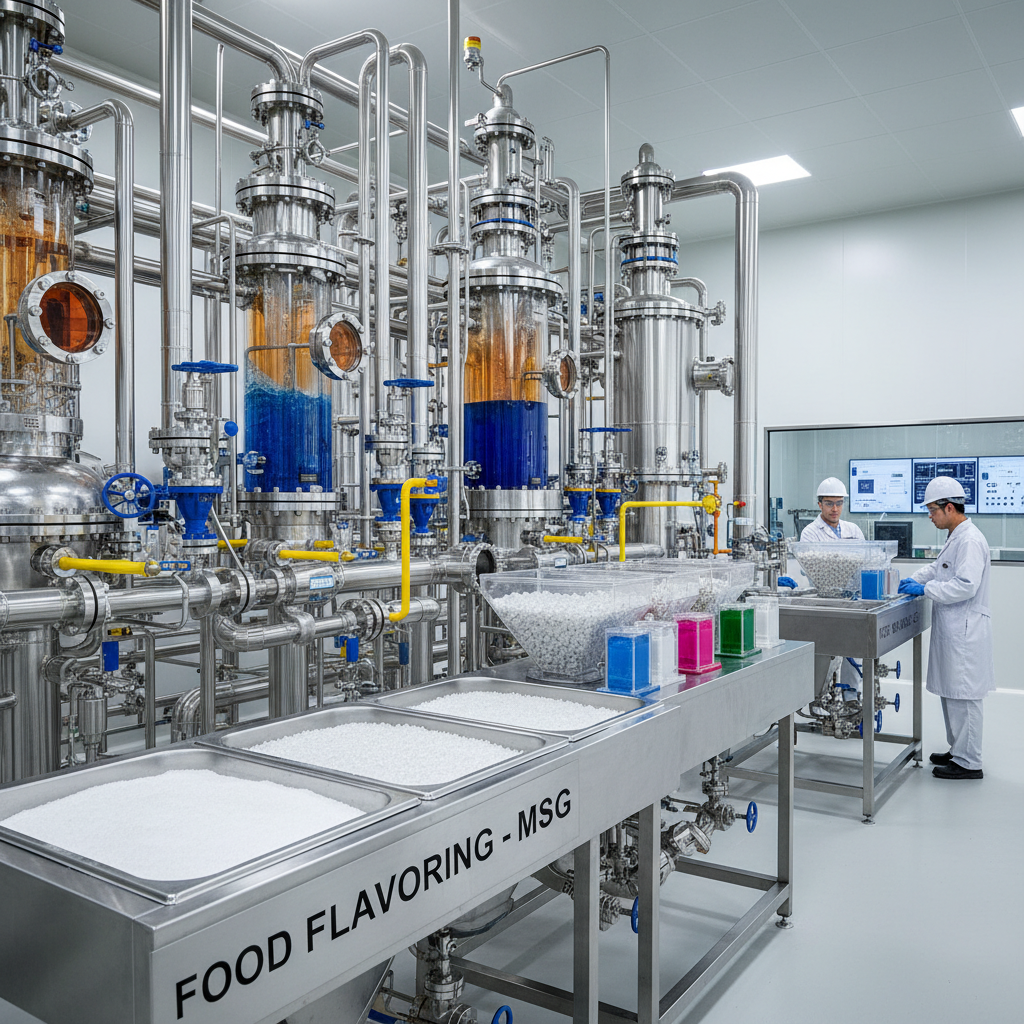
In the sophisticated landscape of modern food science, sodium glutamate stands as one of the most influential flavor enhancers ever utilized globally. By isolating the essence of "umami"—the fifth basic taste—this compound allows manufacturers to bridge the gap between nutritional requirements and sensory satisfaction, making a wide array of processed foods more palatable to a diverse global population.
Understanding the chemical properties and industrial applications of sodium glutamate is essential for professionals in the food additive, pharmaceutical, and feed industries. Its ability to synergize with other ingredients not only reduces the need for excessive salt but also enhances the overall profile of proteins, creating a more balanced and appealing flavor experience.
As global demand for convenient, tasty, and affordable food options grows, the role of sodium glutamate continues to evolve. From its roots in traditional fermentation to modern high-purity synthesis, this additive remains a cornerstone of culinary efficiency and industrial food production.
Global Industry Context of Sodium Glutamate
On a global scale, the production and consumption of sodium glutamate are driven by the rapid urbanization of Asia and Africa, where processed food consumption is skyrocketing. Market data suggests that the umami seasoning market remains resilient, as ISO standards for food safety and quality ensure that mass-produced additives meet stringent health criteria across borders.
However, the industry faces a significant challenge: overcoming historical misconceptions and "food myths" while meeting the demand for "clean label" ingredients. This creates a tension between the high efficiency of synthetic additives and the growing consumer preference for natural fermentation-derived profiles in the food manufacturing sector.
Technical Definition and Industrial Meaning
At its most fundamental level, sodium glutamate is the sodium salt of glutamic acid, a non-essential amino acid found naturally in many foods like tomatoes and aged cheeses. In an industrial context, it is a crystalline powder designed to trigger the umami receptors on the human tongue, signaling the presence of proteins and creating a "savory" depth that is difficult to achieve with salt or sugar alone.
Beyond the kitchen, its meaning extends into the realm of humanitarian and economic efficiency. By allowing food manufacturers to produce nutrient-dense but flavor-rich foods at a low cost, it helps in creating affordable meal solutions for lower-income populations globally, ensuring that taste does not become a luxury.
Furthermore, in the pharmaceutical and feed additive sectors, sodium glutamate serves as a precursor or a nutritional supplement, demonstrating its versatility beyond simple seasoning. It represents the intersection of organic chemistry and consumer psychology, optimizing the sensory experience of eating.
Core Components for High-Quality Production
The purity of sodium glutamate is primarily determined by the fermentation substrate. High-quality producers typically utilize sugarcane or beet molasses, where specific strains of bacteria (such as Corynebacterium glutamicum) convert sugars into glutamic acid with high efficiency.
Consistency and Scalability are critical factors. For sodium glutamate to be viable for global export, the crystallization process must be tightly controlled to ensure uniform particle size and solubility, preventing clumping in industrial mixing vats.
Cost Efficiency and Environmental Impact also play a major role. Modern plants now focus on recovering by-products from the fermentation broth, turning waste into organic fertilizers, thereby aligning the production of sodium glutamate with circular economy principles.
Global Applications and Use Case Analysis
The application of sodium glutamate spans multiple continents, with a particular dominance in the East Asian culinary market. In industrial food production, it is widely used in bouillon cubes, instant noodles, and savory snacks, where it stabilizes flavor profiles across different batches of raw ingredients.
In other contexts, such as in remote industrial zones or post-disaster relief operations, fortified food supplements often incorporate sodium glutamate to make high-protein, low-cost pastes more palatable for malnourished populations, ensuring higher compliance with dietary programs.
Comparison of Sodium Glutamate Performance Metrics
Tangible Advantages and Long-Term Value
The most immediate advantage of sodium glutamate is its ability to reduce overall sodium intake. Because umami enhances the perception of saltiness, manufacturers can reduce the actual sodium chloride content in their products without sacrificing taste, contributing to a healthier public health profile.
Beyond health, there is a strong logical and emotional value in reliability. For a global brand, using standardized sodium glutamate ensures that a product tastes exactly the same in New York as it does in Tokyo, building consumer trust and brand loyalty through sensory consistency.
Future Trends and Green Innovations
The future of sodium glutamate is inextricably linked to biotechnology and the "green transition." We are seeing a shift toward precision fermentation, where genetically optimized microbes produce higher yields with lower energy inputs and zero chemical waste.
Digital transformation is also hitting the factory floor. AI-driven monitoring systems now optimize the fermentation parameters of sodium glutamate in real-time, adjusting temperature and pH to maximize purity while minimizing the carbon footprint of the manufacturing plant.
Moreover, there is a growing trend toward combining sodium glutamate with natural yeast extracts to create "hybrid" flavor enhancers that satisfy both the technical requirements of the industry and the "clean label" demands of the modern consumer.
Challenges and Expert Strategic Solutions
Despite its benefits, the primary limitation of sodium glutamate is the persistent stigma surrounding its safety. While scientific consensus from the FDA and EFSA confirms its safety, consumer perception often lags behind scientific reality.
To overcome this, expert strategists recommend a shift toward transparency. By educating consumers on the natural presence of glutamates in foods like Parmesan cheese, companies can reframe sodium glutamate as a concentrated version of a natural occurrence rather than a "chemical" additive.
Another challenge is the volatility of raw material costs, such as corn and sugar. The solution lies in diversifying substrates, incorporating agricultural waste and cellulosic biomass into the fermentation process to ensure a stable price point for sodium glutamate production.
Strategic Analysis of Sodium Glutamate Production and Market Fit
| Production Method |
Cost Efficiency |
Sustainability Score |
Market Application |
| Traditional Fermentation |
Moderate |
7/10 |
General Food Grade |
| Precision Bio-Synthesis |
High Initial Investment |
9/10 |
Premium/Clean Label |
| Chemical Synthesis |
Very High |
4/10 |
Industrial Intermediates |
| Enzymatic Conversion |
Moderate |
8/10 |
Pharmaceutical Grade |
| Agri-Waste Fermentation |
Very High |
10/10 |
Animal Feed Additives |
| Hybrid Extraction |
Moderate |
6/10 |
Specialty Seasonings |
FAQS
Yes, sodium glutamate is recognized as safe (GRAS) by major global health authorities, including the FDA and EFSA. It is processed by the body in the same way as naturally occurring glutamates found in tomatoes or cheese. When used within recommended industrial levels, it poses no health risk to the general population.
Sodium glutamate triggers the umami receptors, which enhances the perception of saltiness. This synergistic effect allows food scientists to reduce the actual sodium chloride (table salt) content by up to 30-40% without the consumer noticing a drop in flavor intensity, supporting heart-healthy dietary goals.
Food-grade sodium glutamate undergoes more rigorous purification and filtration to meet human consumption safety standards and sensory requirements. Feed-grade versions are optimized for nutritional delivery in livestock and may have different purity thresholds, focusing more on amino acid delivery than on crystal clarity or taste neutrality.
Absolutely. Modern production focuses on using renewable agricultural substrates like sugarcane molasses or corn steep liquor. Emerging technologies are even exploring the use of cellulose from agricultural waste, making the production of this additive more eco-friendly and reducing dependence on primary food crops.
Sodium glutamate is hygroscopic, meaning it absorbs moisture from the air. It should be stored in cool, dry environments in airtight containers, such as multi-layer kraft paper bags with PE liners. Using pallets to avoid direct floor contact and maintaining low humidity in warehouses is critical for preserving flowability.
While its primary role is flavor enhancement, sodium glutamate does not typically act as a preservative. However, by stabilizing the flavor profile, it prevents the "taste fade" that can happen in processed foods over time, ensuring the product remains appealing to the consumer throughout its designated shelf life.
Conclusion
In summary, sodium glutamate is far more than a simple seasoning; it is a vital tool for the global food industry that balances taste, health, and affordability. From its precise fermentation process to its role in reducing sodium intake and enhancing the sensory quality of diverse food categories, its value is rooted in both science and practicality.
Looking forward, the integration of green biotechnology and AI-driven manufacturing will likely erase the remaining stigmas, positioning sodium glutamate as a sustainable pillar of future food security. For businesses seeking to optimize their flavor profiles with high-purity additives, investing in quality-controlled sources is the key to long-term success. Visit our website: www.chinaseasoning.com