Monosodium Glutamate, commonly known as msg used in food, is one of the most widely utilized flavor enhancers in the global food industry. By isolating the savory "umami" taste, it allows manufacturers to create deeply satisfying taste profiles without requiring excessive amounts of expensive proteins or salts, making it a cornerstone of modern food science.
Understanding the role of msg used in food is essential for food technologists and procurement managers who aim to balance cost-efficiency with sensory appeal. As global dietary habits shift toward processed and ready-to-eat meals, the demand for consistent flavor delivery has positioned this additive as a vital tool in maintaining consumer loyalty and product standardization.
Despite historical misconceptions, current scientific consensus and international food safety standards emphasize that when managed correctly, the application of msg used in food is safe and highly effective. From industrial-scale snacks to pharmaceutical-grade nutrient supplements, its versatility remains unmatched in the realm of taste modification.
Global Industry Context of msg used in food
The global market for msg used in food is deeply integrated into the supply chains of Asia, North America, and Europe. According to industry data, the demand for umami enhancers has grown steadily as a result of the expansion of the fast-food sector and the rising consumption of convenience foods. In many regions, the ability to replicate the taste of slow-cooked meats and broths in a fraction of the time has revolutionized commercial kitchen operations.
However, the industry faces the ongoing challenge of consumer perception. While the WHO and FDA recognize its safety, many manufacturers must navigate a complex landscape of "clean label" trends. This has led to a surge in the production of bio-fermented alternatives that maintain the efficacy of msg used in food while appealing to health-conscious demographics.
Defining the Chemical Nature of msg used in food
At its core, msg used in food is the sodium salt of glutamic acid, an amino acid that occurs naturally in many proteins. When the salt dissolves in water or on the tongue, it releases glutamate, which binds to specific receptors in the taste buds, triggering the sensation of "umami" or savoriness. This chemical reaction is what creates the perception of "fullness" in a flavor profile.
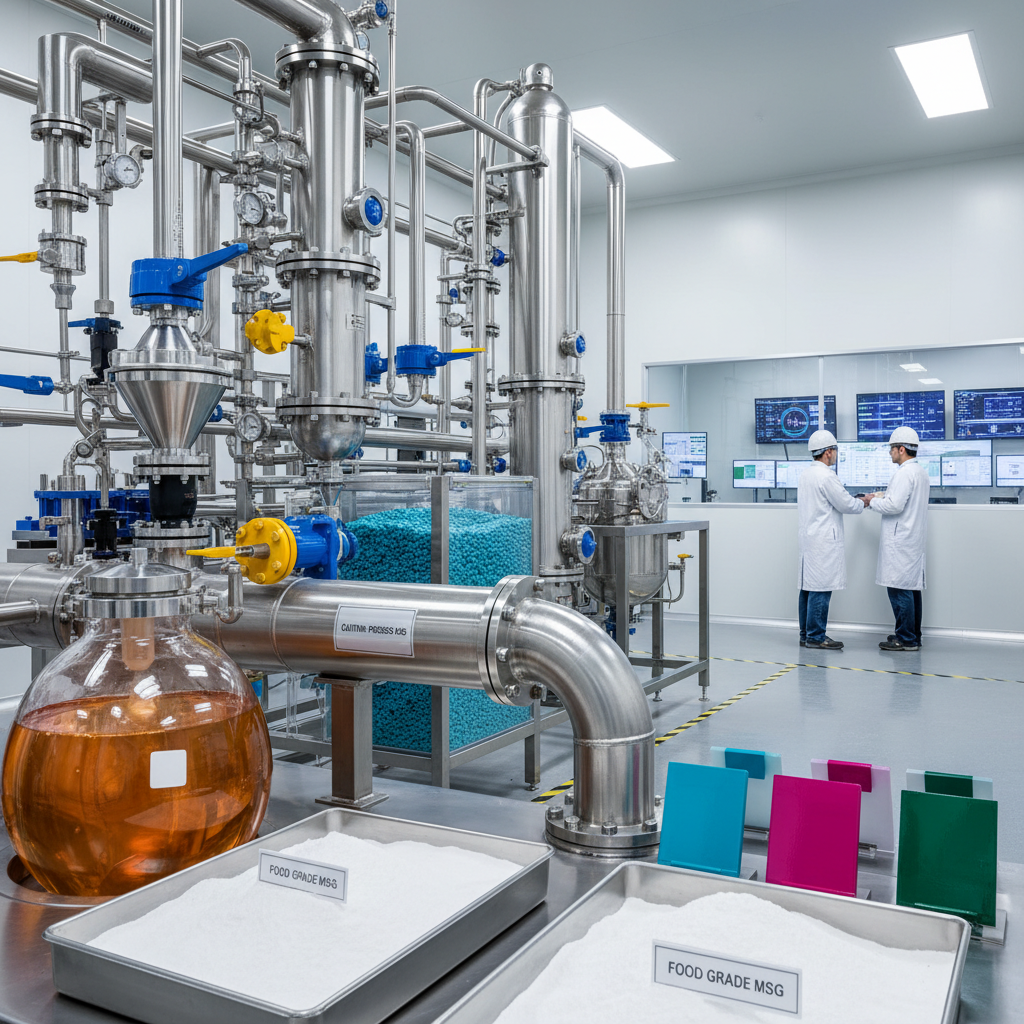
From an industrial perspective, the production of this additive typically involves the fermentation of starches or sugars using bacteria like Corynebacterium glutamicum. This biological process ensures a high-purity crystalline powder that is stable, easy to transport, and seamlessly integrable into various food matrices, whether they be liquids, powders, or semi-solids.
The connection to modern humanitarian needs is often overlooked; by enhancing the taste of nutrient-dense but bland fortified foods, msg used in food helps increase the acceptance of emergency food rations in disaster-prone areas, ensuring that caloric and nutritional intake is maintained through palatable meals.
Key Factors Driving the Efficacy of msg used in food
One of the primary factors is Taste Synergism. When msg used in food is combined with nucleotides, such as inosinate (IMP) or guanylate (GMP), the perceived intensity of umami is multiplied rather than just added. This allows manufacturers to achieve a powerful flavor impact using smaller quantities of additives.
Sodium Reduction is another critical driver. Because the umami receptors are so sensitive to glutamate, the use of msg used in food can actually reduce the total sodium content of a product. By enhancing the perceived saltiness, brands can lower actual NaCl levels without sacrificing the savory experience, aligning with global health initiatives to reduce hypertension.
Finally, Cost Efficiency and Scalability make it an indispensable tool. Compared to using high volumes of natural beef or chicken extracts to achieve a similar depth of flavor, msg used in food offers a precise, concentrated, and affordable method for scaling production while maintaining a consistent taste profile across millions of units.
Global Applications of msg used in food
The application of msg used in food spans diverse sectors. In the snack food industry, it is the secret behind the addictive quality of savory chips and extruded puffs. In the condiment sector, it provides the base for soy sauces, bouillons, and seasoning blends that are exported globally. Even in the pharmaceutical intermediates sector, glutamic acid derivatives are used as building blocks for various medical applications.
In specific regional contexts, such as Southeast Asian cuisine, it is used as a primary flavor bridge in street foods and commercial sauces. In remote industrial zones where fresh ingredients are scarce, processed foods enhanced with msg used in food provide a psychological sense of comfort and satisfaction, proving that flavor is as much a psychological need as a biological one.
Efficiency Comparison of Flavor Enhancers
Tangible Advantages and Long-Term Value
The most immediate advantage of msg used in food is the ability to standardize quality. For global franchises, ensuring that a burger or a soup tastes exactly the same in Tokyo as it does in New York is a logistical nightmare. By utilizing a controlled amount of MSG, companies can mitigate the natural variance in raw ingredients like tomatoes or onions, ensuring a reliable sensory experience.
From a sustainability perspective, the long-term value lies in waste reduction. Because msg used in food allows for the creation of savory profiles using less animal protein, it supports a shift toward plant-based diets. This transition is critical for reducing the carbon footprint of the global food system while maintaining the "meat-like" satisfaction that consumers demand.
Future Innovations in msg used in food Production
The future of msg used in food is moving toward "Precision Fermentation." By utilizing CRISPR and other gene-editing tools, scientists are developing strains of bacteria that can produce glutamate more efficiently and with zero waste. This digital transformation of biotechnology allows for a more sustainable production cycle that requires fewer raw materials and generates fewer by-products.
Moreover, we are seeing the rise of encapsulated MSG. This technology allows the flavor enhancer to be released only upon heating or digestion, preventing early degradation in complex food matrices. This ensures that the "umami punch" is delivered exactly when the consumer eats the product, rather than during the storage phase.
Sustainability policies are also pushing the industry toward green energy. Leading manufacturers of msg used in food are now integrating solar and wind power into their fermentation plants, aiming for a carbon-neutral production process that aligns with ISO environmental standards.
Overcoming Challenges in the Usage of msg used in food
The most significant limitation is the "anti-MSG" sentiment rooted in outdated anecdotal evidence. To overcome this, industry leaders are adopting transparency-first strategies. By providing educational content and clear labeling, companies can shift the narrative from "chemical additive" to "fermented seasoning," highlighting its natural origins in foods like Parmesan cheese and ripe tomatoes.
Another challenge is the interaction of msg used in food with other acidic ingredients, which can sometimes mask the umami effect. Expert formulation now involves the use of buffering agents that stabilize the pH level of the food, ensuring that the glutamate remains active and perceptible to the taste buds.
Lastly, the move toward "Clean Label" requirements means that manufacturers are looking for ways to list MSG under names like "Yeast Extract" or "Hydrolyzed Vegetable Protein." While this solves the marketing problem, the technical goal remains the same: providing the efficiency and flavor depth that only msg used in food can provide.
Analysis of msg used in food Implementation across Food Categories
| Food Category |
Usage Intensity (1-10) |
Primary Goal |
Consumer Acceptance |
| Savory Snacks |
9 |
Craveability |
High |
| Instant Noodles |
10 |
Broth Depth |
Very High |
| Frozen Meals |
7 |
Flavor Recovery |
Medium |
| Condiments/Sauces |
8 |
Umami Base |
High |
| Plant-Based Meats |
8 |
Meat Mimicry |
Medium |
| Processed Meats |
6 |
Salt Reduction |
Medium |
FAQS
Yes. Major health organizations, including the FDA and EFSA, classify MSG as "generally recognized as safe" (GRAS). The glutamate in MSG is chemically identical to the glutamate found naturally in tomatoes, cheese, and mushrooms. When used in moderation as part of a balanced diet, it poses no known health risks to the general population.
MSG contains about one-third the sodium of table salt. Because it triggers the umami receptors, it enhances the perception of saltiness. This allows food manufacturers to reduce the total amount of sodium chloride (table salt) in a product while maintaining a savory and satisfying taste, effectively lowering the overall sodium load.
Absolutely. Most industrial MSG is produced through the fermentation of sugar beets, sugar cane, or corn starch using specialized bacteria. This process is entirely plant-based and vegan, making it a suitable additive for the growing plant-based meat and dairy alternative markets.
Yeast extract is essentially a natural source of glutamates. It is created by breaking down yeast cells (autolysis), which releases natural MSG and other nucleotides. While the label says "Yeast Extract," the chemical effect on the palate is very similar to using pure msg used in food.
MSG is highly hygroscopic, meaning it absorbs moisture from the air. For industrial use, it should be stored in cool, dry environments in airtight containers. Preventing clumping is key to ensuring accurate dosing during the mixing process in large-scale food production.
No, MSG is remarkably heat-stable. It does not break down or lose its umami-enhancing properties during boiling, baking, or frying. This stability is why it is so effective in everything from instant soup powders to oven-baked savory snacks.
Conclusion
In summary, msg used in food serves as an indispensable catalyst for flavor optimization and cost reduction in the modern food industry. By leveraging the science of umami, manufacturers can create products that are not only more delicious but also potentially healthier through sodium reduction and the support of plant-based alternatives.
As we look toward the future, the integration of precision fermentation and sustainable production will further solidify the role of MSG in a green economy. For businesses seeking to balance sensory excellence with operational efficiency, the strategic application of high-quality flavor enhancers remains a winning formula. Visit our website: www.chinaseasoning.com