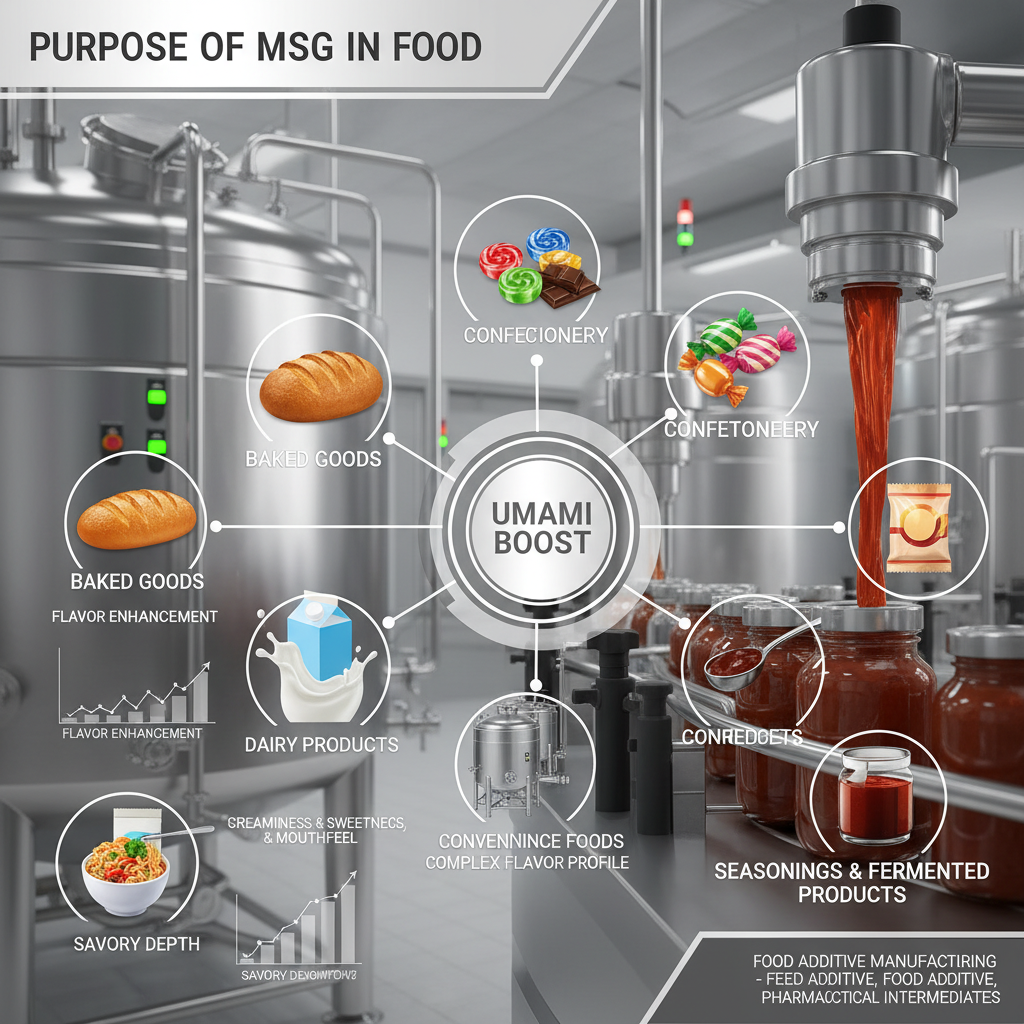
Monosodium Glutamate, commonly known as MSG, is one of the most debated yet widely used additives in the global food industry. Understanding the purpose of msg in food is essential for both manufacturers and consumers, as it transcends simple seasoning to involve the complex science of taste perception and food chemistry. By isolating the "umami" flavor—the fifth basic taste—MSG allows for the creation of savory profiles that enhance the overall eating experience.
From a global industrial perspective, the application of MSG is a strategic tool for cost-efficiency and flavor consistency. In an era where processed foods must meet stringent sensory expectations across different cultures, the purpose of msg in food is to provide a reliable, standardized method of amplifying naturally occurring glutamates. This ensures that products maintain a high quality of taste regardless of raw material variability.
Beyond mere flavor, the strategic use of MSG plays a role in nutritional balance by allowing for the reduction of sodium chloride (table salt) without sacrificing palatability. When used correctly, the purpose of msg in food is to create a synergistic effect with other ingredients, promoting a more satisfying sensory profile that can actually encourage the consumption of vegetables and proteins in otherwise bland diets.
The Fundamental Definition of Umami and MSG
At its simplest level, the purpose of msg in food is to deliver the taste of "umami," a Japanese term meaning "savory" or "delicious." Chemically, MSG is the sodium salt of glutamic acid, an amino acid found naturally in many foods like tomatoes, parmesan cheese, and mushrooms. When added to a dish, it triggers specific receptors on the tongue that signal the presence of proteins, creating a mouth-watering sensation.
By isolating this component, food scientists can precisely control the depth of flavor in a product. This is not about adding a "new" taste, but rather intensifying the existing savory notes, making the purpose of msg in food a matter of sensory optimization rather than artificial modification.
Global Industrial Relevance of Taste Enhancement
In the global food manufacturing sector, consistency is the primary challenge. Raw ingredients vary by season and origin, which can lead to inconsistent flavor profiles in mass-produced goods. The purpose of msg in food is to act as a stabilizing agent for flavor, ensuring that a snack or a sauce tastes exactly the same in New York as it does in Tokyo.
According to industry standards and food safety organizations, MSG is recognized as generally safe (GRAS). From a logistical standpoint, the ability to use a concentrated powder to achieve a rich, broth-like flavor significantly reduces the need for transporting large quantities of bulky, fresh protein sources, thereby lowering the carbon footprint of the supply chain.
Furthermore, as the world moves toward more plant-based diets, the purpose of msg in food becomes even more critical. Plant proteins often lack the inherent depth of animal proteins; MSG bridges this "flavor gap," making sustainable meat alternatives more appealing to the general public.
Core Components of Flavor Synergy
One of the most technical aspects of the purpose of msg in food is its ability to work in synergy with nucleotides, such as inosinate (IMP) and guanylate (GMP). When combined, these compounds create a multiplicative effect on taste intensity, meaning far less of each is required to achieve a powerful savory impact.
The second core component is sodium reduction. Because MSG contains about one-third the sodium of table salt, the purpose of msg in food is often to maintain high palatability while lowering overall sodium levels, helping manufacturers meet health guidelines without alienating consumers.
Finally, the solubility and stability of MSG ensure that it remains active through various processing methods, including high-heat sterilization and freezing. This versatility makes the purpose of msg in food indispensable for the frozen food and canned goods industries.
Comparative Efficiency in Food Production
When evaluating the cost-to-benefit ratio in industrial seasoning, MSG stands out for its efficiency. The purpose of msg in food is to provide maximum flavor impact with minimum dosage, reducing the reliance on expensive natural extracts or excessive salt.
Below is a comparative analysis showing how different methods of achieving savory depth compare in terms of efficiency, cost, and consistency.
Efficiency Comparison for Purpose of MSG in Food
Real-World Applications Across Global Cuisines
In Asian markets, the purpose of msg in food is deeply integrated into the culinary tradition, where it is used to highlight the natural sweetness of seafood and the richness of fermented soy. In these regions, MSG is seen as a tool for culinary art, allowing chefs to layer flavors with precision.
Conversely, in Western industrial food production, the purpose of msg in food is often found in "hidden" applications, such as in processed meats, savory crackers, and ready-to-eat meals. Here, it serves as a corrective measure to ensure that the food remains appetizing after undergoing rigorous preservation processes.
Long-term Value and Consumer Trust
The long-term value of utilizing MSG lies in its ability to drive innovation in healthy eating. By leveraging the purpose of msg in food, developers can create low-sodium products that do not taste "dietary" or bland, thereby improving public health outcomes by reducing hypertension risks.
Building consumer trust requires transparency. When manufacturers clearly communicate the purpose of msg in food as a tool for sodium reduction and flavor enhancement, the stigma surrounding it diminishes. This shift from "additive" to "flavor optimizer" is key to modern branding.
Ultimately, the reliability of MSG provides an emotional sense of satisfaction. The "craveability" associated with umami is a powerful psychological driver that increases consumer loyalty to a brand, as the food provides a consistent, fulfilling sensory reward.
Future Innovations in Glutamate Technology
The future of the purpose of msg in food is shifting toward "Clean Label" solutions. We are seeing a rise in bio-fermentation techniques where MSG is produced from sustainable agricultural waste, aligning the additive with green energy and circular economy goals.
Digital transformation is also playing a role. AI-driven flavor profiling is now used to determine the exact milligram of MSG needed to reach the "bliss point" of a product, minimizing waste and maximizing the purpose of msg in food for specific demographic palettes.
As automation in food processing grows, the integration of precision-dosage systems ensures that the application of glutamates is perfectly uniform, eliminating the human error associated with traditional seasoning.
Strategic Analysis of Glutamate Application Methods
| Application Method |
Flavor Intensity |
Cost Efficiency |
Health Impact |
| Direct MSG Powder |
Very High |
Excellent |
Low Sodium |
| Yeast Extract Blend |
Medium-High |
Moderate |
Clean Label |
| Hydrolyzed Vegetable Protein |
High |
High |
Variable |
| Nucleotide Synergy Mix |
Extreme |
High Cost |
Very Low Dosage |
| Natural Fermentation |
Moderate |
Low |
Organic |
| Salt-Substitution Mix |
Medium |
High |
Heart Healthy |
FAQS
While salt primarily provides a "salty" taste and preserves food, the purpose of msg in food is to provide "umami" or savoriness. MSG enhances the depth of flavor and allows manufacturers to reduce the total amount of sodium chloride used, which can help in reducing the overall sodium intake of the consumer while maintaining a delicious taste.
No, its application is vast. While common in snacks, it is used in soups, sauces, frozen dinners, and even plant-based meat alternatives to replicate the savory profile of animal proteins. It is also widely used in professional kitchens to balance complex flavors in sauces and stews.
The purpose of msg in food contributes to sustainability by making plant-based proteins more palatable. By enhancing the savory notes of legumes and grains, it reduces the consumer's reliance on resource-intensive animal proteins, thus lowering the environmental impact of food production.
Yes, because MSG contains significantly less sodium than table salt, it is often used in specialized food production to create low-sodium options that are still appetizing. This is a key part of the purpose of msg in food for health-conscious product lines.
MSG provides glutamate, which is an amino acid. While it doesn't significantly alter the caloric value of food, the purpose of msg in food is often to make nutrient-dense but bland foods (like steamed vegetables) more appealing, potentially increasing the consumption of healthy ingredients.
Chemically, they are identical. The body processes the glutamate in a tomato exactly the same way it processes the glutamate in added MSG. The purpose of msg in food is simply to provide a concentrated, consistent version of what already exists in nature.
Conclusion
In summary, the purpose of msg in food extends far beyond simple seasoning. It is a sophisticated tool for flavor optimization, sodium reduction, and industrial consistency. By harnessing the power of umami, food manufacturers can create products that are not only delicious and craveable but also more sustainable and health-aligned through the reduction of table salt.
Looking forward, the integration of bio-fermentation and AI-driven flavor mapping will further refine how we use glutamates. We encourage food developers and procurement specialists to view MSG as a strategic asset in the quest for the perfect flavor profile. To explore high-quality food additive solutions and learn more about the science of taste, visit our website: www.chinaseasoning.com.