When stepping into a professional kitchen or browsing the aisles of a specialty food store, one often encounters the confusing terminology of savory concentrates. A common point of confusion for chefs and home cooks alike is whether is chicken bouillon the same as chicken base, as both are designed to provide a rich, savory foundation for soups, sauces, and stews. While they share a primary goal—delivering an intense chicken flavor without the need to simmer bones for hours—their composition, texture, and application differ significantly.
Understanding the nuance between these two ingredients is crucial for maintaining consistency in food production, especially in the food additive and manufacturing industry. While bouillon is typically a dehydrated, granular or cubic product, a base is often a concentrated paste containing fats and proteins that provide a deeper mouthfeel. For those operating in the food manufacturing sector, choosing the wrong format can impact the stability, viscosity, and overall sensory profile of the final commercial product.
Ultimately, determining if is chicken bouillon the same as chicken base requires a look at the ingredient list and the desired end-result. From a technical perspective, the "base" offers a more complex emulsion of flavors, whereas "bouillon" provides a streamlined, high-solubility salt-forward profile. This guide will dissect these differences to help you optimize your culinary and industrial formulations for maximum taste and efficiency.
The Fundamental Definitions of Bouillon vs Base
To answer the question is chicken bouillon the same as chicken base, we must first define them. Chicken bouillon is essentially a dehydrated form of broth, processed into a powder or a compressed cube. It is engineered for rapid dissolution and convenience, relying heavily on salt and flavor enhancers to mimic the taste of a long-simmered stock. Because of its low moisture content, it boasts an exceptional shelf life and is easy to transport globally.
In contrast, a chicken base is a concentrated paste or liquid. It typically contains a higher percentage of actual meat extracts and fats, which are emulsified with salt and seasonings. While bouillon is like a "snapshot" of flavor, a base is more like a "concentrate," providing the richness and viscosity associated with traditional stocks. In the professional food additive industry, bases are preferred when the final product requires a specific "mouthfeel" or a richer fat profile.
Ingredient Composition and Chemical Profiles
When analyzing the chemical makeup to see if is chicken bouillon the same as chicken base, we find a stark difference in the ratio of solids to liquids. Bouillon is dominated by maltodextrin, salt, and MSG (monosodium glutamate), which act as carriers for the flavor. The "chicken" element is often a spray-dried powder, meaning the volatile aromatic compounds are stabilized but lack the richness of organic fats.
Chicken bases, however, utilize a process of reduction and emulsification. They often contain vegetable oils or animal fats that keep the flavor compounds suspended in a paste. This allows for a more sustained release of flavor during the cooking process. From a food chemistry perspective, the presence of lipids in the base creates a more complex flavor profile, whereas the bouillon relies on high osmotic pressure (via salt) for taste delivery.
For manufacturers specializing in pharmaceutical intermediates or food additives, these differences are vital. The solubility of a powder (bouillon) is almost instantaneous in hot water, making it ideal for instant soup mixes. Conversely, a base requires more agitation to incorporate, but it provides a stability in emulsions that powders cannot match, making it the superior choice for heavy sauces or industrial gravies.
Texture, Solubility, and Culinary Application
The practical application of these ingredients often clarifies whether is chicken bouillon the same as chicken base. Bouillon is the "fast-track" option; it is designed for speed and ease of use. In high-volume catering or disaster relief food kits, the lightness and stability of bouillon cubes make them the gold standard for efficiency.
When evaluating the sensory experience, the question of is chicken bouillon the same as chicken base becomes a matter of viscosity. A base adds body to a dish. Because it contains fats and proteins, it helps thicken the liquid slightly, providing a velvet-like texture that bouillon simply cannot replicate. This makes bases the preferred choice for high-end restaurant stocks.
From a professional perspective, the choice depends on the desired end-state. If the goal is a clear, thin broth for a light consommé, bouillon is efficient. If the goal is a rich, savory foundation for a risotto or a creamy soup, a base is necessary. Thus, while they are functionally similar in that they provide "chicken flavor," they are fundamentally different tools in a chef's arsenal.
Cost Efficiency and Industrial Scalability
In the context of large-scale food manufacturing, the decision on whether is chicken bouillon the same as chicken base translates directly into a cost-benefit analysis. Bouillon is generally more cost-effective per serving due to its concentrated nature and lower shipping weight. For companies producing dry-mix food products, the ability to integrate a powder into a blend is a significant logistical advantage.
However, chicken bases offer a higher perceived value and a more "premium" taste profile, which can justify a higher price point for the final consumer product. In the global additive market, the shift toward "clean label" products has led to an increase in the demand for high-quality bases that use fewer artificial fillers and more real meat extracts.
Comparative Performance of Bouillon vs Base in Industrial Use
Global Market Trends in Savory Additives
The global demand for convenient flavor enhancers is evolving. While the question of is chicken bouillon the same as chicken base remains common among consumers, industry trends are moving toward "hybrid" solutions. We are seeing the rise of granulated bases—products that offer the rich flavor of a paste with the convenience of a powder.
Furthermore, the growth of the plant-based meat industry has forced a reimagining of these products. Vegan "chicken" bouillon and bases now utilize yeast extracts and hydrolyzed vegetable proteins to mimic the umami profile of chicken. This digital and chemical transformation in food science is making these additives more accessible to a wider demographic, including those with dietary restrictions or ethical preferences.
Nutritional Impact and Dietary Considerations
When evaluating the health aspect of is chicken bouillon the same as chicken base, sodium is the primary concern. Both products are typically high in salt, which serves as both a preservative and a flavor enhancer. However, bouillon often has a higher concentration of sodium per gram because it lacks the buffering effect of fats and proteins found in a base.
For those managing hypertension or heart health, the choice between the two may depend on the "low-sodium" options available. Many professional-grade bases now offer potassium-based salt substitutes, whereas budget bouillon cubes often rely on traditional NaCl. This makes the selection process not just a matter of taste, but a matter of public health and nutrition.
Additionally, the presence of MSG is a polarizing factor. While recognized as safe by the FDA and EFSA, many modern consumers seek "MSG-free" options. High-quality chicken bases often achieve their savory depth through natural fermentation and slow-cooking, reducing the need for added monosodium glutamate compared to the highly engineered profiles of basic bouillon.
Comparative Analysis for Food Manufacturing
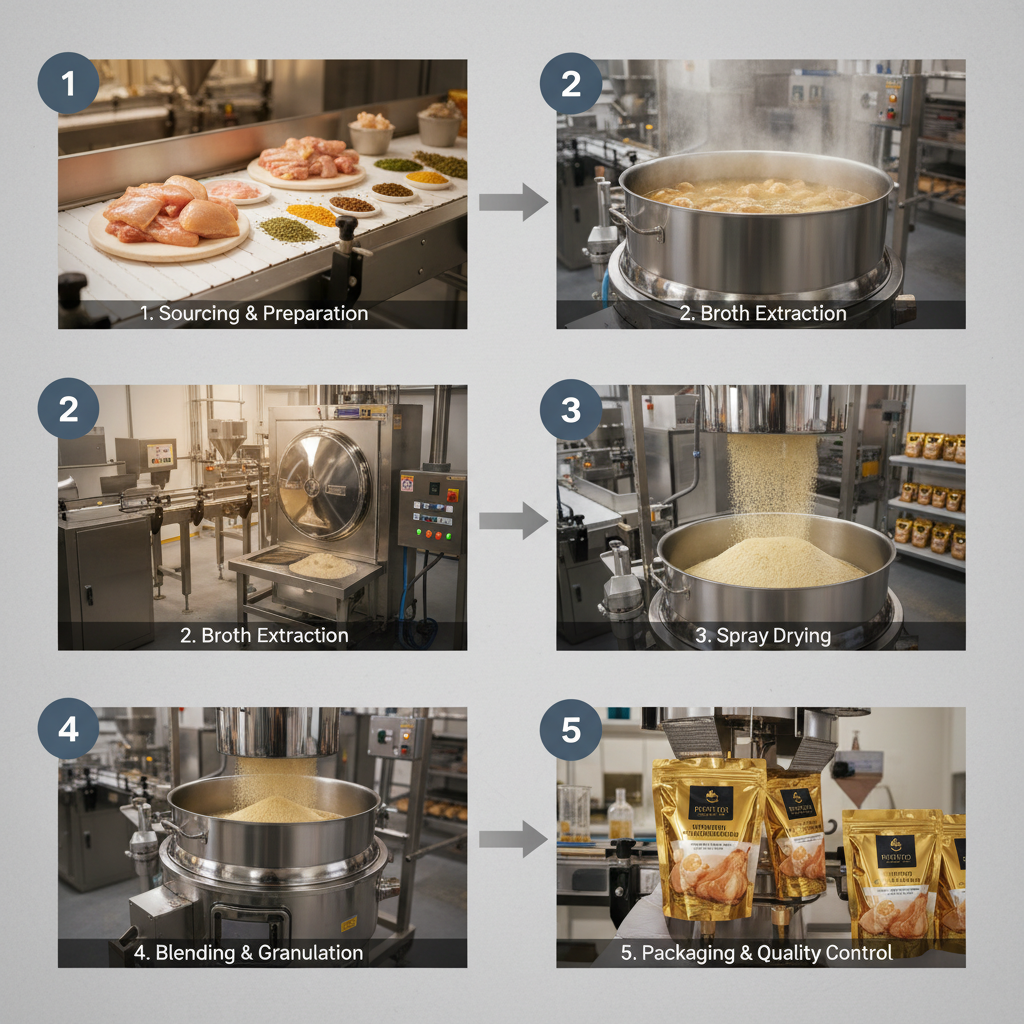
To conclude the technical debate on whether is chicken bouillon the same as chicken base, we must look at the manufacturing pipeline. In industrial food production, the "form factor" (powder vs. paste) dictates the equipment used. Powders are handled by mixers and silos, while pastes require heated extrusion or pumping systems.
The stability of these ingredients during heat treatment (such as sterilization or pasteurization) also differs. The fats in a chicken base can undergo oxidation if not properly stabilized with antioxidants, whereas bouillon is chemically more inert due to its low water activity. This makes bouillon a safer bet for long-term storage in unstable environments.
Ultimately, for a food manufacturer, the "correct" choice is the one that aligns with the product's target price point and sensory requirements. A luxury ready-meal will always utilize a base, while a budget-friendly instant noodle packet will almost exclusively use bouillon.
Technical Comparison Summary: Chicken Bouillon vs. Chicken Base
| Feature Dimension |
Chicken Bouillon |
Chicken Base |
Industrial Preference |
| Physical State |
Dehydrated Powder/Cube |
Concentrated Paste |
Depends on Equipment |
| Flavor Profile |
Salt-Forward, Sharp |
Rich, Umami, Deep |
Base for Premium |
| Solubility |
Very High (Instant) |
Moderate (Requires Stirring) |
Bouillon for Instant |
| Mouthfeel/Body |
Thin, Watery |
Viscous, Velvety |
Base for Sauces |
| Shelf Stability |
Excellent (Ambient) |
Good (Often Refrigerated) |
Bouillon for Export |
| Cost per Unit |
Low |
Medium to High |
Bouillon for Volume |
FAQS
Yes, you can, but the result will be different. If you substitute a base with bouillon, your dish will have the chicken flavor but will lack the rich, fatty mouthfeel and thickness that a base provides. To compensate, you may need to add a small amount of butter or oil to the pot.
Neither is inherently "healthy" as both are high in sodium. However, bases often contain more real meat extracts and fewer fillers like maltodextrin compared to bouillon. Always check the labels for MSG and sodium content to make the healthiest choice for your specific dietary needs.
Chefs prefer bases because they are closer to actual homemade stock. The emulsion of fats and proteins in a base provides a depth of flavor and a textural quality (viscosity) that makes sauces and soups feel more luxurious and professional on the palate.
Bouillon has a significantly longer shelf life because it is almost entirely dehydrated. Once opened, bouillon can last for months in a cool, dry place. A base, containing more moisture and fats, typically needs refrigeration after opening and has a shorter usable window.
While both are salty, the concentration differs. Bouillon is often more intensely salty relative to its volume because salt is the primary preservative. Bases use a combination of salt and fat to preserve the product, though the total sodium per serving remains high in both.
Yes, by reducing a homemade chicken stock until it reaches a syrupy consistency and then mixing it with salt and butter, you can create a primitive version of a base. However, industrial bases use stabilizers to ensure the paste remains smooth and shelf-stable.
Conclusion
In summary, while the question of is chicken bouillon the same as chicken base may seem academic, the answer is a definitive "no." Bouillon is a dehydrated, cost-effective, and highly soluble powder ideal for speed and long-term storage. Chicken base is a rich, concentrated paste that provides the depth, body, and authentic mouthfeel required for premium culinary applications. Understanding these differences allows both home cooks and industrial food manufacturers to select the right tool for the job, ensuring that the final product meets the desired sensory and economic goals.
Looking forward, the industry is likely to see more "hybrid" products that bridge the gap between these two formats, combining the stability of bouillon with the richness of a base. For those in the food additive sector, focusing on clean-label ingredients and sodium reduction will be the key to future growth. Whether you are formulating a new commercial soup or preparing a family meal, choosing between these two depends entirely on whether you prioritize convenience or complexity. For more professional insights into food additives and seasoning solutions, visit our website: www.chinaseasoning.com