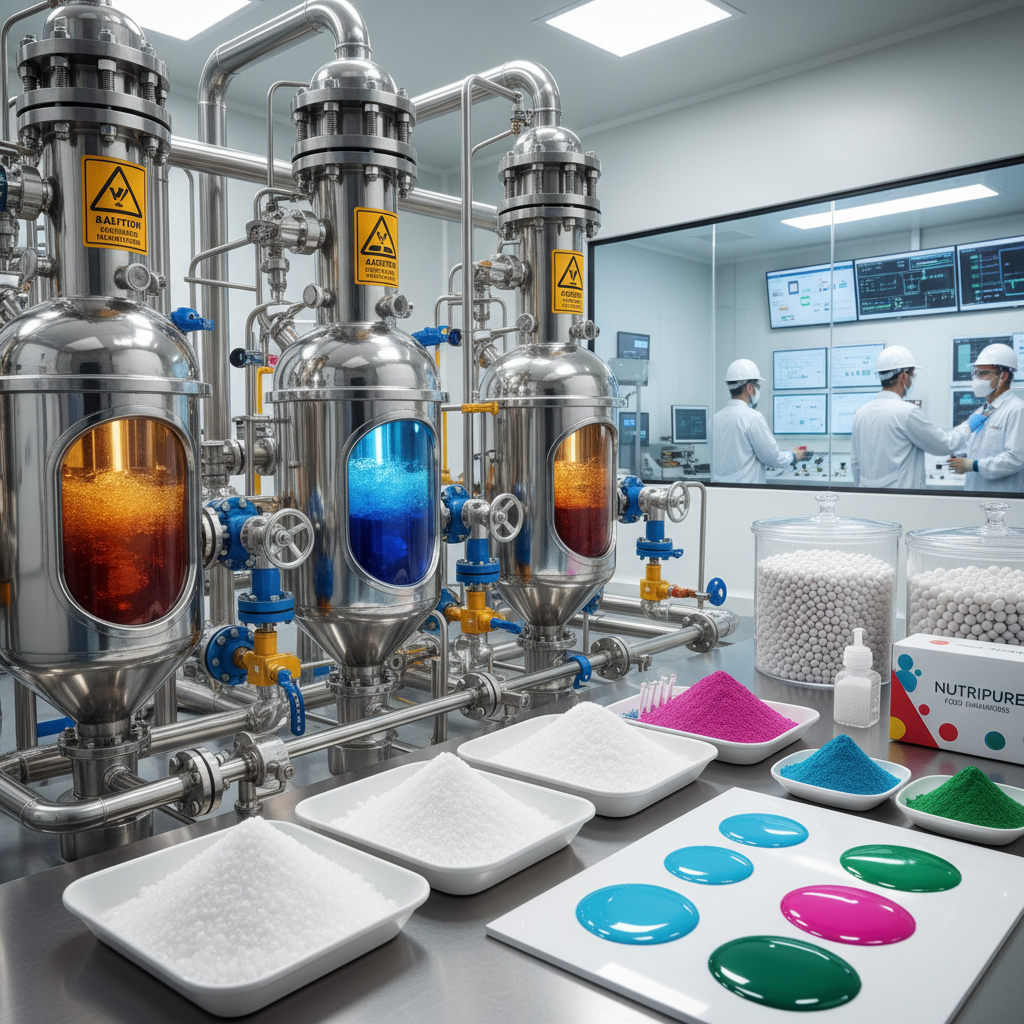
The modern food industry relies heavily on a diverse array of components to maintain quality, safety, and consistency across global supply chains. Understanding the complexities of food additives and their uses is essential for manufacturers who seek to optimize product shelf-life while meeting the rigorous nutritional demands of a growing population. From stabilizers to probiotics, these elements ensure that food remains viable and appealing from the factory to the consumer's table.
On a global scale, the strategic application of functional ingredients addresses critical challenges such as food waste and nutrient degradation. By utilizing advanced fermentation and refinement technologies, the industry can produce high-activity biological agents that enhance the natural properties of food. This evolution in food science allows for the creation of products that are not only stable but also provide significant health benefits, such as improved digestibility and probiotic support.
When examining the specific role of food additives and their uses, it becomes clear that the focus has shifted toward "clean label" solutions and high-purity ingredients. High activity dry yeast, for instance, serves as a prime example of how natural brewing strains and liquid deep fermentation can result in an ecologically safe, acid-resistant additive that optimizes fermentation speed and wine yield without compromising safety.
The Global Significance of Food Additives
The global food supply chain faces unprecedented pressure to reduce spoilage and increase nutritional density. In this context, the strategic implementation of specialized additives is not merely a convenience but a necessity for food security. By employing high-activity biological agents, manufacturers can ensure that products maintain their structural integrity and probiotic value even during long-distance transport.
Furthermore, the integration of advanced fermentation technology has allowed for the production of additives that are both highly pure and ecologically safe. The move toward utilizing high-quality molasses and natural brewing strains reflects a broader industry trend toward sustainable sourcing and biological efficiency, ensuring that the additives used today meet the health standards of tomorrow.
Defining Functional Food Additives
Functional food additives are substances added to food to maintain or improve its safety, freshness, taste, texture, or nutritional appeal. Unlike simple preservatives, functional additives like high activity dry yeast provide active biological benefits. These are refined through liquid deep fermentation and low-temperature drying to preserve the viability of the cells, ensuring they perform their intended function upon application.
In modern industry, these additives are defined by their purity and activity levels. For a probiotic yeast, this means maintaining a viable cell rate of 75% or higher and ensuring strict adherence to safety parameters, such as keeping pathogenic bacteria negative. This precision allows manufacturers to predict the exact fermentation power and speed, which is critical for large-scale industrial production.
The connection to humanitarian needs is evident in the effort to create acid-resistant and antibiotic-resistant strains. By developing additives that can survive harsh pH environments (down to pH 2.5), the industry ensures that beneficial microorganisms reach the gut intact, thereby enhancing the nutritional value of fortified foods provided in various global regions.
Core Components of High Activity Yeast
The efficacy of biological agents depends on their raw materials and production methods. High activity dry yeast utilizes high-quality molasses and natural brewing strains, ensuring a foundation of purity. When analyzing food additives and their uses, the refinement process—specifically liquid deep fermentation—is what separates industrial-grade products from standard variants.
Key technical parameters define the quality of these additives. For instance, a fermentation power (α) of ≥450 ml/h and low moisture content (≤5.5g/100g) are essential for stability. These specifications ensure that the yeast remains dormant during storage but activates rapidly upon use, illustrating the precision required in the study of food additives and their uses.
Safety is the final core component. With strict limits on heavy metals (As ≤0.5 ppm, Pb ≤1.0 ppm) and mold counts (≤10/g), these additives meet international food safety standards. This commitment to purity ensures that the ecological safety of the product is maintained, providing manufacturers with a reliable ingredient that does not introduce contaminants into the food chain.
Practical Applications in Fermentation
High activity dry yeast is primarily utilized to enhance fermentation power and wine yield. Its fast fermentation speed and excellent solubility make it an ideal choice for industrial bakeries and breweries where timing is critical. Because it is acid-resistant (pH 2.5), it can operate effectively in environments that would neutralize lower-quality yeast strains.
Beyond traditional brewing, these additives are used in the production of probiotic-enriched foods. Their ability to resist antibiotics and maintain high viable cell rates ensures that the end product delivers the promised biological benefits to the consumer, optimizing both the sensory experience and the nutritional profile of the food.
Performance Analysis of Food Additives and Their Uses
Global Industry Use Cases
In the European and North American markets, there is a growing demand for "bio-identical" additives that mimic natural processes. High activity dry yeast is widely adopted in these regions for artisanal bread production and craft brewing, where the high fermentation power ensures a consistent crumb structure and flavor profile across different batches.
In emerging markets across Asia and Africa, these additives are used in fortified food programs to combat malnutrition. The probiotic nature of the yeast, combined with its stability in varying temperatures, allows for the creation of shelf-stable, nutrient-dense foods that can be distributed in remote areas without the need for constant refrigeration.
Long-Term Value and Safety Standards
The long-term value of investing in high-purity additives lies in the reduction of production waste. By using a product with a viable cell rate of ≥75% and high solubility, manufacturers reduce the amount of raw material needed to achieve the desired fermentation results, leading to significant cost savings and a smaller environmental footprint.
Reliability and trust are built upon strict adherence to microbiological standards. When a product consistently tests negative for pathogenic bacteria and maintains a total bacterial count of ≤1000 CFU/g, it eliminates the risk of product recalls. This level of quality assurance is essential for maintaining brand reputation in the highly regulated food additives market.
Furthermore, the ecological safety of using natural brewing strains ensures that the additive does not disrupt the natural microbiome of the consumer. This focus on "safe-by-design" ingredients reflects a shift toward sustainable innovation, where the goal is to enhance food quality without introducing synthetic risks.
Future Innovations in Additive Technology
The future of food additives and their uses is leaning toward digitalization and precision fermentation. We are seeing the rise of "smart" additives that can be triggered by specific temperature or pH changes, allowing for even more control over the fermentation process and ensuring that active ingredients are released only when needed.
Sustainability will continue to drive innovation, with a push toward utilizing circular economy raw materials. The use of molasses is already a step in this direction, but future developments may involve carbon-capture technologies to feed the fermentation process, making the production of high activity yeast carbon-neutral or even carbon-negative.
Automation in the drying and refining stages will further reduce moisture levels and increase cell viability. By integrating AI-driven monitoring, producers can adjust fermentation parameters in real-time, ensuring that every batch of additive meets the exact specifications for fermentation power and purity.
Technical Specifications and Quality Benchmarks of High Activity Dry Yeast
| Parameter |
Standard Specification |
Industrial Impact |
Safety Grade |
| Fermentation Power α |
≥450 ml/h |
High Wine Yield |
Premium |
| Moisture Content |
≤5.5 g/100g |
Extended Shelf-life |
High |
| Viable Cell Rate |
≥75% |
Rapid Activation |
Stable |
| Total Bacteria |
≤1000 CFU/g |
Low Contamination |
Safe |
| Lead (Pb) |
≤1.0 ppm |
Non-toxic |
Compliant |
| Pathogenic Bacteria |
Negative |
Consumer Safety |
Absolute |
FAQS
High activity dry yeast is produced using advanced liquid deep fermentation and low-temperature drying, resulting in a higher viable cell rate (≥75%) and superior fermentation power (≥450 ml/h). This ensures faster fermentation speeds and higher yields compared to standard yeasts, which may have lower purity and slower activation times.
With an acid resistance of pH 2.5, this additive can remain active in highly acidic environments. This is critical for specific fermentation processes and for probiotic applications where the yeast must survive the acidic environment of the stomach to provide health benefits to the gut.
Yes, it is designed for ecological safety. It undergoes rigorous testing to ensure pathogenic bacteria are negative and heavy metals like Lead and Arsenic are kept well below international safety limits (Pb ≤1.0 ppm, As ≤0.5 ppm), making it suitable for a wide range of food and beverage products.
One of the key advantages of this specific strain is its antibiotic resistance. This allows it to maintain its biological activity and effectiveness even in conditions where other probiotic strains might be neutralized, ensuring consistent product performance.
To maintain the viable cell rate of ≥75%, it is recommended to store the product in a cool, dry place. The low moisture content (≤5.5g/100g) already provides significant stability, but avoiding extreme heat and humidity is key to preventing premature activation or cell degradation.
The high fermentation power and fast fermentation speed mean that sugars are converted to alcohol more efficiently and consistently. This reduces the risk of stuck fermentations and maximizes the final volume of high-quality wine produced per batch of raw material.
Conclusion
The strategic use of high-activity biological additives represents a convergence of traditional brewing wisdom and cutting-edge biotechnology. By focusing on parameters such as fermentation power, acid resistance, and absolute purity, manufacturers can significantly enhance the quality and safety of their products. The evidence shows that high activity dry yeast, with its strict adherence to safety benchmarks and high viable cell rates, provides a reliable foundation for both the bakery and beverage industries.
Looking forward, the industry will likely see a further shift toward customized probiotic solutions and sustainable fermentation practices. For companies aiming to lead in the global market, adopting additives that prioritize both efficiency and ecological safety is the most viable path to long-term success. We encourage you to explore how these advanced solutions can optimize your production line. Visit our website: www.standard-seasoning.com