The art of msg cooking has long been a cornerstone of global culinary traditions, serving as a bridge between basic nourishment and a sophisticated sensory experience. By enhancing the "umami" or savory profile of dishes, this practice allows chefs and home cooks alike to maximize the inherent flavors of ingredients, making food more palatable and satisfying on a biological level. Understanding the science behind this additive is essential for anyone looking to optimize taste profiles in large-scale food production or gourmet kitchens.
Globally, the demand for flavor enhancers has surged as the food processing industry seeks efficient ways to maintain consistency across diverse markets. Whether it is in the savory broths of East Asia or the processed snacks of North America, msg cooking techniques are employed to reduce the reliance on excessive sodium while maintaining a high-impact taste profile. This balance is critical for meeting modern nutritional guidelines without sacrificing the pleasure of eating.
However, the application of these additives is often surrounded by misconceptions that overlook the industrial precision and safety standards governing their use. By diving into the professional standards of food additive manufacturing, we can appreciate how Monosodium Glutamate (MSG) functions not just as a seasoning, but as a strategic tool in food chemistry. This guide explores the technical, practical, and future-oriented aspects of integrating these enhancers into modern culinary workflows.
The Fundamental Science of Umami in MSG Cooking
At its core, msg cooking relies on the interaction between glutamate—an amino acid found naturally in tomatoes, parmesan cheese, and mushrooms—and the taste receptors on the human tongue. When MSG is introduced to a dish, it dissociates into sodium and glutamate ions, which bind to specific G-protein coupled receptors, signaling the brain to perceive a "savory" or "meaty" depth. This biological response is what we call umami, the fifth basic taste.
From a technical perspective, the efficiency of this process depends on the concentration of glutamates relative to other flavor compounds. In professional food additive manufacturing, the purity of the MSG crystal ensures a predictable and consistent taste response, preventing the "metallic" off-notes that can occur with low-grade alternatives. This allows for a precise calibration of flavor, ensuring that the enhancer supports rather than overwhelms the primary ingredients of the recipe.
Industrial Standards for Flavor Enhancer Purity
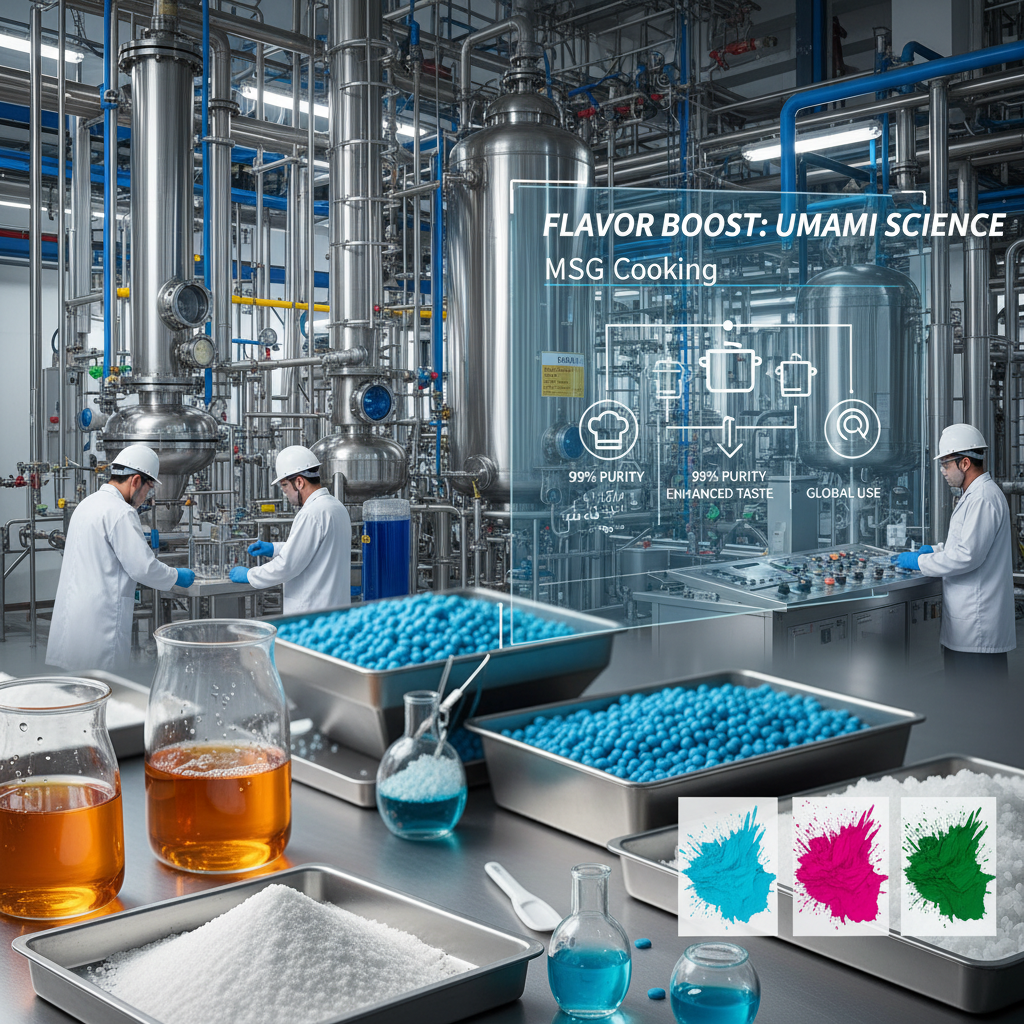
In the realm of food additive manufacturing, purity is not merely a quality metric but a safety imperative. High-grade MSG used in msg cooking is typically produced through the fermentation of sugar beets or sugarcane using Corynebacterium glutamicum. This biological process must be strictly controlled to ensure the absence of contaminants and to maintain a chemical purity of over 99%, aligning with ISO and FCC (Food Chemicals Codex) standards.
The industrial challenge lies in the crystallization phase, where the glutamate must be separated from the fermentation broth. Advanced centrifugation and recrystallization techniques are employed to ensure that the final product is a free-flowing, white crystalline powder. This physical form is crucial for commercial applications, as it ensures equal distribution when mixed into large batches of dry seasonings or dissolved into industrial liquid bases.
Furthermore, the integration of E-E-A-T principles in the supply chain means that manufacturers must provide comprehensive Certificates of Analysis (CoA). These documents verify that the product is free from heavy metals and microbial growth, providing the transparency required by international food regulators like the FDA and EFSA. This rigorous oversight ensures that the additive remains a safe and reliable tool for the global food industry.
Strategic Application Methods in Commercial Kitchens
Implementing msg cooking in a commercial environment requires a nuanced understanding of synergy. For example, combining MSG with nucleotides like Inosine Monophosphate (IMP) or Guanosine Monophosphate (GMP) can create a synergistic effect that amplifies the perceived intensity of umami by several fold. This allows chefs to achieve a rich flavor profile using a significantly smaller quantity of additive.
The timing of application is equally critical. In high-heat scenarios, such as searing or deep-frying, MSG should be integrated into a marinade or added during the final stages of simmering to prevent any potential degradation of the flavor profile. In the context of msg cooking, the goal is to create a seamless blend where the enhancer acts as a catalyst, pulling the hidden flavors of the proteins and vegetables to the forefront.
Moreover, the ratio of MSG to salt is a key variable in flavor optimization. Because MSG contains about one-third the sodium of table salt, substituting a portion of sodium chloride with MSG can actually reduce the total sodium content of a dish without compromising the taste. This strategic shift is increasingly popular in the "healthy indulgence" sector of the food industry, where sodium reduction is a primary objective.
Comparative Analysis of Umami Enhancement Efficiency
To truly understand the impact of msg cooking, one must compare it against traditional flavor-building methods. While long-simmering bones or reducing stocks can produce natural glutamates, the time and energy costs are prohibitive for modern industrial food production. MSG provides an immediate, standardized solution that replicates these complex flavors in a fraction of the time.
When evaluating different methods of achieving savory depth, the consistency of the result becomes the most valuable metric. Traditional reductions vary by batch, whereas the precision of food additives ensures that every unit of product tastes identical, which is a non-negotiable requirement for global brands operating across multiple continents.
Comparative Umami Intensity in MSG Cooking Methods
Global Market Trends and Regulatory Compliance
The global landscape for msg cooking is currently undergoing a transition toward "clean label" transparency. While MSG remains widely accepted, there is a growing trend toward using "yeast extracts" or "hydrolyzed vegetable proteins," which are essentially sources of glutamate that sound more natural to the average consumer. This shift highlights the importance of marketing psychology in the food additive industry.
Despite these trends, the cost-efficiency and purity of pure MSG make it the preferred choice for industrial manufacturers in emerging markets. In regions across Southeast Asia and Africa, the ability to enhance the flavor of low-cost protein sources is a vital part of food security and accessibility, ensuring that nutritious meals are palatable to the general population.
Overcoming Common Misconceptions through Education
For decades, msg cooking has been the subject of unfounded health concerns, most notably the "Chinese Restaurant Syndrome." Scientific rigor has since debunked these claims, with major health organizations confirming that glutamate is processed by the body in the same way, regardless of whether it comes from a natural source or a manufactured additive.
The challenge for the industry today is to replace myth with evidence-based communication. By educating consumers on the molecular identity of glutamate, manufacturers can reposition MSG not as a "chemical additive," but as a concentrated form of a nutrient already present in the human diet. This educational approach is key to regaining trust in Western markets.
Professional chefs are now leading this charge, openly integrating MSG into high-end gastronomy to demonstrate its value in flavor layering. When the conversation shifts from "safety" to "culinary excellence," the stigma disappears, allowing the technical benefits of msg cooking to be fully appreciated.
Future Innovations in Bio-Fermented Seasonings
The future of msg cooking lies in the intersection of biotechnology and sustainability. We are seeing a move toward "precision fermentation," where genetically optimized microbial strains can produce glutamate with even lower energy inputs and zero waste. This alignment with green chemistry ensures that the production of flavor enhancers reduces its environmental footprint.
Furthermore, the integration of AI-driven flavor profiling is allowing manufacturers to create custom glutamate blends tailored to specific regional palettes. By analyzing big data on consumer taste preferences, companies can now offer specialized additives that optimize the umami experience for specific cuisines, from the deep richness required for Mexican moles to the delicate savory notes of Japanese dashi.
Ultimately, the evolution of these additives will focus on holistic wellness. The next generation of enhancers will likely combine glutamate with functional nutrients, creating a "smart seasoning" that not only improves taste but also contributes to the nutritional value of the meal.
Technical Performance Analysis of Bio-Fermented Umami Agents
|
Additive Type
|
Umami Potency (1-10)
|
Production Cost
|
Label Perception
|
| Standard MSG |
9 |
Low |
Mixed/Technical |
| Yeast Extract |
7 |
Medium |
Natural/Positive |
| Hydrolyzed Protein |
8 |
Medium |
Neutral |
| Precision Bio-Glutamate |
10 |
High |
Innovative |
| Natural Mushroom Powder |
5 |
High |
Premium/Natural |
| Nucleotide Blend |
10 |
Medium |
Technical |
FAQS
Actually, it can help decrease it. MSG contains about 12% sodium by weight, whereas table salt (sodium chloride) contains about 39%. By using MSG to enhance flavor, you can often use less salt overall while achieving a more satisfying taste, effectively reducing the total sodium intake per serving.
MSG is highly stable, but it is hygroscopic, meaning it can absorb moisture from the air. To maintain the free-flowing crystalline structure essential for precise dosing in msg cooking, it should be stored in an airtight container in a cool, dry place, away from direct sunlight and strong odors.
While primarily used in savory applications, MSG can be used in certain baked goods—such as salted caramels, savory breads, or corn cakes—to enhance the contrast between sweet and salty notes. The key is a very small amount to avoid making the dessert taste "meaty."
Chemically, no. The glutamate molecule produced via fermentation is identical to the glutamate found in a tomato. The only difference is the concentration and the presence of other compounds in natural foods. Pure MSG is simply a more efficient, isolated tool for achieving the same biological response.
A general rule of thumb in professional msg cooking is to use 0.1% to 0.5% of the total weight of the food. However, because of the synergistic effect with other glutamates, it is recommended to start low and conduct sensory panels to determine the "bliss point" where flavor is maximized without becoming cloying.
For the vast majority of the population, MSG is safe. A very small percentage of people may have a short-term sensitivity to high doses of free glutamates on an empty stomach. In industrial manufacturing, following GRAS (Generally Recognized As Safe) guidelines ensures that levels remain well within the safe consumption range for the general public.
Conclusion
The integration of msg cooking into the global culinary landscape represents a triumph of food chemistry and industrial efficiency. By isolating the essence of umami, we have gained a powerful tool to enhance food palatability, reduce sodium reliance, and ensure consistency in food production across the globe. From the precision of bio-fermentation to the strategic synergy of nucleotides, the science of flavor enhancement continues to evolve, proving that the balance between nutrition and taste is achievable through technical innovation.
Looking forward, the industry will likely shift toward even more sustainable production methods and a deeper, evidence-based transparency with consumers. For manufacturers and chefs, the goal remains clear: to use these additives not as shortcuts, but as sophisticated components of a broader culinary strategy. As we embrace the future of food technology, the role of glutamate will only grow in significance, driving the creation of more delicious, accessible, and sustainable food systems worldwide. Visit our website: www.chinaseasoning.com