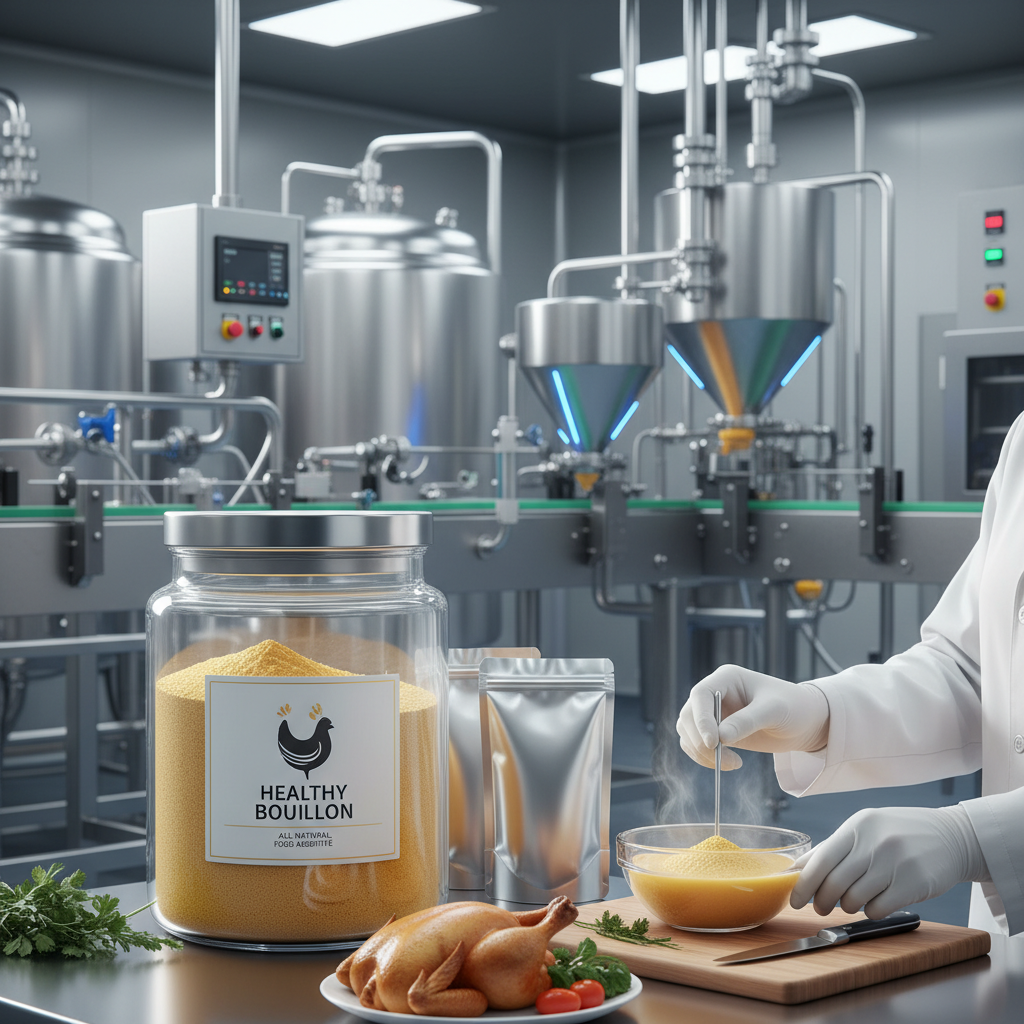
The global culinary landscape is witnessing a significant shift toward convenient yet compliant seasoning solutions, where halal chicken cubes have emerged as a pivotal product. These concentrated flavor enhancers provide a seamless bridge between traditional home-cooked tastes and the rigorous demands of modern, fast-paced industrial food production. By ensuring strict adherence to Islamic dietary laws, they open doors to a vast global market that prioritizes both purity and efficiency.
Beyond simple convenience, the importance of these products lies in their ability to maintain consistency across large-scale batches. In the food additive industry, achieving a standardized savory profile without compromising Halal certification requires precision in ingredient sourcing and processing. Consequently, high-quality halal chicken cubes are no longer just a kitchen staple but a strategic asset for food manufacturers seeking to scale their reach in OIC (Organization of Islamic Cooperation) countries.
Understanding the nuances of these bouillon products—from the enzymatic breakdown of proteins to the exclusion of non-permissible additives—is essential for brands aiming for international success. This comprehensive guide explores the industrial dynamics, technical specifications, and future trajectories of halal chicken cubes, offering insights into how they drive value in the global food additive sector.
Global Market Relevance of Halal Chicken Cubes
The demand for halal chicken cubes is driven by the exponential growth of the global Muslim population and an increasing trend toward processed, convenient foods. According to market data, the Halal food industry is one of the fastest-growing sectors globally, with compound annual growth rates that outpace traditional food segments. This surge is not limited to Muslim-majority nations but extends to diverse markets in Europe and North America where dietary transparency is highly valued.
However, the industry faces a significant challenge: the "trust gap." Many manufacturers struggle to provide verifiable certification that covers every stage of the supply chain, from the slaughterhouse to the final cube compression. By implementing rigorous ISO-standardized quality controls and third-party Halal audits, producers of halal chicken cubes can overcome these barriers and establish long-term brand loyalty in an increasingly skeptical consumer market.
Defining Halal Chicken Cubes in Modern Industry
At its most basic level, halal chicken cubes are dehydrated, concentrated seasoning blocks composed of chicken extract, salt, flavor enhancers, and spices, all processed in accordance with Sharia law. Unlike standard bouillon, every ingredient—including the emulsifiers and anti-caking agents—must be scrutinized to ensure they are free from porcine derivatives or alcohol-based carriers.
In the context of the modern food additive industry, these cubes represent a sophisticated intersection of food science and religious compliance. They are designed to provide a "umami" punch that mimics slow-cooked chicken stock, allowing food service operators to reduce preparation time while maintaining an authentic taste profile. This makes them indispensable in the production of instant noodles, ready-to-eat meals, and industrial soups.
From a humanitarian perspective, the stability and long shelf-life of halal chicken cubes make them an ideal resource for food aid programs in conflict-affected or disaster-prone regions. By providing a nutrient-dense, culturally appropriate flavor base, they ensure that displaced populations receive food that respects their dignity and dietary restrictions.
Core Components and Quality Factors
The efficacy of halal chicken cubes depends heavily on the quality of the chicken extract. High-grade cubes utilize a steam-extraction process that preserves the natural amino acids and aromatic compounds of the meat, ensuring a rich mouthfeel and deep flavor without the need for excessive artificial additives.
Another critical factor is the selection of salt and flavor enhancers. To maintain "Halal-Tayyib" (Pure and Wholesome) standards, manufacturers are increasingly replacing synthetic MSG with yeast extracts or mushroom-based flavor enhancers. This not only appeals to health-conscious consumers but also enhances the overall purity profile of the halal chicken cubes.
Finally, the physical stability of the cube is achieved through precise compression and the use of Halal-certified anti-caking agents. If the moisture content is not strictly controlled during the drying phase, the cubes may clump or degrade prematurely, compromising the product's shelf-life and the end-user's experience in commercial kitchens.
Technical Performance and Cost Efficiency
When analyzing the operational value of halal chicken cubes, the primary focus is on their dissolution rate and flavor distribution. A technically superior cube dissolves rapidly in boiling water without leaving gritty residues, ensuring a homogenous seasoning across the entire dish. This efficiency reduces waste and ensures that every portion served maintains the same high quality.
Moreover, the cost-to-benefit ratio is highly favorable for large-scale food manufacturers. By using concentrated cubes instead of fresh stock, companies significantly reduce logistics costs, refrigeration requirements, and labor hours. The ability to store tons of flavor potential in a small, dry footprint allows for lean inventory management and improved margins.
Comparative Performance Analysis of Halal Chicken Cubes
Global Applications and Use Cases
The application of halal chicken cubes spans a wide array of sectors. In the HORECA (Hotel, Restaurant, and Cafe) industry, they are used as a rapid base for sauces, gravies, and stews, allowing chefs to maintain a consistent flavor profile across multiple franchise locations. In Southeast Asian markets like Indonesia and Malaysia, these cubes are integral to the production of traditional dishes, providing a convenient way to incorporate savory chicken notes into complex recipes.
Furthermore, in the pharmaceutical intermediates and nutraceutical sectors, the base technology used to create halal chicken cubes—specifically the extraction of clean proteins—is often adapted for creating Halal-compliant nutrient supplements. In remote industrial zones or mining camps in the Middle East, these cubes are a staple in communal kitchens, providing essential flavor and comfort to workers while adhering to their religious requirements.
Long-Term Value and Sustainability
The long-term value of investing in high-quality halal chicken cubes extends beyond immediate profit. By prioritizing ethical sourcing and Halal integrity, companies build a foundation of trust with a loyal consumer base. This "trust equity" is invaluable in an era where consumers demand full traceability of their food, from the farm to the fork.
From a sustainability angle, the production of concentrated cubes is significantly more eco-friendly than transporting liquid broths. The reduction in water weight leads to lower carbon emissions during shipping and minimizes the need for plastic bottling. This aligns with global movements toward sustainable food systems and reduces the overall environmental footprint of the seasoning industry.
Ultimately, the adoption of halal chicken cubes promotes social inclusion. By ensuring that high-quality, convenient food options are available to the Muslim community, manufacturers contribute to a more inclusive global food market where religious dietary needs are met with the same innovation and quality as any other consumer segment.
Future Trends and Technological Innovations
The future of halal chicken cubes is being shaped by the digital transformation of the supply chain. Blockchain technology is currently being integrated to provide "Immutable Halal Certification," where a consumer can scan a QR code on the packaging to see the entire journey of the chicken and the additives used, ensuring 100% transparency.
Moreover, the rise of "Clean Label" movements is pushing manufacturers toward automation and green chemistry. New freeze-drying technologies are replacing traditional heat-drying, which preserves more of the natural vitamins and flavor molecules of the chicken. This results in halal chicken cubes that are not only compliant but also nutritionally superior.
We are also seeing a trend toward "Hybrid Cubes," which blend traditional chicken extracts with plant-based proteins to create lower-sodium, higher-fiber alternatives. This innovation allows the product to cater to both religious requirements and modern health trends, ensuring the continued relevance of bouillon products in a health-conscious world.
Comparative Analysis of Future Production Technologies for Halal Chicken Cubes
| Technology Approach |
Halal Compliance Level |
Flavor Intensity |
Production Cost |
| Traditional Spray Drying |
High (Verified) |
Moderate (6/10) |
Low |
| Advanced Freeze-Drying |
Very High (Pure) |
Exceptional (10/10) |
High |
| Blockchain-Traced Sourcing |
Absolute (Verified) |
N/A (Process) |
Moderate |
| Enzymatic Hydrolysis |
High (Halal Enzyme) |
High (9/10) |
Moderate |
| Plant-Protein Blending |
High (Vegetable) |
Moderate (7/10) |
Low |
| Vacuum-Concentration |
High (Verified) |
High (8/10) |
Moderate |
FAQS
A chicken cube is considered Halal when the chicken is slaughtered according to Islamic law (Dhabihah) and every additive used—including flavor enhancers, emulsifiers, and anti-caking agents—is free from pork derivatives, alcohol, or any other forbidden substances. The entire production line must also be free from cross-contamination with non-Halal products, usually verified by a certified Halal auditor.
Yes, halal chicken cubes are specifically designed for scalability. Their concentrated nature makes them ideal for industrial soup bases, instant noodle seasonings, and ready-meal production. They ensure a consistent taste across millions of units while maintaining the religious integrity required for global export to Muslim markets.
Look for recognized certification marks from authoritative bodies (such as JAKIM, MUI, or GSO). Many modern manufacturers now include a QR code on the packaging that links to a digital certificate or a blockchain-based traceability map, allowing you to verify the source of the chicken and the additives in real-time.
Many premium halal chicken cubes are now formulated as "Clean Label" products. This means they replace synthetic MSG with natural yeast extracts and reduce sodium content through the use of potassium salts. Some also incorporate organic chicken extracts and avoid artificial coloring to meet the demands of health-conscious consumers.
Due to their low moisture content and the use of Halal-compliant anti-caking agents, these cubes typically have a shelf life of 12 to 24 months when stored in a cool, dry place. This stability makes them far more efficient for long-term storage and international shipping than liquid stocks or fresh concentrates.
To import halal chicken cubes, you should ensure the supplier provides a valid Certificate of Analysis (CoA) and a Halal certificate recognized in your target country. It is also recommended to check local customs regulations regarding food additives and ensure the packaging meets regional labeling requirements.
Conclusion
In summary, halal chicken cubes represent a critical synthesis of religious compliance, industrial efficiency, and culinary art. By addressing the complex needs of a growing global Muslim population while utilizing advanced food science to maintain flavor and stability, these products have evolved from simple seasonings into strategic industrial components. From the rigorous selection of raw materials to the adoption of blockchain traceability, the focus remains on providing a product that is not only "Halal" but also "Tayyib"—pure, wholesome, and of the highest quality.
As we look toward the future, the integration of sustainable production methods and clean-label ingredients will further elevate the value of these bouillon solutions. For food manufacturers and distributors, the opportunity lies in embracing transparency and innovation to build lasting trust with consumers worldwide. We invite you to explore our premium range of solutions to enhance your product line. Visit our website: www.chinaseasoning.com