The global culinary landscape has been profoundly shaped by the pursuit of "umami," the fifth basic taste that provides a savory depth to food. At the center of this sensory experience is food additive monosodium glutamate, a flavor enhancer that has transitioned from a laboratory discovery to a staple in industrial food production. Understanding its role is crucial for manufacturers who aim to balance cost-efficiency with high palatability in an increasingly competitive market.
From a technical perspective, the integration of this additive allows for a reduction in sodium levels while maintaining a rich flavor profile, addressing a key health challenge in modern diets. By mimicking the naturally occurring glutamates found in tomatoes and aged cheeses, it provides a standardized way to achieve consistency across large-scale batches of processed foods. This reliability is why it remains one of the most widely utilized components in the food manufacturing sector.
However, the application of food additive monosodium glutamate is not merely about taste; it is about the intersection of biochemistry, consumer psychology, and economic scalability. As the food industry pivots toward "clean label" trends and sustainable sourcing, the methods of producing and deploying this additive are evolving to meet more stringent regulatory and health-conscious standards.
Global Context of Food Additive Monosodium Glutamate
The global demand for food additive monosodium glutamate has seen a steady rise, driven by the expansion of the processed food industry in emerging economies. According to market analysis and trade data, the Asia-Pacific region remains the largest consumer, where savory flavor profiles are deeply integrated into traditional and modern cuisines. The challenge for the industry has always been the balance between mass production and the perception of "naturalness" in food.
As ISO standards for food safety become more rigorous, the manufacturing process for MSG has evolved from simple chemical synthesis to advanced fermentation techniques. This shift not only ensures a higher purity level but also aligns with the global push toward bio-based additives, reducing the environmental footprint of large-scale chemical plants.
Definition and Industrial Meaning
In simple terms, food additive monosodium glutamate is the sodium salt of glutamic acid, an amino acid found naturally in many foods. In the industrial context, it serves as a potent flavor enhancer that activates the umami receptors on the human tongue, creating a sensation of "meatiness" or depth that is often missing in dehydrated or processed ingredients.
Beyond the taste, its industrial meaning lies in its ability to act as a cost-effective substitute for expensive natural flavor sources. Instead of using massive quantities of meat extracts or aged fermentation products to achieve a specific flavor threshold, manufacturers can use precisely measured amounts of MSG to reach the same sensory goal.
From a humanitarian and food security perspective, this additive plays a subtle but important role. By improving the palatability of fortified foods—such as nutrient-dense pastes used in disaster relief—it ensures that essential vitamins and minerals are actually consumed by populations experiencing food insecurity.
Core Components of Flavor Enhancement
The efficacy of food additive monosodium glutamate relies on its purity and crystalline structure. High-grade industrial MSG must be free from contaminants and possess a specific solubility rate to ensure that it blends seamlessly into liquid bases or dry powder mixes without clumping.
Another core component is the synergistic effect when combined with nucleotides, such as inosinates (IMP) and guanylates (GMP). When food additive monosodium glutamate is used in tandem with these compounds, the perceived intensity of the umami flavor is multiplied exponentially, allowing manufacturers to use lower total concentrations of additives.
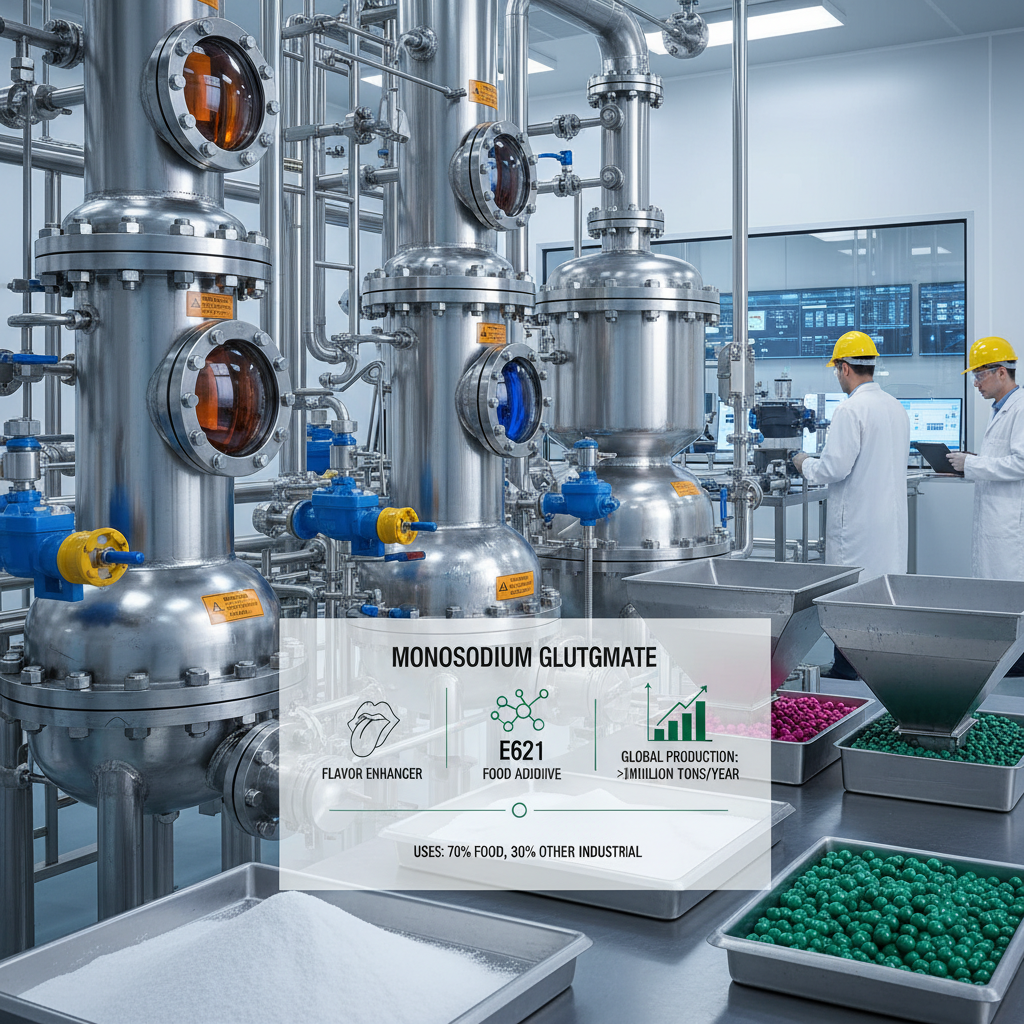
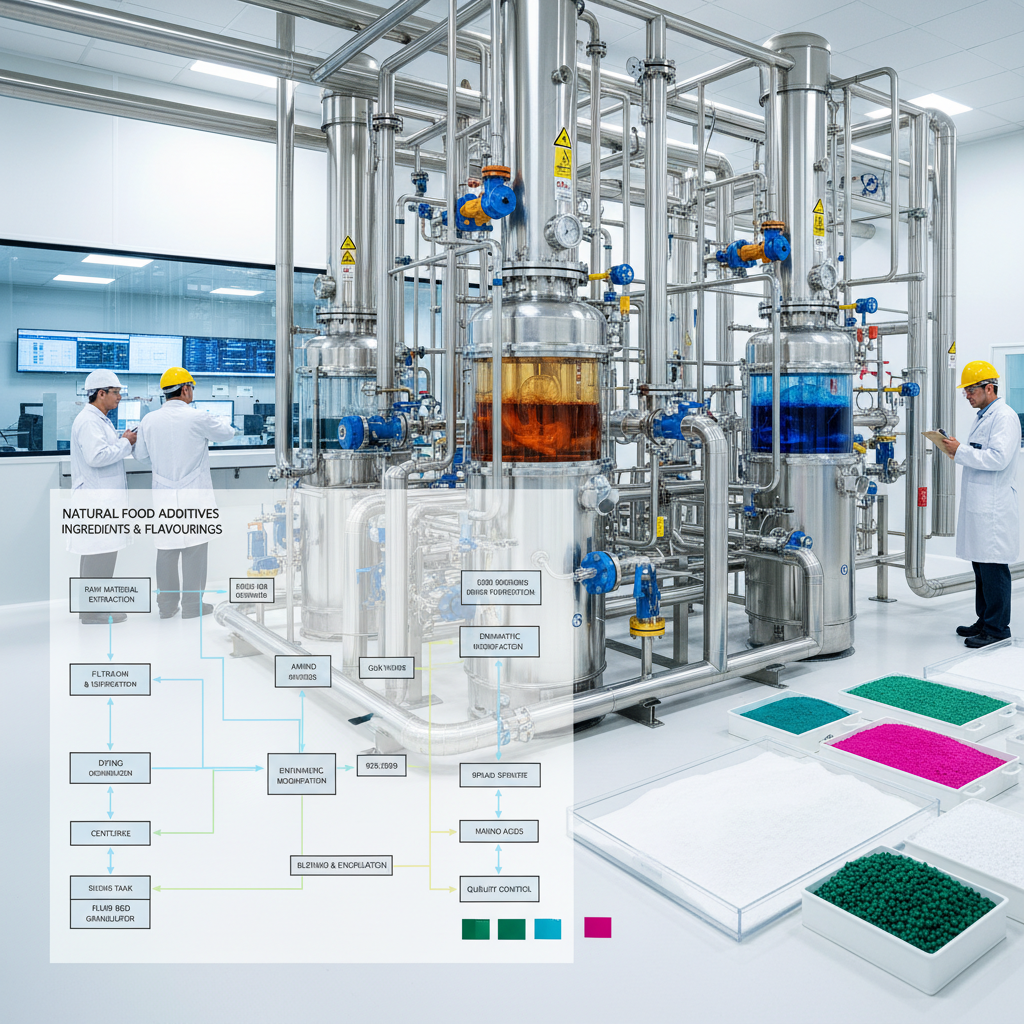
Finally, the scalability of the fermentation process is a critical technical factor. Using molasses or corn starch as a substrate, specific strains of bacteria (like Corynebacterium glutamicum) are used to convert sugars into glutamic acid, which is then neutralized with sodium hydroxide to form the final crystalline powder.
Key Performance Factors in Production
When evaluating the quality of food additive monosodium glutamate, manufacturers focus on three primary metrics: solubility, purity, and particle size. Solubility ensures that the product dissolves quickly in hot or cold applications, while purity is essential for meeting international food safety certifications (such as FCC or USP).
Particle size distribution is equally important, as it affects the flowability of the powder in automated dosing systems. A consistent granule size prevents "bridging" in silos and ensures that every unit of the final food product contains the exact same amount of flavor enhancer.
Comparative Efficiency of MSG Production Methods
Global Applications and Use Cases
The versatility of food additive monosodium glutamate allows it to be applied across diverse food categories. In the snack food industry, it is a core component of extruded corn chips and savory crackers, providing a lingering taste that encourages consumption. In the realm of ready-to-eat (RTE) meals, it compensates for the loss of volatile flavors that occurs during the sterilization and canning process.
Beyond standard commercial foods, MSG is utilized in specialized industrial zones for the production of bouillon cubes and concentrated seasoning pastes. In some regions, it is even integrated into pharmaceutical-grade nutritional supplements to make high-protein diets more palatable for patients recovering from critical illnesses, demonstrating its value beyond simple gastronomy.
Long-Term Value and Advantages
One of the most significant long-term advantages of food additive monosodium glutamate is its contribution to sodium reduction strategies. Because MSG contains only about one-third of the sodium found in table salt (NaCl), it allows food scientists to reduce overall salt levels while maintaining—or even enhancing—the savory perception of the product. This is a critical advantage in combating hypertension and cardiovascular diseases globally.
From an economic perspective, the reliability of MSG provides a safety net for manufacturers. By reducing the reliance on seasonal natural ingredients that vary in potency, companies can ensure a consistent taste profile year-round, which builds consumer trust and brand loyalty.
Furthermore, the shift toward sustainable fermentation means that the production of this additive is increasingly aligned with circular economy principles. The use of agricultural by-products as feedstock transforms waste into high-value food ingredients, adding an ecological dimension to its commercial value.
Future Trends and Innovations
The future of food additive monosodium glutamate is being shaped by digital transformation and biotechnology. Precision fermentation is now allowing manufacturers to engineer bacterial strains that produce glutamic acid more efficiently with fewer impurities, reducing the energy required for downstream purification.
Additionally, there is a growing trend toward "hybrid" flavor systems. Instead of using MSG in isolation, the industry is moving toward complex blends that combine MSG with plant-based proteins and natural extracts. This "synergistic blending" appeals to the clean-label consumer while retaining the unmatched efficiency of the monosodium glutamate molecule.
Automation in dosing and AI-driven flavor profiling are also optimizing how this additive is used. By analyzing consumer taste data in real-time, manufacturers can adjust the concentration of MSG in different regional batches to suit local palate preferences, ensuring maximum market penetration.
Analysis of Future Innovation Trends for Food Additive Monosodium Glutamate
| Innovation Dimension |
Technological Approach |
Expected Impact |
Sustainability Score (1-10) |
| Production Method |
Precision Fermentation |
Higher Purity, Lower Waste |
9 |
| Ingredient Sourcing |
Upcycled Ag-Waste Feedstock |
Reduced Carbon Footprint |
10 |
| Product Form |
Micro-encapsulation |
Controlled Flavor Release |
7 |
| Application Strategy |
AI-Driven Palette Tuning |
Regional Taste Optimization |
8 |
| Regulatory Compliance |
Blockchain Traceability |
Full Supply Chain Transparency |
9 |
| Health Integration |
Low-Sodium Synergies |
Improved Cardiovascular Health |
10 |
FAQS
Yes, food additive monosodium glutamate is recognized as safe (GRAS) by major global health authorities, including the FDA and EFSA. When produced under strict ISO and GMP standards, it is a stable and safe component for a wide range of food applications, provided it is used within recommended dosage levels to maintain a balanced flavor profile.
MSG contains significantly less sodium than traditional table salt. By utilizing the powerful umami-enhancing properties of food additive monosodium glutamate, manufacturers can achieve the same perceived saltiness and flavor depth while using fewer total sodium ions, helping products meet healthier nutritional guidelines.
Fermentation-grade food additive monosodium glutamate is produced using biological catalysts (bacteria) and agricultural substrates, making it more sustainable and generally preferred for high-end food applications. Chemical-grade MSG is synthesized via chemical reactions, which may be faster but often lacks the "natural" appeal required by modern clean-label standards.
While primarily used as a food additive, the chemistry of glutamates is applicable in pharmaceutical intermediates for specific amino acid synthesis. Additionally, similar glutamic acid derivatives are used in feed additives to improve the palatability and nutrient absorption of livestock feed, though the purity requirements differ from food-grade standards.
To maintain the crystalline integrity and flowability of MSG, it should be stored in a cool, dry environment away from direct sunlight. Using moisture-proof packaging, such as multi-layer PE bags or airtight silos, is essential to prevent the powder from absorbing atmospheric humidity, which leads to caking.
The key is to ensure a homogenous blend. We recommend using a ribbon blender or high-shear mixer to distribute food additive monosodium glutamate evenly among other ingredients. Ensuring that the particle size of the MSG matches the other salts and spices in the mix will prevent segregation during transport and application.
Conclusion
In summary, food additive monosodium glutamate remains an indispensable tool in the modern food industry, bridging the gap between economic feasibility and sensory excellence. By leveraging its ability to enhance umami and reduce sodium, manufacturers can create products that are not only delicious but also align with evolving health and sustainability standards. From its precise biological production to its global application in diverse cuisines, MSG exemplifies the power of food science to improve the eating experience on a massive scale.
Looking forward, the integration of AI and precision fermentation will likely refine the use of this additive, making it even more efficient and transparent. For businesses seeking to optimize their flavor profiles while maintaining a commitment to quality and safety, investing in high-purity, sustainably sourced glutamates is a strategic necessity. We invite you to explore our professional range of solutions. Visit our website: www.chinaseasoning.com