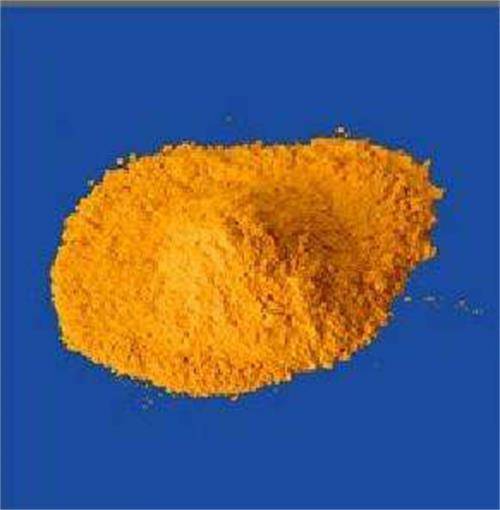
For manufacturers in the food, beverage, and animal feed sectors, the decision between distinct additive forms is rarely straightforward. It involves balancing bioavailability, processing stability, and shelf-life requirements. Specifically, the choice of vitamin e powder vs oil represents a critical juncture in product development. While oils offer high potency for softgels and liquid feeds, powders often provide superior handling characteristics for premixes and dry formulations. The challenge lies not just in selecting a form, but in sourcing it from a partner who guarantees purity and consistency.
Since 2012, Standard Seasoning has bridged the gap between raw material complexity and manufacturing ease. As a global supplier serving over 50 countries, we understand that whether you require the flowability of a powder or the concentration of an oil, the underlying quality must never fluctuate. Our approach removes the procurement headache by offering a one-stop-shop solution. We leverage our extensive experience in food and feed additives to help you navigate the nuances of vitamin e powder vs oil, ensuring that your choice aligns perfectly with your production machinery and end-product goals.
When evaluating additives, technical precision is paramount. The functional differences between vitamin e powder vs oil dictate their suitability for specific industrial applications. Our strict quality control management system ensures that regardless of the physical state—liquid or solid—the product meets rigorous international safety standards. We benchmark our supplies against key performance metrics to ensure seamless integration into your production line.
Standard Seasoning Quality Protocol: Our commitment to excellence means that both our powder and oil variants undergo rigorous testing for potency retention and contaminant screening prior to shipment.
| Performance Metric | Industry Significance | Our Engineering Standard | Client Advantage |
|---|---|---|---|
| Oxidative Stability | Determines shelf-life and potency retention over time. | Advanced encapsulation for powders; Vacuum-sealed, light-protected packing for oils. | Extended product lifecycle regardless of vitamin e powder vs oil selection. |
| Homogeneity & Mixing | Critical for uniform nutrient distribution in feed/food. | Controlled particle size distribution (Powder) / Viscosity standardization (Oil). | Consistent dosage in every batch, eliminating "hot spots" in production. |
| Bioavailability Potential | Efficiency of nutrient absorption by the end consumer/animal. | High-grade carriers ensuring rapid dissolution and absorption. | Maximized nutritional impact, supporting product claims and efficacy. |
| Supply Chain Speed | Impacts production scheduling and inventory costs. | Streamlined logistics protocol (7-15 days delivery). | Rapid integration of either form without production downtime. |
By strictly adhering to these engineering standards, Standard Seasoning ensures that the debate of vitamin e powder vs oil becomes a matter of application preference rather than quality compromise.
In the competitive landscape of global food and feed production, procurement is a strategic lever for profitability. Optimizing your choice of vitamin e powder vs oil extends beyond technical specs; it directly impacts your Return on Investment (ROI) through logistics and inventory management. Many suppliers impose rigid constraints, but Standard Seasoning adopts a value-engineering approach. By offering flexible ordering with small MOQs (Minimum Order Quantities), we allow businesses to test different formulations without tying up capital in massive inventory.
Furthermore, our capability to ship within 7-15 days significantly reduces the cash-to-cash cycle time. Whether your formulation requires the density of oil or the ease of powder, our global infrastructure ensures that your supply chain remains agile. The chart below illustrates the comparative logistics efficiency and application versatility retention, demonstrating how partnering with a versatile supplier mitigates the risks associated with switching between vitamin e powder vs oil.
Related products
Top Selling Products
Leave Your Message