When home cooks or industrial food processors ask how much is 1 cube of chicken bouillon, they are usually looking for more than just a price point; they are seeking the precise concentration of flavor and sodium required to standardize a recipe. In the world of food additives, a single bouillon cube represents a masterpiece of dehydration and compression, condensing hours of simmering chicken stock into a convenient, shelf-stable format.
Understanding the quantitative value of a bouillon cube is essential for maintaining consistency across large-scale culinary operations. Whether you are managing a commercial kitchen or researching food additive formulations, knowing exactly how much flavor potency is packed into one unit allows for precise cost-control and nutritional labeling, ensuring that the final product meets both taste expectations and regulatory standards.
Globally, the reliance on concentrated seasonings has grown as the demand for efficiency in food preparation increases. By analyzing how much is 1 cube of chicken bouillon in terms of salt content, glutamate levels, and reconstituted volume, manufacturers can optimize their Food Additive blends to provide maximum umami with minimum waste, bridging the gap between traditional slow-cooking and modern industrial speed.
The Standard Composition of Chicken Bouillon Cubes
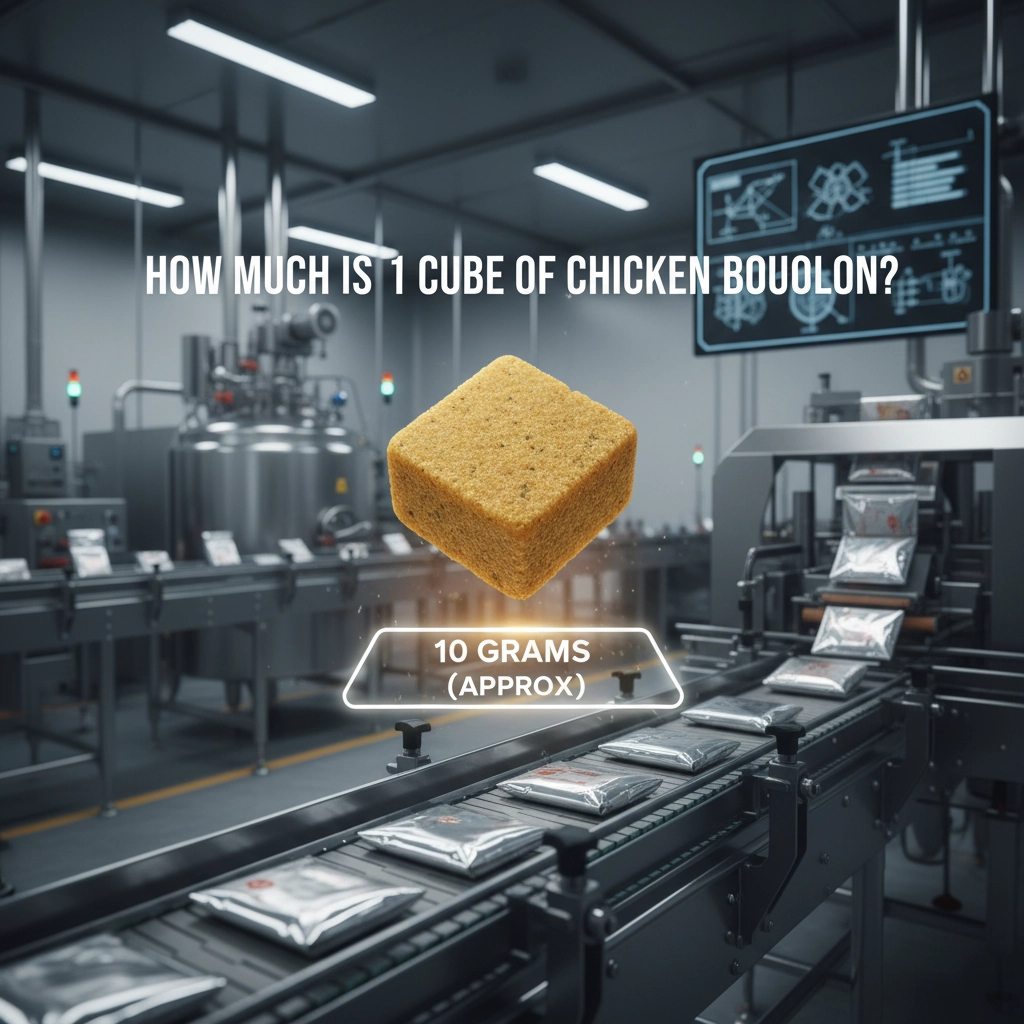
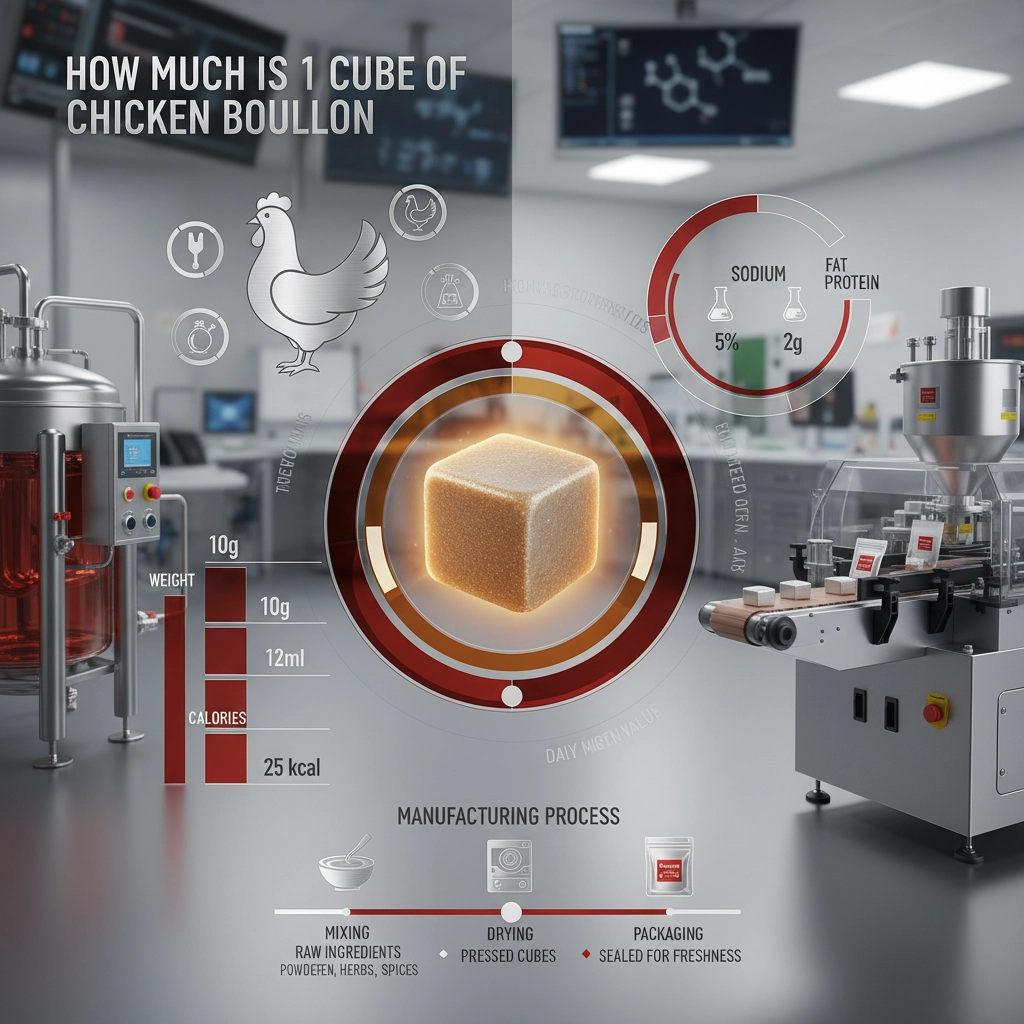
To determine how much is 1 cube of chicken bouillon, we must first look at its physical and chemical makeup. Typically, a standard cube weighs between 10 and 12 grams. This small mass contains a concentrated blend of salt, monosodium glutamate (MSG), hydrolyzed vegetable protein, sugar, and chicken fat or extract. The goal of this composition is to provide a robust flavor profile that can be easily diluted in water to create a savory base.
From a technical standpoint, the "amount" in one cube is designed to flavor approximately 500ml (about 2 cups) of water. The ratio of solids to liquid is what defines the intensity of the product. By utilizing advanced dehydration techniques, manufacturers can ensure that the flavor remains stable over long periods, making it a staple in both domestic pantries and professional food service environments.
Economic Impact and Cost Efficiency Analysis
When evaluating how much is 1 cube of chicken bouillon from a financial perspective, the value lies in its extreme cost-effectiveness. Compared to simmering fresh chicken carcasses for hours, a bouillon cube offers a fraction of the cost per serving. For industrial kitchens, this means a drastic reduction in labor costs and energy consumption, as the "base" is already prepared and ready for immediate use.
Furthermore, the bulk procurement of these additives allows companies to stabilize their food costs. Since bouillon cubes are lightweight and have a long shelf life, shipping costs are minimized. This makes them an ideal choice for organizations operating in remote areas or those providing humanitarian food aid, where the cost per calorie and flavor unit must be kept as low as possible.
In the broader context of the food manufacturing industry, the ability to standardize "how much is 1 cube" allows for precise budgeting. Whether a company is producing canned soups or instant noodles, using a pre-measured cube or its powder equivalent ensures that the cost of seasoning remains constant across millions of units produced.
Nutritional Density and Sodium Considerations
A critical part of the discussion regarding how much is 1 cube of chicken bouillon centers on sodium content. Most standard cubes are heavily salted to act as a preservative and flavor enhancer. In many brands, salt makes up nearly 50% of the total weight of the cube, which is a significant consideration for health-conscious consumers and regulatory bodies.
When users ask how much is 1 cube of chicken bouillon in terms of daily intake, it is often revealed that a single cube can provide over 2,000mg of sodium, which is the total recommended daily limit for many adults. This high concentration is a trade-off for the product's stability and intense flavor, prompting many manufacturers to develop "low-sodium" versions.
Beyond sodium, the presence of flavor enhancers like MSG is what gives the bouillon its characteristic "umami" punch. Understanding the chemical balance in how much is 1 cube of chicken bouillon helps nutritionists and chefs balance the overall saltiness of a dish, often suggesting the omission of additional salt when a cube is used.
Industrial Applications and Scalability
In industrial food production, the question of how much is 1 cube of chicken bouillon is translated into "parts per million" or "percentage of total mass." Large-scale manufacturers don't use individual cubes but rather the bulk powder from which cubes are pressed. This allows for seamless integration into automated mixing systems, ensuring that every batch of sauce or soup has an identical taste profile.
Scalability is where the bouillon format truly shines. Because the ingredients are standardized, a recipe developed in a small test kitchen can be scaled up to produce thousands of gallons of product without the variability associated with fresh ingredients. This consistency is a cornerstone of the global fast-food and convenience food industries.
Comparative Flavor Intensity of Bouillon Formats
Global Market Distribution and Logistics
The logistical advantage of understanding how much is 1 cube of chicken bouillon is evident in global trade. Because they are compact and moisture-resistant, bouillon cubes can be shipped across continents without the need for refrigeration. This has made them an indispensable tool for NGOs and disaster relief agencies providing food security in unstable regions.
In markets across Southeast Asia and Africa, these cubes are often the primary source of seasoning for entire populations. The ability to deliver a high-impact flavor in a tiny, durable package means that the cost of transporting "taste" is minimized, allowing more resources to be spent on bulk staples like rice and corn.
Comparative Analysis of Bouillon Formats
When comparing the cube to other formats, the question "how much is 1 cube of chicken bouillon" becomes a question of efficiency. Powdered bouillon offers easier measurement for irregular amounts, while liquid concentrates provide a cleaner dissolve. However, the cube remains the gold standard for portion control, as it eliminates the need for measuring spoons in a fast-paced environment.
From a storage perspective, the cube format is superior. It occupies the least amount of space per unit of flavor, which is critical for warehouse management in large-scale Pharmaceutical Intermediates or food additive facilities. The physical integrity of the cube also protects the volatile aromatic compounds from oxidation.
Ultimately, the choice of format depends on the end-use. While professional chefs may prefer a paste for its richness, the industrial sector favors the cube's predictability. Knowing exactly how much flavor is delivered per cube allows for an automated, error-free production line.
Future Innovations in Seasoning Technology
The future of how much is 1 cube of chicken bouillon is moving toward "clean label" technology. Modern consumers demand fewer artificial preservatives and lower sodium. Consequently, we are seeing a shift toward using yeast extracts and natural fermentation to achieve the same umami intensity without the heavy salt load traditionally found in a single cube.
Digital transformation is also playing a role. Smart manufacturing allows for "precision dosing," where the components of a bouillon cube are tailored to specific regional taste preferences using AI-driven data. This means a cube produced for the European market may have a different flavor profile and concentration than one produced for the Asian market, despite having the same physical size.
Sustainability is the final frontier. Future bouillon cubes will likely utilize biodegradable packaging and sustainably sourced chicken extracts or plant-based alternatives. The goal is to maintain the convenience of the cube while reducing the environmental footprint of its production.
Comparative Analysis of Bouillon Formulation and Efficiency
| Formulation Type |
Flavor Intensity (1-10) |
Shelf Stability |
Cost per Unit |
| Standard Salt-Based |
9 |
Excellent |
Very Low |
| Low Sodium Organic |
7 |
Good |
Medium |
| Yeast Extract Enhanced |
10 |
Excellent |
Low |
| Plant-Based Alternative |
8 |
Very Good |
Medium |
| Premium Bone-Broth Cube |
10 |
Fair |
High |
| Industrial Grade Bulk |
8 |
Excellent |
Lowest |
FAQS
Typically, one standard bouillon cube is designed to be dissolved in 500ml (approximately 2 cups) of boiling water. This ratio ensures a balanced flavor profile. If the taste is too intense, you can increase the water to 750ml, or if you need a concentrated glaze, reduce the water to 250ml.
Yes, bouillon cubes are highly concentrated. Depending on the brand, one cube can contain between 2g to 5g of salt. Because of this, it is highly recommended to taste your dish before adding any additional salt, as the cube often provides enough sodium for the entire recipe.
Absolutely. In industrial settings, bouillon is preferred for its consistency. To replace 1 liter of fresh stock, you would typically use 2 cubes dissolved in 1 liter of water. This provides a similar flavor profile while significantly reducing preparation time and cost.
Thanks to the high salt content and dehydration process, bouillon cubes have an exceptional shelf life, often lasting 12 to 24 months if stored in a cool, dry place. To maintain maximum potency, ensure the foil packaging remains sealed until use.
Yes, many manufacturers now offer low-sodium, MSG-free, and organic versions. These versions use natural yeast extracts and concentrated vegetable powders to mimic the umami flavor of traditional cubes while reducing the health risks associated with high sodium intake.
Bouillon cubes are designed for hot water. To dissolve one in cold water, it is best to crush the cube into a powder first or dissolve it in a small amount of boiling water to create a concentrate, which can then be stirred into the colder liquid.
Conclusion
Understanding exactly how much is 1 cube of chicken bouillon allows for a seamless transition from amateur cooking to professional food manufacturing. From the precise balance of sodium and umami to the logistical advantages of a dehydrated format, the bouillon cube remains an essential tool in the global food additive industry. By mastering the concentration and application of these cubes, businesses can achieve perfect taste consistency while optimizing their operational costs.
As the industry moves toward cleaner labels and more sustainable production methods, the role of concentrated seasonings will only evolve. We encourage food processors and chefs to explore high-quality, standardized additives that balance flavor intensity with health considerations. For premium seasoning solutions and industrial-grade food additives, visit our website: www.chinaseasoning.com.