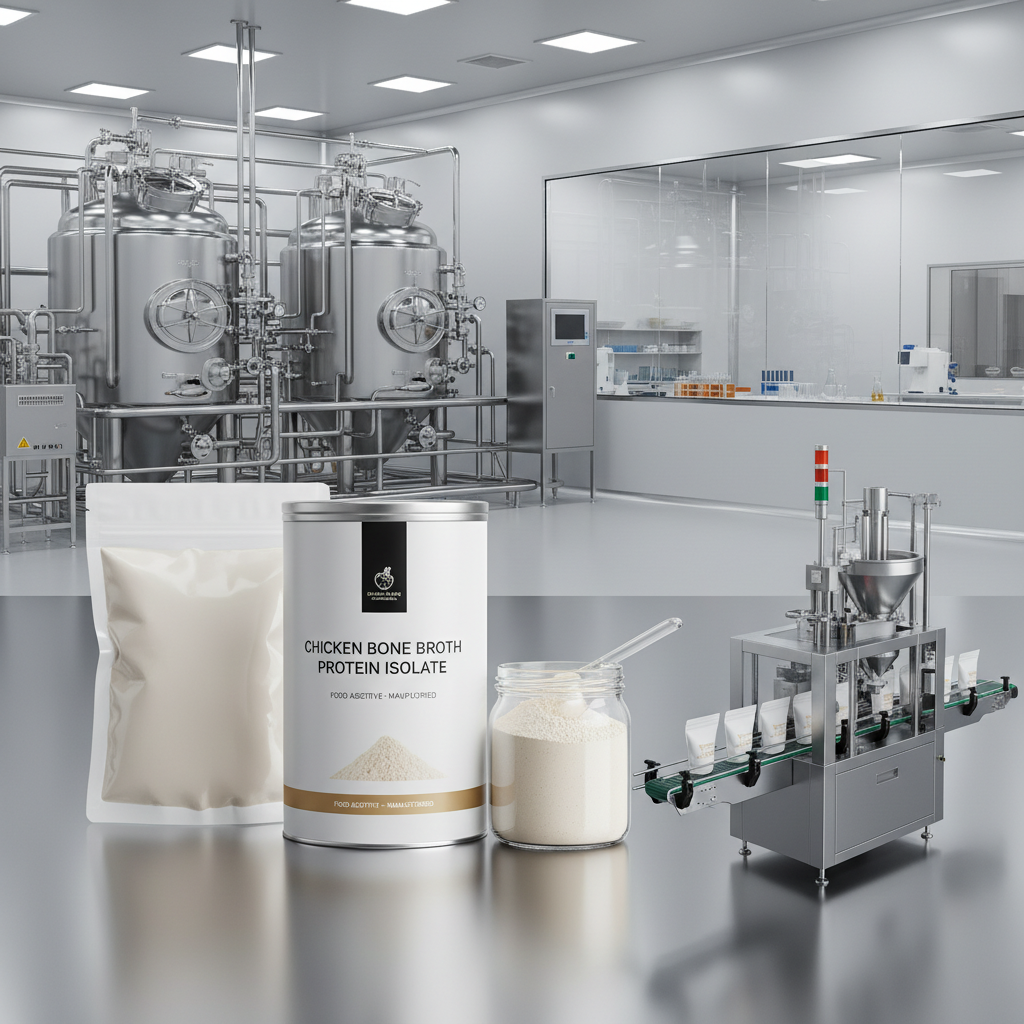
The transition from chicken bouillon granules to cubes represents more than just a change in shape; it is a strategic evolution in food additive manufacturing designed to optimize portion control and shelf stability. For global food producers and home cooks alike, the convenience of a pre-measured cube eliminates the variability associated with granular pouring, ensuring a consistent flavor profile across every batch of soup or stew produced.
In the competitive landscape of the food additive industry, the ability to compress high-intensity flavors into a compact, stable form is a technical milestone. By converting chicken bouillon granules to cubes, manufacturers can reduce packaging volume, lower logistics costs, and provide a product that is more resistant to clumping in humid environments, which is a frequent challenge in tropical markets.
Understanding the technical nuances of this conversion allows businesses to better serve their end consumers by balancing cost-efficiency with premium quality. Whether used in industrial kitchens or as a staple in household pantries, the move toward cubed formats reflects a broader industry trend toward "precision seasoning," where accuracy and ease of use are paramount for the modern consumer.
The Technical Evolution of Chicken Bouillon Granules to Cubes
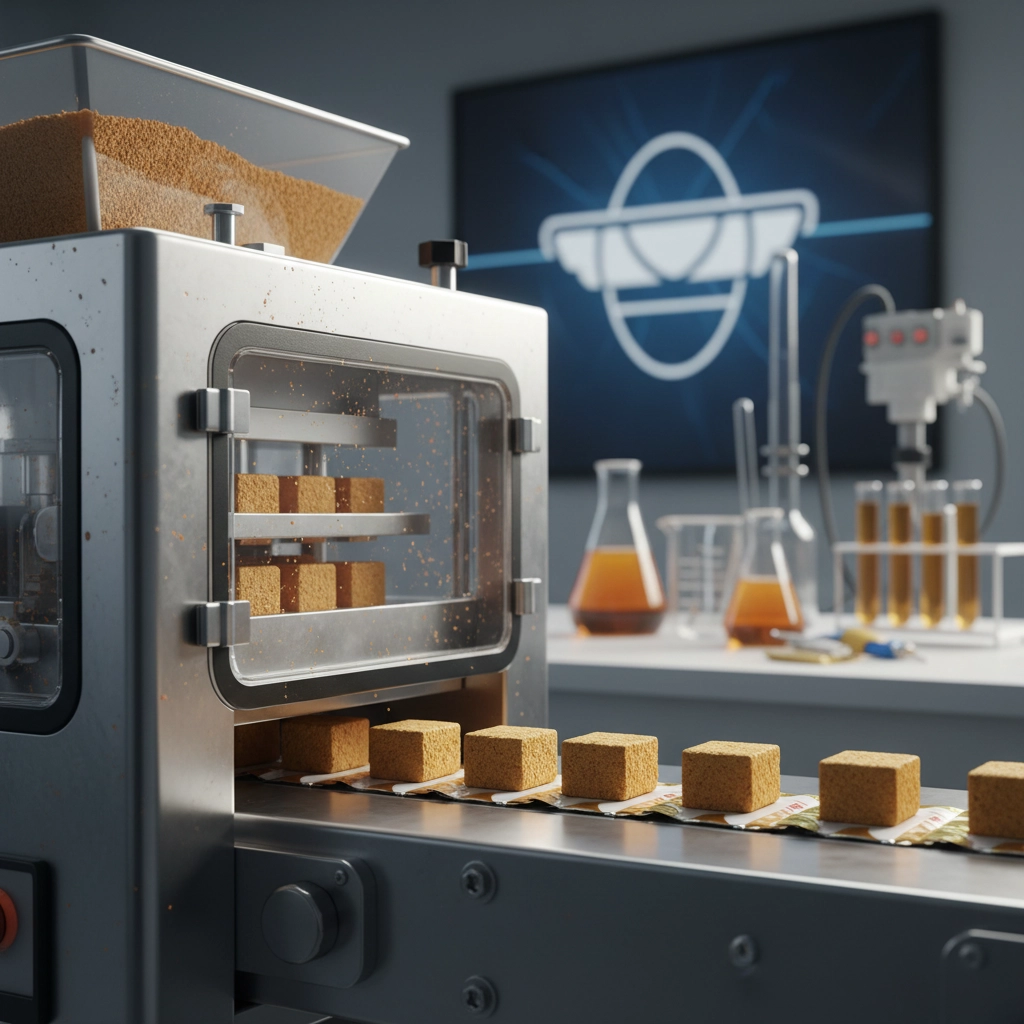
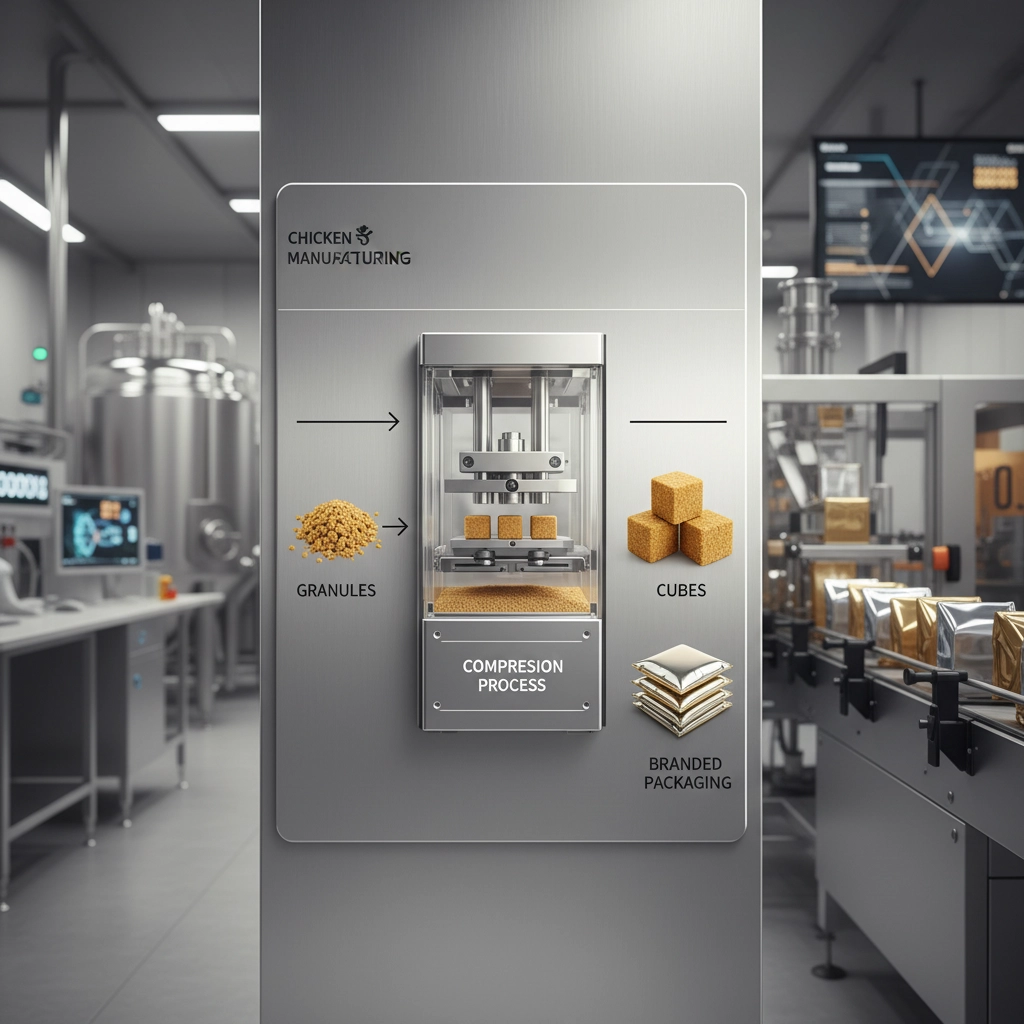
The process of transforming chicken bouillon granules to cubes involves sophisticated compression technology. Unlike loose granules, which rely on a free-flowing powder state, cubes require the integration of specific binding agents and high-pressure molding to ensure the structure remains intact during transport while remaining soluble upon contact with hot water.
This evolution has allowed manufacturers to increase the density of the product, effectively concentrating the essence of chicken stock into a manageable unit. The technical shift focuses on the "disintegration rate," ensuring that while the cube is solid for storage, it dissolves rapidly and evenly, avoiding the clumps often found in lower-quality granular alternatives.
Global Market Demand for Compressed Seasoning
On a global scale, the demand for the conversion of chicken bouillon granules to cubes is driven by the need for standardization in food preparation. In regions such as Sub-Saharan Africa and Southeast Asia, where bouillon is a primary flavor enhancer, the cube format is preferred due to its durability in high-humidity environments and its ability to be sold in single-unit sachets, making it accessible to lower-income demographics.
According to industry trends aligned with ISO food safety standards, the move toward compressed formats reduces the risk of contamination that can occur with open-jar granular products. The airtight wrapping of a cube provides a superior barrier against oxygen and moisture, significantly extending the shelf life without the need for excessive chemical preservatives.
Furthermore, the culinary industry has shifted toward "unit-dose" ingredients to reduce waste. By utilizing the conversion from chicken bouillon granules to cubes, commercial kitchens can precisely calculate food costs per plate, eliminating the "scoop-and-guess" method that often leads to inconsistent salinity and wasted raw materials.
Core Components of the Cubing Process
The first critical factor in moving from chicken bouillon granules to cubes is the formulation of the binder. To maintain the structural integrity of a cube without affecting the taste, manufacturers use food-grade lipids or starches that act as a "glue" during the compression phase but melt instantly in boiling water.
Pressure calibration is the second pillar of the process. If the pressure is too low, the transition from chicken bouillon granules to cubes results in a fragile product that crumbles in the package; if too high, the cube becomes "over-compressed," leading to a slow dissolution rate that frustrates the end-user.
Finally, moisture control is essential. The granular base must be dehydrated to a specific percentage before pressing. Any residual moisture during the conversion of chicken bouillon granules to cubes can lead to microbial growth or premature softening, undermining the very stability that makes the cube format desirable.
Operational Efficiency and Cost Analysis
From an operational standpoint, the transition of chicken bouillon granules to cubes significantly optimizes the supply chain. Cubes allow for higher pallet density, meaning more product can be shipped in a single container compared to bulky jars of granules. This reduction in "shipping air" directly translates to lower carbon emissions and reduced freight costs.
Additionally, the automated packaging lines for cubes are generally faster and more precise than those used for granular filling. The standardization of the cube size allows for high-speed wrapping and boxing, reducing labor costs and minimizing product loss during the filling process.
Efficiency Comparison: Chicken Bouillon Granules to Cubes
Real-World Applications in Global Logistics
In humanitarian aid operations, the conversion of chicken bouillon granules to cubes is a critical logistics advantage. When deploying food relief in disaster-prone areas, space and weight are at a premium. Cubes provide a high-calorie, high-flavor supplement that can be easily distributed in individual portions, ensuring that nutritional enhancers reach the most remote populations without spoilage.
Similarly, in the industrial food sector, pre-cubed bouillon is used as a standardized building block for larger seasoning blends. By starting with a cubed base, manufacturers can maintain an inventory that is easier to count and track, reducing the administrative overhead associated with managing bulk granular silos.
Sustainability and Packaging Innovations
The shift from chicken bouillon granules to cubes has paved the way for more sustainable packaging solutions. Because the cube is a self-supporting structure, it requires less rigid secondary packaging than granules, which often necessitate heavy plastic jars to prevent leakage and clumping.
Current innovations focus on replacing the traditional foil wrap of bouillon cubes with biodegradable, compostable films. This transition ensures that the benefits of the cube format—portability and stability—do not come at the expense of the environment, aligning the product with global "green" manufacturing policies.
Furthermore, by reducing the overall volume of the product through compression, the carbon footprint associated with the transport of chicken bouillon granules to cubes is significantly lowered, contributing to the overall ESG (Environmental, Social, and Governance) goals of the food additive industry.
Future Trends in Bouillon Compression Technology
Looking forward, the process of transforming chicken bouillon granules to cubes is being enhanced by AI-driven precision molding. Smart sensors can now detect the exact moisture content of the granules in real-time, adjusting the compression force millisecond by millisecond to ensure every single cube has a perfectly uniform density.
Another emerging trend is the development of "multi-layer" cubes. Future iterations may see a core of concentrated bouillon surrounded by a layer of vitamins or minerals, essentially turning a simple seasoning cube into a fortified nutritional supplement. This adds a new dimension of value to the conversion of chicken bouillon granules to cubes.
Finally, the integration of automation in the "granule-to-cube" pipeline is reducing human contact to nearly zero, further enhancing hygiene standards and meeting the strictest pharmaceutical-grade requirements for food additives.
Comparative Analysis of Granular vs. Cubed Bouillon Production
| Metric |
Granular Format |
Cubed Format |
Efficiency Gain |
| Storage Volume |
High (Loose) |
Low (Compact) |
+40% Space |
| Dosing Precision |
Variable |
Exact (Per unit) |
High |
| Humidity Resistance |
Poor (Clumping) |
Excellent |
Significant |
| Packaging Waste |
Medium |
Low (Film) |
+25% Green |
| Production Speed |
Moderate |
Very High |
Fast |
| Logistics Cost |
Higher |
Lower |
Cost-effective |
FAQS
The primary reasons are portion control, shelf stability, and logistics. Cubes provide a pre-measured dose, eliminating waste and inconsistency. They also resist clumping in humid environments better than granules and allow for more efficient shipping due to their high density.
When formulated correctly, there is no perceptible difference in taste. The transition from granules to cubes involves adding a binder that is designed to be flavor-neutral and completely soluble in hot water, preserving the original chicken essence.
Pressure is the key variable. Over-compression can lead to a "hard" cube that dissolves slowly. Professional manufacturers use precision molding to ensure the cube is solid enough for transport but porous enough to dissolve rapidly in boiling water.
While the initial investment in compression machinery is higher, the long-term operational costs are often lower. Reduced packaging material and significantly lower shipping costs usually offset the initial machinery expense.
Yes, though in very large scales, granules are sometimes preferred for automated dosing. However, for medium-scale industrial kitchens or as a base for other seasoning mixes, cubes offer superior inventory tracking and consistency.
Cubes typically have a longer effective shelf life because they are individually wrapped in foil or plastic films, which provides a much stronger barrier against moisture and oxidation compared to bulk granular containers.
Conclusion
The strategic transition from chicken bouillon granules to cubes is a masterclass in aligning technical food additive manufacturing with global market needs. By optimizing for density, stability, and portion accuracy, manufacturers have transformed a simple seasoning into a highly efficient logistics tool that serves millions of households and industrial kitchens worldwide.
As we move toward a future of sustainable and precision-based food production, the continued innovation in compression technology will likely lead to even more functional and eco-friendly bouillon formats. For businesses looking to scale their seasoning offerings, adopting the cubed format is not just a trend—it is a necessary step toward operational excellence and consumer satisfaction. Visit our website: www.chinaseasoning.com