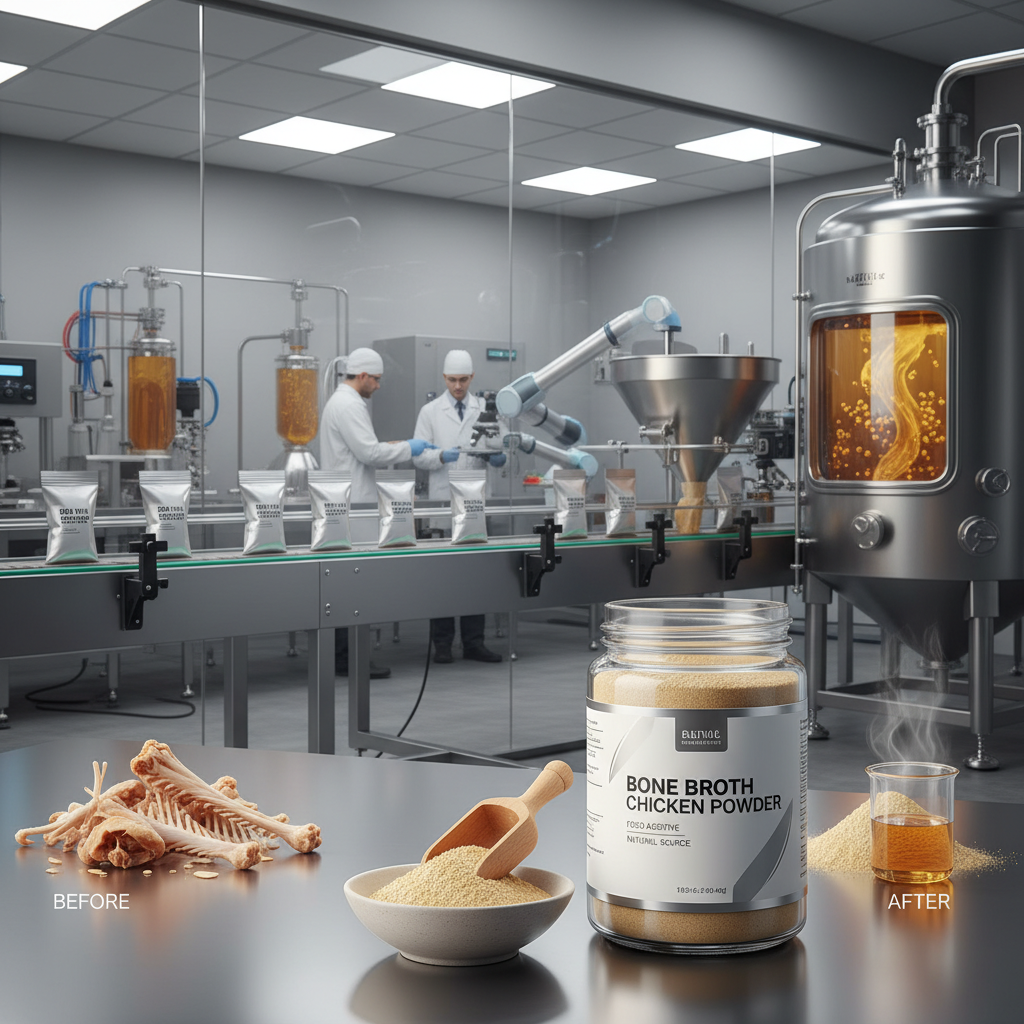
In the evolving landscape of the global food industry, asian chicken bouillon powder has emerged as a cornerstone ingredient for achieving authentic, savory depths in commercial and home cooking. This versatile seasoning agent combines the essence of slow-simmered poultry with a curated blend of spices, providing a consistent umami profile that is essential for scalable food production.
Understanding the technical composition and application of these powders is crucial for manufacturers aiming to optimize taste profiles while maintaining cost-efficiency. As global palates lean more towards fusion and Asian-inspired cuisines, the demand for a standardized, high-quality bouillon that mirrors traditional cooking methods has surged across the food additive sector.
Whether used in instant noodle formulations, ready-to-eat meals, or as a base for professional catering, asian chicken bouillon powder bridges the gap between artisanal flavor and industrial efficiency, ensuring that the final product resonates with consumers worldwide.
Global Market Context of Asian Chicken Bouillon Powder
The global demand for convenient flavor enhancers has seen a significant uptick, with the seasoning market growing steadily according to international trade data. In many regions, asian chicken bouillon powder serves as a critical tool for food processors to maintain taste uniformity across different geographic markets, reducing the reliance on fresh raw materials that are subject to seasonal price volatility.
However, the industry faces the constant challenge of balancing intense flavor profiles with the increasing consumer demand for "clean label" ingredients. Manufacturers are now tasked with reducing sodium levels and removing artificial fillers without compromising the savory "kick" that defines the authentic Asian poultry taste.
Defining the Essence of Asian Chicken Bouillon Powder
At its core, asian chicken bouillon powder is a dehydrated seasoning agent created from a concentrated blend of chicken extract, salt, sugar, and a proprietary mix of aromatic spices. Unlike Western bouillon, the Asian variation often incorporates subtle notes of ginger, garlic, and sometimes fermented soy or yeast extracts to create a more complex, multi-dimensional flavor profile.
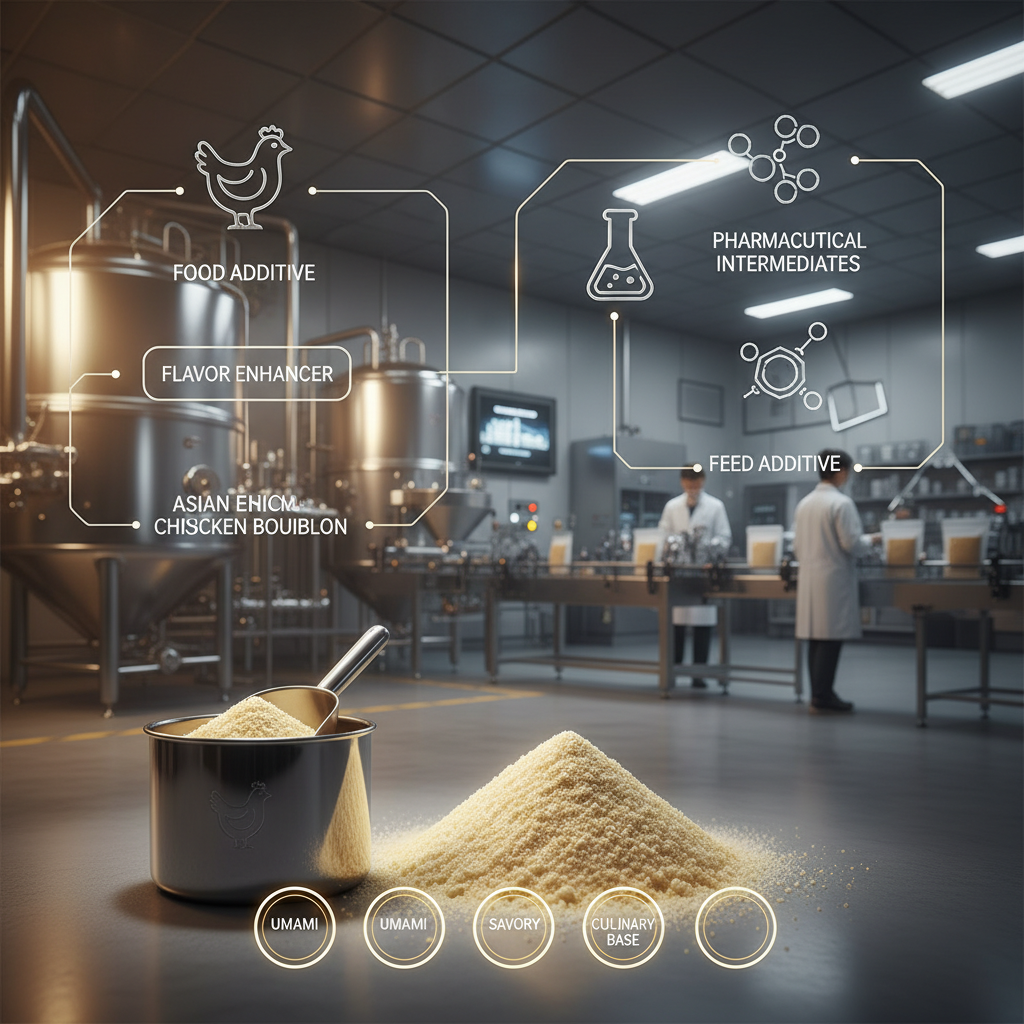
From an industrial perspective, it is classified as a food additive that streamlines the production process. By replacing the need for hours of simmering real chicken bones and aromatics, this powder allows manufacturers to achieve the same gastronomic result in a fraction of the time, making it indispensable for the fast-paced FMCG (Fast-Moving Consumer Goods) sector.
Beyond mere taste, it addresses the humanitarian need for nutrient-dense, long-shelf-life food bases in regions with limited refrigeration. Its stability and ease of transport make it a primary choice for fortified food programs and disaster relief kits, where flavor is essential for psychological well-being and appetite stimulation.
Core Components and Quality Factors
The efficacy of asian chicken bouillon powder depends heavily on its solubility and particle size. High-quality powders must dissolve instantly in hot water without clumping, ensuring that the flavor is distributed evenly throughout the dish, which is a critical requirement for automated soup-making machinery.
Umami synergy is the most vital quality factor. By blending inosine monophosphate (IMP) and guanosine monophosphate (GMP) with glutamates, the asian chicken bouillon powder creates a taste sensation that is exponentially stronger than any single ingredient alone, mimicking the natural depth of a 24-hour bone broth.
Finally, stability and anti-caking properties ensure that the product remains free-flowing during storage and shipment. The use of food-grade silicon dioxide or similar agents prevents the powder from hardening in humid environments, which is essential for maintaining the product's commercial viability in tropical climates.
Practical Applications and Industrial Use Cases
In the industrial kitchen, asian chicken bouillon powder is utilized as a primary base for stocks, sauces, and marinades. For instance, in the production of instant ramen, the powder is integrated into the seasoning sachet, providing a consistent "home-cooked" flavor that is reproducible across millions of units.
Beyond the food industry, these powders are increasingly used in the creation of customized snack seasonings. From chicken-flavored potato chips to savory crackers, the concentrated nature of the bouillon allows for a high-impact taste with minimal application volume, reducing overall production costs.
Performance Comparison of Bouillon Production Methods
Long-Term Value and Economic Advantages
The integration of asian chicken bouillon powder into a supply chain offers profound cost-saving benefits. By reducing the need for intensive labor and energy-heavy boiling processes, companies can lower their carbon footprint and utility expenses while increasing their total output capacity.
Furthermore, the reliability of a standardized powder eliminates the "flavor drift" associated with natural ingredients. This consistency builds consumer trust; a customer buying a product in Tokyo expects the same taste as one buying it in New York, and a high-quality bouillon ensures this sensory reliability.
Future Trends in Flavor Innovation
The next generation of asian chicken bouillon powder is moving toward "natural-identical" flavors. Using biotechnology and fermentation, manufacturers are creating savory components that provide the same depth as chicken extract but are entirely plant-based, catering to the booming vegan and vegetarian markets.
Digital transformation is also playing a role. AI-driven flavor profiling is being used to analyze regional taste preferences in real-time, allowing for the creation of "hyper-local" bouillon powders that adjust the balance of salty, sweet, and savory notes to suit specific cultural palettes.
Sustainability is the final frontier. Innovations in eco-friendly packaging and the sourcing of ethically raised poultry for the extract phase are becoming key differentiators for premium brands seeking to appeal to the conscious consumer.
Overcoming Challenges in Production
One of the primary challenges in producing asian chicken bouillon powder is the prevention of oxidation, which can lead to off-flavors over time. To combat this, advanced vacuum-sealing and nitrogen-flushing techniques are employed during the packaging phase to ensure a shelf life of 18-24 months.
Another hurdle is the reduction of sodium without losing the flavor "punch." Expert chemists are now utilizing potassium salts and yeast-derived umami enhancers to trick the taste buds into perceiving high saltiness while actually reducing the sodium content by up to 30%.
Finally, ensuring a consistent particle size distribution is essential for solubility. By implementing precision milling and sifting systems, producers can ensure that every gram of powder behaves predictably when introduced to liquids, preventing the dreaded "flavor clumps" in commercial soups.
Technical Analysis of Production Challenges and Solutions
| Challenge Category |
Common Symptom |
Innovative Solution |
Impact Score (1-10) |
| Chemical Stability |
Oxidation/Rancidity |
Nitrogen Flushing |
9 |
| Health Compliance |
High Sodium Content |
Yeast Extract Synergy |
8 |
| Physical Property |
Caking/Clumping |
Food-grade SiO2 |
7 |
| Sensory Profile |
Flat Taste |
IMP/GMP Balancing |
10 |
| Solubility |
Slow Dissolution |
Micronization Process |
8 |
| Cost Control |
Raw Material Spikes |
Hybrid Extract Blending |
7 |
FAQS
The primary difference lies in the aromatic profile. While Western bouillon often focuses on celery, parsley, and black pepper, asian chicken bouillon powder typically incorporates ginger, garlic, and soy-based umami enhancers. This creates a deeper, more savory "earthy" taste that complements rice and noodle dishes better than the more "herbal" notes of Western stocks.
Yes, it is specifically designed for scalability. Because it is a dehydrated powder, it offers unmatched consistency and ease of storage compared to liquid stocks. Industrial mixers can easily integrate the powder into large batches of soup or sauce, ensuring that every single unit produced has the exact same flavor profile and salt concentration.
Clumping is prevented through the use of high-quality anti-caking agents like silicon dioxide and by employing moisture-barrier packaging. We recommend storing asian chicken bouillon powder in a cool, dry place and ensuring the seals are airtight. For industrial use, climate-controlled storage is the gold standard for maintaining flowability.
While traditional chicken bouillon uses poultry extracts, the industry has developed "chicken-style" powders using yeast extracts, mushroom powders, and hydrolyzed vegetable proteins. These mimic the flavor of asian chicken bouillon powder perfectly while remaining 100% plant-based, allowing brands to capture the vegan market without sacrificing taste.
When stored under optimal conditions (cool, dry, and away from direct sunlight), a high-grade asian chicken bouillon powder typically has a shelf life of 18 to 24 months. The low water activity (aw) of the powder prevents microbial growth, making it a very stable ingredient for long-term inventory management.
Importing requires adherence to the food safety regulations of the destination country (such as FDA in the US or EFSA in Europe). You will need a Certificate of Analysis (CoA), a Material Safety Data Sheet (MSDS), and proper customs declarations. Working with a supplier who understands international food additive standards is key to a smooth customs clearance process.
Conclusion
In summary, asian chicken bouillon powder is more than just a convenience product; it is a sophisticated tool of food engineering that enables the global delivery of authentic Asian flavors. By combining high-solubility technology with umami synergy and rigorous stability controls, it provides food manufacturers with a reliable, cost-effective, and scalable solution for enhancing taste profiles.
As the industry moves toward cleaner labels and sustainable sourcing, the continued innovation in bouillon production will be pivotal. For businesses looking to elevate their product line with professional-grade seasoning, investing in high-quality, standardized bouillon is a strategic move toward operational efficiency and consumer satisfaction. Visit our website for more professional solutions: www.chinaseasoning.com