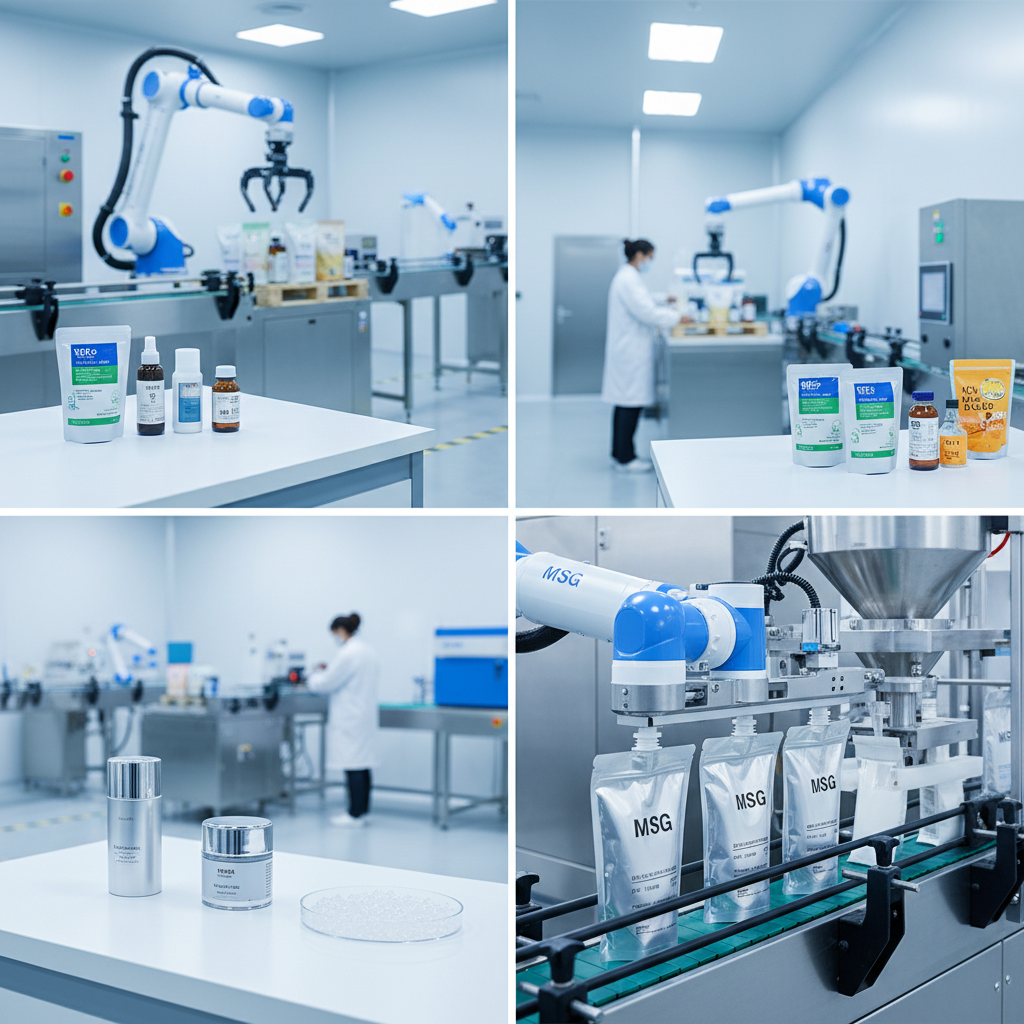
The modern food industry relies heavily on a sophisticated blend of ingredients to maintain consistency, flavor, and shelf-life. Among the most critical of these are specialized components that serve as the backbone for texture and sweetness in processed goods. Understanding the variety of additives examples in food allows manufacturers to optimize their production lines while meeting strict regulatory standards for safety and quality.
From the precise crystalline structure of sugars to the stabilizing properties of emulsifiers, the strategic use of these components ensures that food remains palatable and nutritious during transport and storage. This is particularly vital in a globalized market where supply chains span continents, requiring ingredients that can withstand varying environmental conditions without compromising the final product's integrity.
When exploring additives examples in food, one of the most prominent is Glucose (Dextrose), a high-purity monosaccharide essential for energy delivery and texture control in everything from confectionery to pharmaceutical syrups.
The Role of Glucose as Primary Food Additive
Glucose, also known as Dextrose, stands as one of the most widely distributed and important monosaccharides in nature. As a polyhydroxyaldehyde with the chemical formula C6H12O6, it serves as a primary energy source for living cells and a critical metabolic intermediate. In the industrial context, pure glucose appears as a colorless crystal that is soluble in water, providing a clean, subtle sweetness that is less intense than sucrose, making it an ideal base for complex flavor profiles.
Beyond its role as a sweetener, glucose is indispensable in the field of biology and food science. It is produced naturally by plants through photosynthesis and utilized by manufacturers to achieve specific chemical reactions, such as the Maillard reaction for browning. This makes it a quintessential example of how a simple natural molecule can be transformed into a high-performance industrial tool.
Technical Specifications and Purity Standards
To ensure safety and consistency, industrial-grade glucose must adhere to rigorous specifications. Food Grade FCC VII standards require a high assay on a dry basis, typically ≥ 99.5%, to ensure that the product performs predictably in large-scale manufacturing. Contaminants such as chloride, sulphated ash, and sulfur dioxide are kept to absolute minimums (often ≤ 0.01% and ≤ 0.002% respectively) to prevent off-flavors or chemical instability in the final food product.
The physical form of the additive also plays a role in its application. For instance, Monohydrate and Anhydrous forms differ in their water content—the latter having a much lower loss on drying (approximately 2.0% compared to 10.0% for monohydrate). This distinction is crucial for manufacturers who need to control the moisture levels of their recipes precisely to avoid spoilage or texture degradation.
Furthermore, strict microbiological controls are implemented to ensure that pathogenic bacteria are completely absent and that mold and yeast counts remain within safe limits (≤ 100pcs/g). These purity standards are not just regulatory hurdles but are essential for maintaining the safety of the global food supply chain.
Functional Benefits in Baking and Confectionery
In the realm of bakery and confectionery, the choice of sweetener can drastically alter the end result. Utilizing glucose provides unique advantages in controlling the texture and shelf-life of cakes and torrefied foods. Because it helps retain moisture, it keeps baked goods soft for longer periods, which is a primary goal for commercial distributors.
When analyzing various additives examples in food, glucose is highlighted for its ability to control crystallization. In the production of jams, jellies, and honey products, it prevents the formation of large sugar crystals, resulting in a smoother, more professional mouthfeel and a more appealing glossy appearance.
Moreover, the high solubility of dextrose powder makes it an excellent choice for beverages and cold foods. It dissolves quickly and uniformly, ensuring that every sip or bite has a consistent flavor profile. This efficiency reduces processing time and ensures that the sweetness does not overpower other delicate aromatic ingredients.
Impact on Energy and Nutritional Formulations
Glucose is recognized globally as a highly bioavailable form of sugar, meaning it is rapidly metabolized by the human body to provide immediate energy. This characteristic makes it a cornerstone ingredient in sports nutrition and clinical formulations. For athletes, the rapid absorption of dextrose provides the necessary fuel for high-intensity physical activity and cognitive performance.
In nutritional supplements, glucose is often combined with electrolytes, vitamins, and minerals to create fortified powders. Its neutral taste profile allows for the easy integration of these functional nutrients without requiring excessive masking agents, ensuring the final product is both effective and palatable.
Performance Ratings of Additives Examples in Food
Industrial Versatility and Application Scope
The application of glucose extends far beyond the kitchen. In industrial settings, it is used in the production of artificial fibers and as a fermentation substrate for various biological processes. This versatility allows a single raw material to serve multiple industries, from textiles to pharmaceuticals, emphasizing its value as a multi-functional chemical building block.
For large-scale manufacturers, the ability to source glucose in bulk (such as 25kg bags with a supply ability of 500mt per month) ensures that production schedules remain uninterrupted. The logistical ease—supported by ocean, land, and air transport—allows this essential ingredient to reach factories globally, maintaining a consistent supply of high-quality dextrose anhydrous and monohydrate.
Quality Assurance and Global Certification
In the global food additive market, trust is built on certification. Our glucose production is backed by ISO 9001:2008, FDA, and Halal certifications. These credentials signify that the manufacturing process meets international standards for quality management and dietary restrictions, allowing the product to be exported to diverse markets including North America, Europe, and Southeast Asia.
The rigorous testing of every batch ensures that the specific rotation remains between +52.00 and +53.50, a key indicator of the purity and optical activity of alpha-D-glucose. Such precision is critical for pharmaceutical applications where the chemical identity of the sugar must be absolute to avoid adverse reactions or dosage errors.
By combining strict factory controls in China with international oversight, we ensure that our dextrose provides reliable performance. This commitment to quality helps manufacturers reduce waste and avoid costly product recalls, providing long-term stability for their brands.
Comparative Analysis of Glucose Forms
Choosing between Monohydrate and Anhydrous glucose depends entirely on the desired end-product characteristics. Monohydrate contains a water molecule within its crystalline structure, making it slightly more bulky and suited for applications where some moisture is acceptable. Anhydrous glucose, however, is the pure form without water, offering higher concentration and better stability in anhydrous reactions.
From a cost-efficiency perspective, glucose offers a competitive alternative to sucrose while providing superior solubility. This allows manufacturers to lower their raw material costs without sacrificing the quality or the perceived sweetness of their products, which is a critical advantage in the competitive food manufacturing landscape.
Ultimately, the integration of these glucose forms into a recipe allows for a tailored approach to food design. Whether the goal is rapid energy delivery in a sports drink or long-term softness in a cake, the flexibility of dextrose ensures that the specific needs of the formulator are met.
Comparative Specifications of Glucose Grade Variants
| Variant Type |
Assay (Dry Basis) |
Loss on Drying |
Primary Use Case |
| Food Grade Monohydrate |
≥ 99.5% |
≤ 10.0% |
General Bakery/Confectionery |
| Food Grade Anhydrous |
99.5% |
2.0% |
Pharmaceutical/High-Concentrate |
| FCC VII Standard |
≥ 99.5% |
Variable |
International Regulatory Compliance |
| Industrial Grade |
98.0% - 99.0% |
Moderate |
Artificial Fiber Industry |
| Sports Nutrition Grade |
≥ 99.5% |
Low |
Energy Gels and Recovery Drinks |
| Clinical Grade |
≥ 99.8% |
Very Low |
Intravenous/Medical Solutions |
FAQS
In the context of food additives, glucose and dextrose are essentially the same. "Dextrose" is the term often used in the industry to refer to the form of glucose that is processed for use as a sweetener or energy source. Chemically, both refer to the monosaccharide C6H12O6, providing identical nutritional and functional properties in food applications.
Glucose acts as a humectant, meaning it attracts and retains moisture. In cakes and torrefied foods, this prevents the product from drying out quickly, thereby extending the softness and overall shelf life. It also helps control the rate of staling, ensuring the product remains fresh for the consumer longer than it would with sucrose alone.
Anhydrous glucose is generally preferred for applications requiring rapid solubility and precise concentration, such as powdered beverage mixes or concentrated syrups. Because it lacks the associated water molecule found in monohydrate, it offers a higher purity of the sugar itself, which can lead to more consistent sweetness and stability in liquid formulations.
While glucose can replace sucrose, it is less sweet. Manufacturers often use a blend of both to balance the sweetness level while leveraging the functional benefits of glucose, such as crystallization control and moisture retention. Total replacement may require adjusting the quantity to maintain the same perceived sweetness level.
For food and pharmaceutical safety, you should ensure the supplier holds ISO 9001 for quality management, FDA registration for safety standards, and Halal or Kosher certifications if the product is intended for specific dietary markets. Compliance with FCC (Food Chemicals Codex) VII is also a key indicator of high purity.
Glucose is a simple sugar that does not require breaking down into smaller units before absorption. This allows it to enter the bloodstream rapidly, providing a near-instant source of energy (ATP) for muscles and the brain, which is critical for athletes during intense exercise or for quick recovery post-workout.
Conclusion
In summary, glucose and its variants—dextrose monohydrate and anhydrous—are indispensable additives examples in food, offering a unique combination of rapid energy delivery, texture enhancement, and shelf-life extension. By adhering to strict purity standards like FCC VII and maintaining international certifications such as ISO and FDA, manufacturers can ensure that their products remain safe, consistent, and high-performing across diverse global markets.
As the food industry evolves toward more functional and nutritionally optimized products, the role of high-purity glucose will only grow. We recommend that food scientists and procurement managers carefully select the form of glucose that aligns with their specific moisture and solubility requirements to maximize product quality. For more information on high-grade food additives, visit our website: www.standard-seasoning.com