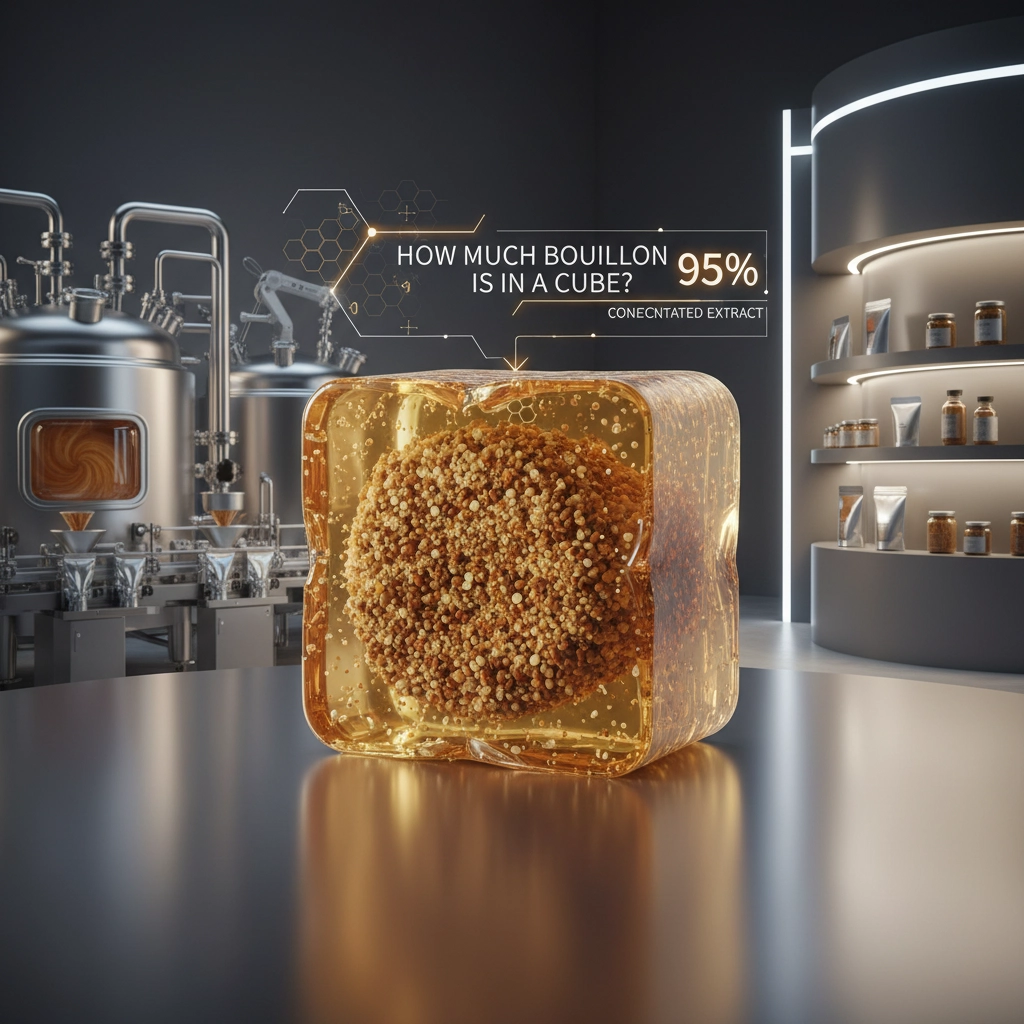
The global food industry relies heavily on the precision of flavor enhancement to ensure consistency across mass-produced goods. Among the most critical components in this process are msg products, which serve as the foundation for achieving the coveted umami taste that consumers crave in savory dishes. By integrating these enhancers into concentrated formats like bouillon cubes, manufacturers can provide a scalable solution for professional kitchens and home cooks alike.
Understanding the role of flavor enhancers in modern food science is essential for anyone looking to optimize production efficiency and taste profiles. The shift toward standardized seasoning ensures that whether a product is used in a high-end restaurant or a home kitchen, the sensory experience remains identical. This stability is achieved through the careful calibration of salt, vegetable fats, and amino acid-based enhancers.
From a commercial perspective, the integration of msg products into bouillon and spice cubes allows for precise dosing and extended shelf life. This not only reduces waste in industrial food processing but also empowers culinary creators to achieve professional-level depth in their soups, stews, and sauces without the need for hours of traditional stock reduction.
The Industrial Role of msg products in Seasoning
In the competitive landscape of food additive manufacturing, msg products act as a primary catalyst for flavor synchronization. By utilizing these components in the production of bouillon cubes—such as chicken, beef, and vegetable varieties—manufacturers can ensure that the "umami" profile is consistent across thousands of metric tons of production per month. This reliability is crucial for international distributors who supply catering businesses and food manufacturers.
The efficiency of these products lies in their ability to enhance the natural taste of other ingredients without overpowering them. When combined with palm oil and salt in a compressed cube format, these enhancers create a stable matrix that dissolves quickly in hot water. This process allows for the rapid release of savory notes, transforming basic water into a rich, professional-grade stock in seconds.
Defining the Composition of msg products
At its core, the category of msg products refers to monosodium glutamate and related flavor-enhancing salts used to stimulate the taste receptors associated with savoriness. In the context of industrial seasoning cubes, these are not used in isolation but are blended with flavor enhancers, vegetable fats, and specific proteins (like chicken or beef extracts) to create a complex, layered taste profile.
The modern industry defines these products not just by their chemical makeup, but by their purity and solubility. For instance, a high-quality seasoning cube must maintain a specific assay percentage (typically 65% min) to ensure that the flavor release is potent enough to season a standard volume of broth without requiring excessive amounts of the product, which could lead to over-salting.
Furthermore, the integration of these components into "clean label" or Halal-certified options demonstrates the versatility of these additive systems. By adjusting the carrier oils and removing animal-derived fats in favor of vegetable alternatives, manufacturers can adapt these savory products for global markets, meeting diverse dietary laws while maintaining the same high-impact taste profile.
Key Performance Factors of msg products
The efficacy of msg products in a commercial setting is measured by several key factors, primarily solubility and stability. A professional-grade seasoning cube must dissolve completely and rapidly, leaving no residue or clumps, which ensures a uniform distribution of flavor throughout the dish, whether it is a thin soup or a thick gravy.
Another critical factor is the purity level, specifically the control of heavy metals. In the manufacturing of msg products, strict limits on Arsenic (0.5ppm max), Lead (1ppm max), and Mercury (0.5ppm max) are enforced. This adherence to safety standards is non-negotiable for products intended for global export, ensuring consumer safety and regulatory compliance across different jurisdictions.
Finally, the synergy between the enhancers and the carrier fats—such as palm oil—determines the aromatic release of the cube. The fat protects the volatile flavor compounds during storage and releases them upon heating, allowing the savory properties of the msg products to blend seamlessly with the natural extracts of chicken, beef, or vegetables.
Global Applications of msg products
The application of msg products extends far beyond simple home cooking. In industrial food processing, these enhancers are used to create standardized bases for ready-to-eat meals, instant noodles, and canned soups. By using bulk bouillon cubes, food manufacturers can maintain strict portion control and flavor consistency across different production batches, which is essential for brand loyalty.
In regional markets, such as Southeast Asia and Africa, these products are indispensable for enhancing the nutritional appeal of staple grains and legumes. In remote industrial zones or post-disaster relief operations, the compact and shelf-stable nature of seasoning cubes provides a critical way to make simple, calorie-dense foods more palatable, improving the dietary experience for populations with limited access to fresh ingredients.
Performance Rating of Various msg products Formulations
Long-Term Value of High-Purity msg products
The long-term commercial value of investing in high-purity msg products lies in the reduction of operational risks and the increase in product shelf-life. When impurities are minimized, the chemical stability of the seasoning cube is enhanced, preventing oxidation and flavor degradation over time. This is particularly valuable for exporters shipping via ocean freight to distant markets, where temperature fluctuations can affect product quality.
Moreover, the use of standardized enhancers builds trust with B2B clients, such as restaurant chains and food manufacturers. When a supplier can guarantee a specific PH range (6.8 – 7.2) and a consistent translucent rate (95% min), the client can automate their recipes without the need for constant manual adjustment. This reliability creates a virtuous cycle of innovation and trust, positioning the manufacturer as a premium partner in the global food supply chain.
Innovation Trends in msg products Formulation
The industry is currently witnessing a shift toward "functional" msg products. Innovation is focusing on the development of vegan-certified bouillon cubes that replicate the savory depth of bone broth using plant-based proteins and fermented yeast extracts. This allows manufacturers to capture the growing plant-based market without sacrificing the intense umami experience that traditional animal-based stocks provide.
Digital transformation is also playing a role in the quality control of these additives. Advanced automated dosing systems now allow for the precise integration of flavor enhancers at the micro-gram level, ensuring that every single cube in a 25kg drum has the exact same chemical composition. This level of precision minimizes waste and ensures that the "Loss on Drying" remains at a strict 0.1%, maximizing the efficiency of the final product.
Sustainability is the third pillar of innovation. Manufacturers are exploring ways to source raw materials for msg products from sustainable fermentation processes that reduce carbon footprints. By optimizing the productivity of plants (e.g., achieving 500mt/month), companies can lower the per-unit cost and pass those savings on to the end consumer while adhering to green manufacturing policies.
Technical Specifications for msg products Quality
To ensure the highest quality of msg products, strict technical parameters must be adhered to during the crystallization and compression phases. The specific rotation (typically between +24.8 and +25.3) serves as a key indicator of the molecular purity of the enhancer. Any deviation from these values can result in an altered taste profile or inconsistent solubility in the final seasoning cube.
Packaging is equally critical to maintaining these specifications. Whether delivered in 50g bags for retail or 25kg drums for industrial use, the packaging must protect the product from moisture. Because msg products are hygroscopic, any ingress of water can lead to clumping and a decrease in the translucent rate, which would compromise the visual and functional quality of the crystals.
Ultimately, the synergy of high-purity raw materials, precise manufacturing, and robust logistics defines the success of these flavor systems. By maintaining a rigorous standard for heavy metal limits and PH levels, manufacturers can provide a product that is not only flavorful but also safe and compliant with international food safety standards.
Technical Quality Analysis of msg products in Seasoning Cubes
| Parameter |
Standard Limit |
Actual Result |
Quality Impact |
| Assay Percentage |
65.00% min |
65.31% |
Flavor Potency |
| PH (5% Solution) |
6.8 – 7.2 |
7.0 |
Chemical Stability |
| Arsenic (As2SO3) |
0.5ppm max |
0.3ppm |
Safety Compliance |
| Lead (Pb) |
1ppm max |
0.1ppm |
Toxicity Control |
| Loss on Drying |
0.1% |
0.1% |
Shelf Life |
| Translucent Rate |
95% min |
95.5% |
Visual Purity |
FAQS
The primary function of msg products is to provide a concentrated source of umami, which is the savory taste characteristic of meats and fermented foods. In bouillon cubes, they work synergistically with salt and vegetable fats to enhance the natural flavor of the base (chicken, beef, or fish) and ensure a consistent, deep taste profile that persists even when diluted in large volumes of water.
Yes, our msg products are manufactured under strict quality controls that meet international food safety standards. We monitor heavy metal levels closely, keeping Arsenic, Lead, and Mercury well below the maximum allowed limits (e.g., Lead at 0.1ppm vs a 1ppm limit), making them suitable for export to markets with rigorous safety regulations.
Absolutely. While traditionally used in meat-flavored cubes, msg products are chemically compatible with plant-based ingredients. By combining them with vegetable fats and mushroom or yeast extracts instead of animal proteins, you can create vegan bouillon cubes that maintain the same savory intensity and professional quality as traditional versions.
High purity in msg products ensures a clean taste without off-notes or metallic aftertastes. Technically, a high translucent rate and a precise PH range (6.8-7.2) prevent the additive from reacting negatively with other ingredients, ensuring that the final cube dissolves quickly and tastes consistent across different batches.
For industrial-scale applications, msg products and integrated seasoning cubes are typically provided in 25kg drums or 25kg bags. These are designed to protect the crystals from moisture and contamination during ocean, land, or air transport, ensuring that the "Loss on Drying" remains at 0.1% upon arrival.
Consistency is achieved by using standardized msg products with a guaranteed assay percentage (65% min). Because the chemical composition is uniform, one cube can reliably replace a set volume of broth. For industrial processors, we recommend automated dosing systems that leverage the product's consistent solubility to ensure flavor uniformity.
Conclusion
In summary, the strategic application of msg products within the food additive industry is essential for achieving the flavor precision and stability required for global commercial success. By combining high-purity amino acid enhancers with optimized carrier fats and strict quality control parameters, manufacturers can produce bouillon and seasoning cubes that offer unparalleled convenience and taste consistency. From ensuring the absence of heavy metals to optimizing solubility and translucency, every technical detail contributes to a product that empowers professional chefs and home cooks alike.
Looking forward, the evolution of these flavor systems will likely be driven by the intersection of sustainability and personalization, with a greater emphasis on vegan-certified and clean-label formulations. As the global demand for convenient, high-quality seasoning grows, the reliance on scientifically formulated enhancers will only increase. We invite you to explore our full range of food additive solutions and experience the difference that precision manufacturing makes. Visit our website: www.standard-seasoning.com