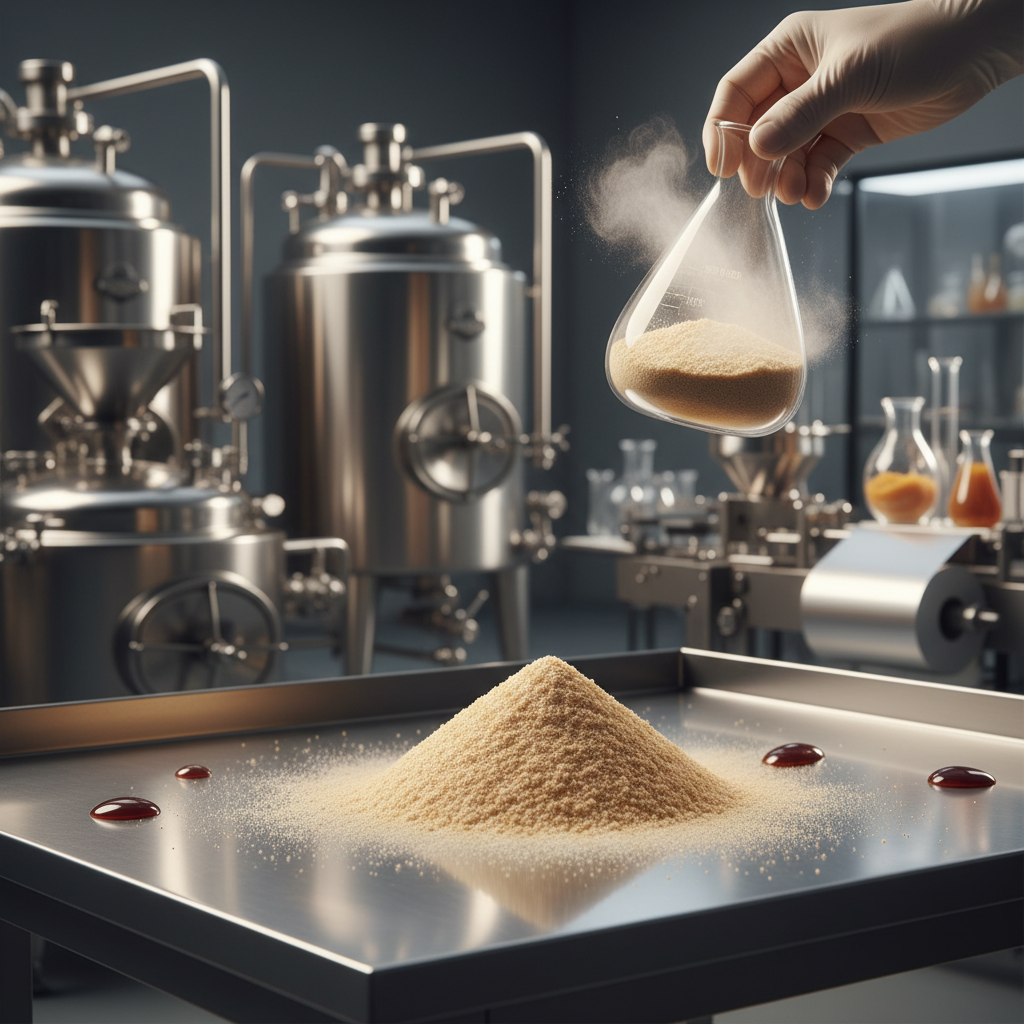
In the contemporary landscape of food science, achieving a perfect balance between taste and health has become a global priority. The integration of high-intensity sweeteners like Aspartame allows manufacturers to create low-calorie alternatives that do not compromise on the sensory experience, making nahco3 10 relevant in the broader context of additive optimization.
Across the global market, the demand for sugar reduction is driven by rising health consciousness and regulatory pressures to combat metabolic diseases. The role of precision-grade additives is crucial here, as they provide the necessary sweetness profile and stability required for diverse applications, from carbonated beverages to pharmaceutical syrups, effectively bridging the gap between indulgence and wellness.
Understanding the technical specifications and purity levels of these components ensures that the final product maintains a consistent taste and shelf-life. By focusing on high-purity standards—such as an assay of 98%-102%—industries can ensure safety and efficacy, ensuring that nahco3 10 remains a point of reference for quality benchmarks in the food additive sector.
The Chemical Composition of nahco3 10
The molecular architecture of the sweetener associated with nahco3 10 is based on two essential amino acids: L-Aspartic Acid and L-Phenylalanine. This combination creates a dipeptide methyl ester with the formula C14H18N2O5 and a molecular weight of 294.30, which allows it to interact specifically with sweetness receptors on the human tongue.
Because these constituents are commonly found in daily foods, the product is widely accepted. Its potency is remarkable, being approximately two hundred times sweeter than traditional sucrose, which allows for a significant reduction in the volume of additive needed to achieve the desired flavor profile in commercial food production.
Global Market Relevance of nahco3 10
On a global scale, the demand for nahco3 10 components is driven by the shift toward "sugar-free" and "low-calorie" labeling. In regions like North America and Europe, where health regulations are stringent, the use of approved intensive sweeteners is essential for maintaining the viability of the beverage and confectionery industries.
According to ISO 9001:2008 standards and FDA guidelines, the consistency of additive purity is non-negotiable. This is why manufacturers focus on maintaining a strict assay range of 98%-102%, ensuring that every batch delivered to international markets meets the safety requirements for human consumption.
The logistical chain for these products, often originating from hubs like Shanghai, utilizes Ocean, Land, and Air transport to ensure a steady supply ability of up to 500mt per month. This scalability allows global brands to maintain their production lines without interruption, regardless of regional demand spikes.
Core Purity and Quality Standards of nahco3 10
Maintaining the integrity of nahco3 10 involves rigorous control of the "Loss on Drying" and "Residue on Ignition." With a loss on drying limit of ≤ 4.5% and residue on ignition at ≤ 0.2%, the product ensures that moisture and inorganic impurities do not interfere with the chemical stability of the final food product.
The safety profile of nahco3 10 is further reinforced by strict heavy metal limits, where Lead is kept below 10 mg/kg and Arsenic below 3 mg/kg. These thresholds are critical for obtaining Halal and FDA certifications, ensuring that the product is safe for a diverse global population.
Furthermore, the biological purity is monitored via Total Bacteria Count (≤ 250cfu/g) and Molds and Yeasts (≤ 100cfu/g). This microbiological control prevents spoilage in sensitive applications such as dairy products and pharmaceutical syrups, where stability is paramount.
Performance Metrics and Efficacy of nahco3 10
The efficacy of nahco3 10 is measured by its specific rotation (+14.5º to +16.5º) and its pH range of 4.5-6.0. These parameters ensure that the sweetener blends seamlessly into acidic beverages or neutral pharmaceutical tablets without altering the intended flavor or chemical balance of the formulation.
Different mesh sizes (from 20 mesh to 350 mesh) allow manufacturers to choose the appropriate solubility rate. For instance, a finer powder is ideal for instant beverage mixes, whereas granular types are preferred for table-top sweetener sachets.
Efficiency Comparison of nahco3 10 Application Methods
Industrial Applications of nahco3 10
The versatility of nahco3 10 allows it to span across multiple high-value industries. In the beverage sector, it is indispensable for carbonated soft drinks and fruit syrups, providing a clean sweetness that replaces sucrose without the caloric burden.
Beyond liquids, it finds critical use in the pharmaceutical industry for sugar-free syrups and effervescent tablets. Its stability in these formats makes it an ideal choice for patients requiring medication without glucose spikes, illustrating the intersection of food science and healthcare.
Sustainability and Safety of nahco3 10
The safety of nahco3 10 is backed by decades of global consumption and approval by the majority of worldwide health authorities. By utilizing amino acids already present in the daily diet, the body processes the additive naturally, reinforcing its position as a safe alternative to artificial sugar.
From a manufacturing perspective, the focus on ISO 9001:2008 ensures that the production process minimizes waste and optimizes resource use. The use of durable 25kg paper drums for packaging reduces environmental impact compared to non-recyclable plastics.
Long-term value is derived from the trust built through certification. Halal and FDA approvals allow for seamless entry into diverse cultural and regulatory markets, ensuring that the supply chain remains ethical and transparent.
Technical Analysis of nahco3 10 Variants
When analyzing the different grades of nahco3 10, the primary differentiator is the mesh size and the assay purity. A 98%-102% assay ensures that the L-phenylalanine content is balanced, preventing any off-tastes that can occur with lower-grade substitutes.
The interaction between the pH level and the loss on drying determines the shelf-life of the powder. A well-controlled pH (4.5-6.0) prevents the hydrolysis of the methyl ester bond, which is essential for maintaining the sweetener's potency over long transit times from China to global destinations.
In conclusion, the technical synergy between molecular weight (294.30) and specific rotation ensures that each batch of nahco3 10 performs identically across different food matrices, providing manufacturers with the reliability needed for mass production.
Technical Specification Comparison of nahco3 10 Grades
| Grade Variant |
Assay Range |
Particle Size |
Application Focus |
| Standard Powder |
98% - 102% |
100 Mesh |
General Beverages |
| Fine Powder |
99% - 101% |
350 Mesh |
Instant Mixes |
| Coarse Powder |
98% - 102% |
20 Mesh |
Industrial Syrup |
| Granular |
98% - 102% |
Granules |
Table-top Sachets |
| Pharma Grade |
≥ 99% |
Ultra-Fine |
Effervescent Tablets |
| Confectionery |
98% - 102% |
Mixed Mesh |
Chewing Gums |
FAQS
The primary advantage is its intense sweetness—approximately 200 times that of sucrose—combined with a low-calorie profile. This allows manufacturers to significantly reduce calorie counts in beverages and foods while maintaining the desired taste, making it essential for dietary and sugar-free products.
Mesh size determines the dissolution rate. A 350-mesh powder dissolves rapidly, making it perfect for instant desserts and beverage mixes. Conversely, a 20-mesh or granular form is better suited for table-top sweeteners where a specific texture or slower dissolution is preferred.
Yes, it is produced under strict quality controls. It carries ISO 9001:2008 and FDA certifications, and it is Halal certified, ensuring that it meets the safety and dietary requirements of diverse global markets and regulatory bodies.
To maintain the assay purity and prevent hydrolysis, the product should be stored in a cool, dry place away from direct sunlight. The 25kg paper drums provide a sturdy barrier, but maintaining low humidity is key to keeping the "Loss on Drying" below 4.5%.
Aspartame is generally used in products that do not require high-temperature processing for long periods, as heat can break down the dipeptide structure. It is best suited for cold beverages, confectionery, and pharmaceutical tablets where stability is managed at room temperature.
Our China-based factory maintains a productivity and supply ability of 500mt per month. With a logistics network covering Ocean, Land, and Air transport via Shanghai port, we can support large-scale industrial needs with consistent lead times.
Conclusion
In summary, the strategic use of high-purity additives like the ones associated with nahco3 10 represents a critical evolution in food manufacturing. By balancing an assay of 98%-102% with precise microbiological and heavy metal controls, manufacturers can deliver products that are not only low in calories but also safe and consistent. From the versatility of mesh sizes to the reliability of international certifications (FDA, Halal, ISO), these components enable the creation of a healthier global food ecosystem without sacrificing the sensory pleasure of sweetness.
Looking forward, the trend toward personalized nutrition and functional foods will only increase the demand for precision-grade sweeteners. We recommend that manufacturers prioritize suppliers who offer transparent technical data and scalable supply chains to ensure long-term stability. For those seeking a reliable, high-quality partner in food additive manufacturing, visiting our professional portal is the first step toward innovation. Visit our website: www.chinaseasoning.com