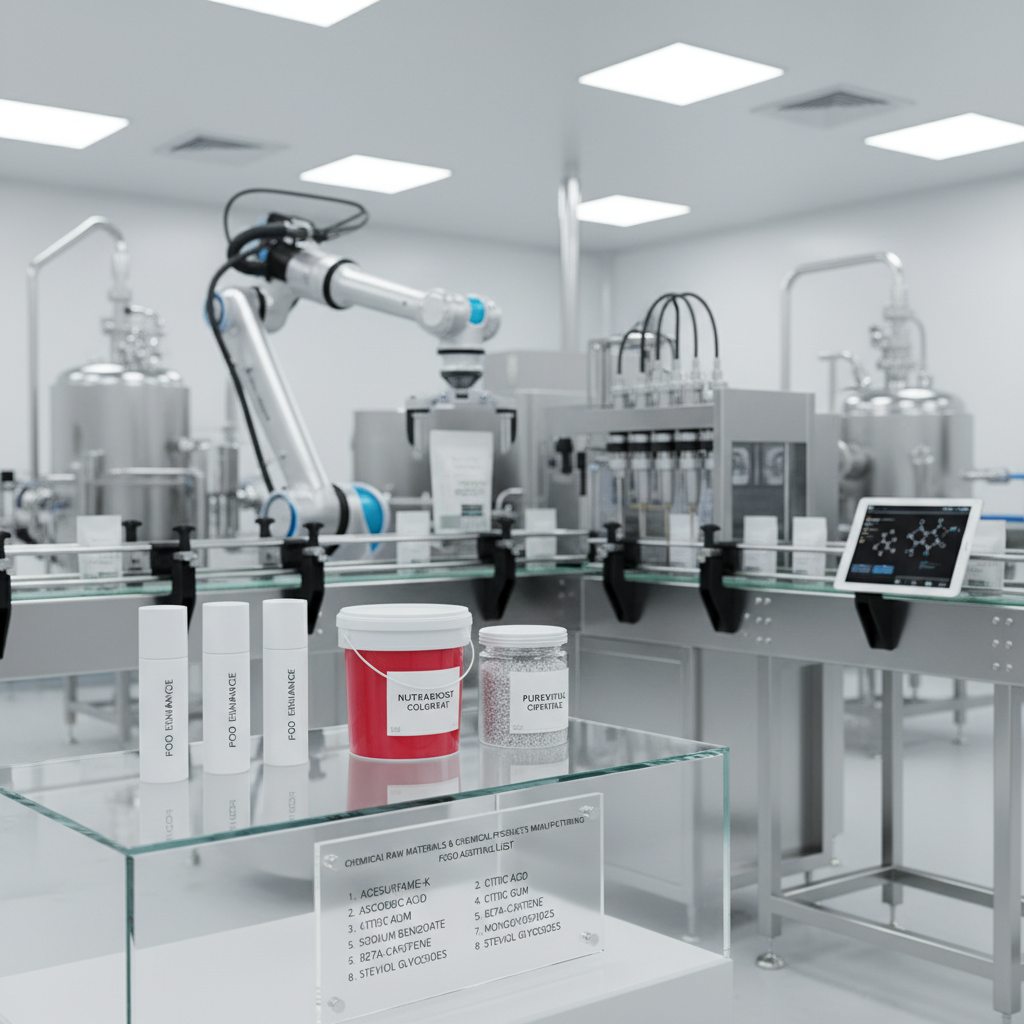
Understanding the food additives numerical list is essential for food manufacturers, regulators, and quality assurance professionals who strive for precision in ingredient labeling and safety compliance. This numerical system, primarily driven by the International Numbering System (INS) and the E-number system, provides a universal language that transcends linguistic barriers, ensuring that a preservative used in Asia is identified exactly the same way in Europe or the Americas.
In a globalized food supply chain, the ability to quickly cross-reference a food additives numerical list allows companies to maintain rigorous quality control and adapt their formulations to meet varying regional legislative requirements. By simplifying complex chemical names into streamlined codes, the industry can reduce errors in procurement and enhance the transparency of the food production process.
Ultimately, mastering the nuances of the food additives numerical list empowers brands to innovate with confidence, ensuring that their use of Feed Additives, Food Additives, or Pharmaceutical Intermediates aligns with global safety standards. This systematic approach not only protects the consumer but also optimizes the operational efficiency of the manufacturing plant.
Global Standardization of the Food Additives Numerical List
The implementation of a standardized food additives numerical list is not merely a matter of convenience but a critical safety requirement. According to standards mirrored by organizations like the Codex Alimentarius, the numbering system prevents the dangerous confusion that can arise from using common names, which may vary significantly between different languages and regions.
By adopting a numerical framework, the industry ensures that every ingredient—from emulsifiers to antioxidants—is tracked with surgical precision. This global synchronization reduces the risk of cross-contamination and ensures that pharmaceutical intermediates used in food-grade applications are handled with the appropriate safety protocols.
Decoding the Logic Behind Numerical Classification
The logic governing the food additives numerical list is designed for intuitive grouping. For instance, most systems categorize additives by their primary function: colors are typically grouped together, followed by preservatives, antioxidants, and acidity regulators. This structural hierarchy allows chemists and food scientists to quickly identify the purpose of an additive without needing to delve into deep molecular data.
Beyond basic function, the numerical list often distinguishes between naturally derived substances and synthetic compounds. This distinction is vital for "clean label" initiatives, where manufacturers must accurately report whether an additive is a biological extract or a laboratory-synthesized chemical, ensuring transparency for the end consumer.
Furthermore, the evolution of this numbering system reflects the growth of the industry. As new pharmaceutical intermediates and specialty feed additives are developed, the numerical list expands, incorporating new codes that adhere to the established logic of the existing framework, thereby maintaining a seamless database for global trade.
Essential Categories Within the Numerical System
One of the primary pillars of the food additives numerical list is the classification of preservatives. These additives are critical for extending shelf life and preventing spoilage, and their numerical codes allow for rapid verification of permissible daily intake (PDI) levels across different jurisdictions.
Another vital segment found in the food additives numerical list is the category of emulsifiers and stabilizers. These substances are essential for maintaining the texture and consistency of processed foods, bridging the gap between oil and water phases in complex food matrices.
Finally, the numerical list encompasses nutritional enhancers and acidity regulators. These additives ensure that food not only tastes consistent but also meets specific nutritional profiles required by health regulations, proving that the food additives numerical list is the backbone of modern nutritional science.
Operational Impact on Manufacturing Efficiency
Integrating a precise food additives numerical list into an ERP (Enterprise Resource Planning) system drastically reduces procurement lead times. When purchasing agents use numerical codes rather than descriptive names, the likelihood of ordering the wrong grade of a pharmaceutical intermediate or a feed additive is nearly eliminated.
This numerical precision also streamlines the audit process. During quality inspections, auditors can cross-reference the physical stock with the numerical list to ensure that all additives are approved for the specific product line, thereby minimizing the risk of costly product recalls and regulatory fines.
Efficiency Gain Analysis using Food Additives Numerical List
Global Applications and Regulatory Compliance
In the European Union, the E-number system serves as the primary food additives numerical list, ensuring that every additive has undergone a rigorous safety assessment by the EFSA. This creates a high-trust environment for consumers and a clear roadmap for manufacturers who wish to export their goods into the European market.
Similarly, in North America and Asia, the adoption of INS codes allows for a seamless transition of ingredients between feed additive production and food additive application. By adhering to a global numerical list, companies can leverage economies of scale, sourcing high-purity pharmaceutical intermediates that are versatile enough for multiple industrial uses.
Long-term Value of Precise Additive Indexing
The long-term value of maintaining a comprehensive food additives numerical list lies in the ability to implement sustainable innovation. When a company knows exactly which numerical code corresponds to a specific function, they can more easily experiment with "green" alternatives—such as replacing a synthetic preservative with a natural one—without disrupting the overall formulation.
Moreover, this indexing fosters a culture of reliability. For B2B clients in the food and pharmaceutical sectors, a supplier that provides documentation based on the standardized numerical list is viewed as more professional and trustworthy. This reduces the friction in the onboarding process for new vendors and speeds up the certification of new products.
Beyond the technicalities, the numerical list supports the dignity of the consumer by ensuring that allergy warnings and ingredient disclosures are accurate. When the food additives numerical list is used correctly, it prevents hazardous errors in labeling that could otherwise lead to severe health crises for sensitive populations.
Future Trends in Additive Digitization
The future of the food additives numerical list is moving toward full digitization and integration with Blockchain technology. We are seeing a shift where a numerical code is no longer just a label on a page, but a digital key that unlocks a complete history of the additive's origin, purity levels, and transport conditions.
Automation in the manufacturing plant is also evolving. AI-driven dosing systems are now being programmed to recognize additives via their numerical lists, allowing for real-time adjustments in formulation based on the purity of the incoming raw materials. This minimizes waste and ensures that every batch of product is identical.
As the industry moves toward "Industry 4.0," the synergy between the food additives numerical list and digital twins will allow manufacturers to simulate the effects of different additives in a virtual environment before a single gram of material is used in the physical factory.
Analysis of Digital Integration in Additive Classification
| Technology Phase |
Application Area |
Efficiency Gain |
Risk Reduction |
| Manual Lists |
Basic Labeling |
Low (3/10) |
Moderate |
| ERP Integration |
Procurement |
Medium (6/10) |
High |
| QR/RFID Coding |
Warehouse Mgmt |
High (8/10) |
Very High |
| Blockchain Trace |
Supply Chain |
Extreme (9/10) |
Absolute |
| AI Optimization |
R&D Formulation |
Extreme (10/10) |
High |
| IoT Monitoring |
Real-time Dosing |
High (8/10) |
Moderate |
FAQS
The primary purpose is to provide a universal, standardized identification system for food additives. This eliminates the confusion caused by chemical synonyms or regional naming differences, ensuring that manufacturers, regulators, and consumers can identify an ingredient accurately regardless of the language, which is critical for safety and legal compliance.
When exporting, companies must comply with the destination country's laws. A numerical list (like the INS or E-numbers) allows exporters to quickly check if an additive used in their home country is permitted in the target market and at what maximum concentration, simplifying the regulatory filing process.
While very similar, E-numbers are specifically used within the European Union. INS (International Numbering System) is the broader global standard developed by JECFA and Codex Alimentarius. In most cases, the numbers are identical, but the E-prefix is a regional designation for the European market.
Yes, many substances that serve as pharmaceutical intermediates are also approved as food additives (such as certain antioxidants or acidity regulators). The numerical list helps distinguish the grade and intended use of these chemicals to ensure food-grade purity standards are met.
The best way is to subscribe to updates from the Codex Alimentarius or the EFSA. Additionally, partnering with a professional supplier who provides updated certificates of analysis (COA) linked to current numerical codes ensures your documentation remains compliant with the latest safety standards.
A numerical code indicates that the substance is recognized and regulated, not necessarily that it is "healthy" in a nutritional sense. It signifies that the additive has been evaluated for safety at specific dosage levels, allowing consumers and manufacturers to manage intake responsibly.
Conclusion
The food additives numerical list serves as more than just a catalog of codes; it is the fundamental infrastructure that supports global food safety, trade efficiency, and industrial precision. By bridging the gap between complex chemistry and practical application, this system ensures that Feed Additives, Food Additives, and Pharmaceutical Intermediates are used with transparency and accuracy.
As we move toward an era of digital transparency and AI-driven manufacturing, the integration of these numerical systems into smarter supply chains will further enhance the reliability of the global food supply. For businesses looking to scale internationally, prioritizing the mastery of this numerical framework is not just a regulatory necessity—it is a competitive advantage. Visit our website: www.chinaseasoning.com