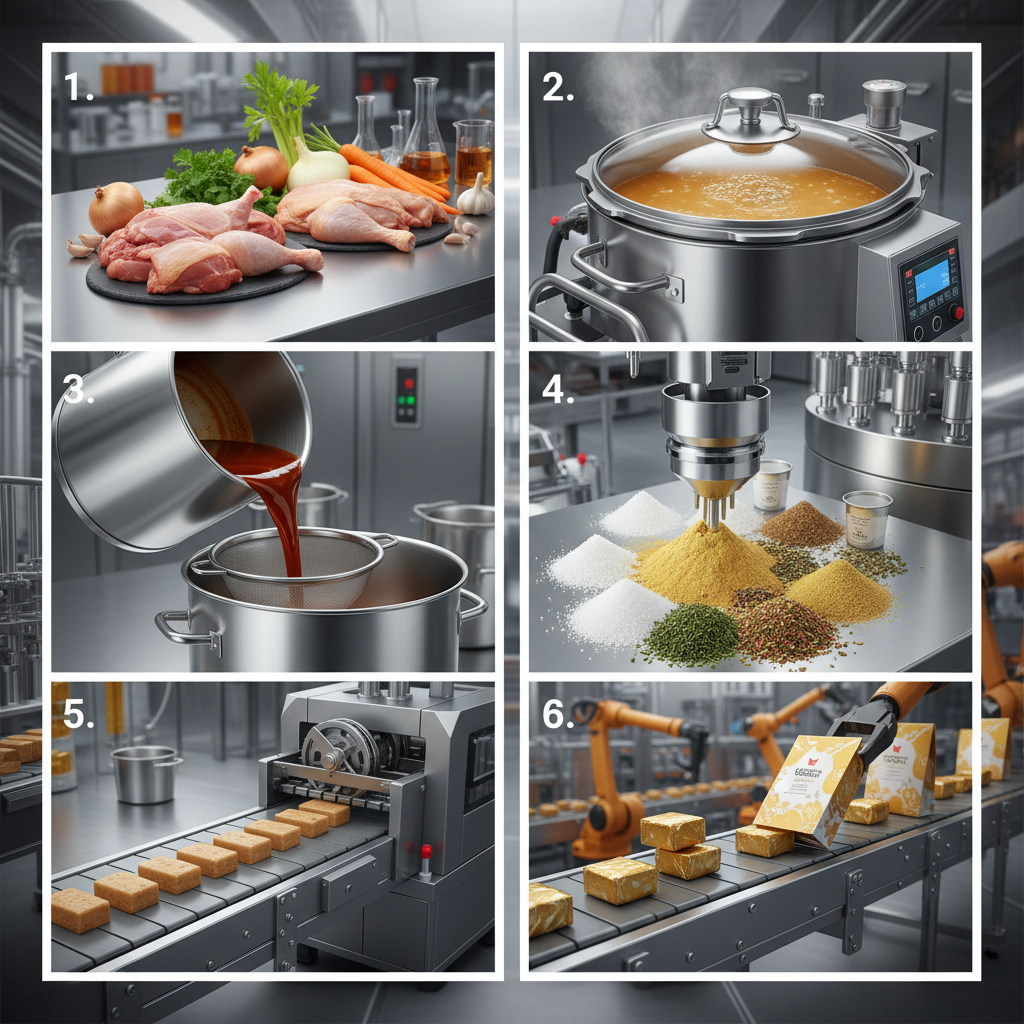
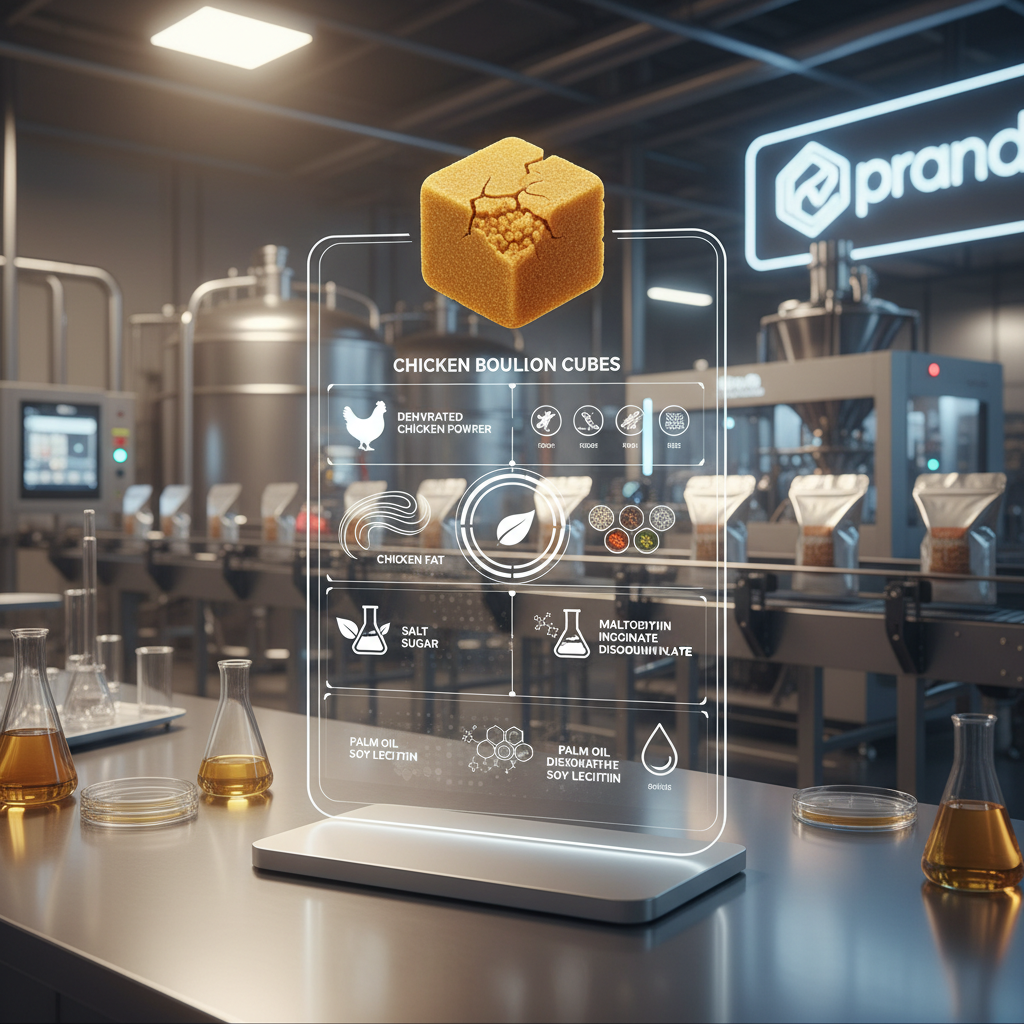
Understanding the intricate balance of chicken bouillon cubes ingredients is essential for food manufacturers and culinary professionals aiming to achieve a consistent, savory profile across global markets. These compressed seasoning blocks are more than just convenience items; they are complex formulations of flavor enhancers, salts, and stabilizers that enable the rapid creation of rich stocks without the need for hours of simmering.
Globally, the demand for standardized flavor bases has surged as urbanization and fast-paced lifestyles increase the reliance on processed food additives. By analyzing the specific chemical and organic components of these cubes, brands can optimize for clean-label trends while maintaining the "umami" depth that consumers expect from traditional chicken broth.
Whether utilized in industrial food production or home kitchens, the quality of the raw materials—from hydrolyzed vegetable proteins to specialized salt blends—determines the product's shelf stability and taste authenticity. Mastering these ingredients allows for the creation of products that meet strict international safety standards while catering to diverse regional palate preferences.
Global Significance of Chicken Bouillon Cubes Ingredients
The global food additive market has seen a steady rise in the strategic use of chicken bouillon cubes ingredients to address food security and flavor standardization. According to industry trends aligned with ISO quality standards, the ability to condense high-impact flavors into a stable, dry form reduces logistics costs and waste, making it a vital tool for food accessibility in developing regions.
However, the industry faces the challenge of balancing intense flavor delivery with the growing consumer demand for "natural" ingredients. Manufacturers are now pivoting toward advanced spray-drying technologies and natural yeast extracts to replace synthetic enhancers, ensuring that the global supply chain remains resilient and responsive to health-conscious regulations.
Defining the Composition of Seasoning Cubes
At its core, chicken bouillon cubes ingredients refer to a precise mixture of salt, flavor enhancers, fats, and binders that are compressed into a solid block. This formulation is designed to be highly soluble in water, releasing a concentrated chicken-flavored broth that mimics the result of slow-cooking organic poultry.
From a technical perspective, these ingredients are selected not only for taste but for their functional properties. For instance, the inclusion of maltodextrin or cornstarch acts as a bulking agent and stabilizer, ensuring that the cube remains solid during transport and dissolves uniformly when added to boiling water.
In the context of modern food manufacturing, these compositions are critical for humanitarian aid and emergency food kits. Because the ingredients are dehydrated and salt-stabilized, they offer an exceptional shelf life, providing essential flavor and sodium—which helps with electrolyte balance—in disaster-stricken areas where fresh food is unavailable.
Core Components for Flavor and Stability
The primary driver of taste in
chicken bouillon cubes ingredients is the synergy between salt and glutamates. Salt serves as both a preservative and a flavor carrier, while Monosodium Glutamate (MSG) or natural yeast extracts provide the savory "umami" depth that characterizes authentic chicken stock.
Fat components, such as hydrogenated vegetable oils or palm oil, are integrated into the chicken bouillon cubes ingredients to provide "mouthfeel" and carry fat-soluble aromatic compounds. This ensures that the resulting broth has a rich, velvety texture rather than tasting like a thin, salty solution.
Finally, the structural integrity of the cube depends on binders and anti-caking agents. These additives prevent the chicken bouillon cubes ingredients from clumping in humid environments, ensuring that each single-serving unit is easy to dispense and store.
Technical Performance and Cost Efficiency
For industrial food processors, the efficiency of chicken bouillon cubes ingredients is measured by their solubility rate and flavor consistency across batches. High-grade ingredients allow for a rapid dispersion in hot liquids, which is critical for large-scale commercial kitchens where time-to-table is a key performance indicator.
Furthermore, the cost-efficiency of these formulations allows brands to offer premium tastes at a low price point. By utilizing concentrated extracts rather than bulk fresh chicken, manufacturers can significantly reduce raw material procurement and cold-chain storage costs.
Performance Comparison of Bouillon Ingredient Grades
Global Applications and Industrial Use Cases
In the pharmaceutical and nutraceutical sectors, specific chicken bouillon cubes ingredients are adapted to create savory-flavored supplements or medical-grade broths for patients with appetite loss. These versions often reduce sodium content and eliminate artificial colors to comply with health regulations while maintaining palatability.
On a larger scale, the ready-to-eat (RTE) meal industry relies heavily on these ingredients to standardize the taste of dehydrated soups and instant noodles. In regions like Southeast Asia and Africa, where bouillon cubes are a staple, the ingredients are often tailored to include local spices, blending the base chicken flavor with regional profiles to capture local market shares.
Long-Term Value of High-Quality Additives
Investing in premium chicken bouillon cubes ingredients yields significant long-term benefits in terms of brand trust and consumer loyalty. When a product consistently delivers a clean, authentic chicken taste without a chemical aftertaste, it builds a perception of quality and safety that is invaluable in the competitive food additive market.
Moreover, the shift toward sustainable sourcing—such as using non-GMO cornstarch and sustainably harvested palm oil—adds emotional value for the modern consumer. This alignment with ethical production practices transforms a simple commodity into a responsible brand choice.
Reliability in the supply chain is the final pillar of value. By sourcing standardized ingredients that meet Global Food Safety Initiative (GFSI) benchmarks, manufacturers minimize the risk of recalls and ensure that their products remain compliant with the varying import laws of different countries.
Future Innovations in Bouillon Formulation
The future of chicken bouillon cubes ingredients is being shaped by biotechnology and the "clean label" movement. We are seeing a transition toward fermentation-derived flavors, where precision fermentation creates the exact amino acid profile of chicken without requiring animal derivatives, catering to the booming vegan and vegetarian markets.
Digital transformation in manufacturing is also playing a role. AI-driven formulation tools now allow chemists to simulate how different ingredient ratios will react under various temperature and humidity conditions, drastically reducing the R&D cycle for new bouillon variants.
Additionally, there is a strong push toward "functional" bouillon. Future ingredients may include fortified vitamins or minerals, turning a simple seasoning cube into a nutrient-dense base that supports public health initiatives in malnutrition-prone areas.
Analysis of Ingredient Trends and Impact on Product Quality
| Ingredient Category |
Traditional Approach |
Innovation Trend |
Quality Impact Score |
| Flavor Enhancers |
Pure MSG |
Yeast Extracts |
9/10 |
| Fat Sources |
Hydrogenated Oils |
Cold-Pressed Oils |
8/10 |
| Binding Agents |
Industrial Starch |
Modified Tapioca |
7/10 |
| Salt Profiles |
Sodium Chloride |
Potassium Blends |
8/10 |
| Colorants |
Artificial Yellow |
Turmeric/Paprika |
9/10 |
| Aroma Bases |
Synthetic Esters |
Natural Oleoresins |
9/10 |
FAQS
The most critical ingredients are the combination of salt and umami providers like MSG or yeast extract. These create the savory foundation. Additionally, chicken fat or vegetable oil equivalents are essential for providing the rich mouthfeel and aroma that consumers associate with real chicken broth.
Stability is achieved through a combination of low moisture content and the use of anti-caking agents like silicon dioxide. Binders such as maltodextrin help maintain the cube's shape, while high salt concentrations act as a natural preservative to inhibit microbial growth during storage.
Yes, by replacing animal-derived chicken extracts with hydrolyzed vegetable proteins, nutritional yeast, and specific aromatic spices. Modern biotechnology allows for the creation of "chicken-style" flavor profiles using plant-based amino acids that mimic the taste of poultry without using any animal products.
Maltodextrin serves as a filler and a stabilizer. It provides the bulk needed to form a cube and ensures that the other concentrated flavor ingredients are evenly distributed. It also improves the solubility of the cube, allowing it to dissolve smoothly in water without leaving clumps.
Generally, yes, provided they comply with the Codex Alimentarius and local regulations (such as FDA or EFSA). Manufacturers must ensure that colorants and preservatives used in the ingredients are approved in the destination country to avoid customs delays or product recalls.
Sodium is vital for preservation and taste, but excessive levels are a health concern. Many modern formulations are moving toward "reduced-sodium" versions by substituting a portion of sodium chloride with potassium chloride or increasing the concentration of flavor enhancers to maintain taste with less salt.
Conclusion
In summary, the strategic selection of chicken bouillon cubes ingredients is a delicate science that balances flavor intensity, structural stability, and cost-effectiveness. From the essential role of umami enhancers and fats to the technical necessity of binders and anti-caking agents, each component plays a vital part in delivering a consistent culinary experience across diverse global markets.
Looking forward, the industry is poised for a shift toward cleaner labels and sustainable, plant-based alternatives. Manufacturers who embrace these innovations while maintaining the rigorous quality standards of food additive production will be best positioned to lead the market. For those seeking high-quality seasoning solutions and expert guidance on food additives, we invite you to visit our website: www.chinaseasoning.com.