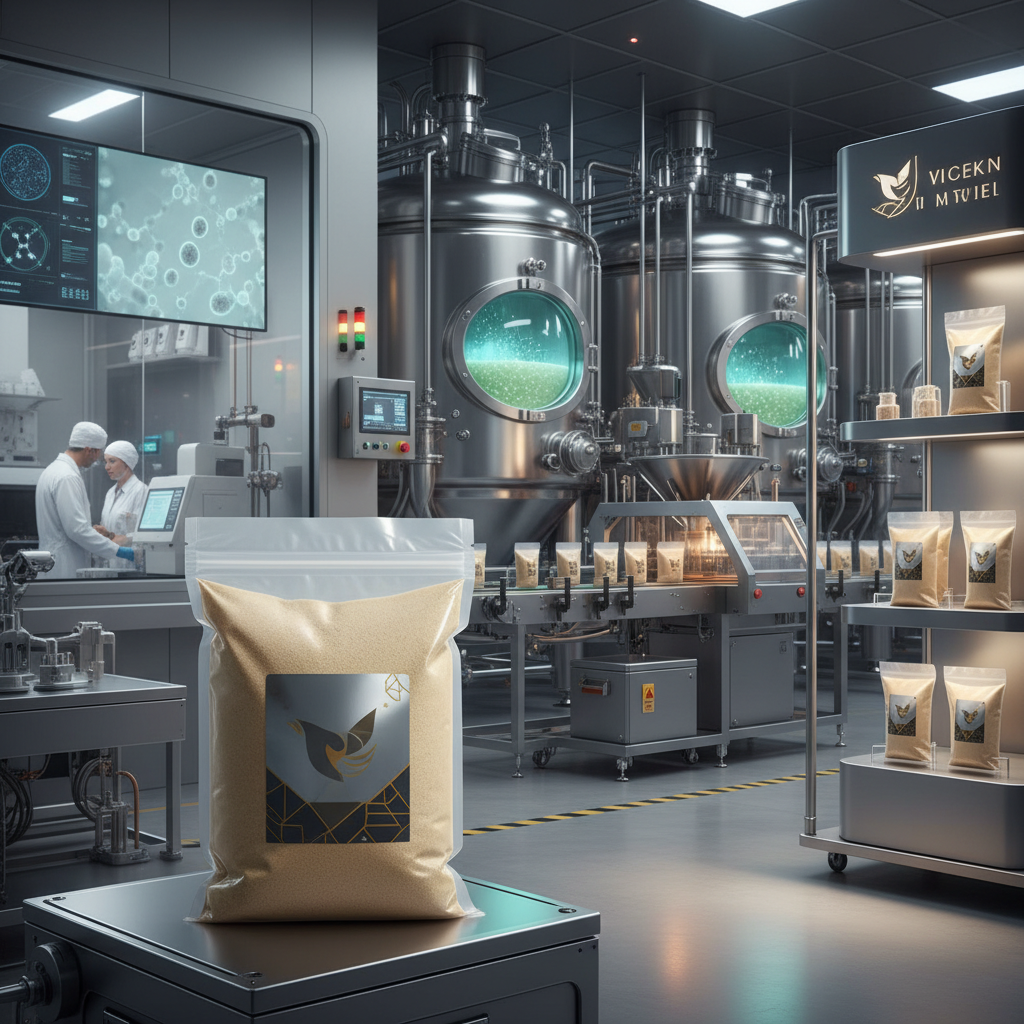
In the evolving landscape of the global food industry, vegetarian chicken powder has emerged as a cornerstone for manufacturers seeking to bridge the gap between traditional savory profiles and the rising demand for plant-based alternatives. As consumers shift toward "flexitarian" diets, the ability to replicate the complex, umami-rich taste of chicken without using animal derivatives has become a critical competitive advantage in the food additive sector.
The global surge in plant-based eating is not merely a trend but a structural shift driven by health consciousness, environmental sustainability, and ethical considerations. According to market analysis mirroring trends seen in ISO food safety standards and UN sustainability goals, the demand for clean-label, meat-free seasonings is expanding rapidly across Asia, Europe, and North America. This shift presents a significant opportunity for food additive manufacturers to innovate using fermentation and hydrolyzed vegetable proteins.
However, achieving a realistic "chicken" flavor using only plant-based sources is a complex chemical challenge. The industry must balance salt levels, MSG alternatives, and aromatic compounds to ensure that vegetarian chicken powder provides the same culinary satisfaction as its animal-based counterpart while remaining stable during industrial processing and storage.
The Global Market Relevance of Vegetarian Chicken Powder
The global appetite for vegetarian chicken powder is fueled by a convergence of dietary restrictions and a growing global movement toward sustainable food systems. In regions like Southeast Asia and India, where vegetarianism is deeply rooted in culture, these powders are essential for maintaining traditional flavor profiles in modern, fast-paced food production.
Beyond cultural preferences, the industrial shift is driven by the need to reduce the carbon footprint associated with livestock farming. By implementing high-quality plant-based seasonings, manufacturers can significantly lower their environmental impact while meeting the strict regulatory requirements of the European and North American "clean label" movements.
Defining the Composition of Plant-Based Chicken Seasoning
At its core, vegetarian chicken powder is a sophisticated blend of plant-derived ingredients designed to mimic the organoleptic properties of chicken bouillon. It typically utilizes a base of hydrolyzed vegetable proteins (HVP), yeast extracts, and a curated mix of salts, sugars, and spices to create the characteristic "chicken" aroma and taste.
Unlike traditional powders, the vegetarian version relies on the Maillard reaction—the chemical reaction between amino acids and reducing sugars—to generate the savory, browned notes typically associated with roasted meat. This process is carefully controlled during production to ensure consistency across different batches.
Modern industry standards now demand that these compositions be free from animal-derived fats and hidden gelatin, making the precise sourcing of plant lipids and stabilizers crucial for maintaining the powder's solubility and mouthfeel in liquid applications.
Core Technical Factors for Flavor Optimization
To achieve a premium profile, vegetarian chicken powder must prioritize Umami Synergy. This is achieved by combining glutamates from yeast extracts with nucleotides, which amplifies the perception of richness and prevents the flavor from tasting "flat" or overly salty.
Solubility and Dispersion are equally critical. In an industrial setting, vegetarian chicken powder must dissolve instantaneously in hot or cold water without clumping, which requires the use of high-grade anti-caking agents and precise particle size distribution.
Finally, Aromatic Stability ensures that the chicken-like scent remains potent throughout the product's shelf life. Using encapsulated flavor technology allows the volatile compounds in the powder to be released only upon heating, preserving the freshness of the final dish.
Industrial Applications and Global Use Cases
The versatility of vegetarian chicken powder allows it to be integrated into a vast array of food categories. From instant noodle seasoning packets in Asia to vegan cream soups in Europe, this additive provides a consistent, cost-effective way to introduce savory depth without the volatility of fresh meat prices.
In specialized contexts, such as the production of plant-based "meat" analogues, the powder is used as a curing agent to infuse proteins with a meaty essence. Additionally, in humanitarian food relief operations, fortified vegetarian powders are used to provide high-flavor, nutrient-dense seasonings that are easy to transport and store in remote industrial zones.
Comparative Performance of Vegetarian Chicken Powder Formulations
Strategic Advantages and Long-Term Value
From a business perspective, switching to vegetarian chicken powder offers significant cost stability. Unlike animal-based powders, which are subject to the price fluctuations of the poultry market and the risks of avian flu, plant-based additives rely on more stable agricultural commodities.
Moreover, the adoption of these powders enhances brand trust. By catering to the growing segment of eco-conscious and health-oriented consumers, companies can position themselves as innovative leaders in the "Green Food" transition, creating a long-term emotional connection with customers who value sustainability and animal welfare.
Future Trends in Meat-Free Flavor Technology
The future of vegetarian chicken powder lies in precision fermentation. By using genetically tailored microbes to produce specific proteins that mimic the exact molecular structure of chicken flavor, manufacturers will soon be able to eliminate the "aftertaste" often associated with plant proteins.
Digital transformation is also playing a role. AI-driven flavor mapping is now being used to analyze the chemical components of real chicken and automatically adjust the proportions of the vegetarian powder blend to achieve a 99% sensory match.
Furthermore, there is a strong trend toward "Clean Label 2.0," where synthetic flavor enhancers are replaced by natural extracts from mushrooms, seaweed, and fermented legumes, ensuring that the powder remains non-GMO and organic-certified.
Challenges and Innovative Solutions in Production
One of the primary challenges in producing vegetarian chicken powder is the presence of "beany" or "bitter" notes inherent in soy and pea proteins. To solve this, advanced deodorization processes and enzymatic hydrolysis are employed to break down the off-flavor peptides.
Another limitation is the lack of the same fatty mouthfeel found in animal-based stocks. Innovative producers are integrating plant-based lipids, such as coconut or sunflower-derived fats, through spray-drying technology to create a powder that delivers a rich, velvety texture upon reconstitution.
Lastly, maintaining a low sodium profile while keeping high flavor intensity is a constant struggle. The solution involves the strategic use of potassium salts and natural flavor boosters that "trick" the taste buds into perceiving more salt than is actually present.
Technical Analysis of Production Challenges and Solutions for Vegetarian Chicken Powder
|
Challenge Dimension
|
Impact on Quality
|
Innovative Solution
|
Effectiveness Score (1-10)
|
| Off-flavor Notes |
Bitter/Beany taste |
Enzymatic Hydrolysis |
9 |
| Mouthfeel |
Thin, watery texture |
Spray-dried Plant Lipids |
8 |
| Sodium Content |
High salt requirements |
Yeast Extract Synergy |
7 |
| Aroma Loss |
Short scent lifespan |
Micro-encapsulation |
10 |
| Solubility |
Clumping in cold water |
Agglomeration Processing |
9 |
| Color Consistency |
Too pale or uneven |
Natural Caramelization |
8 |
FAQS
The primary difference is the source of the umami flavor. While regular bouillon uses chicken extract and animal fats, vegetarian chicken powder utilizes hydrolyzed vegetable proteins, yeast extracts, and plant-based lipids. It is designed to replicate the taste and aroma of chicken without any animal-derived ingredients, making it suitable for vegans, vegetarians, and those with religious dietary restrictions.
Yes, it is highly suitable. Its powdered form ensures a long shelf life, easy transport, and precise dosing in large-scale manufacturing. Because it is standardized, it provides a consistent flavor profile across millions of units, which is far more reliable than using fresh plant-based broths in a factory setting.
The beany taste is typically caused by lipoxygenase enzymes in soy or pea proteins. The most effective way to overcome this is through enzymatic hydrolysis or using high-quality yeast extracts that mask the off-notes. Additionally, adding aromatic spices and using precise Maillard reaction parameters during production can neutralize these unwanted flavors.
Depending on the formulation, yes. To ensure it works in cold processes, look for vegetarian chicken powder that has undergone "agglomeration." This process creates larger, porous particles that dissolve more easily in cold liquids without leaving clumps, ensuring a smooth texture in cold sauces or dressings.
Standard powders can lose volatile aromas at very high temperatures. However, professional-grade powders often use micro-encapsulation technology. This protects the flavor molecules in a microscopic shell that only breaks open when the food is consumed or heated to a specific point, ensuring the "chicken" aroma remains intact even after retort or baking.
Importing requires compliance with the destination country's food safety laws (such as FDA in the US or EFSA in the EU). Companies should ensure the supplier provides a full Certificate of Analysis (COA), MSDS, and organic or Halal/Kosher certifications if applicable. Working with a seasoned manufacturer like those at www.chinaseasoning.com ensures all documentation meets international customs standards.
Conclusion
In summary, vegetarian chicken powder represents a sophisticated intersection of food chemistry and consumer psychology. By leveraging umami synergy, precision fermentation, and advanced encapsulation, the industry has successfully created a plant-based alternative that does not compromise on the sensory experience of traditional chicken seasoning. Its ability to provide cost stability, sustainability, and inclusivity makes it an indispensable tool for the modern food manufacturer.
Looking ahead, the continued evolution of "clean label" requirements and the integration of AI in flavor design will further refine these products. We suggest that manufacturers proactively transition toward high-performance, plant-based seasonings to future-proof their product lines against shifting dietary trends and environmental regulations. To explore premium, industrial-grade solutions for your production, visit our website: www.chinaseasoning.com.