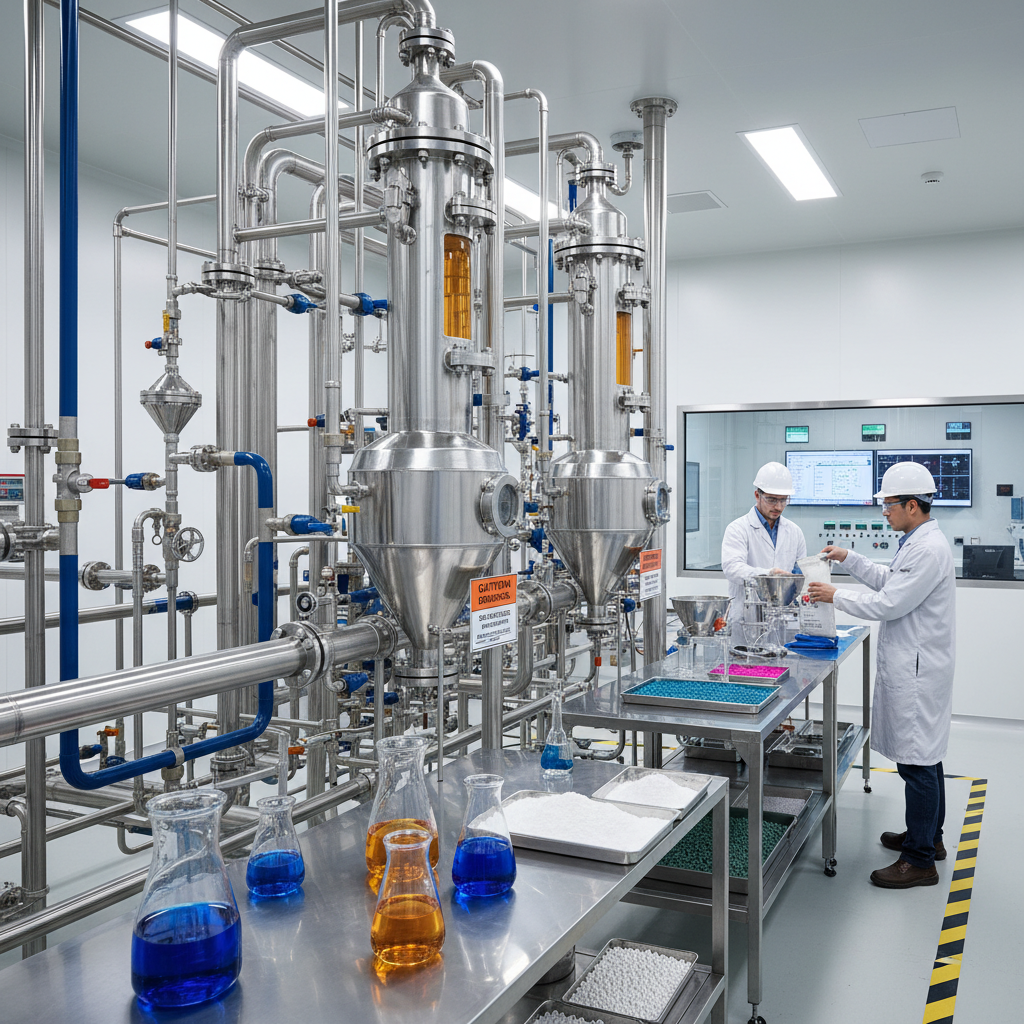
The global food industry is constantly evolving to meet the demands of a growing population that seeks both convenience and high-quality taste. At the heart of this evolution is the role of a specialized artificial flavouring agents factory, which provides the essential chemical building blocks to enhance the sensory profiles of processed foods. By utilizing advanced biotechnological processes, these facilities ensure that the "umami" experience is accessible in a wide variety of affordable consumer products.
One of the most significant breakthroughs in taste enhancement is the development of Nucleotide disodium (I+G), a new generation of nucleotide food preservatives and flavor enhancers. This complex mixture, consisting of 5′-inosinate disodium and 5′-guanylic acid disodium, allows food manufacturers to create a rich, savory depth that mimics natural meat profiles. The precision required to produce these components necessitates the infrastructure of a professional artificial flavouring agents factory to maintain strict purity and concentration standards.
Understanding the synergy between different additives, such as the combination of I+G with monosodium glutamate (MSG), can drastically reduce production costs while improving the final taste. By sourcing from a reliable artificial flavouring agents factory, companies can achieve a multiplied savory effect that satisfies global palates while maintaining the stability and solubility of their ingredients.
The Science Behind Disodium-5-Ribonucleotide (I+G)
Disodium-5-ribonucleotide, commonly known as I+G, is a white crystalline powder that serves as a powerful umami enhancer. It is composed of 5′-inosinate disodium (IMP) and 5′-guanylic acid disodium (GMP), which are produced through the phosphorylation of inosine and guanosine derived from starch glucose fermentation. Because it is odorless and tasteless on its own, it serves as an invisible catalyst that amplifies the natural flavors of food.
When produced in a professional artificial flavouring agents factory, the ratio of IMP to GMP is carefully balanced to ensure maximum effectiveness. Known as the "king of a hundred flavors," I+G is essential for creating the rich, savory taste found in modern convenience foods, making it a cornerstone of contemporary food additive manufacturing.
Key Components of a High-Quality Flavoring Facility
A premier artificial flavouring agents factory must integrate sophisticated fermentation technology with precise purification processes. The production of I+G begins with the fermentation of starch glucose, where specific microbial strains are used to synthesize the necessary nucleotides. This biological stage requires strict temperature and pH control to ensure the yield and purity of the resulting powder.
Beyond fermentation, the facility must employ advanced crystallization and drying techniques. The goal is to produce a white crystalline powder with high solubility and stability, ensuring that the additive integrates seamlessly into various food matrices without clumping or degrading. Quality control labs are vital for verifying that the final product meets the required specifications for content and purity.
Finally, the scalability of the production line determines the factory's ability to serve global markets. By optimizing the phosphorylation process, a high-capacity artificial flavouring agents factory can provide consistent volumes of I+G to manufacturers of instant noodles, soy sauces, and seasoned powders, ensuring that global food chains have a reliable supply of flavor enhancers.
Technical Specifications and Purity Standards
To maintain the reputation of a world-class artificial flavouring agents factory, rigorous technical specifications must be adhered to. For Disodium-5-ribonucleotide, the overall content should range between 97.0% and 102.0%, with IMP and GMP each contributing roughly 48.0% to 52.0%. These precise ratios are what allow the product to function as a "multiplier" for savory taste.
Purity is not just about the active ingredients but also about the absence of contaminants. A leading artificial flavouring agents factory ensures that the transmittance of a 5% solution is at least 95%, indicating high clarity and minimal impurities. Furthermore, heavy metal limits are strictly enforced, with Arsenic (As) kept under 1 mg/kg and Lead (Pb) under 10 mg/kg to comply with international food safety standards.
The pH level of the final powder, typically between 7.0 and 8.5, is critical for its stability in different food environments. By maintaining a loss on drying of no more than 2.0% (or specified limits like 25.0% max depending on the hydration state), an artificial flavouring agents factory ensures that the product remains shelf-stable and easy to dose in industrial settings.
Economic Impact of Synergistic Taste Enhancement
The primary economic advantage of using I+G is its synergistic effect when mixed with monosodium glutamate (MSG). When these two agents are combined, the savory perception is not merely added but multiplied. This allows manufacturers to achieve a more intense meat-like flavor while using significantly lower total amounts of additives. Typically, the dosage of I+G is only about 2% to 5% of the MSG amount, yet the impact on taste is profound.
For industrial food producers, this synergy translates directly into cost reduction. By enhancing the richness and sweetness of the food, I+G can make a product taste as though it contains more meat or high-quality protein than it actually does. This allows an artificial flavouring agents factory to provide a solution that helps brands reduce the use of expensive raw meat without compromising the sensory experience of the consumer.
Comparative Efficiency of Artificial Flavouring Agents Factory Solutions
Global Applications in the Food Industry
The applications of I+G are vast and span across multiple culinary categories. It is a primary ingredient in instant noodle seasoning packets, where it provides the foundational savory note that defines the product's appeal. Similarly, in the production of chicken essence, chicken powder, and fresh soy sauce, I+G is used to enhance the richness and sweetness, suppressing unpleasant salty or bitter odors that can occur during industrial processing.
Beyond Asia, the global reach of an artificial flavouring agents factory extends to the production of savory snacks, canned soups, and processed meats in Europe and North America. By utilizing the ability of I+G to enhance the original taste of meat, manufacturers can produce high-quality savory products that maintain a consistent flavor profile across different batches, regardless of the natural variation in raw ingredients.
Therapeutic Adjuvant Effects and Stability
Interestingly, the research surrounding these nucleotide compounds suggests benefits beyond simple flavor enhancement. Disodium-5-ribonucleotide has been noted for having certain adjuvant therapeutic effects. Specifically, it has been associated with supportive treatment for conditions such as migratory hepatitis, chronic hepatitis, and progressive muscle atrophy, as well as various eye diseases.
From a chemical standpoint, the stability of the product is one of its most valued traits. Unlike some natural flavor extracts that degrade quickly when exposed to heat or light, thecrystalline powder produced by an artificial flavouring agents factory remains stable under various processing conditions. This ensures that the "umami" effect is preserved from the factory floor to the consumer's plate.
Furthermore, the high solubility of I+G makes it an ideal choice for liquid seasonings and spray-dried powders. Whether it is integrated into a high-pressure retort process or a cold-mix application, the consistency of the product allows food scientists to formulate recipes with extreme precision, ensuring every bite is perfectly seasoned.
Future Trends in Artificial Flavouring Production
The future of the artificial flavouring agents factory is moving toward "green chemistry" and sustainable fermentation. There is a growing emphasis on using non-GMO starch sources and reducing the water footprint of the fermentation process. Digital transformation, including AI-driven bioreactors, is allowing factories to optimize the yield of IMP and GMP in real-time, further reducing costs and waste.
Another emerging trend is the development of customized nucleotide blends. Instead of a standard 50/50 mix of IMP and GMP, factories are beginning to offer tailored ratios based on the specific protein source of the client's product—whether it be plant-based meat alternatives or traditional seafood. This precision allows for a more "natural" taste profile that aligns with the clean-label movement.
Ultimately, the goal is to merge high-efficiency industrial production with the nuances of natural taste. As consumers demand more transparency, the artificial flavouring agents factory will play a key role in educating the market on how these safe, fermentation-derived nucleotides improve food security by making nutrient-dense, tasty food more affordable globally.
Core Technical Analysis of I+G Production Standards
|
Parameter Dimension
|
Standard Specification
|
Impact on Final Product
|
Quality Grade (1-10)
|
| Total Content |
97.0% - 102.0% |
Determines potency and dosage |
10 |
| IMP/GMP Ratio |
~50% Each |
Optimizes umami synergy |
9 |
| Solution Transmittance |
Min 95% |
Ensures clarity in liquids |
8 |
| pH Value |
7.0 - 8.5 |
Ensures chemical stability |
9 |
| Arsenic (As) |
Max 1 mg/kg |
Food safety compliance |
10 |
| Lead (Pb) |
Max 10 mg/kg |
Toxicity prevention |
10 |
FAQS
While MSG provides a basic savory taste, I+G (Disodium-5-ribonucleotide) acts as a flavor multiplier. When used alone, I+G has a milder effect, but when combined with MSG, it creates a synergistic reaction that significantly intensifies the "umami" or meat-like flavor, allowing manufacturers to use less total additive for a stronger taste.
No, in a modern artificial flavouring agents factory, I+G is produced via the fermentation of starch glucose. This microbial process makes it suitable for a wide range of dietary requirements, as it is derived from plant-based sugars and processed through phosphorylation of inosine and guanosine.
I+G enhances the richness and sweetness of food, making the meat taste more delicious. This means producers can reduce the actual amount of meat used in a recipe while maintaining the same perceived flavor profile, thereby lowering raw material costs without sacrificing quality.
Yes, one of the key benefits of this nucleotide agent is its ability to suppress unpleasant odors and tastes, such as those that are overly salty, bitter, or too acidic. This makes it an invaluable tool for balancing complex flavor profiles in processed seasonings.
Typically, I+G is used as a supplement to MSG. The recommended dosage is generally between 2% and 5% of the total amount of MSG used. Because of its high potency, a small amount is sufficient to multiply the savory effect across the entire product.
Yes, Disodium-5-ribonucleotide is known for its excellent solubility and stability. It can withstand the heat associated with most industrial food processing, such as spray-drying or canning, ensuring the flavor remains consistent throughout the product's shelf life.
Conclusion
The role of a specialized artificial flavouring agents factory in the modern food supply chain cannot be overstated. Through the production of high-purity Disodium-5-ribonucleotide (I+G), these facilities enable the creation of savory, appealing, and cost-effective food products that meet the taste expectations of millions. By leveraging the synergy between nucleotides and glutamates, the industry can enhance food richness, mask off-flavors, and optimize production costs, all while adhering to strict safety and purity standards.
Looking forward, the integration of sustainable fermentation and personalized flavor blending will further refine the capabilities of flavor enhancement. As we move toward a future of alternative proteins and clean-label ingredients, the precision provided by these chemical building blocks will be essential in making healthy, sustainable food taste just as satisfying as traditional options. For high-quality flavor solutions, visit our website: www.standard-seasoning.com.