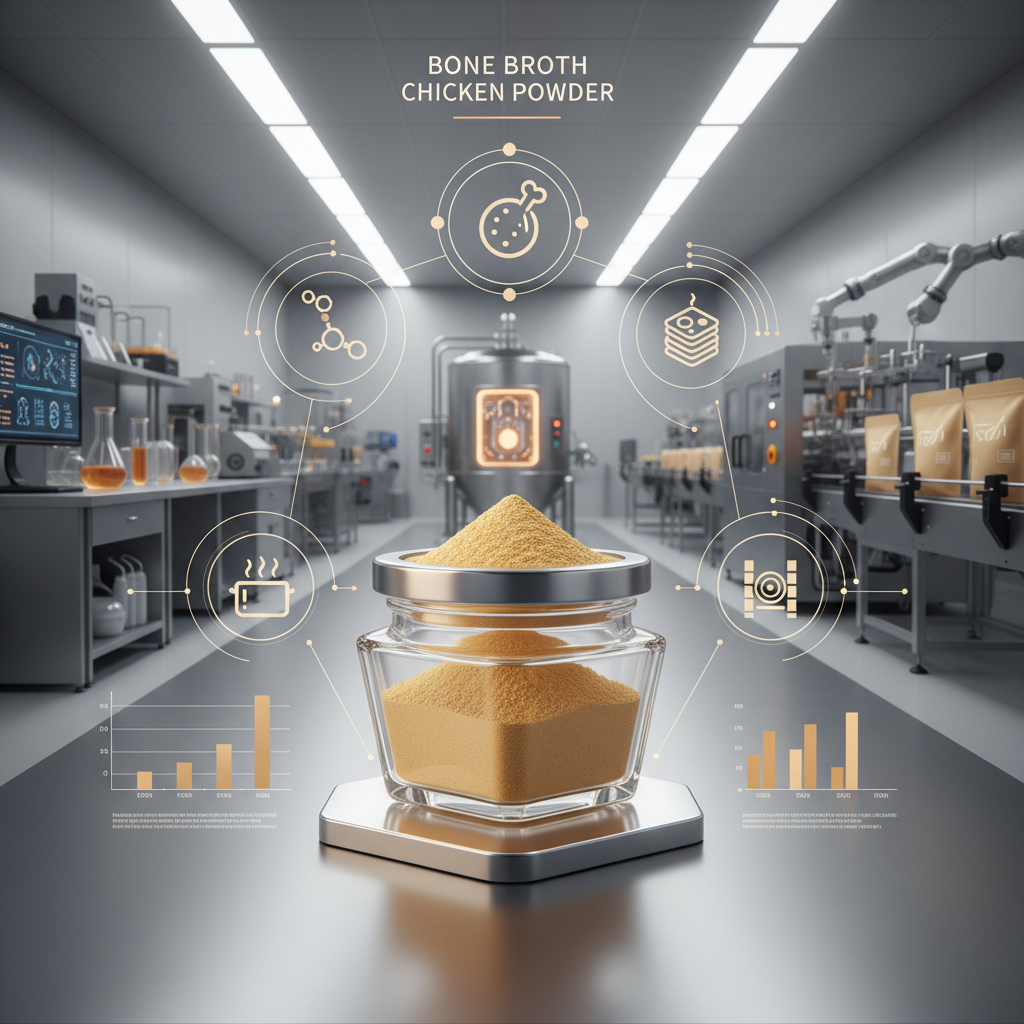
In the evolving landscape of the global food additive industry, bone broth chicken powder has emerged as a pivotal ingredient for manufacturers seeking to balance convenience with nutritional depth. As consumers pivot toward "clean label" products and functional foods, the demand for high-quality, concentrated protein and collagen sources has surged, making this powder an essential tool for flavor enhancement and nutritional fortification.
The versatility of bone broth chicken powder extends across various sectors, from industrial food production to specialized pharmaceutical intermediates and animal feed additives. By transforming traditional slow-simmered bone broths into a stable, spray-dried powder, the industry has solved the logistical nightmare of transporting liquid bases while preserving the essential amino acids and rich umami profiles that define authentic chicken broth.
Understanding the technical specifications and application methods of this ingredient is crucial for brands aiming to maintain consistency in large-scale production. Whether used to enrich a ready-to-eat soup or as a nutrient-dense additive in pharmaceutical-grade supplements, this powder represents the intersection of traditional culinary wisdom and modern food engineering, ensuring that global food security and quality standards are met.
Global Relevance and Industry Context of Bone Broth Chicken Powder
The global market for concentrated flavor enhancers is witnessing a significant shift toward nutrient-dense alternatives. With the rise of the "wellness economy," bone broth chicken powder has transitioned from a simple seasoning to a functional ingredient. Statistics from food industry analysts indicate that the demand for collagen-rich additives is growing at a CAGR of over 5%, driven largely by the aging population in North America and Europe seeking joint health support through dietary intake.
However, the industry faces a critical challenge: maintaining the biological activity of peptides and proteins during the dehydration process. Many conventional powders rely on artificial fillers and MSG, which clash with the modern consumer's desire for transparency. This has created a gap in the market for a pure, high-efficacy bone broth chicken powder that delivers both the sensory experience of a slow-cooked broth and the verified nutritional profile of real bone marrow extraction.
Definition and Technical Meaning of Bone Broth Chicken Powder
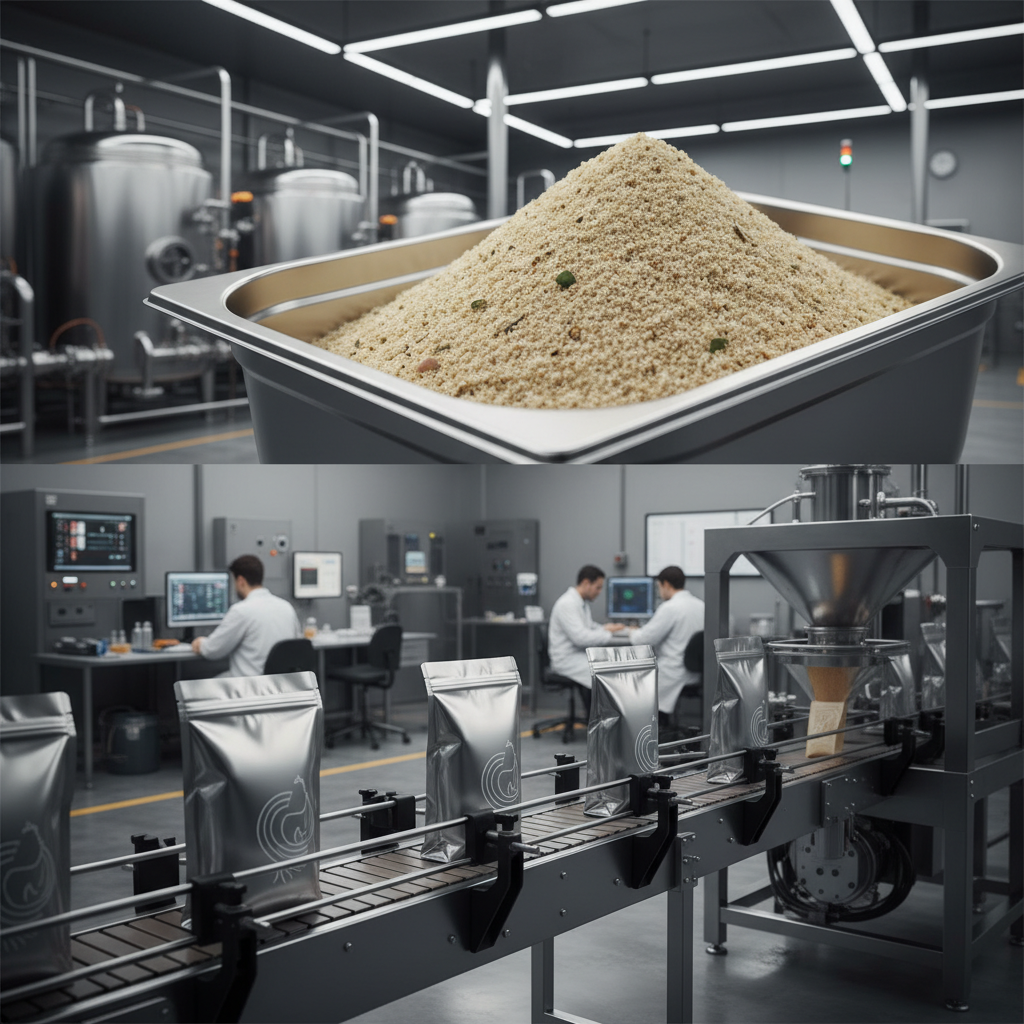
At its core, bone broth chicken powder is a dehydrated concentrate derived from the prolonged simmering of chicken bones and connective tissues. Unlike standard chicken bouillon, which often emphasizes salt and artificial flavorings, bone broth powder focuses on the extraction of gelatin, glucosamine, and essential amino acids, which are then captured through advanced spray-drying or freeze-drying technologies.
In a modern industrial context, this product serves as more than just a flavor base; it is a delivery system for bioavailable proteins. By reducing the water content to less than 5%, manufacturers can create a product with an extended shelf life that remains chemically stable without the need for aggressive preservatives. This makes it an ideal candidate for integration into complex food matrices.
From a humanitarian and nutritional perspective, the powder form allows for the rapid fortification of food aid in disaster-stricken areas. The ability to provide a high-protein, calorie-dense, and easily soluble additive means that malnourished populations can receive essential nutrients in a form that is easy to transport and prepare, bridging the gap between emergency relief and long-term nutritional recovery.
Core Components and Quality Factors
The efficacy of bone broth chicken powder is primarily determined by its protein concentration and the integrity of its collagen peptides. High-quality production requires precise temperature control during the extraction phase to prevent the denaturing of proteins, ensuring that the final powder retains its functional properties, such as viscosity and mouthfeel.
Scalability and consistency are the two most critical operational factors. To ensure that every batch of bone broth chicken powder tastes the same and provides the same nutritional value, manufacturers employ standardized extraction cycles and rigorous HPLC (High-Performance Liquid Chromatography) testing to monitor amino acid profiles.
Furthermore, solubility is a key performance indicator. A superior bone broth chicken powder must dissolve rapidly in hot or lukewarm water without clumping. This is achieved through optimized particle size distribution and the use of natural anti-caking agents, ensuring a seamless integration into commercial beverages, soups, and pharmaceutical formulas.
Global Applications and Real-World Use Cases
The application of bone broth chicken powder spans across diverse industries. In the commercial food sector, it is used by instant meal manufacturers to provide a "homemade" taste in a fraction of the time. In the pharmaceutical realm, it is processed into intermediates for health supplements targeting gut health and skin elasticity, leveraging the natural glycine and proline found in chicken bones.
In specific regional contexts, such as remote industrial zones or high-altitude mining camps, this powder provides a critical nutritional boost. Because it is lightweight and nutrient-dense, it allows for the preparation of restorative meals in environments where fresh ingredients are unavailable, ensuring that laborers maintain their energy levels and immune health.
Comparative Performance of Bone Broth Chicken Powder Processing Methods
Tangible Advantages and Long-Term Value
The transition to using bone broth chicken powder offers significant cost efficiencies for food manufacturers. By eliminating the need for large-scale simmering vats and the energy-intensive process of maintaining liquid heat for 24+ hours, companies can reduce their carbon footprint and operational overhead while increasing their output.
Beyond the financial logic, there is a profound emotional value in the reliability and safety of a standardized powder. For the end-consumer, it represents a trust in purity; for the brand, it provides the security of a product that will not spoil during transit. This synergy of innovation and traditional nutrition creates a long-term value proposition centered on sustainability and health-conscious engineering.
Future Trends and Technical Innovations
The future of bone broth chicken powder is closely tied to the digital transformation of the supply chain. We are seeing the implementation of blockchain technology to track the origin of the chicken bones, ensuring that the raw materials are ethically sourced and antibiotic-free. This transparency is becoming a non-negotiable requirement for high-end pharmaceutical and food markets.
Technologically, the industry is moving toward "nano-encapsulation." This process involves wrapping the active peptides of the bone broth chicken powder in a microscopic protective layer, which prevents flavor degradation and allows for the targeted release of nutrients in the digestive system. This leap in biotechnology will transform the powder from a simple ingredient into a precision nutrition tool.
Additionally, the integration of green energy in the drying process—such as solar-thermal evaporation—is reducing the environmental impact of production. As the industry aligns with global ESG (Environmental, Social, and Governance) goals, the production of bone broth powder is becoming a model for how "waste" (chicken bones) can be upcycled into high-value nutritional assets.
Common Challenges and Expert Solutions
One of the most persistent challenges in producing bone broth chicken powder is the occurrence of oxidation, which can lead to off-flavors and a decrease in nutritional potency. To combat this, experts recommend the use of modified atmosphere packaging (MAP) and the addition of natural antioxidants, such as rosemary extract, which preserve the sensory profile without adding synthetic chemicals.
Another hurdle is the variability of raw materials. Chicken bones vary in collagen content depending on the age of the bird and the breed. The solution lies in a "blended standardization" approach, where batches are analyzed and combined to achieve a consistent protein percentage, ensuring that the final industrial output meets strict ISO and FDA specifications.
Finally, the cost of high-end freeze-drying often prohibits widespread adoption. To solve this, many manufacturers are adopting a hybrid drying system—utilizing vacuum evaporation for the initial concentration and spray drying for the final powdering. This maintains the majority of the nutritional value of the bone broth chicken powder while keeping the price point competitive for the mass market.
Analysis of Production Metrics and Quality Standards for Bone Broth Chicken Powder
|
Production Metric
|
Standard Range
|
Impact on Quality
|
Optimized Solution
|
| Protein Content |
30% - 60% |
Nutritional Value |
Enzymatic Hydrolysis |
| Moisture Level |
< 5% |
Shelf Stability |
Double-Stage Drying |
| Solubility Rate |
95% - 99% |
User Experience |
Micronized Milling |
| Collagen Bioavailability |
High |
Health Efficacy |
Low-Temp Extraction |
| Color Index |
Creamy Yellow |
Visual Appeal |
Controlled Oxidation |
| Sodium Level |
Customizable |
Dietary Compliance |
Potassium Substitutes |
FAQS
Standard bouillon is primarily a seasoning focused on salt and artificial flavor enhancers (like MSG) to mimic chicken taste. In contrast, bone broth chicken powder is a nutritional concentrate derived from actual bone marrow and connective tissue, focusing on protein, collagen, and amino acids. While bouillon provides taste, bone broth powder provides both taste and functional health benefits, making it a superior choice for health-conscious food manufacturing.
Yes, when produced under GMP (Good Manufacturing Practice) conditions, it can serve as a primary ingredient for pharmaceutical intermediates. Its high concentration of bioavailable collagen peptides makes it ideal for supplements targeting joint repair, skin health, and gut lining recovery. To be pharmaceutical-grade, the powder must undergo rigorous filtration and purification to remove impurities and ensure a standardized nutrient profile.
Liquid bone broth typically has a short shelf life of a few days when refrigerated and a few months when frozen. Bone broth chicken powder, however, can remain stable for 12 to 24 months if stored in a cool, dry place in airtight packaging. This stability is due to the removal of water (the primary medium for microbial growth), making it far more efficient for global logistics and long-term storage.
Absolutely. Because of its rich protein and mineral content, it is an excellent additive for premium animal feed. It supports growth, skeletal development, and immune function in livestock and pets. Its powder form allows for precise dosing and easy mixing into pellets or mash, ensuring that animals receive consistent nutritional support without the waste associated with liquid additives.
While most bone broth powders dissolve best in hot liquids, solubility in cold or lukewarm applications can be improved by choosing a micronized powder with a smaller particle size. Additionally, using a high-shear mixer during the integration process can prevent clumping. For specific cold-use formulations, we recommend consulting with a technician to adjust the peptide chain length during the hydrolysis phase.
The primary ingredient is chicken, which is generally not a common allergen. However, manufacturers must be cautious about cross-contamination with soy, gluten, or dairy in shared facilities. We ensure that our bone broth chicken powder is produced in controlled environments with strict allergen management protocols to meet international safety standards and provide a clean-label product for sensitive consumers.
Conclusion
In summary, bone broth chicken powder represents a sophisticated evolution in food additive technology, blending traditional nutritional values with industrial efficiency. By addressing the critical needs for protein fortification, flavor consistency, and logistical stability, it has become an indispensable asset for the food, pharmaceutical, and feed industries worldwide. From its role in supporting global health to its ability to reduce production waste, the value of this ingredient extends far beyond the kitchen.
As we look toward a future defined by sustainable nutrition and precision health, the role of concentrated, clean-label additives will only grow. We suggest that manufacturers prioritize the transition to high-bioavailability powders to meet the rising consumer demand for functional transparency. By embracing these innovations, brands can secure a competitive edge while contributing to a healthier global food ecosystem. Visit our website for more information: www.chinaseasoning.com