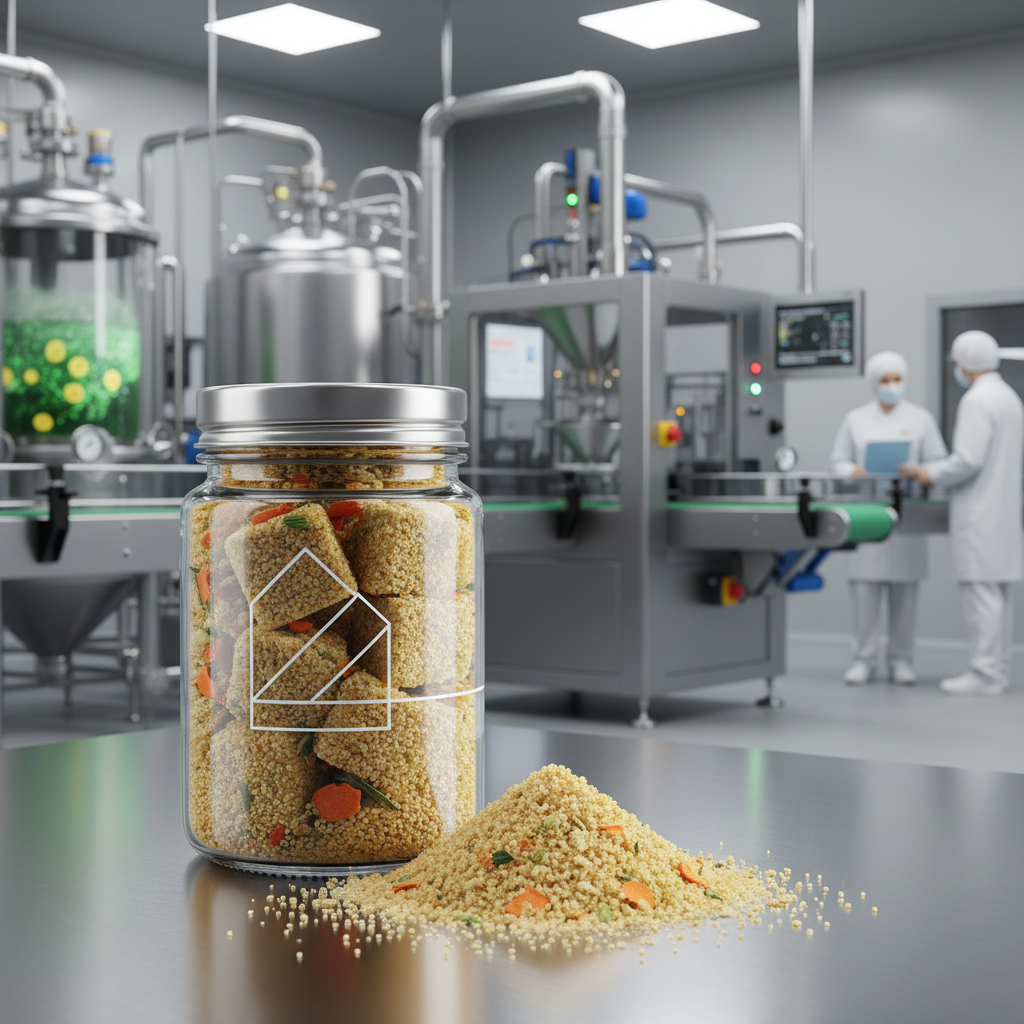
The global food industry is currently witnessing a significant shift toward high-performance, clean-label ingredients that enhance nutritional value without compromising safety. Among the various options available to food scientists, the search for reliable flavor enhancers and protein sources often leads to the discussion of sodium glutamate powder and its functional alternatives in modern food systems.
Maintaining consistency in batch production while adhering to international regulatory standards is a primary challenge for manufacturers today. As consumers demand more transparency and "natural" labeling, the industry is evolving to integrate additives that provide the same sensory satisfaction as traditional options but with improved nutritional profiles and stricter compliance.
Our Yeast Protein Powder 80% emerges as a sophisticated solution for those seeking the functional benefits associated with sodium glutamate powder, combining high fermentation power and strict Codex compliance to ensure global marketability and superior food quality.
Global Relevance of Sodium Glutamate Powder
In the global food additive market, the role of flavor enhancers like sodium glutamate powder has been pivotal in shaping the taste profiles of processed foods across Asia, Europe, and the Americas. According to industry benchmarks and ISO quality standards, the demand for cost-effective flavor modulation continues to drive the adoption of these ingredients in large-scale food manufacturing.
However, the industry now faces the dual challenge of maintaining these sensory characteristics while meeting the strict guidelines of the Codex General Standard for Food Additives. This has led to the development of advanced functional proteins, such as our Yeast Protein Powder 80%, which provides a natural, protein-rich alternative to traditional chemical enhancers.
Defining Sodium Glutamate Powder in Modern Industry
At its core, sodium glutamate powder is a seasoning agent used to impart the "umami" or savory taste to a wide variety of food products. In the context of modern industry, it represents the intersection of chemistry and culinary art, allowing manufacturers to create consistent taste experiences regardless of the raw material variability.
Beyond simple taste, the industry now views these powders through the lens of humanitarian and nutritional needs. In regions where food security is a concern, efficient flavor enhancers can make nutrient-dense but bland fortified foods more palatable, thereby increasing the adoption of essential micronutrients in vulnerable populations.
Modern interpretations of these additives now prioritize "Clean-Label" solutions. By sourcing from approved food additives manufacturers, brands are transitioning toward ingredients that offer the same functional performance as sodium glutamate powder but are derived from natural fermentation processes, satisfying the consumer's desire for transparency.
Core Components of High-Performance Additives
When analyzing the effectiveness of an additive like sodium glutamate powder, the most critical factor is its solubility and dispersion. High-quality powders must integrate seamlessly into liquid or dry food systems without leaving residues or creating clumps, ensuring a uniform taste profile across the entire product batch.
Another core component is regulatory compliance. Whether using traditional sodium glutamate powder or a yeast-based protein alternative, adherence to the Codex standard is non-negotiable. This ensures that the product is safe for global export and meets the heavy metal limits, such as As ≤ 0.5 ppm and Pb ≤ 1.0 ppm.
Finally, biological activity and purity define the premium nature of these ingredients. For instance, our Yeast Protein Powder 80% maintains a viable cell rate of ≥75% and a fermentation power α of ≥450 ml/h, providing a level of functional performance that surpasses standard sodium glutamate powder by adding nutritional depth to the food matrix.
Global Applications and Use Cases
The application of savory enhancers like sodium glutamate powder spans multiple industrial sectors, from instant noodle production in Southeast Asia to gourmet snack manufacturing in North America. In these contexts, the powder acts as a catalyst for taste, reducing the need for excessive salt while maintaining high palatability.
In more specialized environments, such as the production of pharmaceutical intermediates or fortified health supplements, the focus shifts toward high-purity proteins. Our 80% Yeast Protein Powder is used in these remote industrial zones to provide a clean-label, natural flavor base that aligns with the functional requirements of sodium glutamate powder without the synthetic connotations.
Comparative Performance of Flavor and Protein Additives
Long-Term Value and Sustainability
The transition from synthetic sodium glutamate powder to fermentation-derived proteins offers significant long-term value in terms of brand equity and consumer trust. By utilizing natural food additives ingredients and flavourings, companies can move away from the controversial reputation of some synthetic enhancers and embrace a "health-first" corporate identity.
Sustainability is also enhanced through the use of yeast-based proteins, which typically have a lower environmental footprint compared to some chemical synthesis routes. This shift not only ensures reliability in the supply chain but also promotes social impact by providing safer, more nutritious food options for a growing global population.
Future Trends and Technological Innovations
The future of flavor enhancement is moving toward precision fermentation and biotechnology. We are seeing a trend where the traditional utility of sodium glutamate powder is being replicated through bio-engineered yeast strains that can produce specific amino acid profiles, offering a more nuanced and complex umami experience.
Digital transformation in manufacturing is also playing a role, with AI-driven formulation tools allowing food scientists to calculate the exact ratio of yeast protein to other additives to mimic the sensory properties of sodium glutamate powder while optimizing for cost and nutritional density.
Furthermore, the integration of green energy in the production of food additives is becoming a standard. Modern factories are utilizing carbon-capture technology and renewable energy to produce fermented proteins, ensuring that the additives of tomorrow are as sustainable as they are effective.
Challenges and Expert Solutions
One of the primary challenges in replacing sodium glutamate powder is the "taste gap"—the difficulty in achieving the same intense savory hit with natural alternatives. To solve this, experts recommend a synergistic approach, blending high-concentration yeast proteins with other natural nucleotides to create a multi-layered flavor profile.
Another limitation is the stability of biological additives. Unlike the highly stable nature of sodium glutamate powder, yeast proteins can be sensitive to temperature and moisture. This is addressed through advanced spray-drying techniques and strict moisture control (keeping moisture ≤ 5.5g/100g) to ensure a long shelf life.
Lastly, the complexity of global regulatory landscapes can be a barrier. The solution lies in partnering with a certified approved food additives supplier who provides full documentation and ensures that every batch meets the Codex General Standard for Food Additives, eliminating the risk of customs rejection.
Technical Analysis of Sodium Glutamate Powder Alternatives
| Additive Type |
Flavor Intensity |
Nutritional Value |
Regulatory Ease |
| Standard SGP |
High (10/10) |
Low (2/10) |
Moderate |
| Yeast Protein 80% |
Medium-High (8/10) |
Very High (10/10) |
Excellent (Codex) |
| Hydrolyzed Veg Protein |
Medium (6/10) |
Medium (5/10) |
High |
| Mushroom Extract |
Medium (7/10) |
High (7/10) |
Very High |
| Fermented Soy |
High (9/10) |
Medium (6/10) |
Moderate (Allergens) |
| Natural Nucleotides |
Very High (10/10) |
Low (3/10) |
High |
FAQS
Yes, yeast protein powder, especially at 80% concentration, provides a natural source of amino acids that replicate the savory umami profile of sodium glutamate powder. Unlike synthetic alternatives, it also adds significant nutritional value (protein) and is highly favored for clean-label product formulations.
Codex compliance ensures that additives meet international safety and quality standards. When choosing between sodium glutamate powder or natural proteins, selecting a Codex-approved supplier guarantees that the product is safe for global distribution and free from harmful contaminants like heavy metals.
Yes, high-purity protein powders and specific salt-based enhancers are often used in pharmaceutical contexts as stabilizers or nutrient bases. The key is to ensure the product has a low total bacterial count (≤1000 CFU/g) and is negative for pathogenic bacteria.
While sodium glutamate powder is exceptionally stable, natural yeast proteins are also highly stable if the moisture content is kept below 5.5%. Proper sealing and storage in cool, dry conditions ensure that the fermentation power remains high over time.
The best way to ensure purity is to request a Certificate of Analysis (COA) that lists specific parameters: heavy metals (As, Pb), bacterial counts, and active ingredient percentage (e.g., 80% protein). Sourcing from an approved manufacturer is essential.
Initially, natural alternatives may have a different price point than mass-produced sodium glutamate powder. However, the long-term value is found in the ability to charge a premium for "natural" or "clean-label" products, which generally increases overall profit margins.
Conclusion
The evolution of the food additive industry highlights a clear transition toward ingredients that balance sensory excellence with nutritional integrity. While sodium glutamate powder has long served as the benchmark for savory flavor, the rise of high-performance, Codex-compliant yeast proteins offers a path toward cleaner, safer, and more sustainable food systems.
For manufacturers looking to future-proof their products, the integration of natural, high-protein additives is no longer just an option—it is a strategic necessity. By prioritizing purity, regulatory compliance, and functional performance, brands can meet the demands of the modern consumer while maintaining the taste profiles that drive global success. Visit our website: www.standard-seasoning.com