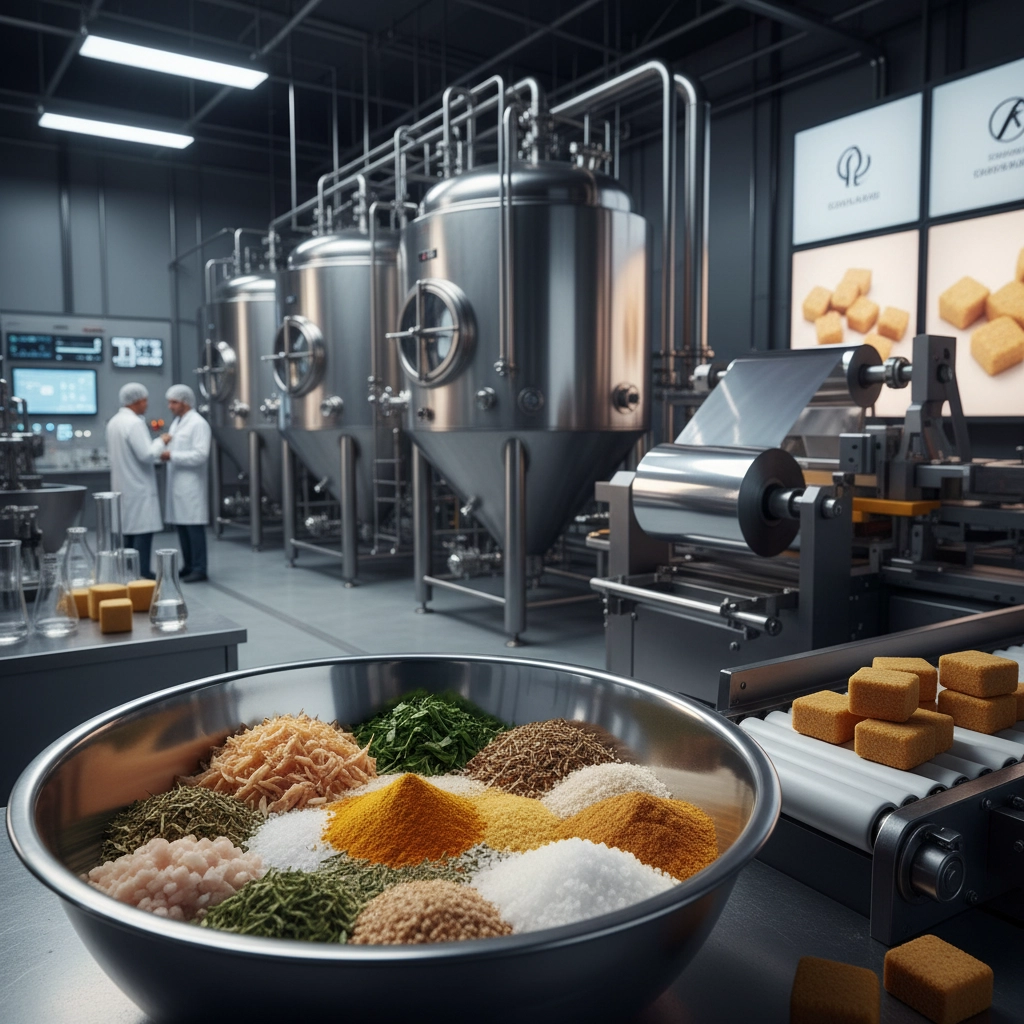
Understanding the composition of chicken stock cube ingredients is essential for food manufacturers and culinary professionals aiming to balance flavor intensity with nutritional value. These concentrated bouillon blocks represent a triumph of food engineering, condensing the complex profile of a slow-simmered poultry broth into a shelf-stable, convenient format that serves millions of households globally.
From a commercial perspective, the selection of specific chicken stock cube ingredients determines not only the taste profile—salty, savory, or aromatic—but also the product's stability and cost-effectiveness. In an era where consumers are increasingly scrutinizing labels for clean-label alternatives, the evolution of these ingredients reflects a broader industry shift toward transparency and health-conscious additive manufacturing.
Whether utilized in large-scale industrial food production or small-scale home cooking, the synergy between salt, flavor enhancers, and dehydrated proteins is what creates the "umami" experience. Mastering the ratio of these components allows producers to maintain consistency across batches, ensuring that every cube delivers a standardized, high-quality flavor profile regardless of the geographic market.
Global Significance of Chicken Stock Cube Ingredients
The global demand for concentrated seasoning is driven by the need for food security and convenience. In many developing regions, chicken stock cube ingredients provide a critical, affordable method of enhancing the nutritional palatability of staple grains, effectively bridging the gap in protein access through flavor simulation.
According to industry trends aligning with ISO food safety standards, the standardization of these ingredients allows for rapid deployment in humanitarian aid and disaster relief. Because they are dehydrated and highly concentrated, they bypass the logistical nightmares of transporting liquid stocks, ensuring that nutrient-dense flavor can reach remote areas without the risk of spoilage.
Defining the Core Composition of Bouillon Cubes
At its most basic level, the composition of chicken stock cube ingredients consists of a matrix of salt, flavor enhancers (such as MSG or yeast extracts), dehydrated chicken fat or powder, and a binding agent. The salt acts not only as a flavor profile but as a primary preservative, reducing water activity to inhibit microbial growth.
Modern industry has evolved these components to include complex mixtures of hydrolyzed vegetable proteins (HVP) and maltodextrin, which help in achieving a uniform texture and rapid solubility. These additions ensure that when the cube hits boiling water, it dissolves completely without leaving clumps, providing a smooth, consistent broth.
From a humanitarian perspective, the ability to synthesize these flavors using plant-based mimics has allowed for the creation of halal and kosher-certified products. This adaptability ensures that the essential "chicken" taste can be delivered to diverse populations regardless of dietary restrictions or religious requirements.
Key Factors for Flavor Stability and Quality
One of the most critical aspects of chicken stock cube ingredients is the balance of salinity and umami. Over-reliance on salt can lead to health concerns, while too little salt compromises the shelf life and the "punch" of the flavor, making the product less competitive in the global market.
Scalability in production relies heavily on the quality of the binding agents. The use of refined fats and starches ensures that the chicken stock cube ingredients maintain their structural integrity during shipping and handling, preventing the cubes from crumbling into powder before they reach the consumer.
Cost efficiency is achieved through the strategic use of flavor enhancers. By blending high-cost natural chicken extracts with cost-effective yeast extracts, manufacturers can maintain a premium taste profile while keeping the retail price accessible for low-income populations worldwide.
Industrial Applications and Formulation Efficiency
In industrial food manufacturing, the use of standardized chicken stock cube ingredients allows for precise recipe scaling. Whether producing instant noodle seasonings or pre-packaged meal kits, the predictability of these ingredients ensures that the final taste remains identical across millions of units.
Furthermore, the integration of these additives in commercial kitchens reduces labor costs associated with traditional stock reduction. By substituting 24 hours of simmering with a high-quality bouillon base, restaurants can maintain a consistent flavor profile while significantly decreasing energy consumption and waste.
Efficiency Rating of Different Chicken Stock Cube Ingredients Methods
Strategic Advantages of Standardized Ingredients
The primary advantage of using professional-grade chicken stock cube ingredients is the guarantee of reliability. In the food additive industry, variance in raw materials can lead to catastrophic flavor shifts; however, standardized mixtures provide a safety net for brands, ensuring consumer loyalty through taste consistency.
Beyond taste, there is a significant economic impact. The long shelf life—often exceeding two years—reduces inventory waste and lowers the cost of logistics. This reliability builds a foundation of trust between the additive manufacturer and the end-product brand, fostering long-term B2B partnerships based on quality assurance.
Future Innovations in Additive Technology
The future of chicken stock cube ingredients is leaning heavily toward "Clean Label" movements. This involves replacing synthetic MSG with naturally occurring glutamates found in mushrooms or fermented algae, meeting the growing consumer demand for "natural" products without sacrificing the savory depth.
Automation and AI-driven flavor mapping are also beginning to play a role. By analyzing molecular structures, developers can now create "hyper-realistic" chicken flavors using plant-based proteins, which not only reduces the environmental footprint of poultry farming but also lowers the cost of raw materials.
Furthermore, sustainability in packaging is evolving. The industry is moving away from plastic-wrapped foils toward biodegradable films, ensuring that the convenience of the stock cube does not come at the expense of the planet.
Overcoming Challenges in Ingredient Sourcing
One of the main challenges in maintaining the quality of chicken stock cube ingredients is the volatility of raw material prices, particularly for high-quality chicken extracts and specialized salts. This instability can lead to inconsistent product quality if manufacturers attempt to cut corners with inferior fillers.
To overcome this, leading manufacturers are adopting vertical integration, sourcing their own poultry extracts and managing the fermentation process for yeast extracts in-house. This ensures a closed-loop quality control system from the farm to the final cube.
Another hurdle is the stringent regulatory environment across different continents. What is permitted as a flavor enhancer in one region may be restricted in another. The solution lies in the development of modular formulations—base mixes that can be slightly adjusted to meet the specific legal requirements of each target market.
Analysis of Ingredient Performance Across Different Formulation Standards
| Ingredient Type |
Solubility Rate |
Umami Intensity |
Shelf Stability |
| Natural Chicken Powder |
Medium |
High |
Moderate |
| MSG-Based Enhancers |
Very High |
Extreme |
Very High |
| Yeast Extract Blend |
High |
Medium-High |
High |
| Hydrolyzed Vegetable Protein |
High |
Medium |
High |
| Maltodextrin Binder |
Extreme |
Low |
Extreme |
| Palm Oil/Fat Base |
Low |
Medium |
High |
FAQS
The most critical ingredients for umami are glutamates, typically provided by MSG, yeast extracts, or hydrolyzed vegetable proteins. When these are combined with nucleotides (like IMP or GMP), they create a synergistic effect that exponentially increases the perception of savoriness, mimicking the deep flavor of long-simmered chicken bones.
Stability is achieved through a combination of low water activity and high salt concentration. By removing almost all moisture and using salt as a natural preservative, manufacturers inhibit the growth of bacteria and fungi. Additionally, antioxidant-rich fats are used to prevent the oils in the cube from becoming rancid over time.
Yes, by using a blend of yeast extracts, mushroom powders, and specific amino acids, manufacturers can replicate the chicken flavor profile without using any animal products. These are increasingly popular for vegan and vegetarian markets while maintaining the same functional properties as traditional bouillon.
Maltodextrin serves as a filler and a binding agent. It helps to standardize the volume of the cube, ensures the other powder ingredients are distributed evenly, and significantly improves the solubility of the cube when it is added to hot water, preventing the formation of clumps.
Common allergens include soy (found in hydrolyzed vegetable proteins) and sometimes gluten (if wheat-based fillers are used). Professional manufacturers provide detailed specifications to ensure cross-contamination is avoided and that labels accurately reflect all potential allergen sources.
Importing requires adherence to the destination country's food safety laws (such as FDA or EFSA). It is recommended to partner with a supplier that provides COA (Certificate of Analysis) and MSDS documentation to ensure all ingredients meet local purity and safety standards.
Conclusion
In summary, the complexity of chicken stock cube ingredients extends far beyond simple seasoning; it is a sophisticated blend of chemistry, nutrition, and logistics. By balancing umami enhancers, stabilizing agents, and salt, the food industry has created a tool that provides consistent flavor, economic efficiency, and global accessibility, regardless of the culinary environment.
As the industry moves toward clean-label initiatives and sustainable sourcing, the focus will shift toward natural flavor extraction and biodegradable packaging. For manufacturers, the key to future success lies in the ability to innovate these formulations to meet health-conscious demands without compromising the iconic savory profile that consumers love. Visit our website: www.chinaseasoning.com