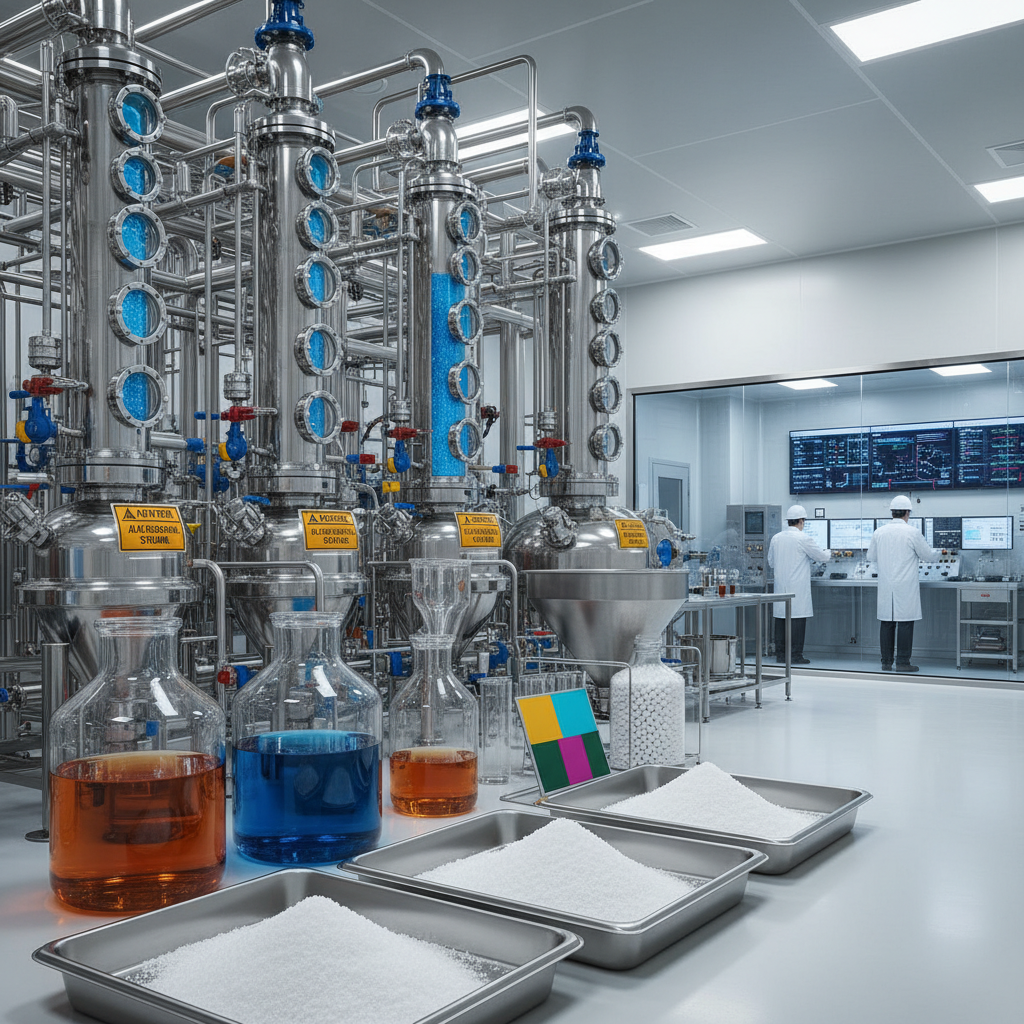
Understanding the nuances of food preservation often leads professionals to evaluate different acidification agents, particularly when debating citric acid monohydrate vs citric acid anhydrous. While both serve as essential regulators in food science, their chemical structure—specifically the presence or absence of water molecules—significantly alters their behavior in dry mixes and liquid solutions. For manufacturers, choosing the right form is not merely a technicality but a critical decision affecting product shelf-life and stability.
In the global food additive market, the demand for high-purity preservatives is surging as consumer preferences shift toward clean-label ingredients with proven safety profiles. The comparison of citric acid monohydrate vs citric acid anhydrous highlights the trade-off between solubility and hygroscopicity. This technical distinction determines whether a powder remains free-flowing in a sachet or clumps during the production of powdered beverages and pharmaceuticals.
Beyond simple acidification, the industry often integrates these agents with broad-spectrum antimicrobial preservatives like Sodium Benzoate to achieve a synergistic effect. When analyzing citric acid monohydrate vs citric acid anhydrous, it is essential to consider how these acids interact with other preservatives to maintain an optimal pH level, typically between 2.5 and 4.0, to maximize the bactericidal efficiency of the formulation.
Chemical Fundamentals of Citric Acid Monohydrate vs Citric Acid Anhydrous
At its core, the distinction in citric acid monohydrate vs citric acid anhydrous lies in the hydration state of the molecule. The monohydrate form contains one molecule of water of crystallization, making it more stable under standard atmospheric conditions. This inherent hydration makes it the preferred choice for many general-purpose food applications where absolute dryness is not a prerequisite for the final product.
Conversely, the anhydrous form is produced by removing all water molecules through a heating process. This results in a more concentrated form of the acid, which is essential for anhydrous formulations where any amount of water could trigger a premature chemical reaction. Understanding these molecular differences is the first step in optimizing the texture and potency of food additives.
Solubility and Dissolution Dynamics in Industrial Use
When comparing the dissolution rates of citric acid monohydrate vs citric acid anhydrous, the anhydrous version typically exhibits a faster dissolution profile. Because it lacks the water of crystallization, it interacts more aggressively with the solvent, making it ideal for rapid-dissolve tablets or instant powder drinks where immediate homogeneity is required.
However, this rapid reactivity comes with a challenge. The anhydrous form is significantly more thirsty for moisture, which can lead to "caking" if the storage environment is not strictly controlled. In contrast, the monohydrate form provides a more balanced dissolution rate that is often more forgiving during large-scale industrial mixing processes in the food manufacturing sector.
For manufacturers focusing on liquid-based preservatives, such as those producing sauces or fruit juices, the difference in solubility is less critical than the overall pH impact. In these cases, the primary goal is to lower the pH to a range of 2.5 to 4.0, ensuring that other preservatives, like Sodium Benzoate, can effectively inhibit microbial growth.
Impact of Hygroscopicity on Product Stability
Hygroscopicity, or the ability to attract and hold water molecules from the surrounding environment, is a deciding factor in the debate of citric acid monohydrate vs citric acid anhydrous. Anhydrous citric acid is highly hygroscopic, meaning it can quickly absorb moisture from the air, leading to the formation of lumps and a reduction in flowability.
In practical terms, when analyzing citric acid monohydrate vs citric acid anhydrous for dry-blend applications, the monohydrate form is often superior because it is less prone to clumping. This stability ensures that the additive remains evenly distributed throughout the product, preventing "hot spots" of acidity that could alter the flavor profile of a batch.
To mitigate the risks associated with the anhydrous form, companies often utilize vacuum packaging or specialized desiccants. By controlling the humidity, they can leverage the high potency of the anhydrous version while avoiding the physical degradation that occurs when citric acid monohydrate vs citric acid anhydrous are stored in suboptimal conditions.
Performance Metrics: Efficiency in Food Systems
Evaluating the efficiency of citric acid monohydrate vs citric acid anhydrous requires a look at the active acid content per kilogram. Because the anhydrous form lacks water, it has a higher percentage of pure citric acid by weight. This means that for a specific acidity target, a lower quantity of anhydrous powder is required compared to the monohydrate version.
This weight efficiency can lead to cost savings in shipping and storage for high-volume manufacturers. However, the "efficiency" must be balanced against the operational costs of managing a more sensitive material. Many food technicians prefer the reliability of the monohydrate form to avoid the risk of batch failure due to moisture absorption.
Comparative Efficiency of Citric Acid Monohydrate vs Citric Acid Anhydrous
Global Applications Across Diverse Industries
The application of citric acid monohydrate vs citric acid anhydrous extends far beyond the kitchen. In the pharmaceutical industry, the anhydrous form is critical for the production of effervescent tablets. The reaction between the anhydrous acid and a carbonate base must be precisely timed; any internal moisture from a monohydrate form would trigger the reaction prematurely, ruining the tablet's shelf-life.
In the broader food industry, these acids are ubiquitous in the production of jams, pickles, and soda pops. For these liquid-heavy products, the monohydrate version is often the standard due to its cost-effectiveness and ease of handling. Whether used in high-tech medical anticorrosion or in the daily-use industry for toothpaste and adhesives, the choice depends on the water-sensitivity of the final medium.
Synergistic Effects with Antimicrobial Agents
One of the most critical roles of acidification in food preservation is its relationship with antimicrobial agents like Sodium Benzoate. Sodium benzoate, a high-purity white powder, is a broad-spectrum antimicrobial agent, but its effectiveness is strictly dependent on the pH of the environment.
When manufacturers weigh citric acid monohydrate vs citric acid anhydrous, they are essentially deciding how to achieve the ideal pH range of 2.5 to 4.0. In this acidic environment, benzoic acid becomes more active, enhancing the bactericidal effect. Without the proper acid catalyst, preservatives would lose their effectiveness in alkaline mediums, leading to rapid spoilage.
This synergy is vital for the preservation of fruit juices and canned goods. By using a combination of an organic acid (like citric acid) and an inorganic preservative (like Sodium Benzoate), producers can ensure a robust defense against mold and bacteria while maintaining the sensory characteristics of the food.
Strategic Selection Guide for Manufacturers
Choosing between citric acid monohydrate vs citric acid anhydrous should be based on a matrix of product requirements, storage capabilities, and cost targets. If the final product is a powder, stability and flowability are paramount, making the monohydrate form a safer bet. If the product is a liquid or a highly controlled pharmaceutical, the purity and potency of the anhydrous form offer a competitive edge.
Moreover, manufacturers must consider the origin and certification of their additives. Sourcing high-purity materials with SGS certification ensures that heavy metals and arsenic levels are kept well below strict limits (e.g., Arsenic ≤0.0002%), which is non-negotiable for food-grade and pharmaceutical-grade applications.
Ultimately, the strategic selection of the correct acid form reduces waste, improves consistency, and enhances the overall quality of the end product. The following table provides a summarized comparison to help procurement officers and food scientists make an informed decision.
Summary Comparison of Citric Acid Monohydrate vs Citric Acid Anhydrous
| Feature/Dimension |
Citric Acid Monohydrate |
Citric Acid Anhydrous |
Recommended Application |
| Water Content |
Contains 1 H2O molecule |
Zero water molecules |
Anhydrous for dry-mixes |
| Hygroscopicity |
Moderate/Low |
Very High |
Monohydrate for stability |
| Dissolution Rate |
Standard |
Very Fast |
Anhydrous for effervescence |
| Concentration |
Lower pure acid % |
Higher pure acid % |
Anhydrous for potency |
| Storage Risk |
Low caking risk |
High clumping risk |
Monohydrate for easy storage |
| Typical Use |
Beverages, Canned Food |
Pharmaceuticals, Tablets |
Application dependent |
FAQS
The primary difference is the hydration state. Citric acid monohydrate contains one molecule of water per molecule of citric acid, making it more stable and less prone to clumping. Citric acid anhydrous contains no water, resulting in a more concentrated acid that dissolves faster but is highly hygroscopic and sensitive to humidity.
For powdered mixes, citric acid monohydrate is generally preferred because of its lower hygroscopicity, which prevents the powder from caking over time. However, if your process requires an extremely fast dissolution or if you are creating an effervescent product, the anhydrous form is the correct choice, provided you have moisture-controlled packaging.
Both forms provide the same acidic property. However, because the anhydrous form is more concentrated, you will need a smaller weight of it to achieve the same pH level compared to the monohydrate form. Once dissolved in water, the chemical effect on the pH of the solution is identical.
Citric acid acts as a pH regulator. Sodium Benzoate's antimicrobial effectiveness depends on the acidity of the medium. By using citric acid to lower the pH to between 2.5 and 4.0, the benzoate is converted into benzoic acid, which can penetrate microbial cell walls and inhibit growth more effectively.
Yes, generally. Because it is highly hygroscopic, anhydrous citric acid requires stricter environmental controls, such as airtight containers, vacuum sealing, or humidity-controlled warehouses, to prevent clumping and degradation, which can increase operational overhead compared to the monohydrate form.
Yes, but you must adjust the weight. Since anhydrous citric acid is more pure (no water weight), you will use less of it. You should calculate the molar equivalence to ensure you don't over-acidify your product. Additionally, check if the added "dryness" of the anhydrous form affects the texture of your product.
Conclusion
In summary, the decision regarding citric acid monohydrate vs citric acid anhydrous is a balance of chemical stability, dissolution requirements, and storage logistics. While the monohydrate form offers superior stability and ease of handling for most food applications, the anhydrous form provides the potency and rapid reaction necessary for specialized pharmaceutical and effervescent products. Both serve as indispensable tools in achieving the precise pH levels required to make preservatives like Sodium Benzoate effective.
As the food and pharmaceutical industries move toward higher precision and stricter quality standards, understanding these technical differences allows manufacturers to optimize their formulations for better shelf-life and consumer satisfaction. We recommend conducting small-scale stability tests to determine which form best suits your specific environmental conditions and product matrix. For high-quality food additives and expert guidance, visit our website: www.chinaseasoning.com.