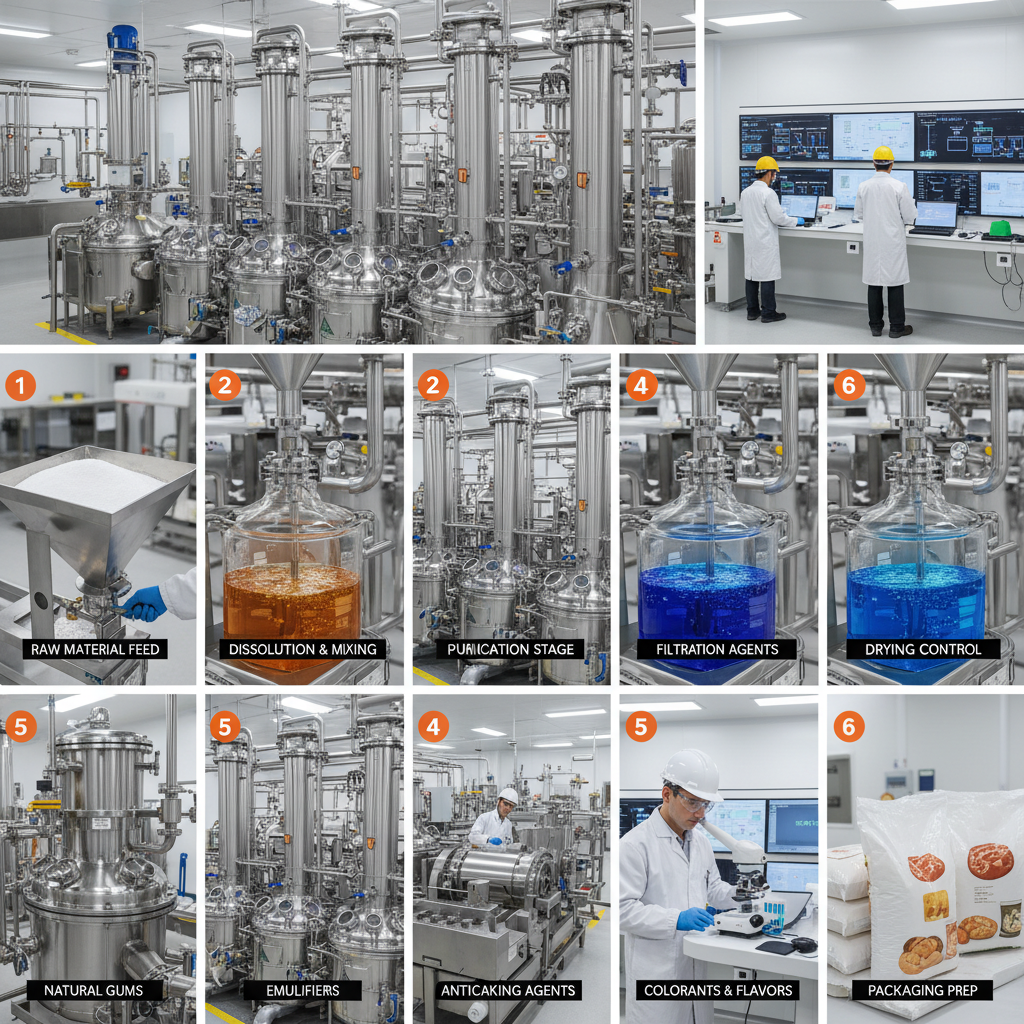
Sodium carboxymethyl cellulose (CMC) has become an indispensable polymer in the modern industrial landscape, serving as a versatile thickener, stabilizer, and emulsifier. For businesses across the food, pharmaceutical, and chemical sectors, partnering with reliable sodium carboxymethyl cellulose suppliers is not merely a procurement step, but a strategic decision that impacts product texture, shelf-life, and overall consumer satisfaction.
Globally, the demand for high-purity CMC is surging as manufacturers shift toward cleaner labels and more sustainable additive solutions. The ability of these suppliers to maintain rigorous quality control standards ensures that the end products—ranging from gluten-free breads to advanced pharmaceuticals—remain consistent in viscosity and stability, regardless of environmental fluctuations.
Understanding the nuances of CMC grades and the capabilities of different sodium carboxymethyl cellulose suppliers allows companies to optimize their formulations. By focusing on the intersection of chemical purity and functional performance, industries can achieve a competitive edge in an increasingly demanding global market.
Global Market Dynamics of Sodium Carboxymethyl Cellulose Suppliers
The landscape of sodium carboxymethyl cellulose suppliers is currently shaped by a transition toward high-performance, eco-friendly production. With the global cellulose ether market expanding, suppliers are now integrating ISO and HACCP certifications to meet the stringent requirements of the European and North American food safety authorities.
Current trends indicate a significant shift in supply chain concentration, with a strong emphasis on vertical integration. Leading suppliers are optimizing their raw pulp sourcing to ensure that the degree of substitution (DS) remains consistent, which is critical for the viscosity and solubility of the final product across various industrial applications.
Defining the Role of CMC in Modern Industry
In simple terms, sodium carboxymethyl cellulose (CMC) is a cellulose derivative that acts as a water-soluble polymer. When sourced from reputable sodium carboxymethyl cellulose suppliers, it provides a controlled way to manage the rheology of liquids, effectively preventing the separation of oil and water in emulsions and providing a smooth, creamy mouthfeel in food products.
Beyond simple thickening, CMC serves a humanitarian and industrial purpose by enhancing the efficiency of resource use. In the pharmaceutical industry, for instance, it is used as a binder in tablets, ensuring that medication is delivered in a controlled, stable manner. This versatility makes the choice of supplier a critical factor in the safety and efficacy of the end product.
Modern industry relies on CMC to solve the "stability paradox"—the need for a product to be stable during shipping and storage but easily soluble or digestible upon use. By adjusting the molecular weight and purity levels, professional suppliers provide tailored solutions that address these specific chemical challenges across diverse sectors.
Core Technical Factors in CMC Selection
When evaluating sodium carboxymethyl cellulose suppliers, the first critical factor is the Degree of Substitution (DS). This represents the average number of hydroxyl groups substituted by carboxymethyl groups per glucose unit; a higher DS typically leads to better solubility and stability in salty environments.
Viscosity control is the second pillar of quality. Leading sodium carboxymethyl cellulose suppliers provide a wide range of viscosities—from low-viscosity grades for pharmaceutical coatings to high-viscosity grades for oil drilling fluids—ensuring the polymer behaves predictably under shear stress.
Purity and contaminant levels, particularly regarding heavy metals and microbial counts, define the grade of the product. For food-grade CMC, suppliers must adhere to FDA and EFSA standards to ensure that the additive does not introduce unwanted impurities into the food chain, maintaining a clean-label profile.
Industrial Application and Performance Metrics
The practical application of CMC varies wildly depending on the industry. In the food sector, it prevents ice crystal growth in frozen desserts and stabilizes the suspension of particles in sauces. In contrast, in the detergent industry, it acts as an anti-redeposition agent, keeping dirt suspended in the water so it doesn't settle back onto the fabric during a wash cycle.
To quantify the performance of different products from sodium carboxymethyl cellulose suppliers, companies often use a weighted scoring system based on solubility, viscosity stability, and cost-to-performance ratio.
Performance Metrics Across Different CMC Grades
Global Use Cases and Regional Adoption
In the Asia-Pacific region, particularly in China and India, sodium carboxymethyl cellulose suppliers are seeing a massive increase in demand for food-grade CMC to support the booming processed food industry. The ability to produce large volumes at a competitive price point allows regional manufacturers to scale quickly while maintaining quality.
In Western markets, the focus has shifted toward "specialty CMC" for high-end cosmetics and organic-certified food additives. Here, suppliers are investing in green chemistry to reduce the environmental impact of the etherification process, catering to consumers who demand sustainable and biodegradable ingredients.
Long-term Value and Sustainability Benefits
The long-term value of partnering with professional sodium carboxymethyl cellulose suppliers lies in the reliability of the supply chain. When a supplier offers consistent batch-to-batch viscosity, it eliminates the need for costly formulation adjustments and reduces production downtime, leading to significant operational savings.
From a sustainability perspective, CMC is derived from cellulose—the most abundant organic polymer on Earth. By optimizing the production process to use fewer hazardous chemicals and more renewable energy, suppliers are helping industries reduce their overall carbon footprint while maintaining the functional integrity of their products.
Moreover, the emotional value of "trust" cannot be overstated. In industries like pharmaceuticals, where a single impurity can lead to a product recall, the transparency and certification provided by top-tier suppliers offer peace of mind and ensure the safety and dignity of the end consumer.
Future Innovations and Supplier Trends
The future of sodium carboxymethyl cellulose suppliers is trending toward "intelligent polymers." We are seeing the development of CMC with modified side chains that respond to specific triggers, such as pH changes or temperature shifts, allowing for "smart delivery" systems in medicine and targeted release in food science.
Digital transformation is also hitting the supply chain. Advanced suppliers are implementing blockchain for traceability, allowing customers to track the origin of the cellulose pulp and the exact conditions under which the CMC was manufactured. This level of transparency is becoming a mandatory requirement for entry into the premium global market.
Automation in production is further reducing human error and increasing the precision of the Degree of Substitution. As AI-driven quality control becomes standard, the variance between batches will diminish, allowing for even more precise formulations in high-tech industrial applications.
Comparative Analysis of Future CMC Supplier Trends
| Innovation Dimension |
Current Standard |
Future Trend |
Impact Score (1-10) |
| Production Method |
Chemical Etherification |
Enzymatic Modification |
9 |
| Traceability |
Paper-based Batch Records |
Blockchain Integration |
8 |
| Viscosity Control |
Manual Sampling |
Real-time AI Monitoring |
10 |
| Sustainability |
Waste Water Treatment |
Zero-Liquid Discharge (ZLD) |
7 |
| Product Grade |
Generic Grades |
Custom-tailored DS/MW |
9 |
| Packaging |
Standard Plastic Bags |
Biodegradable Bio-films |
6 |
FAQS
Verification should start with requesting COAs (Certificate of Analysis) for each batch, focusing on the Degree of Substitution (DS), viscosity, and purity levels. Additionally, check for international certifications such as ISO 9001, HACCP, and FDA registration. Ordering a sample for lab-scale testing to ensure compatibility with your specific formula is also highly recommended.
Food-grade CMC is produced under stricter hygienic conditions and must comply with food safety regulations regarding heavy metals and microbial contamination. Industrial-grade CMC, while chemically similar, may have higher tolerance for impurities and is used in applications like detergents or oil drilling where human consumption is not a factor.
Yes, reputable suppliers can adjust the molecular weight and the degree of substitution to create specific viscosity profiles. Whether you need a thin liquid for a spray application or a thick gel for a stabilizer, suppliers can tailor the product to your exact rheological requirements.
CMC improves shelf life by preventing syneresis (the separation of liquid from a gel) and stabilizing emulsions. By maintaining a consistent texture and preventing the settling of ingredients, it ensures that the product remains appealing and functional throughout its intended storage period.
Yes, because it is derived from cellulose (plant-based), CMC is generally biodegradable. However, the environmental impact depends on the chemicals used during the etherification process. Many modern suppliers are moving toward greener chemistry to ensure the entire lifecycle of the product is sustainable.
The primary challenge is moisture control. CMC is hygroscopic, meaning it absorbs water from the air, which can lead to clumping. Professional suppliers use moisture-proof packaging, such as multi-layer aluminum foil bags or heavy-duty plastic liners, to ensure the product arrives in a free-flowing powder form.
Conclusion
Selecting the right sodium carboxymethyl cellulose suppliers is a fundamental pillar for any manufacturer aiming for high-quality, stable, and cost-effective products. From the technical precision of the Degree of Substitution to the critical nature of viscosity control and purity, every detail provided by the supplier translates directly into the performance of the final product. By integrating these high-performance polymers, industries can achieve a perfect balance of texture and stability across a myriad of applications.
Looking ahead, the evolution of CMC toward smart polymers and sustainable production marks a new era of industrial chemistry. Companies are encouraged to partner with suppliers who not only meet current regulatory standards but are also investing in AI-driven quality control and green synthesis. Doing so will ensure long-term resilience and a competitive edge in a market that increasingly values transparency, safety, and environmental stewardship. Visit our website for more information: www.chinaseasoning.com