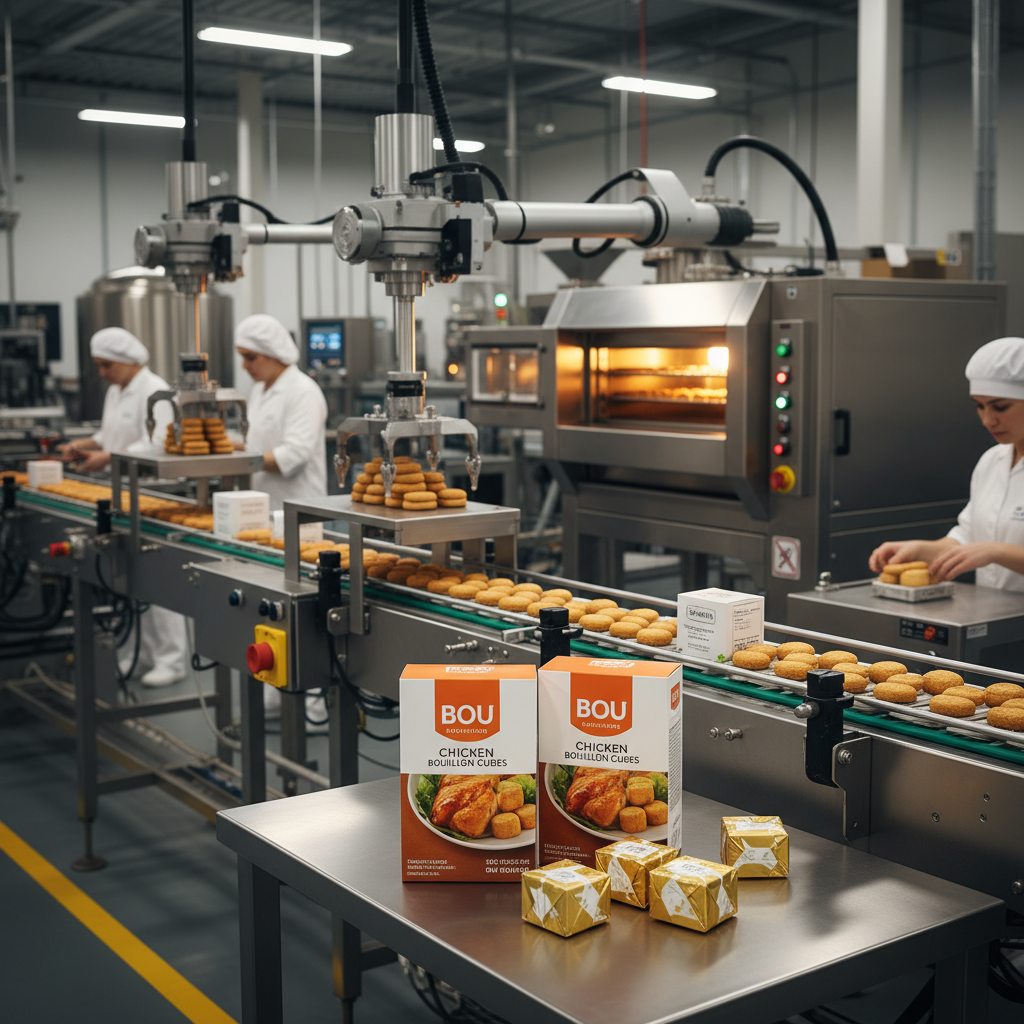
Understanding the complexities of monosodium glutamate production is essential for ensuring product quality and regulatory compliance. In the global food additive market, the precision of the crystallization process directly impacts the final product's transparency and purity, which are critical factors for industrial acceptance. Proper msg labeling ensures that consumers and manufacturers can accurately identify the grade and specification of the flavor enhancer they are utilizing.
The industry faces a continuous challenge in balancing high-yield production with the strict purity standards required for food and pharmaceutical applications. From the initial concentration of the solution to the final drying and screening processes, every step must be meticulously controlled to avoid impurities and ensure a uniform particle size. This technical rigor is what separates premium MSG from lower-grade alternatives, making the transparency of production data a key competitive advantage.
For professional buyers and laboratory researchers, the technical specifications—such as a transmittance of 98% and a content of 99%—are the primary markers of quality. By adhering to strict msg labeling standards, manufacturers provide the necessary assurance that the product is fit for use as a flavor enhancer in salted foods or as a reagent in scientific settings.
The Fundamentals of MSG Crystallization Process
The crystallization of monosodium glutamate is a multi-stage operation that begins with the concentration of the solution. To achieve the desired crystalline structure, the solution must reach a concentration of 30~30.5 Be at approximately 70°C. This initial phase is critical because it sets the foundation for the growth of uniform, transparent, and bright crystals, which are the hallmarks of high-quality msg labeling.
Once the concentration is reached, the process involves a delicate balance of temperature and feed rates. The addition of diluted decoloring solutions helps maintain a low supersaturated state, preventing the uncontrolled generation of new crystal nuclei. This controlled growth ensures that the final product meets the stringent physical requirements for commercial distribution and industrial use.
Technical Specifications and Purity Standards
High-grade monosodium glutamate is defined by its chemical purity and physical clarity. A standard premium product boasts a content of 99% and a transmittance of 98%, ensuring that it integrates seamlessly into food products without altering the visual appeal. These specifications are not mere numbers; they are the result of rigorous neutralization and crystallization cycles.
Impurity control is another cornerstone of the production process. For instance, the neutralizer used must have a light transmittance of over 90% to avoid contaminating the crystals. Limits on chloride (0.1%), sulfate (0.05%), and heavy metals (10ppm) are strictly maintained to ensure the product is safe for human consumption and meets international food safety standards.
The pH value, typically ranging between 6.7 and 7.5, ensures the stability of the compound. When these parameters are verified and recorded, they form the basis for accurate msg labeling, allowing the end-user to trust the efficacy and safety of the additive in concentrations ranging from 0.2% to 0.9%.
The Role of Seed Crystals and Nucleation
The initiation of crystallization relies on the introduction of crystal seeds into the concentrated solution. This stage is characterized by a slight turbidity as the seed grains begin to grow. In the context of msg labeling, the size and uniformity of these seeds determine the final grain size of the product.
A critical phenomenon known as "pseudocrystals" often occurs when new, small crystal nuclei appear alongside the growing seeds. To combat this and ensure a "whole crystal" result, manufacturers add warm water close to the temperature of the feed liquid. This process dissolves the smaller nuclei while preserving the larger seed crystals, a technique essential for maintaining the premium quality associated with professional msg labeling.
The repeated cycle of concentration and the strategic addition of warm water allow the crystals to grow to the required size without losing transparency. Once the desired grain is achieved, the concentration is reduced to 29-39.5 Be before discharging the product into the concentrate storage tank for immediate centrifugation.
Advanced Drying and Screening Methods
After centrifugation, the wet crystals must be dried to prevent clumping and degradation. The industry employs various specialized methods depending on the required throughput and energy efficiency, including vacuum box drying, airflow drying, and vibrating bed drying. These methods are designed to remove moisture while preserving the crystalline integrity of the MSG.
To achieve the uniform particle size required for commercial msg labeling, the dried crystals undergo a vibration screening process. This removes oversized or undersized particles, ensuring that the final packaged product is consistent in both appearance and dissolution rate.
Comparison of MSG Processing Efficiency Ratings
Industrial Applications of High-Purity MSG
Monosodium glutamate serves as a versatile tool in the food industry, primarily as a flavor enhancer. When applied in concentrations of 0.2% to 0.9% in normally salted foods, it significantly enhances the savory "umami" profile. This makes it indispensable for large-scale food production where consistency across batches is paramount.
Beyond food, high-purity MSG is utilized in the pharmaceutical sector, often combined with sugar to mask the bitterness of certain drugs, thereby improving patient palatability. Additionally, its high purity and strict msg labeling make it a reliable laboratory reagent for biochemical research.
Quality Control in Flavor Enhancer Production
Quality control begins with the raw materials and extends to the final packaging. The use of a neutralizer with high light transmittance is non-negotiable to ensure the resulting crystals are bright and transparent. Any deviation in the crystallization temperature or concentration can lead to a product that fails to meet the criteria for premium msg labeling.
Centrifugation is another critical control point. The mother liquor recovered after centrifugation is not discarded but is incorporated into the next batch of neutralization solution. This not only increases the overall yield of the process but also ensures that the resources are used efficiently without compromising the purity of the final product.
The final screening process acts as the last line of defense. By utilizing vibration screens to remove out-of-spec crystals, manufacturers can guarantee a uniform particle size. This uniformity is essential for the additive's performance in automated dosing systems used by global food manufacturers.
Comparative Analysis of MSG Manufacturing Stages
Analyzing the manufacturing process reveals that the crystallization and "whole crystal" phases are the most technically demanding. These stages require precise thermal management and chemical dosing to prevent the proliferation of pseudocrystals, which would otherwise degrade the visual quality of the product.
In contrast, the drying and screening phases are more focused on physical refinement. While less chemically complex, these stages are vital for the commercial viability of the product, as they determine the shelf-life and ease of application in the final food product.
Ultimately, the synergy between these chemical and physical processes is what allows a manufacturer to claim a 99% purity level. Accurate msg labeling is the final step that communicates this technical achievement to the market, bridging the gap between the factory and the consumer.
Technical Performance Summary of MSG Production Stages
| Production Stage |
Key Quality Metric |
Critical Control Point |
Impact on Final Labeling |
| Concentration |
30~30.5 Be |
Temperature (70°C) |
Crystalline Base |
| Crystallization |
Seed Growth Rate |
Decoloring Solution |
Transmittance % |
| Whole Crystal |
Nuclei Dissolution |
Warm Water Volume |
Grain Uniformity |
| Centrifugation |
Mother Liquor Recovery |
Rotation Speed |
Purity Level |
| Drying |
Moisture Content |
Vacuum/Airflow Rate |
Shelf Stability |
| Screening |
Particle Size Distribution |
Vibration Frequency |
Physical Grade |
FAQS
High-purity MSG is typically characterized by a content of 99%, a transmittance of 98%, and a pH value between 6.7 and 7.5. Additionally, it must have strictly controlled levels of impurities, including chloride (0.1%), sulfate (0.05%), and heavy metals (10ppm) to ensure it meets food and pharmaceutical safety standards.
The "whole crystal" process involves adding warm water to dissolve small, newly formed crystal nuclei (pseudocrystals) while leaving the larger seed crystals intact. This ensures the final product has a uniform particle size and higher transparency, which is essential for premium commercial grading.
For most normally salted foods, MSG is used as a flavor enhancer in concentrations ranging from 0.2% to 0.9%. This range is optimal for enhancing the savory umami taste without overpowering the original flavor profile of the food product.
The neutralizer is a primary component in the production of MSG crystals. If the neutralizer contains too many impurities or has low light transmittance (less than 90%), it can lead to cloudy or discolored crystals, which would fail the quality checks for premium grade labeling.
Depending on the factory's scale and requirements, common drying methods include box drying rooms, vacuum box drying, airflow drying, conveyor belt drying, and vibrating bed drying. The choice depends on the needed balance between drying speed and the preservation of crystal structure.
Yes, high-purity monosodium glutamate is used in the pharmaceutical industry, particularly when combined with sugar to improve the palatability of bitter drugs. Its use in this sector requires the highest level of purity and strict adherence to chemical specifications.
Conclusion
The production of high-quality monosodium glutamate is a sophisticated interplay of chemical engineering and physical refinement. From the critical control of the crystallization environment to the final precision screening of the particles, every step is designed to maximize purity and uniformity. By strictly adhering to these technical standards, manufacturers can provide a product that is not only a powerful flavor enhancer but also a safe, reliable ingredient for global food and pharmaceutical industries.
As the industry evolves, the focus on transparency and precise msg labeling will only increase, driven by consumer demand for quality and regulatory requirements. Investing in advanced crystallization and drying technologies will allow manufacturers to further enhance the transmittance and purity of their products, ensuring long-term competitiveness in the global market. For those seeking a reliable supplier of premium MSG, visiting our website at www.standard-seasoning.com is the first step toward sourcing quality-guaranteed additives.