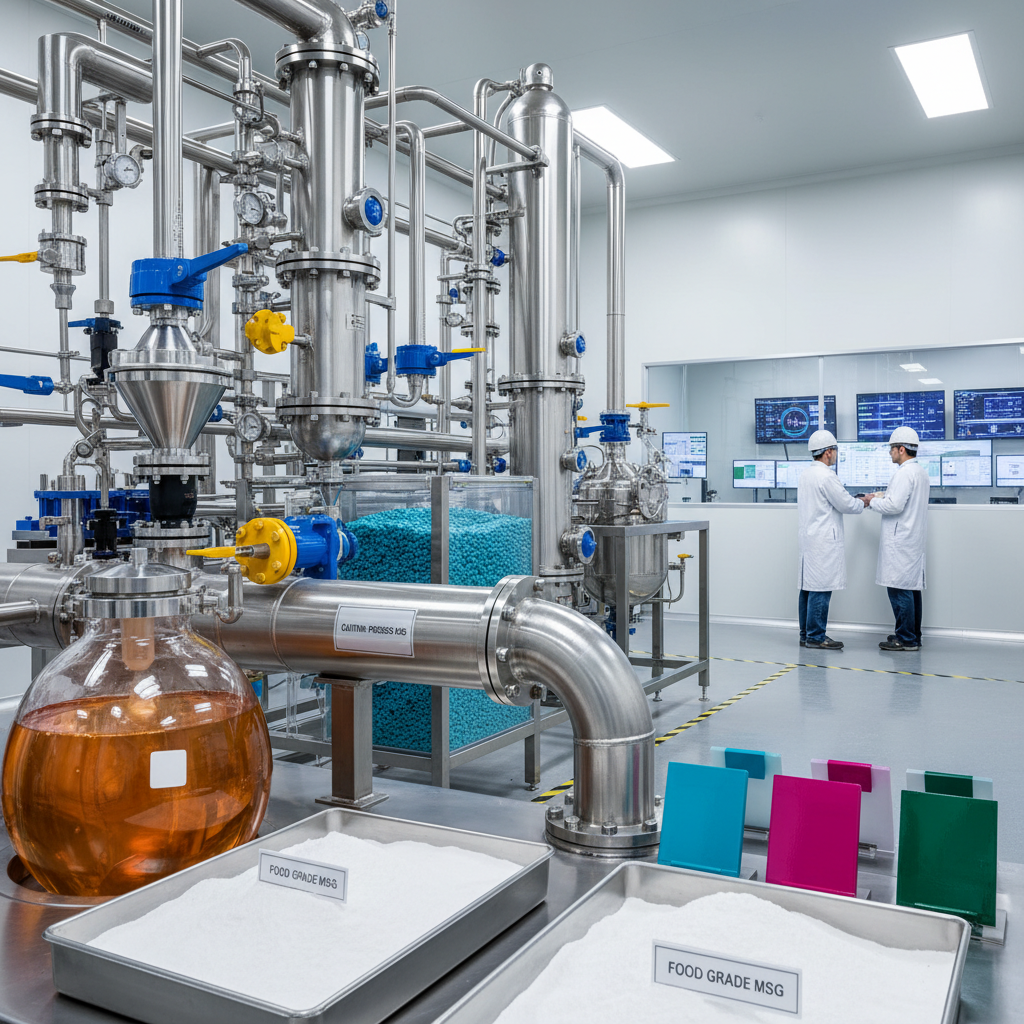
The global food supply chain faces constant challenges regarding shelf-life extension and the prevention of microbial spoilage. To combat these issues, the industry relies on specialized additives that inhibit the growth of pathogens and spoilage organisms, ensuring that food remains safe for consumption from the factory to the table.
Modern food science focuses on the delicate balance between maintaining nutritional integrity and implementing robust preservative strategies. By utilizing targeted chemical and biological interventions, manufacturers can significantly reduce food waste and protect public health against foodborne illnesses.
Among the various tools available, antimicrobial food additives play a pivotal role in stabilizing products. While some components act directly against bacteria, others, like Vitamin E, serve as powerful antioxidants that prevent lipid peroxidation, thereby indirectly supporting the overall stability and quality of the food matrix.
Global Industry Context of Antimicrobial Food Additives
The demand for extended shelf-life products has grown exponentially as urbanization and global trade expand. According to international food safety standards, the prevention of microbial contamination is not just a commercial necessity but a humanitarian imperative to prevent mass food poisoning and nutrient loss.
In this context, the integration of antimicrobial food additives helps manufacturers meet strict ISO and regulatory requirements. By managing the biological load within processed foods, these additives ensure that essential vitamins and proteins remain viable during long-distance transportation.
Definition and Mechanism of Action
Antimicrobial food additives are substances added to food to prolong its shelf life by inhibiting the growth of bacteria, molds, and yeasts. These agents work through various mechanisms, such as disrupting the cell membrane of the microorganism or interfering with its metabolic enzymes.
Beyond direct antimicrobial action, the industry often utilizes synergistic blends. For instance, while some agents target pathogens, antioxidants like Vitamin E (tocopherol) protect the fat-soluble components of food from oxidation, which prevents the degradation that often makes food more susceptible to microbial attack.
This dual approach ensures that the food remains chemically stable and biologically safe. The goal is to maintain the organoleptic properties—taste, smell, and texture—while ensuring that the product does not become a medium for harmful bacterial growth.
Core Components of Food Stabilization
The effectiveness of antimicrobial food additives depends heavily on their solubility and stability. Most agents are categorized by whether they are water-soluble or fat-soluble, which determines their application in different food matrices, such as oils or aqueous solutions.
A critical component in stabilization is the use of antioxidants. Vitamin E, a fat-soluble vitamin and hydrolyzate of tocopherol, is one of the most important antioxidants used to prevent lipid peroxidation. When paired with other antimicrobial food additives, it creates a comprehensive shield against both chemical and biological decay.
Furthermore, the purity of these additives is paramount. Specifications regarding moisture (max 5.0%), heavy metals like Lead (max 10.0mg/kg), and total bacterial counts (max 1000cfu/g) ensure that the additives themselves do not introduce contaminants into the food chain.
Practical Applications and Efficacy
In industrial settings, the application of these additives varies based on the product's sensitivity. For example, additives must be heat-stable to survive pasteurization, although some, like certain forms of Vitamin E, may see reduced activity if subjected to extreme frying temperatures.
The efficacy of these stabilizers is measured by their ability to maintain a low microbial load over time. By implementing a rigorous dosing strategy, manufacturers can ensure that salmonella and shigella remain absent, while coliform levels are kept strictly below 3.0MPN/g.
Comparative Efficacy of Stabilization Methods
Global Use Cases in Food Manufacturing
In the European and North American markets, there is a strong shift toward "clean label" ingredients. This has led to the increased use of naturally derived antimicrobial food additives and antioxidants that consumers perceive as safer and more sustainable.
In emerging economies across Asia and Africa, the focus is often on affordability and extreme stability to combat high humidity and temperature during transport. Here, highly concentrated powders (such as Vitamin E 50% min) are essential for cost-effective fortification and preservation in large-scale food production.
Long-Term Value and Safety Advantages
The long-term value of investing in high-quality stabilizers lies in the reduction of product recalls and waste. By utilizing certified ingredients (SGS, USP30, BP2005), companies can guarantee a level of consistency that builds consumer trust and brand loyalty.
Safety is not only about the absence of bacteria but also about the nutritional benefit. Antioxidants like Vitamin E provide a double benefit: they protect the food product and offer health benefits to the end consumer, including supporting capillary health and improving blood circulation.
Ultimately, the strategic use of these additives ensures food security. By extending the window of viability for essential food items, the global community can better manage surpluses and deficits in food availability.
Future Trends in Preservative Technology
The future of antimicrobial food additives is moving toward "intelligent" preservation. This includes the development of encapsulate additives that release their active components only when a specific trigger, such as a change in pH or temperature, is detected in the food.
Sustainability is also driving innovation, with a move toward bio-preservatives derived from fermentation processes. These "green" additives aim to provide the same efficacy as synthetic options while adhering to the strictest organic certifications.
Automation in dosing and the integration of AI to predict spoilage patterns will allow for the precise application of additives, minimizing waste and maximizing the shelf-life of every batch produced.
Analysis of Future Stabilization Trends and Specifications
| Trend Category |
Key Technology |
Expected Impact |
Adoption Rate (1-10) |
| Bio-Preservation |
Bacteriocins |
Reduced Synthetic Chemicals |
8 |
| Antioxidant Synergy |
Tocopherol Blends |
Enhanced Lipid Stability |
9 |
| Smart Packaging |
Active Film Release |
Real-time Protection |
7 |
| Nano-Encapsulation |
Liposomal Delivery |
Targeted Action |
6 |
| Clean Labeling |
Plant-based Extracts |
Consumer Acceptance |
10 |
| Precision Dosing |
AI-Driven Mixing |
Minimized Waste |
7 |
FAQS
Antimicrobial additives specifically target and inhibit the growth of microorganisms like bacteria and fungi. Antioxidants, such as Vitamin E, prevent the oxidation of fats and oils. While they have different primary functions, they often work together to maintain overall food stability and prevent spoilage.
When used correctly, they preserve nutritional value by preventing degradation. For instance, adding Vitamin E not only protects the food from oxidation but also fortifies the product with a fat-soluble vitamin essential for human health, thereby increasing the overall nutritional profile.
You should look for third-party certifications such as SGS, USP30, or BP2005. Additionally, request a Certificate of Analysis (CoA) to verify that the product meets specifications for purity, such as maximum levels of lead, arsenic, and total bacterial count.
Yes, some additives are sensitive to extreme heat. For example, while Vitamin E is stable under many conditions, its activity can be significantly reduced during high-temperature frying. It is important to choose the additive form that matches your processing method.
Depending on the volume, standard industrial packaging includes drums of 5kg, 10kg, or 25kg. These ensure the powder remains dry and protected from oxygen and light, which is critical for maintaining the potency of oxygen-sensitive components like tocopherol.
By extending the shelf life and preventing early spoilage, these additives allow food to be transported over longer distances and stored for longer periods. This reduces the amount of food discarded due to expiration or microbial contamination in the supply chain.
Conclusion
The strategic implementation of antimicrobial food additives and antioxidants is fundamental to the modern food industry. By combining rigorous purity standards, such as those found in high-grade Vitamin E, with targeted antimicrobial strategies, manufacturers can effectively balance safety, nutritional value, and commercial longevity.
Looking forward, the transition toward bio-based and intelligent preservation systems will further refine how we protect our food. For companies aiming to optimize their product stability and meet global safety certifications, investing in high-purity, certified additives is the most reliable path to success. Visit our website: www.standard-seasoning.com