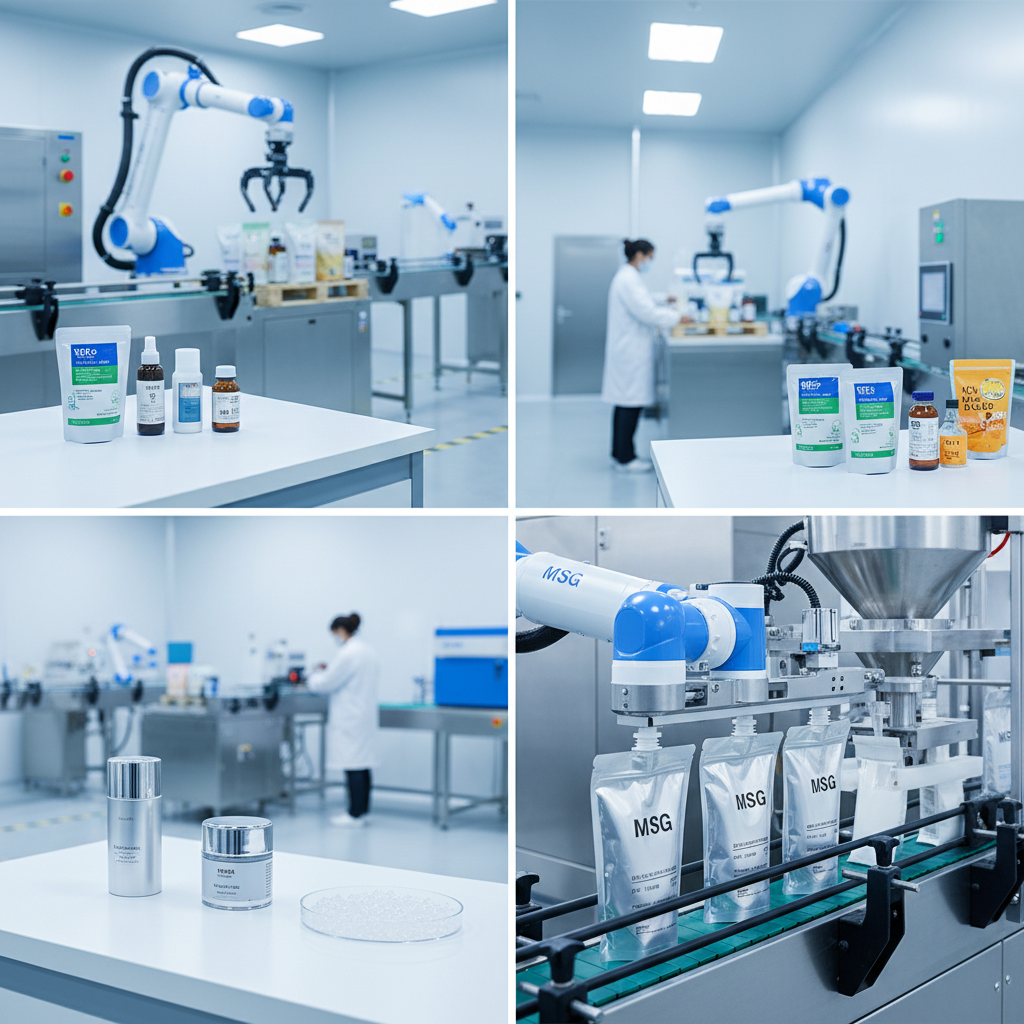
Understanding the diverse array of components used in modern food processing is essential for manufacturers seeking to balance texture, taste, and cost. While many consumers search for a specific ingredient in chinese food msg to understand flavor enhancement, the industry relies on a broader spectrum of polysaccharides and additives to achieve commercial stability and mouthfeel.
The global food additive market is currently undergoing a transition toward ingredients that offer multifunctional benefits, such as improving solubility while maintaining a neutral taste profile. This evolution is driven by the need for cleaner labels and more efficient production processes in the beverage, dairy, and confectionery sectors.
Among these critical components, Maltodextrin stands out as a versatile polysaccharide that serves as a foundation for many processed foods. Unlike a singular ingredient in chinese food msg, Maltodextrin provides the structural integrity, viscosity, and carrier properties necessary for the mass production of high-quality food products.
The Technical Profile of Maltodextrin as a Food Component
Maltodextrin (MD) is a sophisticated polysaccharide food ingredient produced as a low conversion product between starch and starch sugars. It typically appears as a white or slightly yellowish amorphous powder, characterized by its lack of visible impurities and a distinct, non-sweet or slightly sweet taste. This neutral profile makes it an ideal base for various food formulations where the goal is to enhance texture without altering the intended flavor profile.
In the context of complex flavor systems, such as those where a manufacturer might use a specific ingredient in chinese food msg, Maltodextrin serves as an essential filler and stabilizer. Its ability to integrate seamlessly into powdered mixes ensures that active ingredients are distributed evenly, preventing clumping and ensuring a consistent consumer experience across every batch.
Global Industry Relevance and Functional Demand
The global demand for high-performance food additives has surged as industrial food production scales to meet the needs of a growing population. Manufacturers are no longer looking for simple additives but for multifunctional ingredients that can simultaneously improve shelf life, reduce costs, and optimize mouthfeel. The integration of polysaccharides into the global supply chain has become a cornerstone of the modern food industry.
One of the primary challenges in food engineering is maintaining the stability of volatile aromas and flavors. Whether dealing with delicate fruit essences or a pungent ingredient in chinese food msg, the industry requires a carrier that can protect these components from oxidation and degradation. Maltodextrin fulfills this role by acting as a protective matrix during spray-drying and storage.
From the perspective of ISO standards and global food safety regulations, the use of highly purified maltodextrin ensures that products remain compliant with international purity requirements. This reliability allows pharmaceutical and food companies to standardize their formulas across different geographic markets, ensuring that a product tastes and behaves the same way in Asia as it does in Europe or North America.
Core Characteristics and DE Value Impact
The physical properties of Maltodextrin are fundamentally governed by its hydrolysis DE (Dextrose Equivalent) value. The DE value is not merely a technical measurement but a critical indicator of how the product will behave in a formulation. For instance, a product with a specific DE range will exhibit different levels of solubility and sweetness, allowing food scientists to fine-tune the end product.
Generally, a higher DE value indicates a greater degree of hydrolysis, which leads to increased solubility, sweetness, and permeability. While this is beneficial for rapid dissolution, it can negatively impact the product's viscosity and anti-crystallization properties. Understanding this balance is key when formulating products that might also include a flavor-enhancing ingredient in chinese food msg.
Conversely, lower DE values provide superior organization, higher viscosity, and better pigment stability. This makes low-DE Maltodextrin ideal for applications where structural integrity is paramount, such as in frozen desserts or thick sauces. By selecting the appropriate DE value, manufacturers can precisely control the freezing point drop and browning reactions (Maillard reaction) during heat processing.
Versatile Applications Across Food Categories
Maltodextrin's utility spans a vast array of food categories due to its ability to act as a thickener, stabilizer, and carrier. In the dairy industry, it is added to milk powders and infant formulas (at dosages of 5% to 20%) to expand volume, prevent clumping, and improve the nutritional ratio, making the product easier to digest and absorb.
In the confectionery and snack sector, it prevents sanding and withering in candies while reducing stickiness and dental issues. It is also a critical component in meat products like ham and sausages (5% to 10% dosage), where it provides strong adhesive and thickening properties, resulting in a more delicate texture and extended shelf life.
Functional Performance of Maltodextrin vs Typical Flavor Enhancers
Strategic Advantages in Production and Costing
One of the most significant commercial advantages of Maltodextrin is its ability to reduce overall production costs without sacrificing product quality. By serving as a high-quality filler and diluent in solid seasonings and powdered oils, it prevents moisture absorption and clumping, which drastically reduces waste and extends the storage life of the product.
Furthermore, its role as a fat substitute in powdered oils allows manufacturers to create healthier product profiles while maintaining a rich, creamy mouthfeel. This strategic substitution is particularly valuable in health-conscious markets, where reducing calories while maintaining the sensory appeal of a traditional ingredient in chinese food msg is a competitive necessity.
Future Trends in Polysaccharide Innovation
The future of food additives is moving toward "smart" polysaccharides that can react to specific environmental triggers, such as temperature or pH changes. We are seeing a shift toward higher-purity maltodextrins with ultra-specific DE values to meet the demands of personalized nutrition and medical-grade food production, particularly in the pharmaceutical intermediate sector.
Digital transformation in the manufacturing process is also enabling more precise control over the hydrolysis process. This means that the gap between the theoretical properties of a low-conversion starch product and the actual result is narrowing, leading to higher consistency and fewer defective batches in large-scale industrial production.
Additionally, there is a growing trend toward combining Maltodextrin with natural fibers and proteins to create synergistic effects. These hybrid systems aim to provide the structural benefits of a traditional ingredient in chinese food msg but with enhanced nutritional value and a lower glycemic impact, aligning with global health trends.
Technical Specifications and Quality Standards
To ensure consistent performance in the field, Maltodextrin must adhere to strict technical specifications. Key parameters include a moisture content of 6% maximum and a pH range between 4.6 and 6.5. These metrics ensure that the powder remains stable during transport and does not react prematurely with other active ingredients in the formula.
Solubility is another critical metric, with a minimum requirement of 98% to ensure that the product dissolves quickly in beverages and instant powders. Strict limits on impurities, such as SO2 ash (0.5% Max) and Arsenic (0.5mg/kg Max), are mandatory to comply with food safety laws and protect consumer health.
Microbiological control is equally stringent, with Coli forms limited to 30/100g and total bacteria capped at 3000/g. These standards ensure that when Maltodextrin is used alongside a flavor-enhancing ingredient in chinese food msg, it does not introduce contaminants that could compromise the product's shelf life.
Core Technical Specifications and Application Dosages of Maltodextrin
| Application Category |
Recommended Dosage |
Primary Function |
Key Performance Metric |
| Dairy Products |
5% - 20% |
Volume expansion & Anti-clumping |
Solubility (98% Min) |
| Nutritious Snacks |
10% - 25% |
Instant thickening & Flavor absorption |
DE Value (15-20) |
| Solid Beverages |
10% - 30% |
Aroma maintenance & Crystallization inhibition |
Carrier Efficiency |
| Frozen Foods |
10% - 25% |
Ice particle refinement & Viscosity |
Freezing Point Drop |
| Candy & Sweets |
10% - 30% |
Toughness increase & Stickiness reduction |
Anti-deliquescence |
| Meat Products |
5% - 10% |
Adhesion & Shape stability |
Viscosity Index |
FAQS
Maltodextrin is a polysaccharide used primarily for texture, viscosity, and as a carrier, whereas a flavor enhancer like the common ingredient in chinese food msg focuses on stimulating taste receptors to enhance umami. Maltodextrin provides the "body" of the food, while flavor enhancers provide the "taste."
The Dextrose Equivalent (DE) value determines solubility and sweetness. High DE values increase solubility and sweetness but lower viscosity. Low DE values increase viscosity and stability. Choosing the right DE ensures your product has the correct mouthfeel and stability.
Yes, Maltodextrin can serve as a fat substitute in powdered oils. It mimics some of the mouthfeel properties of fats while significantly reducing the calorie count and improving the storage stability of the powder by preventing oil seepage.
Absolutely. Maltodextrin is frequently used in sugar-free milk powders and infant formulas because it provides the necessary bulk and texture without adding the high levels of sweetness associated with sucrose or other sugars.
Maltodextrin should be stored in a cool, dry place with moisture levels kept low. Because it is a polysaccharide with a moisture limit of 6% max, exposure to high humidity can lead to clumping and a decrease in solubility.
In products like sausages, it acts as a binder and thickener that helps maintain water retention and structural integrity. This stability prevents the product from drying out and maintains a fresh texture for a longer period.
Conclusion
Maltodextrin serves as an indispensable tool in the modern food scientist's arsenal, providing essential functional properties that go far beyond simple flavor enhancement. From its role as a precise carrier for a flavor-enhancing ingredient in chinese food msg to its ability to stabilize frozen desserts and optimize the nutritional profile of infant formulas, its versatility is unmatched. By mastering the relationship between DE values and physical properties, manufacturers can achieve a perfect balance of cost-efficiency, stability, and sensory appeal.
As the industry moves toward more sustainable and health-conscious formulations, the demand for high-purity, multifunctional polysaccharides will only continue to grow. We recommend that manufacturers prioritize the selection of additives based on rigorous technical specifications to ensure global compliance and product consistency. For more high-quality food additive solutions and technical support, visit our website: www.standard-seasoning.com.